
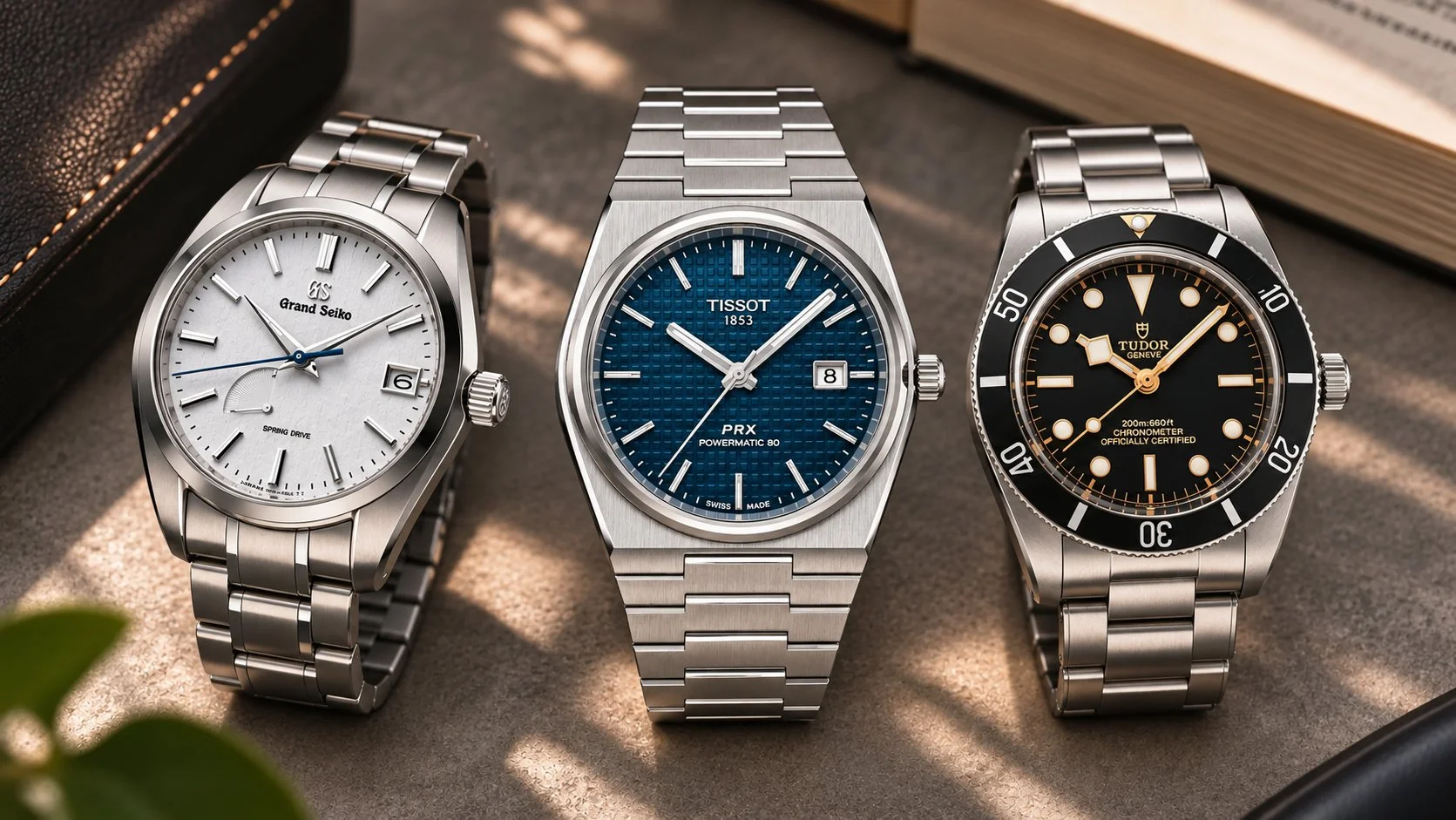
Earlier this year I wrote that it is time to retire the phrase entry-level luxury, because calling a $5,000 watch an entry to anything is a strange way to describe the biggest purchase most people make all year. I still believe that. I also know that a few thousand people a month type those exact words into Google, and what they mean is simple: I am ready to spend real money on a watch for the first time, I want it to be from a brand that will still matter in twenty years, and I do not want to get it wrong. That is a question worth answering properly, whatever we call it.
So here is my answer, using the price bands I laid out in that piece instead of the industry's. The first group is $850 to $3,000, which is accessible Swiss and the best of the microbrands, and it is where I think most people should actually start. The second is $3,000 to $7,000, which is established luxury, the brands with in-house movements, service networks and real history, and it is where the phrase usually gets used. One watch per brand, every one of them something I would buy with my own money, and I have marked which ones I have worn and reviewed and which I have only handled. I have owned a Tudor Black Bay, I run a watch brand that lives in the first band, and I have spent 25 years deciding where luxury starts for me. Here is where it starts.
How I Picked These Watches
Three rules. The brand has to be one you can walk into a store and get serviced in ten years, which rules out a lot of good watches from companies that may not be around. I have made one exception for a brand that is eight years old, and I explain why when we get to it. The watch has to be the version of that brand I would actually recommend, not the cheapest thing in the catalog, which is why you will see a Black Bay 54 and not a Tudor Royal. And the price has to be the one on the brand's US site in November 2026, not a grey-market number, because the whole point of this list is that you can buy the watch tomorrow and know what it costs.
I have left out two brands on purpose. Seiko and Orient make the real entry-level watches, the ones most of us started with, and they belong in our guide to the best watches under $500 rather than here. And Rolex is not on this list because nothing Rolex sells is under $7,000 and most of it you cannot buy at retail anyway. If you want the band above this one, our guide to the best watches under $10,000 is where it lives.
$850 to $3,000: Accessible Swiss and the Best Microbrands
This is the band where I think luxury actually starts, and the band where I would spend my first serious money. Every watch here has a sapphire crystal, a reliable Swiss or Swiss-grade automatic and finishing that would have cost twice as much ten years ago. What you give up compared to the next band is mostly an in-house movement and a famous name on the dial. What you keep is about $3,000.
Tissot PRX Powermatic 80
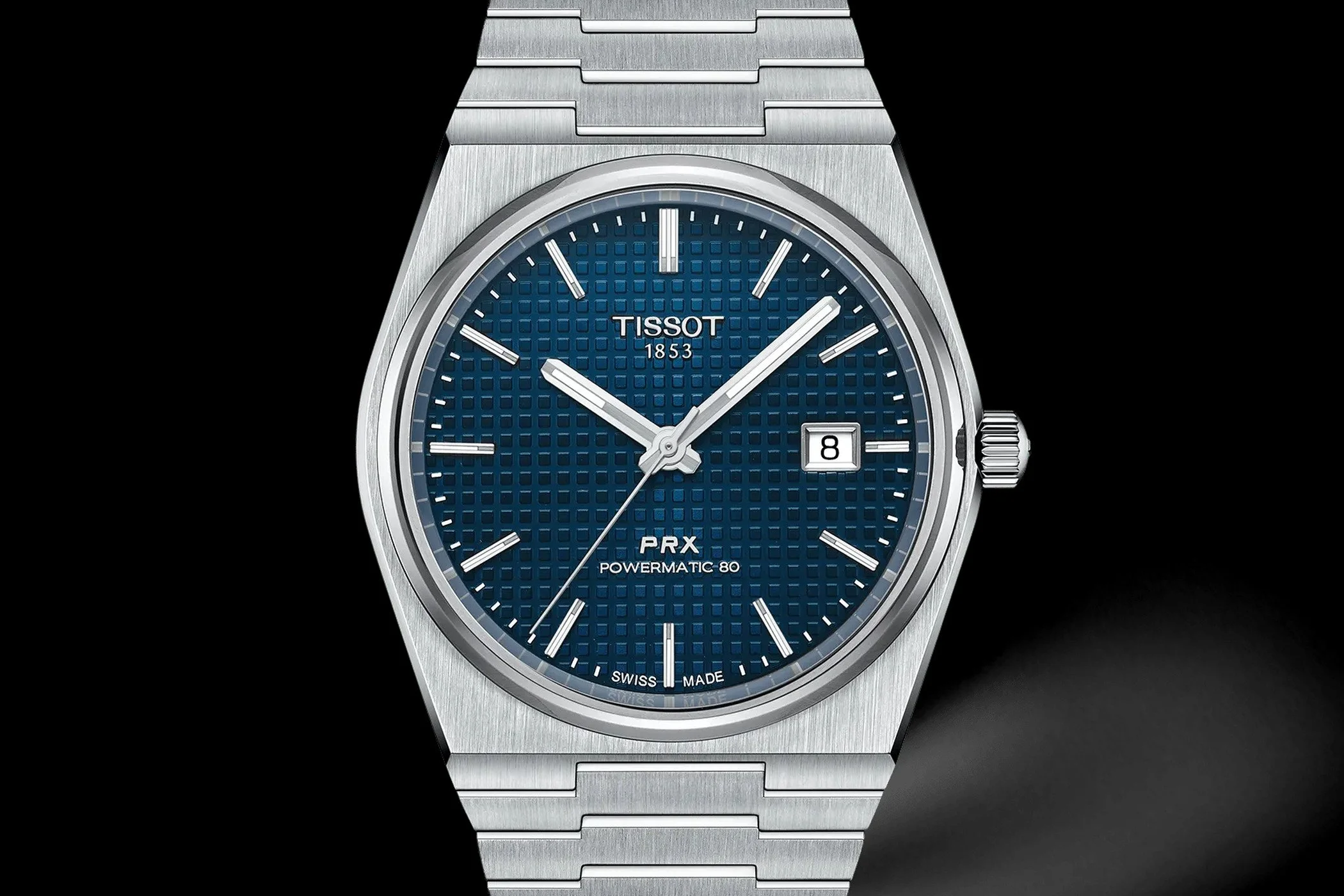
Case Size: 40mm, Thickness: 10.9mm, Lug-to-Lug: 44.6mm, Movement: Powermatic 80 Automatic, Power Reserve: 80 Hours, Water Resistance: 100m, Crystal: Sapphire, Bracelet: Integrated Steel, Price: $850 USD
I am starting below my own $1,000 floor because the PRX is the exception that makes the rule. It is a 1978 design brought back in 2021, an integrated-bracelet sports watch with a waffle dial and a slim case, and it is the watch that taught a generation of new collectors what an integrated bracelet feels like on the wrist. The Powermatic 80 inside is a Swatch Group automatic with 80 hours of reserve, the crystal is sapphire, the bracelet is better than it has any right to be, and the price has gone from $650 to $850 in four years because Tissot knows exactly what it has.
I reviewed the 35mm PRX and came away thinking the smaller case is the one most people should get, but the 40mm Powermatic 80 is the icon. The things that give away the price are the clasp, which is stamped and has no micro-adjustment, and the end links, which can pinch. Neither matters once it is sized. If you want to find out whether you are an integrated-bracelet person before you spend $1,600 on the Twelve below, this is a cheap way to learn.
The Tissot PRX Powermatic 80 costs $850 USD on the bracelet.
Wren Diver 38
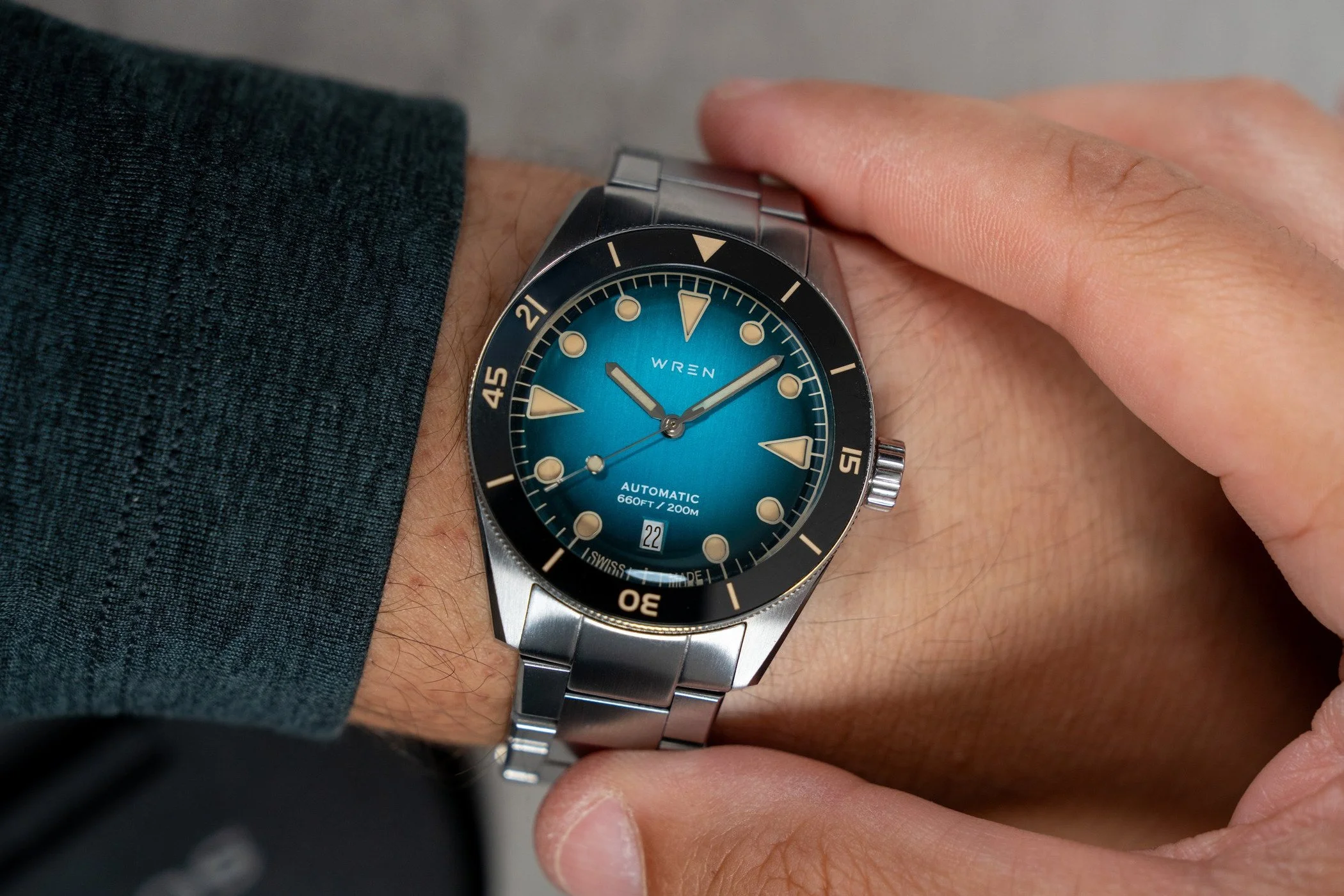
Case Size: 38mm, Thickness: 10.7mm, Movement: Sellita SW300-1 Automatic, Power Reserve: 56 Hours, Water Resistance: 200m, Bezel: Ceramic, Fully Lumed, Crystal: Box Sapphire, Bracelet: Steel with Micro-Adjust Clasp, Price: $1,595 USD
Full disclosure first: Wren is my brand, so weigh this entry accordingly. I am including it because it is the watch I used as the example in the piece that started this argument, and because I truly believe it is a great case for luxury starting below $2,000. The Diver 38 is a 200-meter Swiss-made diver that is 10.7mm thick with its box sapphire, which puts it in the company of thin divers that cost several times as much. It has a ceramic bezel with the entire scale lumed, a sandwich dial with the markers cut through the plate, a clear hardness coating on the case and bracelet, and a clasp you can adjust on the wrist.
The honest comparison is the one I made in that piece. Put it next to a Black Bay 54 and ask whether the Tudor feels three times better. It has the in-house movement, the shield and the service network, and those are real. On case quality, bezel action, comfort at the end of a long day and how it looks with a T-shirt, the gap is a lot smaller than $3,100. You can read everything about it in our Wren explainer and decide for yourself.
The Wren Diver 38 costs $1,595 USD, with or without a date.
Christopher Ward The Twelve
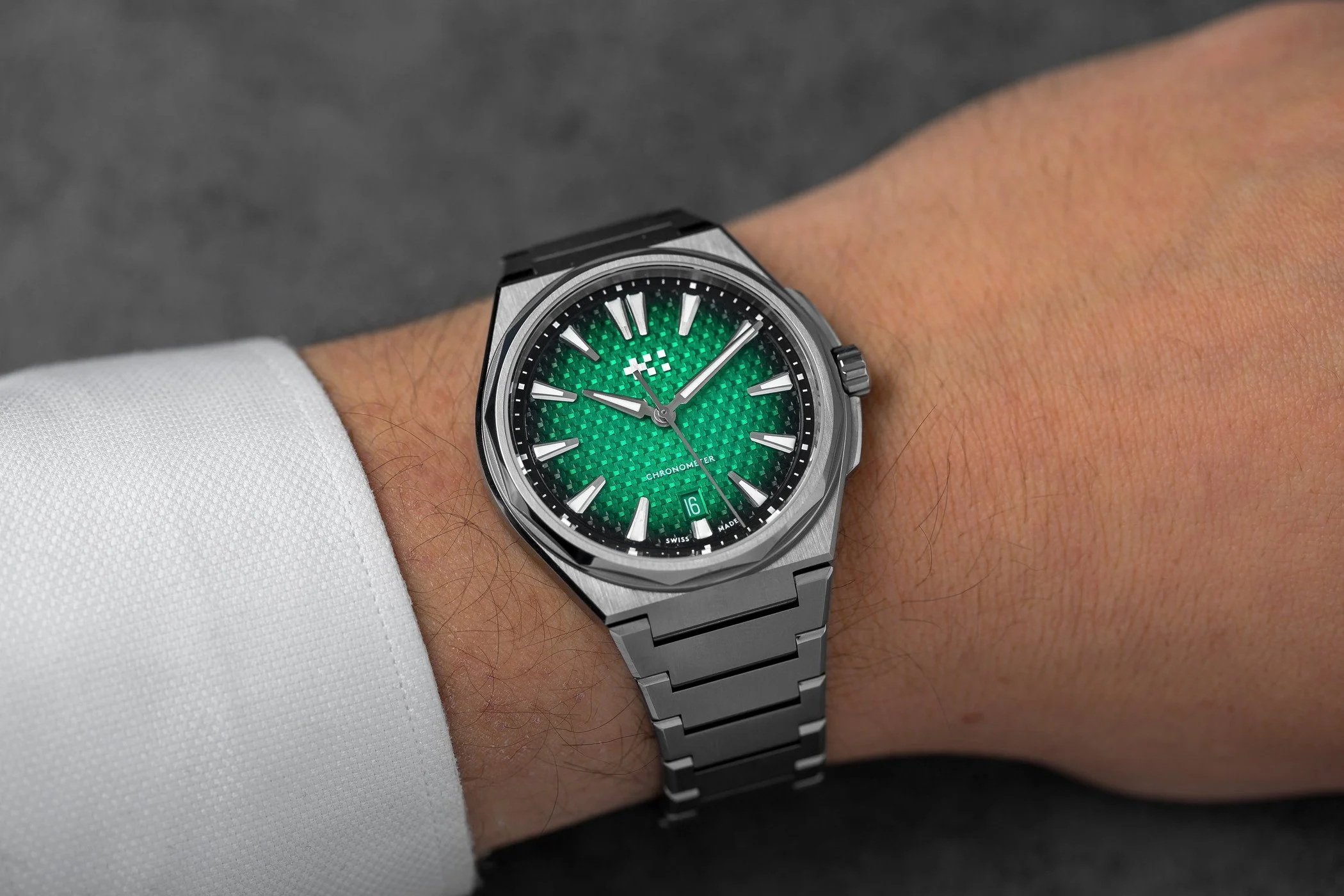
Case Size: 40mm, Thickness: 9.95mm, Lug-to-Lug: 44.3mm, Movement: Sellita SW200-1 COSC Automatic, Power Reserve: 38 Hours, Water Resistance: 100m, Crystal: Sapphire, Bracelet: Integrated Steel with Micro-Adjust, Price: $1,635 USD in Steel
If the PRX is the integrated-bracelet watch you buy to find out whether you like them, the Twelve is the one you buy once you know. Christopher Ward sells direct, which is how a watch with a COSC-certified movement, a dodecagonal bezel, a textured dial and a bracelet with on-the-fly adjustment comes in at $1,635, and the brand has been on a run for three years that has made it the most talked-about Swiss name under $2,000.
I reviewed the Twelve in titanium and called it one of the best luxury sport watches under $2,000, which I would still say about the steel version. Yes, there are hints of the Royal Oak and the Nautilus, and the design has its own ideas, from the twelve-sided bezel to the way the bracelet tapers. The case finishing is the thing that surprised me, and the clasp is the best in this band. The 40mm wears like a 39 because the lugs are short, and there is a 36mm if you want smaller.
The Christopher Ward The Twelve costs $1,635 USD in steel on the bracelet, and from $2,000 USD in titanium.
Doxa SUB 200T
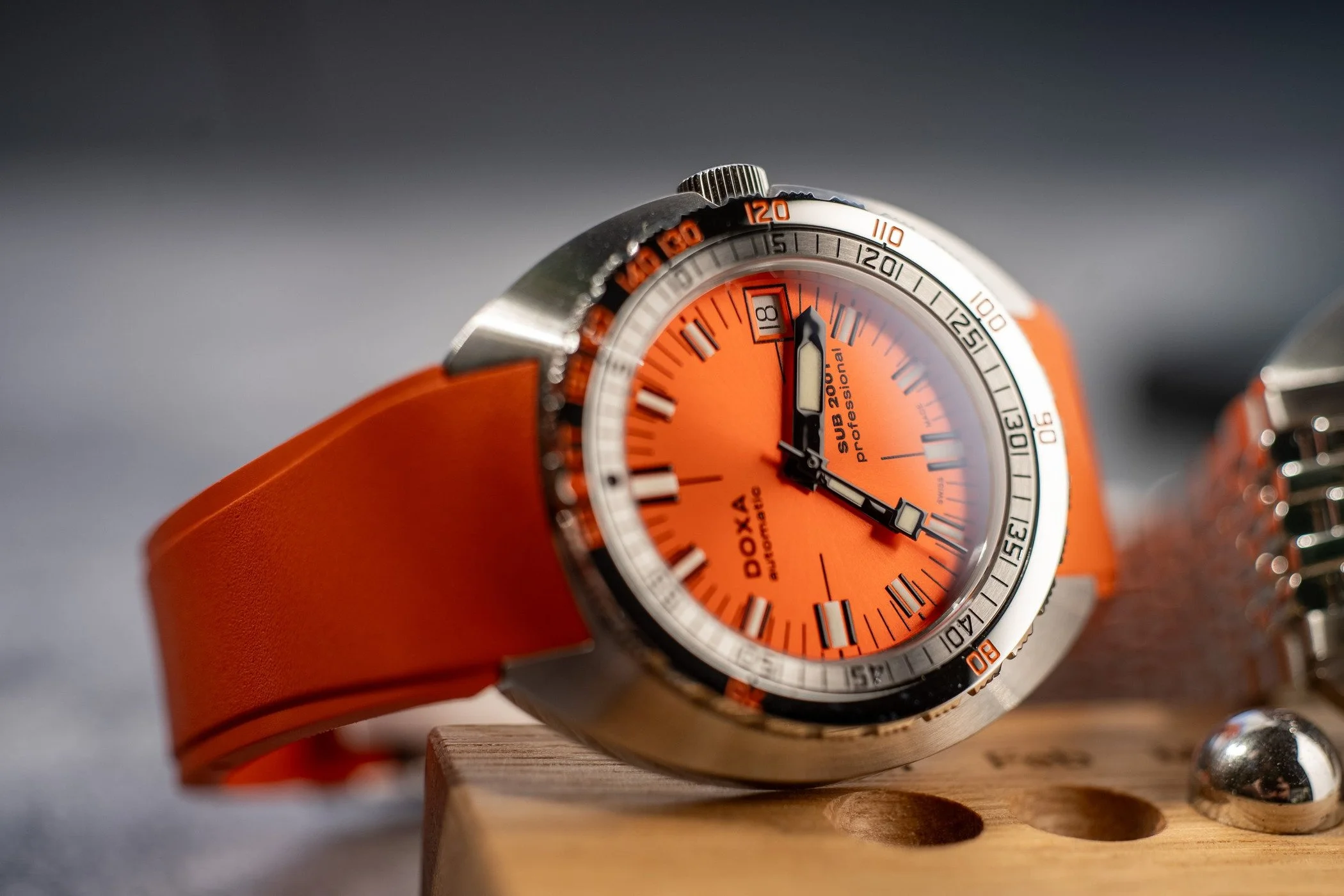
Case Size: 39mm, Thickness: 10.7mm, Lug-to-Lug: 41.5mm, Movement: Sellita SW200-1 Automatic, Power Reserve: 38 Hours, Water Resistance: 200m, Bezel: Unidirectional with No-Decompression Scale, Crystal: Sapphire, Price: $1,750 USD on Rubber, $1,790 USD on Bracelet
Doxa has been making watches since 1889 and dive watches since 1967, when it built the SUB 300 with Jacques Cousteau's input and put an orange dial on it because orange is the color that reads best underwater. That watch has never really left, and for most of the last fifty years the catch was the size, because a Doxa cushion case at 42mm wears like a 45. The SUB 200T, which arrived in 2024, is the same idea at 39mm, with the same no-decompression bezel, the same beads-of-rice bracelet and the same orange, and it is the first Doxa I would recommend to someone with an average wrist.
I covered the SUB 200T when it launched and have reviewed the SUB 300 Carbon, which taught me that the brand's cases are better finished than the price suggests and that nothing else on the market looks like one. The 200T gives up the in-house story to a Sellita SW200-1, and 38 hours of reserve is the one spec I wish were better. What you get in exchange is a watch with a real place in dive history, from a company that has been through a few owners and is still here, for less than a Black Bay 54 on rubber. The Professional in orange is the one to buy, because if you are going to own a Doxa, own the Doxa.
The Doxa SUB 200T costs $1,750 USD on rubber and $1,790 USD on the beads-of-rice bracelet.
Formex Essence 39
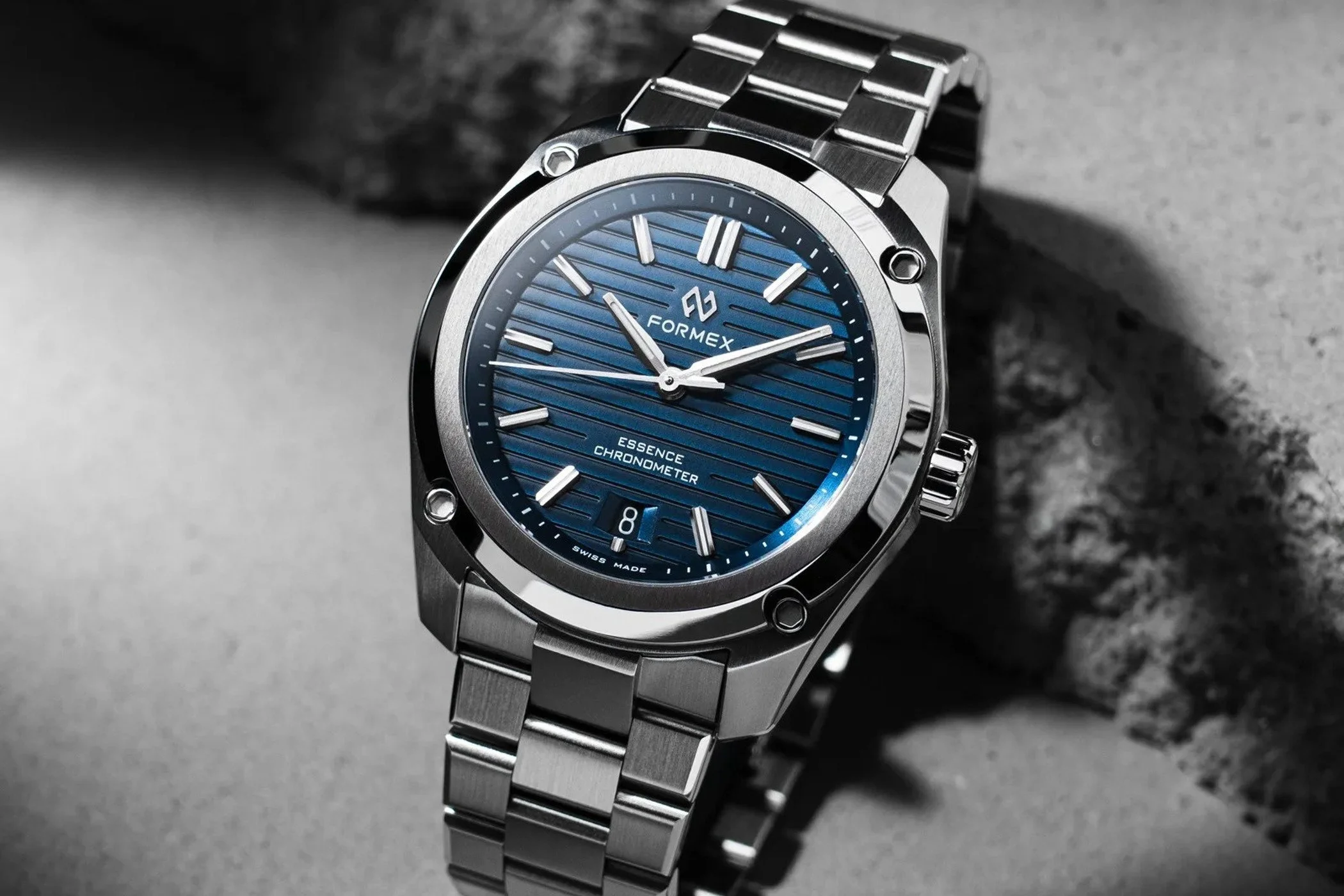
Case Size: 39mm, Thickness: 10.6mm, Lug-to-Lug: 45mm, Movement: Sellita SW200-1 COSC Automatic, Power Reserve: 41 Hours, Water Resistance: 100m, Case: Patented Suspended Case System, Crystal: Sapphire, Clasp: Patented Fine Adjustment, Price: from $1,850 USD
Formex is the Swiss brand that engineers first and designs second, and the Essence is what happens when that attitude meets a dress-sport watch. The case is suspended inside an outer frame on four springs, a system Formex patented for its chronographs in 1999, so the watch absorbs shocks that would otherwise go into the movement and into your wrist. The movement is COSC-certified, the clasp has a ratcheting fine adjustment that you operate with a thumb, and the whole thing is 10.6mm thick on a 39mm case that wears flat.
I have covered Formex since its Essence Ceramica Skeleton and the Essence 39 is the one I point people to, because it is a chronometer with a case you cannot get anywhere else for $1,850. It is also the watch on this list that nobody will recognize across a room, which some people count against it. I count it the other way.
The Formex Essence 39 costs from $1,850 USD, and $1,980 USD on the bracelet.
TAG Heuer Formula 1 Solargraph
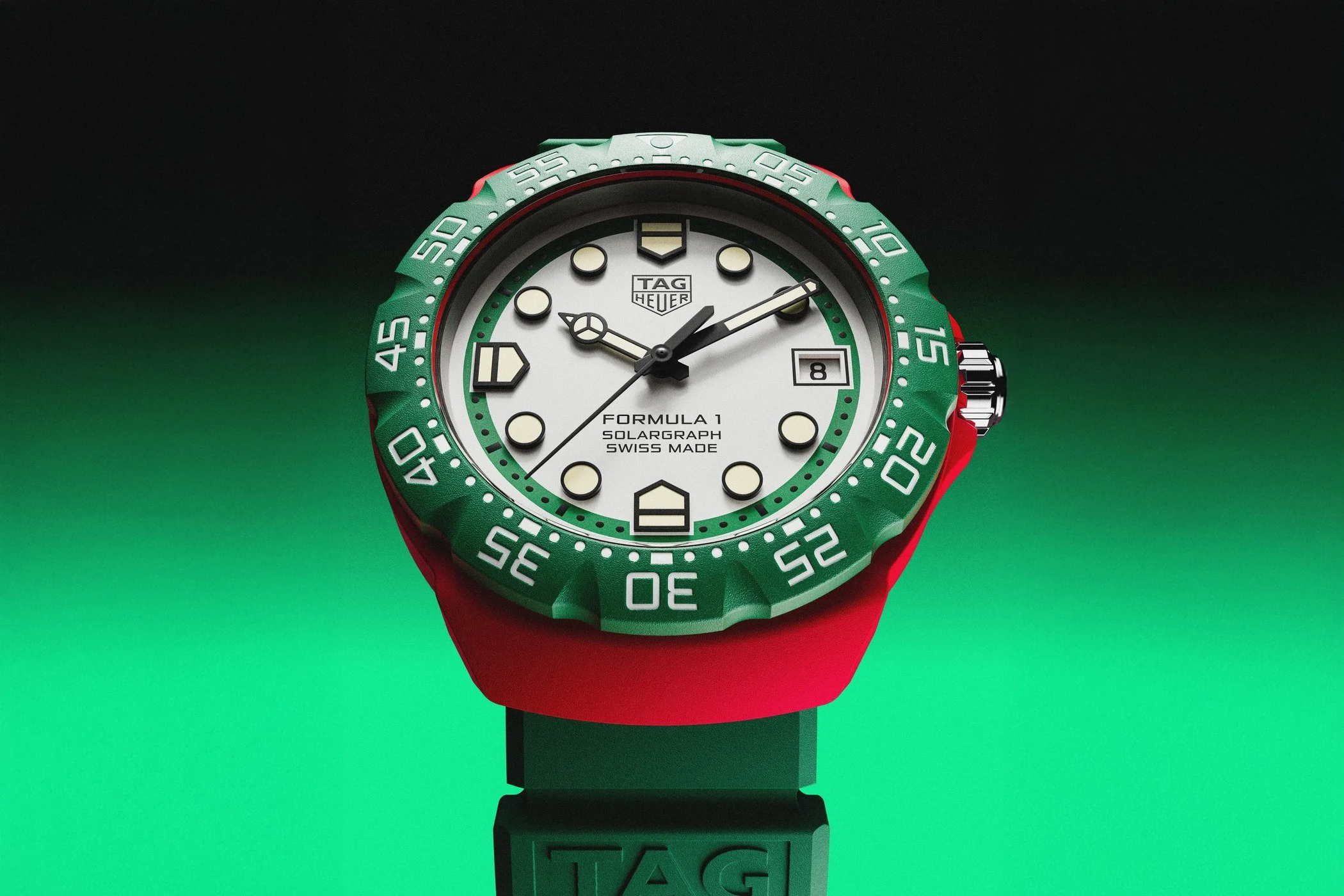
Case Size: 38mm, Thickness: 9.9mm, Lug-to-Lug: 45.5mm, Movement: TH50-00 Solargraph Solar Quartz, Power Reserve: 10 Months on a Full Charge, Water Resistance: 200m, Bezel: Bidirectional, Crystal: Sapphire, Price: $1,950 USD on Rubber, $2,050 USD on Bracelet
This is the one entry on the list without a mechanical movement, and it is here on purpose. TAG Heuer brought the Formula 1 back in 2025 as a 38mm solar-powered watch in the colors of the 1986 original, and it is the most fun anyone in Swiss watchmaking has had with a sub-$2,000 watch in years. The Solargraph movement charges off any light, runs ten months in the dark and is accurate to seconds a month, which means you can leave it in a drawer all winter and it will be right when you pick it up.
I covered the Formula 1 Solargraph at launch and the thing I did not expect was how well the case is finished for a watch that started life as a plastic quartz. It is the watch I would buy a 22-year-old who wants a real Swiss name on the dial, and it is the watch I would buy myself for a beach week. If you want the serious TAG Heuer, the Carrera starts at about $3,500 and I have reviewed the Carrera Glassbox, but it is not where this list lives.
The TAG Heuer Formula 1 Solargraph costs $1,950 USD on rubber and $2,050 USD on the bracelet.
Oris Divers Date
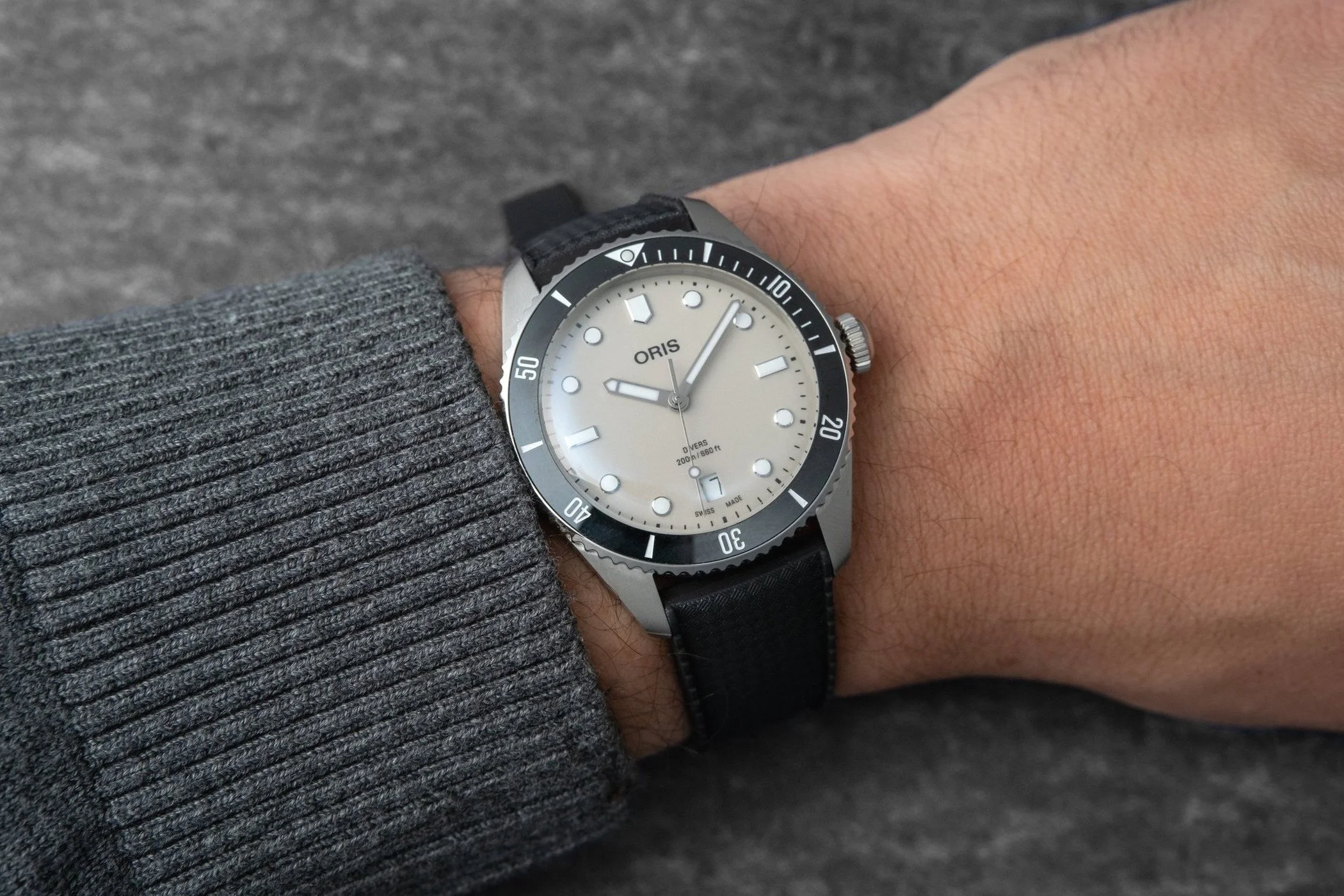
Case Size: 39mm, Thickness: 12mm, Lug-to-Lug: 46mm, Movement: Oris 733 (Sellita SW200-1) Automatic, Power Reserve: 41 Hours, Water Resistance: 100m, Bezel: Unidirectional Aluminum, Crystal: Domed Sapphire, Price: $2,800 USD
Oris is the brand that makes the strongest case that independent and accessible can be the same thing. It is still family-owned, it still makes mechanical watches only, and it has spent the last few years perfecting a dive watch collection that already was not broken. The Divers Date is the 2025 reworking of the Divers Sixty-Five, slimmer at 12mm, with a fully curved sapphire, a bracelet that was redesigned from scratch and a date at six that finally sits where it should.
I reviewed the Divers Date in beige and called it the best bang for your buck under $3,000, and the reason is the whole package rather than any one spec. It wears like a 38, it has the vintage proportions without the vintage compromises, and it comes from a company that will service it in thirty years. If you want the Oris with the five-day in-house movement, the Aquis Date Calibre 400 is $3,900 and I have reviewed that too, but the Divers Date is the one I would buy first.
The Oris Divers Date costs $2,800 USD on the bracelet.
$3,000 to $7,000: Established Luxury
This is the band the phrase was invented for. Longines, Rado, Tudor, Omega and Grand Seiko, the names that have been making watches for a century or more, plus Nomos, which makes its own movements in Glashütte, and one eight-year-old brand I will defend below. You pay for the movement, the name and the history. Here is where I think that money is best spent.
Longines Spirit Pilot 39
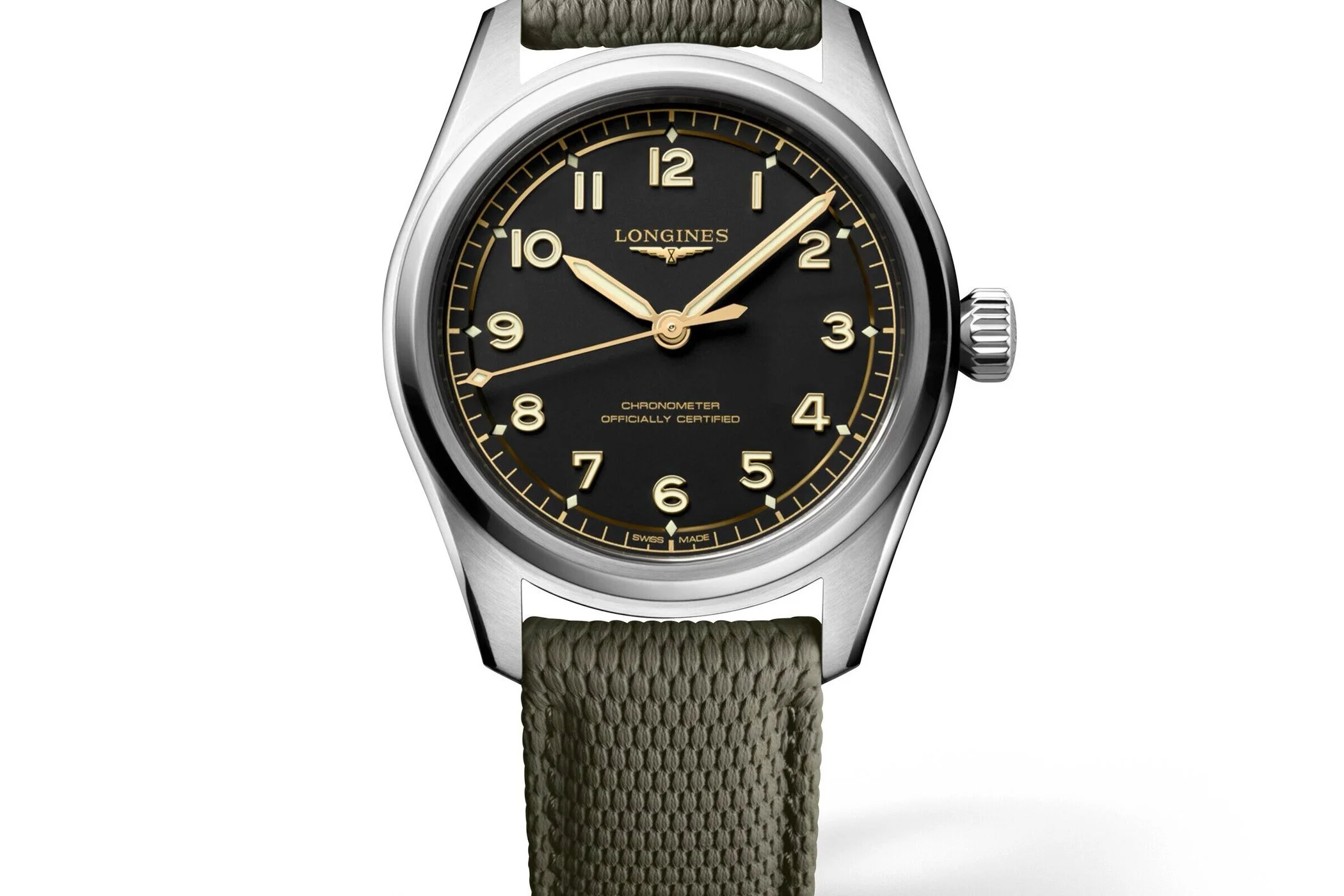
Case Size: 39mm, Thickness: 11.5mm, Movement: Longines L888.4 COSC Automatic, Silicon Hairspring, Power Reserve: 72 Hours, Water Resistance: 100m, Crystal: Sapphire, Dial: No Date, Price: $3,100 USD on Bracelet, $2,700 USD on Rubber
Longines is the brand every list like this has to include, and the Spirit is the Longines to include. It is a pilot's watch in the loose sense, with big numerals and a five-star chronometer dial, and in October 2025 Longines reworked it into the Spirit Pilot, a 39mm case that is the right size with no date, which made the dial better, and a movement that is COSC-certified, has a silicon hairspring and runs for three days. Longines sells more watches than almost any Swiss brand you can name, which is why the finishing on a $3,100 watch looks the way it does: the volume pays for the tooling.
I have handled the Spirit at every Watches and Wonders since it launched and covered the HydroConquest GMT, but I have not reviewed the Spirit Pilot on the wrist, so take this entry as informed rather than lived with. What I can tell you is that it is thicker than it looks in photos, that the bracelet is worth the $400 over the rubber, and that it is the watch in this band most likely to be the only watch someone owns for a decade.
The Longines Spirit Pilot 39 costs $3,100 USD on the bracelet and $2,700 USD on rubber.
Nomos Tangente 38 Date
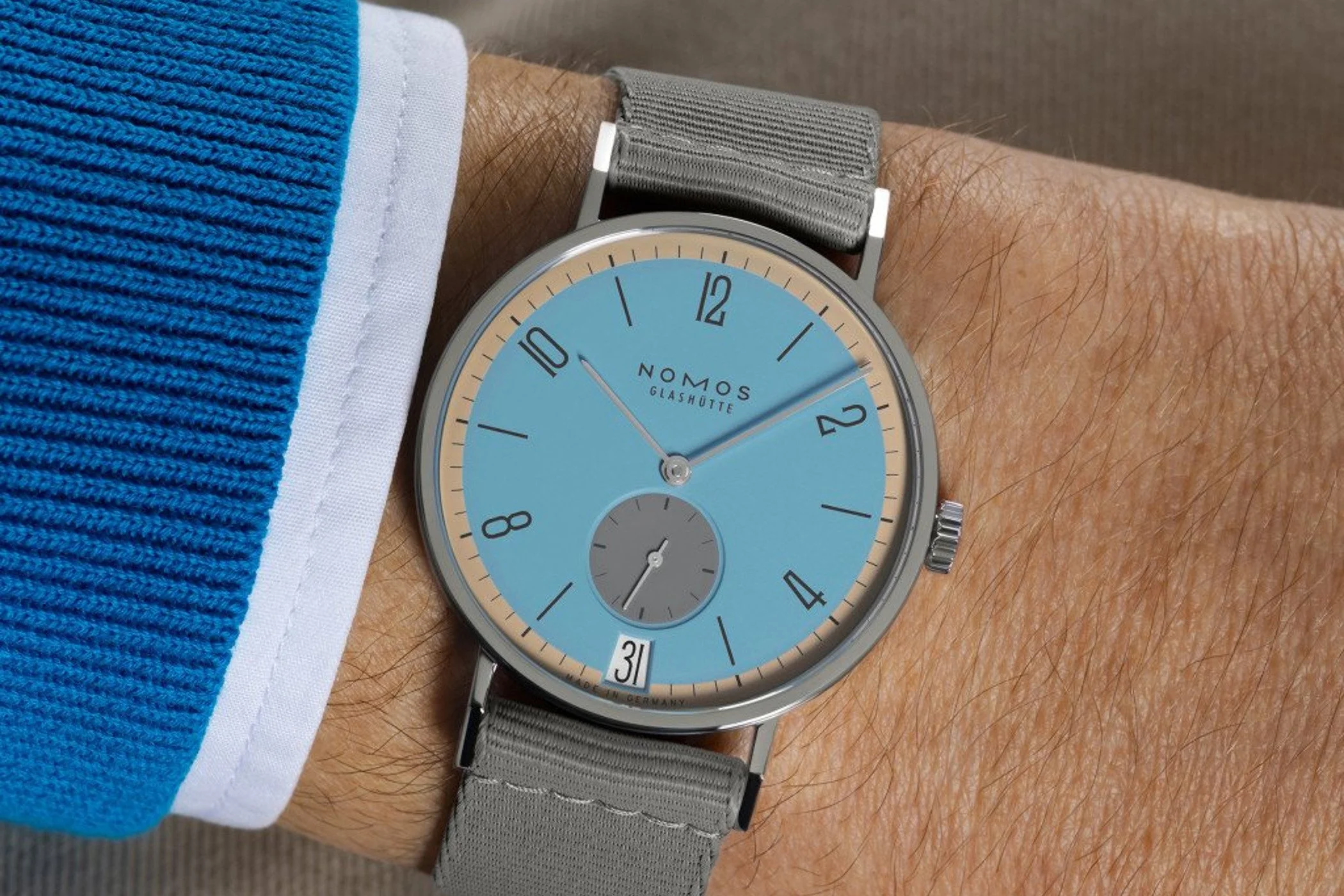
Case Size: 37.5mm, Thickness: 6.9mm, Lug-to-Lug: 47mm, Movement: Nomos DUW 4101 Hand-Wound, In-House, Power Reserve: 43 Hours, Water Resistance: 30m, Crystal: Sapphire, Strap: Horween Cordovan, Price: $3,320 USD
Nomos is the youngest of the old names in this band, founded in 1990, but it makes its own movements in Glashütte, the small German town that is to Germany what the Vallée de Joux is to Switzerland. The Tangente is a Bauhaus dress watch that has not changed much since 1992 because it did not need to, and the 38 Date is the version with the big date window at six and a hand-wound caliber that is 6.9mm thick with the case around it. On the wrist that is the whole story: a watch this thin, with a movement this well finished, from a company that builds its own escapement.
I covered the Tangente 38 Date when it launched and have handled plenty of Nomos at Watches and Wonders, though I have not had this one on for a review. The caveats are the ones that come with every Tangente: 30 meters of water resistance, long straight lugs that make it wear bigger than 37.5mm, and a strap that is lovely and not cheap to replace. If you want a dress watch that people who know watches will notice, this is the one at the price.
The Nomos Tangente 38 Date costs $3,320 USD on the Cordovan strap in the Nomos US store.
Rado Captain Cook High-Tech Ceramic
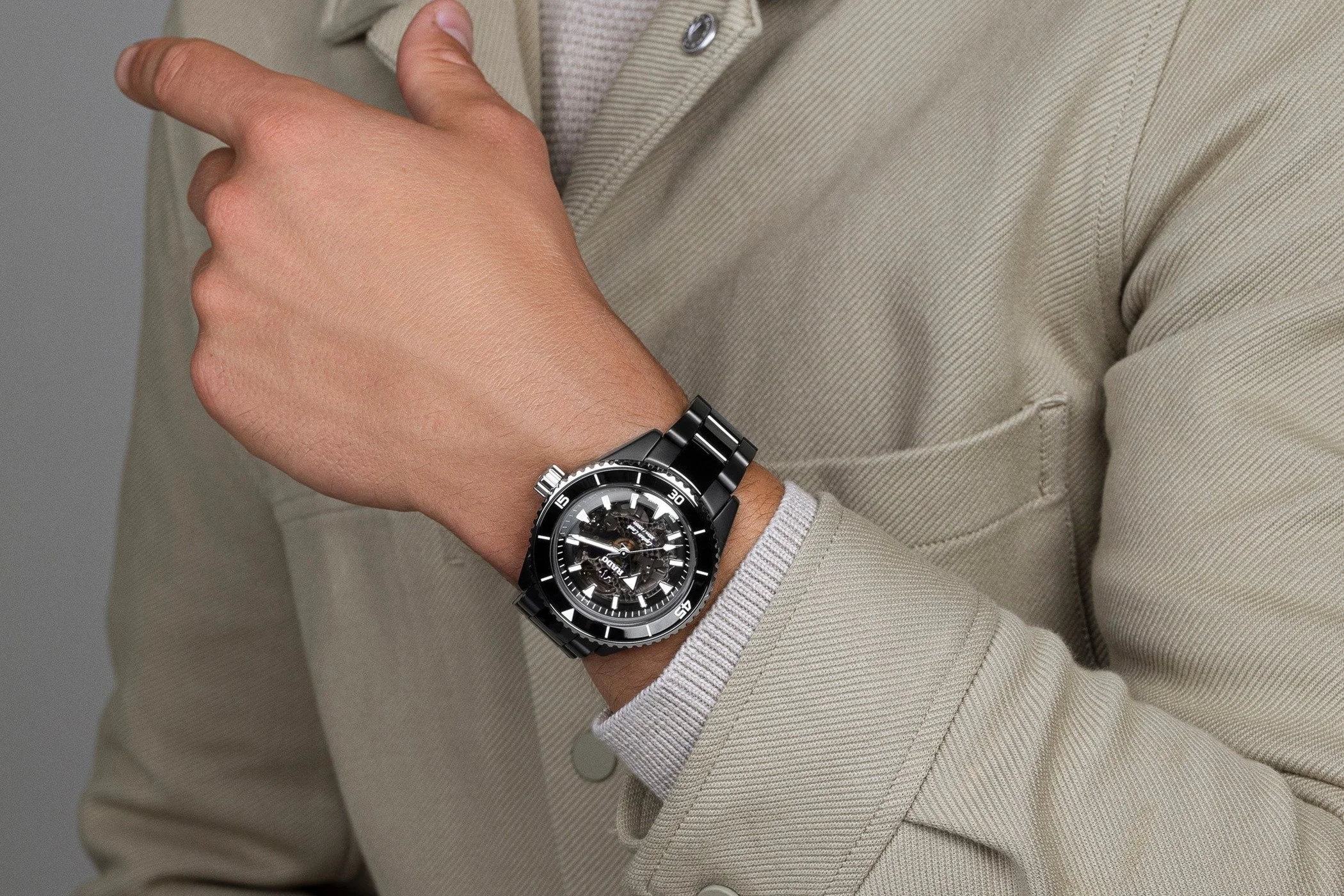
Case Size: 43mm, Thickness: About 14.6mm, Lug-to-Lug: About 49.8mm, Material: High-Tech Ceramic Case and Bracelet, Movement: Rado R734 Automatic, Nivachron Hairspring, Power Reserve: 80 Hours, Water Resistance: 300m, Bezel: Unidirectional Ceramic, Crystal: Sapphire, Price: $4,600 USD
Rado is the brand that figured out ceramic before anyone else cared, with a full ceramic watch in 1986 and the material know-how of the Swatch Group behind it ever since, and the Captain Cook High-Tech Ceramic is where that history meets a proper dive watch. The case, bezel and bracelet are all high-tech ceramic, which means the watch will look the same in twenty years because the material does not scratch, and the dial is a smoked sapphire that lets you see the movement without turning it into a skeleton. The R734 inside runs 80 hours, has an antimagnetic Nivachron hairspring, and the whole thing is rated to 300 meters.
I have not reviewed a Captain Cook, and this is the one entry on the list I have not had on my own wrist, so weigh that accordingly. What I can tell you from the spec sheet and from people I trust who have worn it is that 43mm of ceramic does not wear like 43mm of steel, because the material is lighter and the case has almost no hard edges, and that the black is the material itself rather than a coating that will wear through at the clasp. It is also the one watch in this band that nobody will mistake for anything else. If you want the ceramic and a conventional dial, the High-Tech Ceramic Diver version is $4,250 USD, and if you want it in steel, the 42mm Captain Cook Automatic is $2,650 USD and belongs in the first band.
The Rado Captain Cook High-Tech Ceramic costs $4,600 USD on the ceramic bracelet.
Tudor Black Bay 54
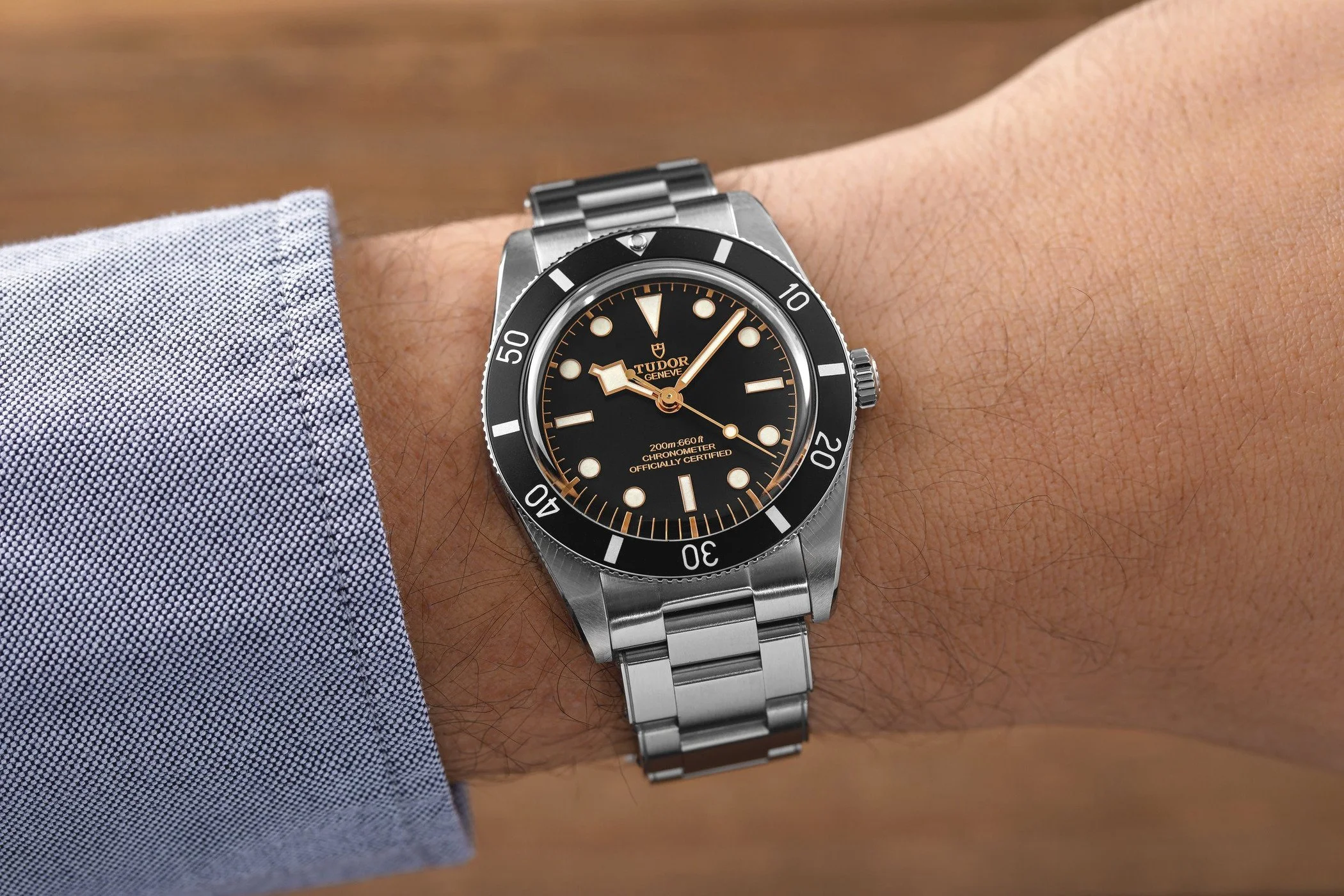
Case Size: 37mm, Thickness: 11.2mm, Lug-to-Lug: 46mm, Movement: Tudor MT5400 Manufacture Automatic, COSC, Power Reserve: 70 Hours, Water Resistance: 200m, Bezel: Unidirectional Aluminum, Crystal: Domed Sapphire, Bracelet: Steel with T-Fit Clasp, Price: $4,725 USD on Bracelet, $4,475 USD on Rubber
The Black Bay is the watch that made Tudor matter again, and I know that because I bought the original one, the red-bezel ETA version, when it came out in 2012. The 54 is the one I would buy now. Tudor released it in 2023 as a tribute to the 1954 Oyster Prince Submariner, 37mm instead of the original Black Bay's 41, with the in-house MT5400 that is chronometer-certified and runs 70 hours, a slimmer 11.2mm case and the T-Fit clasp that adjusts on the wrist. When I went hands-on with the Black Bay 54 I said it might be my favorite Black Bay to date, and nothing since has changed that.
This is the watch the phrase entry-level luxury gets used on most, and it is the one that best earns the money. The movement is Tudor's own, the warranty is five years, and the resale market is the deepest of anything on this list. The questions to ask are whether 37mm is too small for you, and it is not for most wrists, and whether you need a date, because neither the 54 nor the 39mm 58 has one. If you do, it is the 41mm Black Bay. If you want the 39mm 58 instead, the current version costs $4,975 USD on rubber and $5,225 USD on the steel bracelet, so the 54 is now the cheaper of the two. Either way, this is where the $3,000 jump from the first band buys the most.
The Tudor Black Bay 54 costs $4,725 USD on the bracelet and $4,475 USD on rubber.
Atelier Wen Perception V3
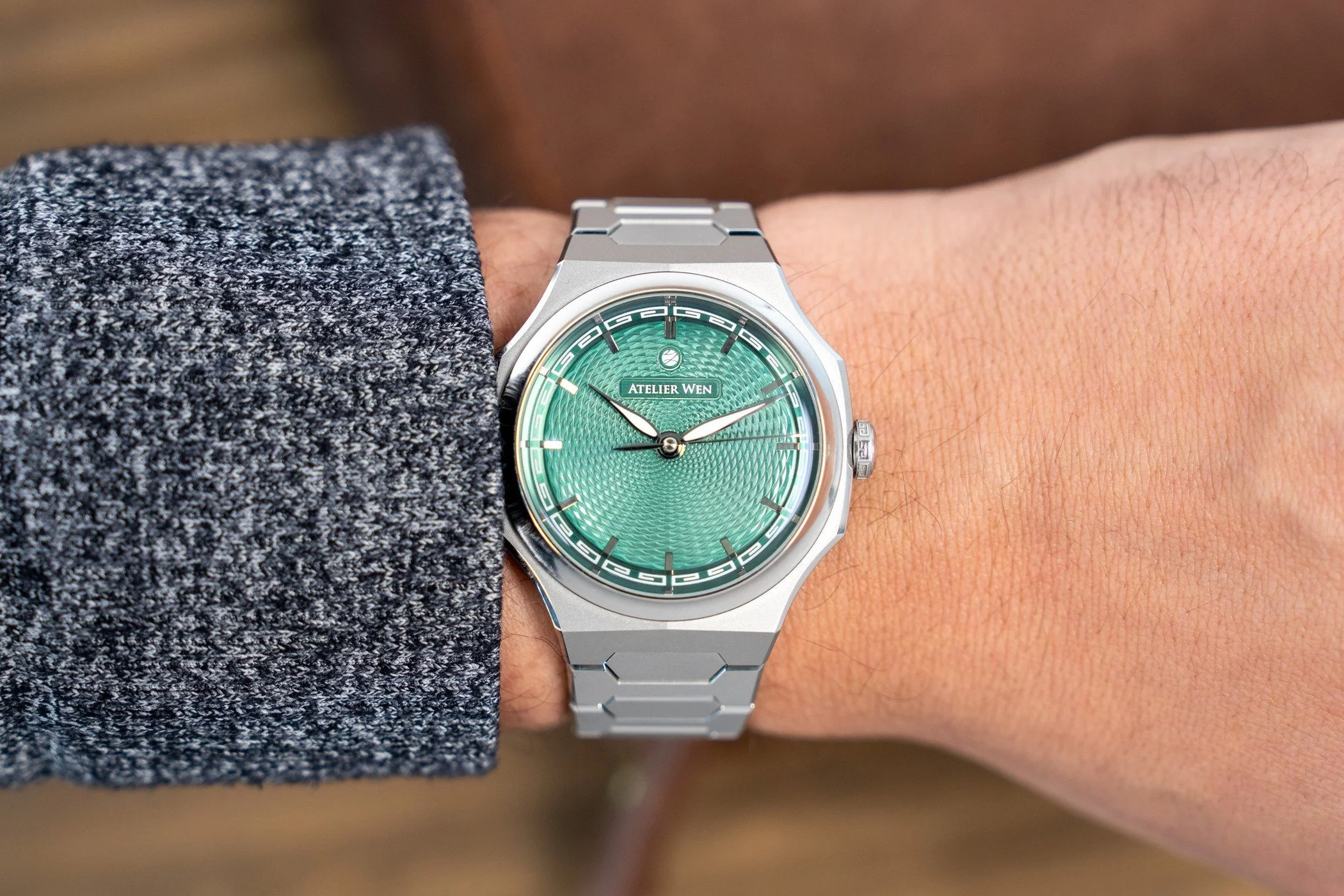
Case Size: 40mm, Thickness: 10.4mm, Lug-to-Lug: 47mm, Material: 904L Steel, Micro-Blasted with Polished Accents, Movement: Pequignet EPM03 Automatic, Customized, Water Resistance: 100m, Crystal: Double-Domed Sapphire, Caseback: Sapphire, Price: $4,850 USD
Here is the exception to my own rule. Atelier Wen is eight years old, it has no boutiques and no service network to speak of, and it is on this list anyway because it is the one young brand I would put my own money into at this price. It was started by two Frenchmen who fell for Chinese culture, it makes its watches with the best artisans it can find in China, and the Perception is the integrated-bracelet watch that made its name, with a hand-guilloché dial that nothing else under $10,000 can match. The V3 is the current version. The movement is now a French manufacture caliber from Pequignet in Morteau, reworked with curved bridges filled with blue aventurine lacquer, and the Yún, with its bamboo-green dial and a fully micro-blasted case and bracelet, is the first new core color since launch.
I have reviewed every generation of this watch, and the V3 Yún is the best of them. It wears smaller than 40mm because the lugs curve down and the first links follow them, the extra millimeter of thickness over the old version is a fair trade for the movement you see through the back, and the sandblasted finish makes the dial the only thing you look at. The price has gone from $3,288 to $4,850 with the French movement, so the days of calling it a bargain are over, and the brand sells in windows, with the current batch delivering in March 2027. If you can wait, it is the one watch on this list that nobody else at the table will have.
The Atelier Wen Perception V3 Yún costs $4,850 USD, with the Piào and Xiá dials at the same price.
Frederique Constant Classic Moonphase Manufacture
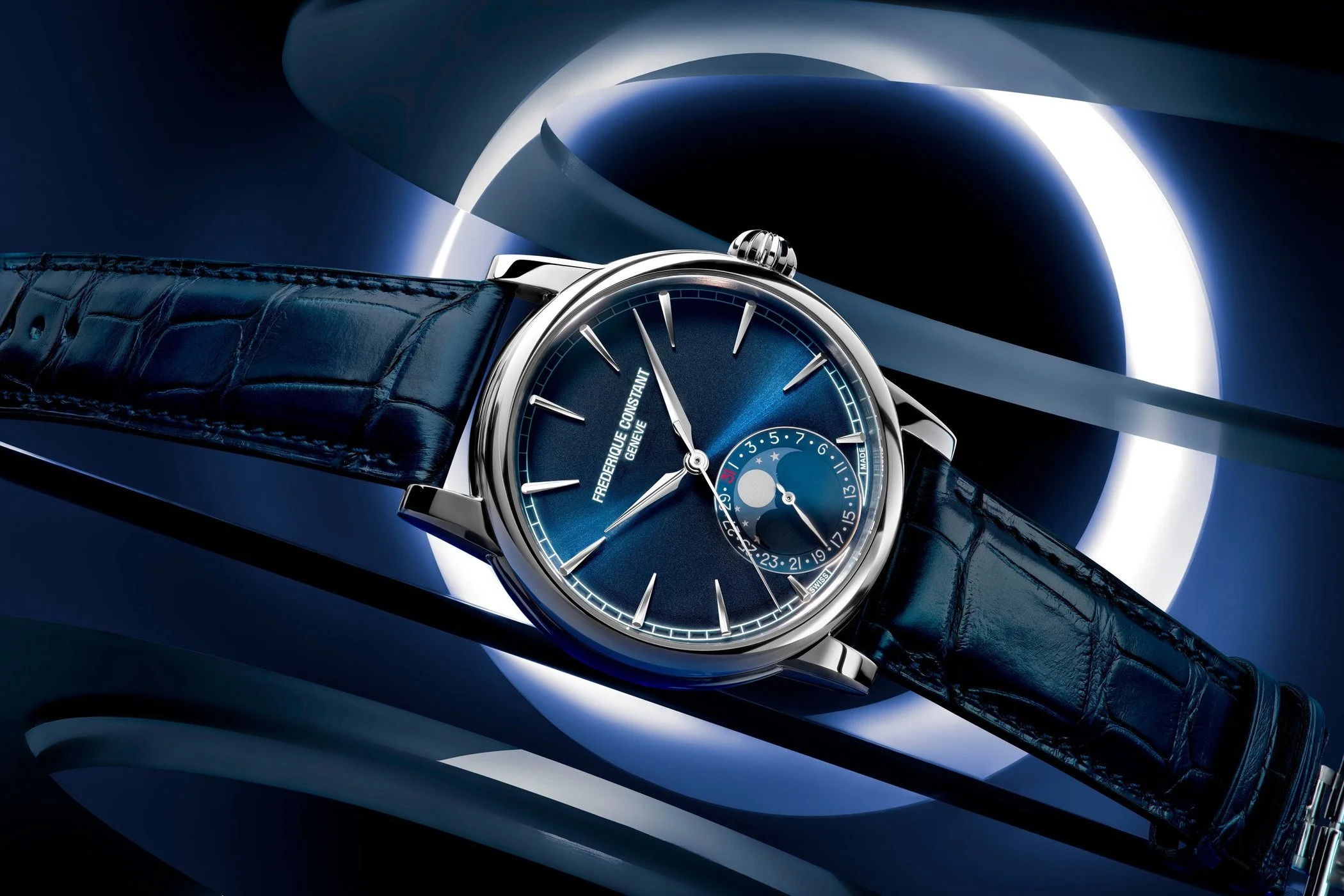
Case Size: 40mm, Thickness: About 11.5mm, Lug-to-Lug: 47mm, Movement: FC-716 Manufacture Automatic, Moonphase and Date, Power Reserve: 38 Hours, Water Resistance: 50m, Crystal: Convex Sapphire, Caseback: Sapphire, Price: $4,995 USD
Frederique Constant is the brand that turns in-house into something you can afford, and the Classic Moonphase Manufacture is the watch that makes the point. It is a 40mm dress watch with a moonphase and a pointer date, both driven by a movement Frederique Constant designed and builds itself in Geneva, which it then sells for less than $5,000. The dial is a sunray with applied markers and a moon disc at six, and the case is slim enough to pass under a cuff.
I covered the Classic Moonphase Manufacture when the latest version launched and have had Frederique Constant on the wrist at shows for years without reviewing this reference, so the same caution as the Longines applies. What I can say is that a manufacture moonphase at $4,995 has no real competition in Switzerland, that the blue dial is the one to get, and that it is the watch on this list that will make a watch person ask what it is.
The Frederique Constant Classic Moonphase Manufacture costs $4,995 USD in steel.
Omega Seamaster Diver 300M
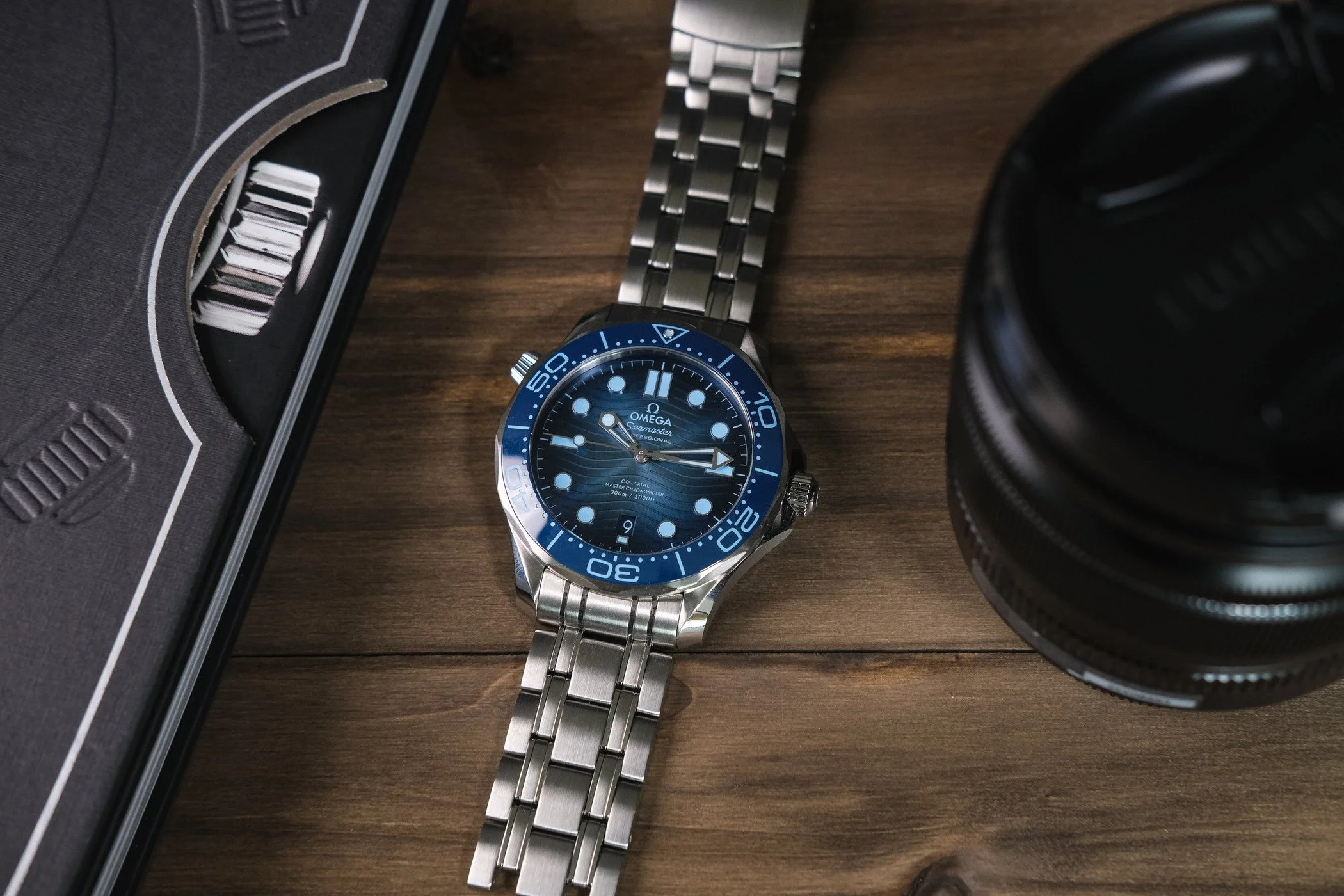
Case Size: 42mm, Thickness: 13.6mm, Lug-to-Lug: 50mm, Movement: Omega 8800 Co-Axial Master Chronometer, Power Reserve: 55 Hours, Water Resistance: 300m, Bezel: Unidirectional Ceramic, Crystal: Sapphire, Price: $6,700 USD on Bracelet
I nearly left Omega off this list, because the Seamaster Diver 300M in steel is $6,700 in 2026 and five years ago it was $5,200, which is the price creep I complained about in the first place. It stays because it is still the best watch Omega makes for the money and because at the top of this band it is the one true alternative to a Submariner you can actually buy. The 8800 inside is a Master Chronometer, which means it is tested by METAS to 15,000 gauss and zero to plus five seconds a day, the bezel is ceramic, the dial is laser-engraved ceramic with waves, and the helium valve at ten is the detail everyone argues about.
I reviewed the Summer Blue version and have reviewed the Seamaster 300 as well. It is a big watch, 42mm and 50mm lug-to-lug, and it wears like one, which is the main reason to try it on before you buy. If it fits, it is the most watch on this list by the specs, and the one that will still look current when the trends move on.
The Omega Seamaster Diver 300M costs $6,700 USD on the bracelet in steel.
Grand Seiko Snowflake SBGA211
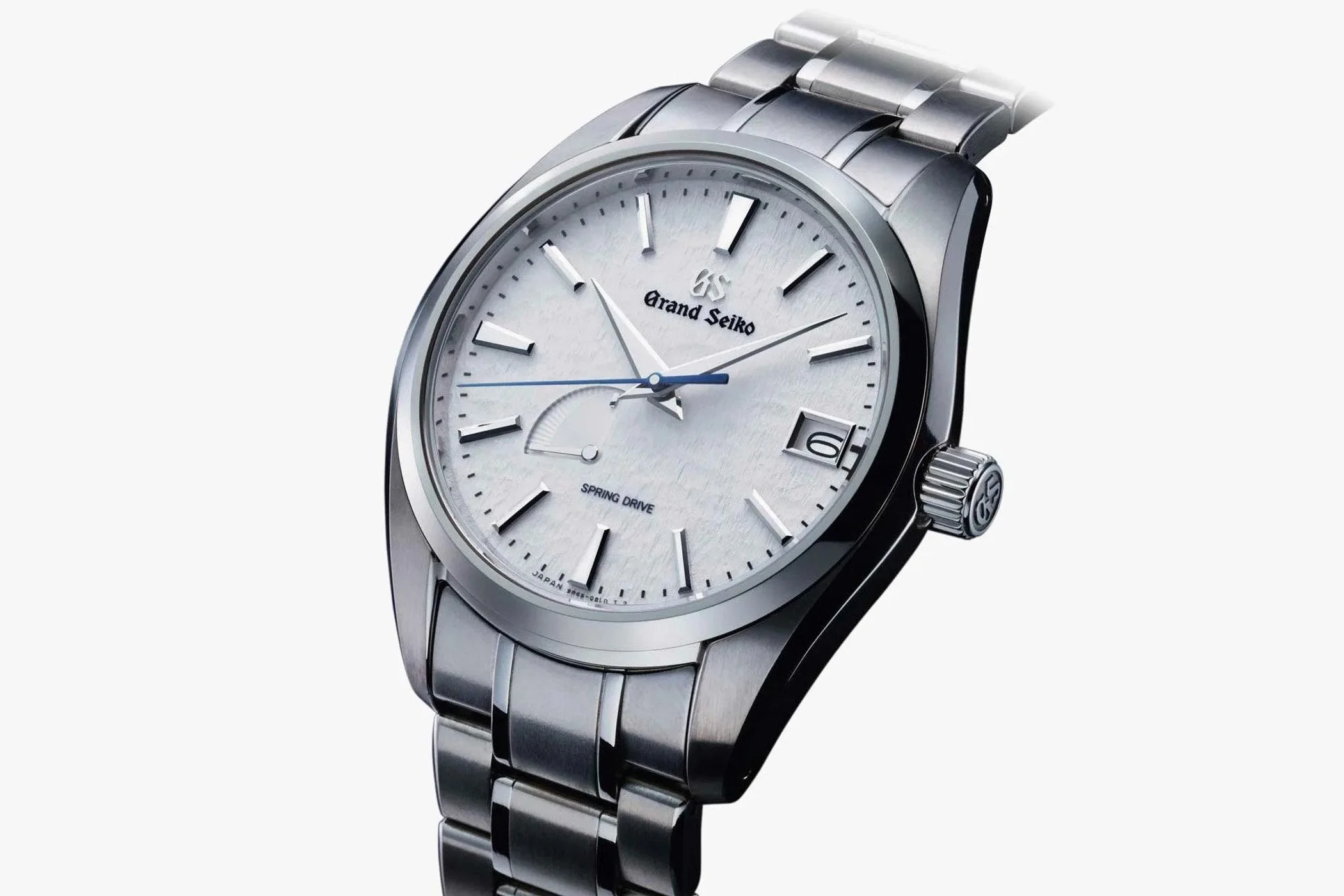
Case Size: 41mm, Thickness: 12.5mm, Lug-to-Lug: 49mm, Material: High-Intensity Titanium, Movement: Grand Seiko 9R65 Spring Drive, Power Reserve: 72 Hours, Accuracy: Plus or Minus 15 Seconds a Month, Water Resistance: 100m, Crystal: Sapphire, Price: $6,900 USD
The Snowflake is the Grand Seiko, the one with the dial that looks like fresh snow in Shinshu and the Spring Drive movement with the seconds hand that glides instead of ticking, and at $6,900 it is the ceiling of this list. It is here because nothing else at the price is finished this way. The case is Zaratsu-polished titanium that looks like a mirror and weighs nothing, the dial is textured in a way that photographs cannot capture, and Spring Drive is a movement nobody else makes, accurate to a second a day with a mainspring doing the work.
I have toured the Grand Seiko studios and reviewed the White Birch, which is the Snowflake's mechanical sibling at a higher price, and the Snowflake is the one I tell people to buy first. The one thing to know is the size. It is 41mm and 49mm lug-to-lug, which is larger than it should be for a watch this elegant, and the titanium hides it on the wrist better than steel would. If it is too big, the 40mm SBGA413 Shunbun is the same idea in a smaller case.
The Grand Seiko Snowflake SBGA211 costs $6,900 USD.
Which Entry-Level Luxury Watch Should You Buy?
If you have $2,000, buy the Christopher Ward Twelve if you want an integrated bracelet, the Doxa SUB 200T if you want a diver with a story, the Oris Divers Date if you can stretch to $2,800, or, with my bias noted, the Wren Diver 38 if you want the thin one. If you have $5,000, buy the Tudor Black Bay 54 and stop looking, unless you want the watch nobody else will have, in which case it is the Perception. If you want a dress watch at any of these prices, it is the Nomos. And if you have $7,000 and want the watch that will stop a collector in the street, it is the Snowflake.
Whatever you buy, buy it because you want that watch, not because somebody told you it was the proper first rung. The ladder is a story the industry tells. The watches are real, and the good ones are good at every price on this list.