
Great Vintage Rolex Watches for Under $10,000

Believe it or not, there are still some “deals” to be had.
While the days of snagging a clean Datejust for $2,500 and a nifty GMT-Master II for $5,000 may be long behind us, there are still numerous vintage Rolex models that can be had for well under $10,000 — and even under $5,000, provided you know a) what to look for and b) where to look for one. For you serious “heads” out there, don’t expect to source a gilt-dial Sub or a rare double-signed Daytona for this kind of money, ’cause it ain’t gonna happen. But cool Oyster Perpetuals and Air-Kings, or even white-dialed “Polar” Explorer IIs? Eminently possible.
As always, you should pay top dollar for examples in premium condition, prioritizing clean dials, correct parts, and, to the extent possible, unpolished cases. Dealers such as Wind Vintage, Wanna Buy a Watch, Second Time Around, Craft + Tailored, Oliver & Clarke, and others are specialists in these kinds of pieces and can be relied upon to source excellent examples. And while you can certainly find a good deal on eBay if you know what you’re looking for, well…you better know what you’re looking for. Read books like The Vintage Rolex Field Guide and scour the greater horological internet for information before making such a purchase.
When perusing our guide below, keep in mind a few key things: 1) not every reference discussed will have every characteristic discussed, as Rolex often transitioned through several “marks” within one reference as technology evolved; 2) production years are approximate, generally to within one calendar year 3) we’ve done our best to approximate price ranges despite market fluctuations. Keep in mind, however, that outlier examples of a given watch — a double-signed dial, or a special metal, etc — can command a price well outside the quoted range.
Most of all — have fun. These are watches, after all. We’re not saving the world, here!
Rolex Datejust ref. 1601/1603 ($5,000-$8,000)
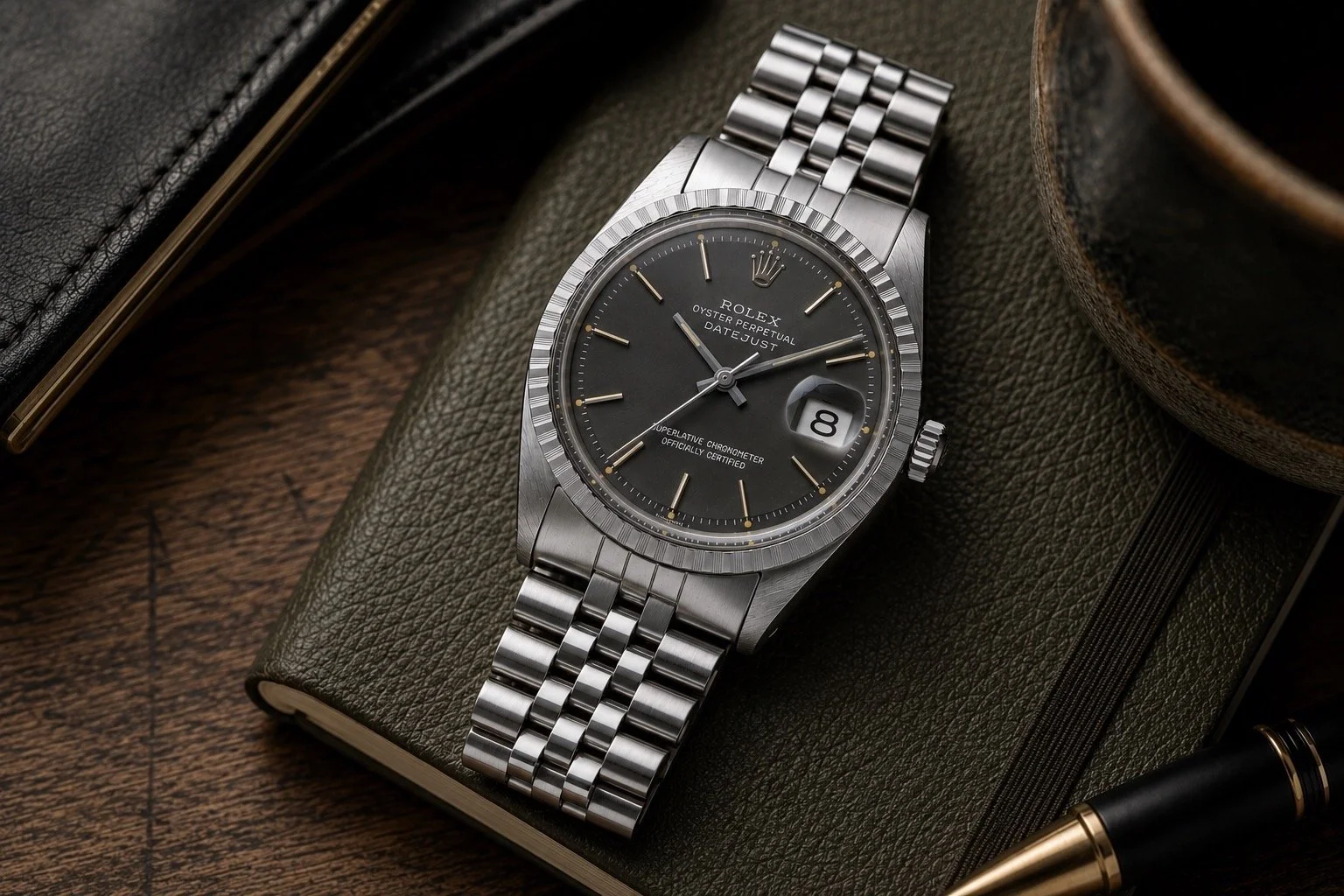
Though they weren’t the very first Datejust references — that honor would go to the ref. 4467 — the refs. 1601 and 1603 are generally considered the “OG” DJs by many collectors. Why? Because if you take a look at these watches and compare them, side by side, to modern versions, you’ll realize that they were effectively fully formed way back in the 1960s. A stainless steel case measuring 36mm; a matching Jubilee or Oyster bracelet; a “pie-pan” dial featuring applied baton indices; the classic magnified date window at 3 o’clock; an automatic Rolex movement. And, of course, the iconic bezel: On the ref. 1601, it’s a fluted bezel in white gold, whereas on the ref. 1603, it’s an engine-turned design. The 1601 will run you a bit more by virtue of the gold content, but either way, you’re getting a killer, dressy everyday watch.
Rolex Datejust Oysterquartz ref. 17000 ($6,000-$10,000)
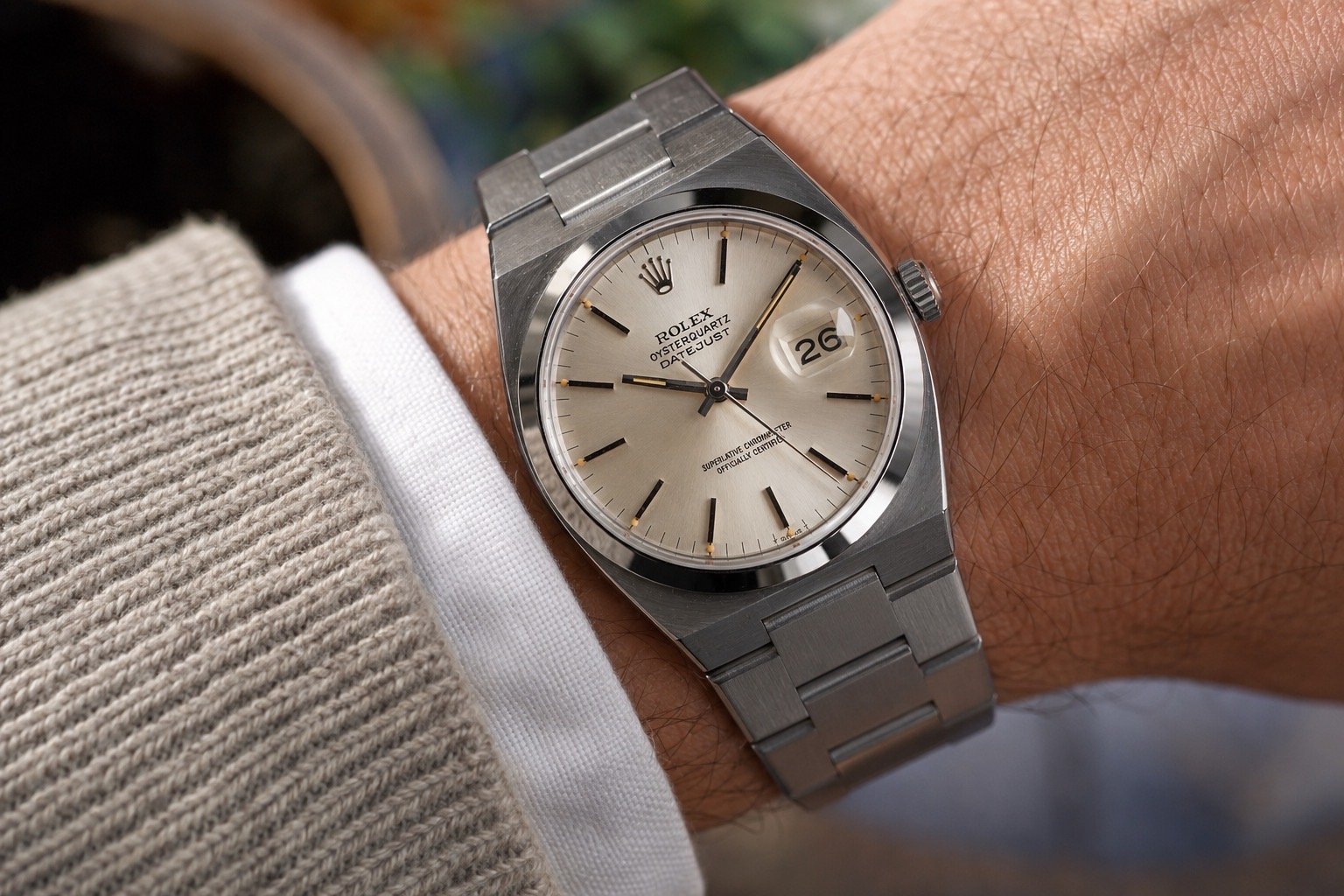
While Rolex launched a quartz watch using the famed Beta 21 movement as early as 1970, it was the ref. 17000 (and two-tone ref. 17013) that exemplified the Crown’s powers of innovation. Unlike the great majority of cheap quartz movements, the cal. 5035 — produced in house following five years of R&D — was a thing of sophistication and beauty: based upon a stepped motor driving a mechanical escapement, it features a traditional gear train, a pallet fork, an escape wheel, and 11 jewels. The case and bracelet design further differentiate it from similar (yet mechanical) watches in the brand’s catalog: sharp and angular, it features a tonneau-shaped housing that transitions seamlessly into the bracelet in the manner of Genta-designed “luxury sports watches” such as the Nautilus and Royal Oak.
Rolex Oyster Perpetual ref. 1002 ($4,000-$5,000)
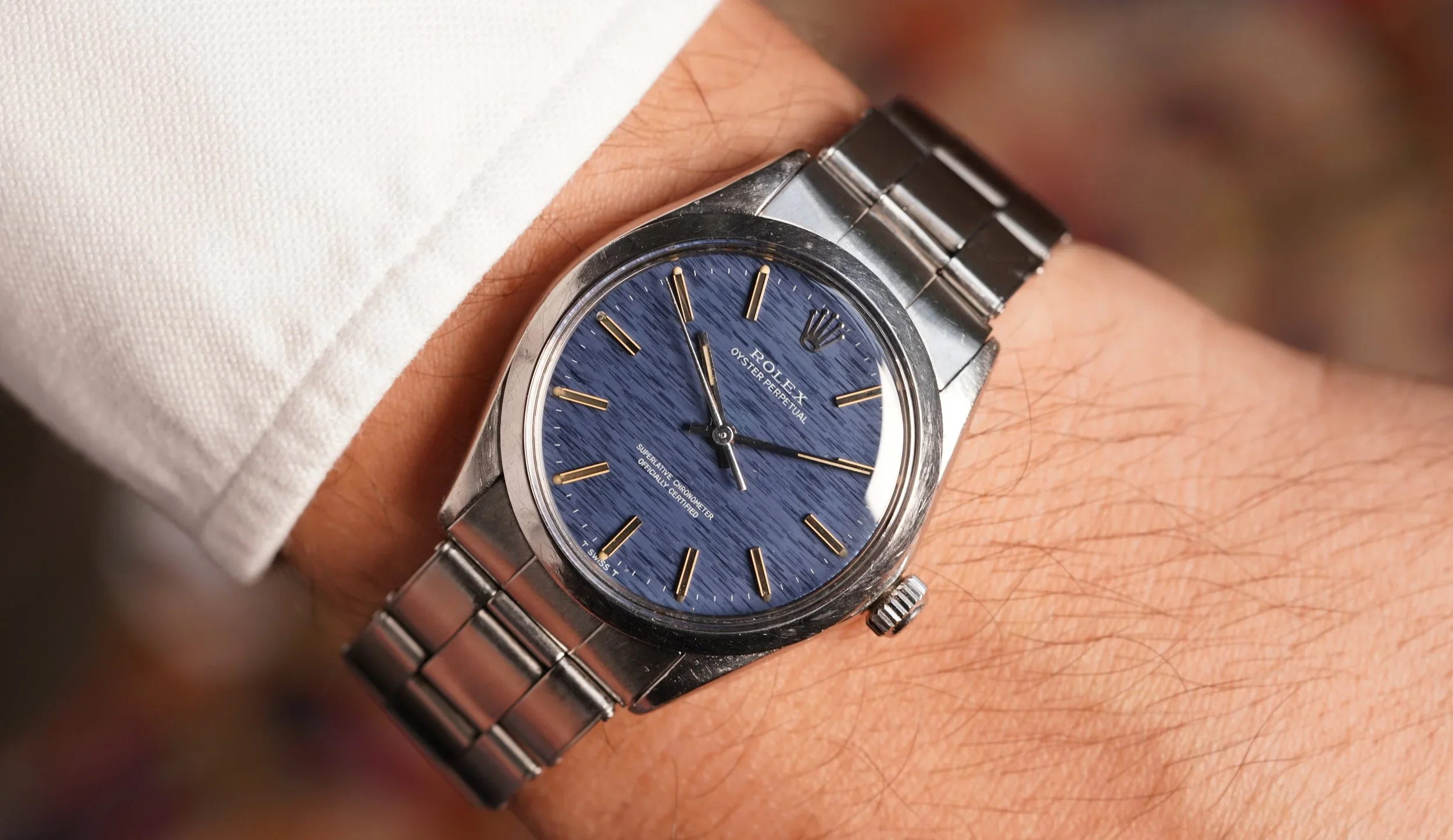
Photo Courtesy of Wind Vintage
There are few purer expressions of the Rolex design philosophy than the Oyster Perpetual ref. 1002, produced between approximately 1960 and 1988. Measuring 34mm in stainless steel and typically paired to a matching Oyster bracelet, it features no date window, no additional time zone, no rotating bezel — just a smooth bezel, an acrylic crystal, a time-only dial available in a wide variety of configurations, and a robust, easy-to-service automatic Rolex movement. Slim and easy-wearing, most examples feature silver sunburst, black gloss, blue sunburst, or champagne coloration with applied baton indices and a matching handset, while rarer examples boast Explorer-style 3-6-9 dials or “linen” patterns. Though prices for these beauties have increased substantially over the years, they still represent one of the best buys in the Rolex cinematic universe.
Rolex Air-King ref. 5500 ($4,000-$6,000)
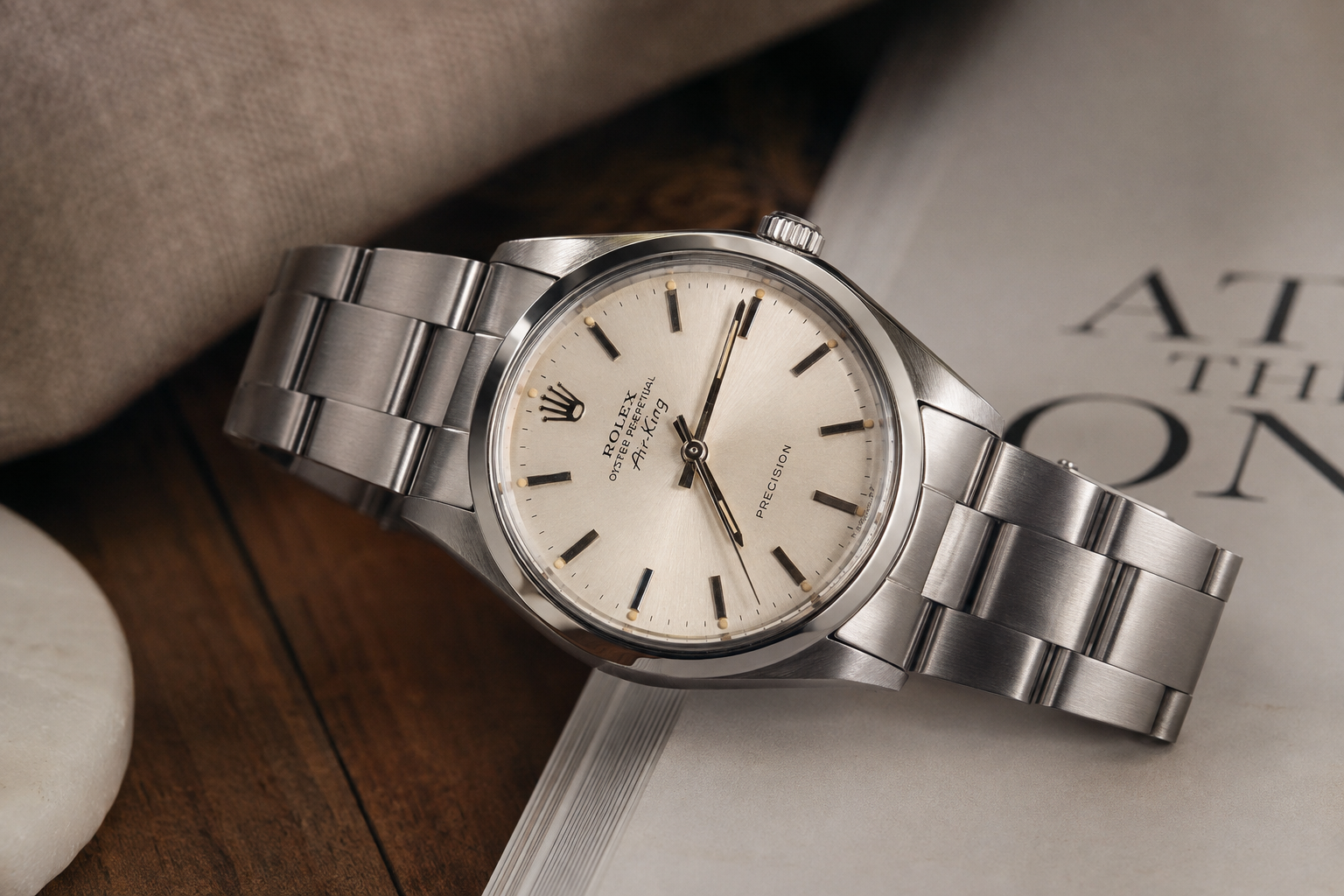
Launched in the late 1950s, the Air-King ref. 5500 is a non-chronometer, time-only watch similar to the aforementioned Oyster Perpetual ref. 1002: likewise measuring 34mm in stainless steel, it also features a smooth bezel, an Oyster or Jubilee bracelet, an acrylic crystal, and either the cal. 1520 or 1530 automatic Rolex movement. Though these were well-made movements with high jewel counts, their lack of chronometer certification ensured that the ref. 5500 remained relatively affordable, while a wide variety of dials ensures that it’s an interesting reference for collectors. (Silver, black, blue, grey, champagne, and more “exotic” variants such as Explorer-style and double-signed examples exist, with the latter commanding a premium.) Slim and clean like the OP ref. 1002, the ref. 5500 is an excellent everyday watch for both men and women.t, an acrylic crystal, and either the cal. 1520 or 1530 automatic Rolex movement. Though these were well-made movements with high jewel counts, their lack of chronometer certification ensured that the ref. 5500 remained relatively affordable, while a wide variety of dials ensures that it’s an interesting reference for collectors. (Silver, black, blue, grey, champagne, and more “exotic” variants such as Explorer-style and double-signed examples exist, with the latter commanding a premium.) Slim and clean like the OP ref. 1002, the ref. 5500 is an excellent everyday watch for both men and women.
Rolex Oyster Perpetual Date ref. 1500 ($4,000-$6,000)
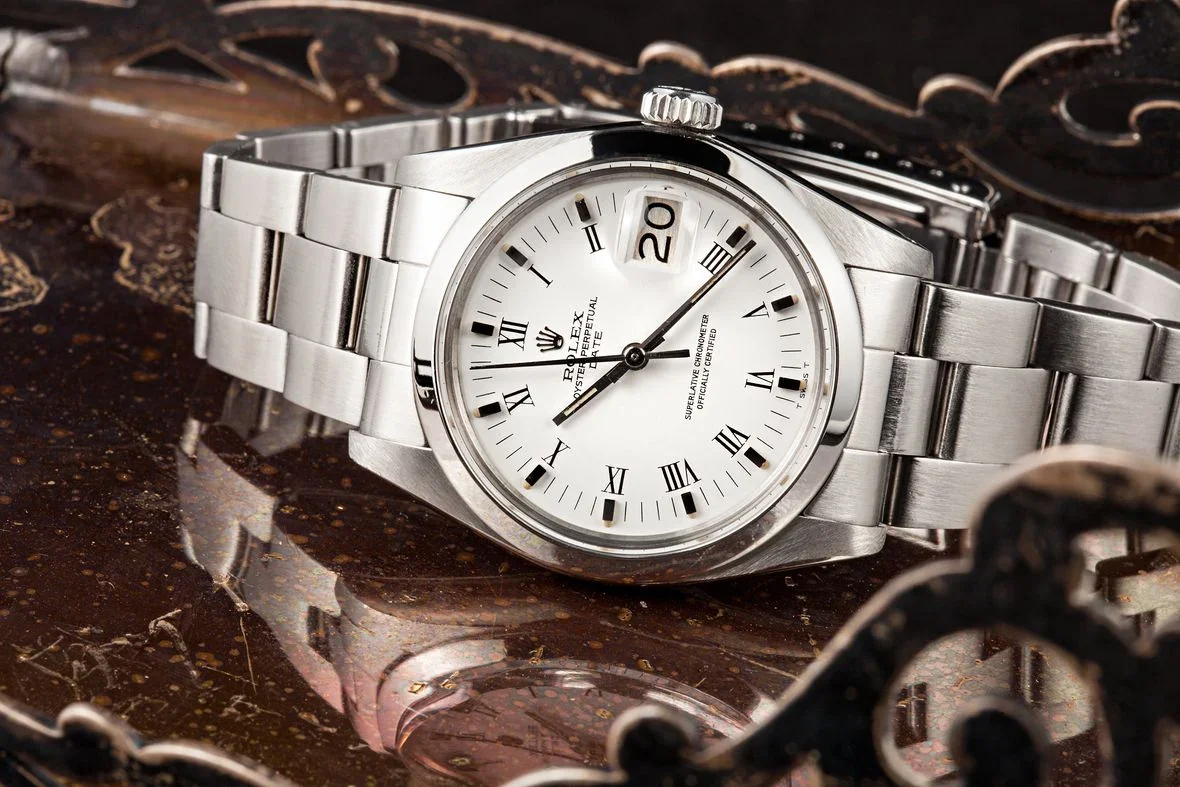
Photo courtesy of Bob’s Watches
The ref. 1500 occupies an interesting position between the date-less four-digit OP references and vintage Datejust references such as the 1601 and 1603 — or, more precisely given its smooth bezel, the ref. 1600. Like, say, the ref. 1002, it features a 34mm stainless steel case rather than a 36mm case; however, like the refs. 1601 and 1603, it features a date window, “cyclops” magnifier, and the cal. 1565 or 1575, both of which are chronometer-certified. Like many of the four-digit watches in this list, it typically comes with applied baton indices and a matching handset, though the sheer number of dial colorways offers the collector a delightful array from which to choose. Particularly fun are “radial” dials in which extra-long minute hashmarks extend inward from the dial periphery.
Rolex Explorer ref. 14270 ($6,500-$8,500)
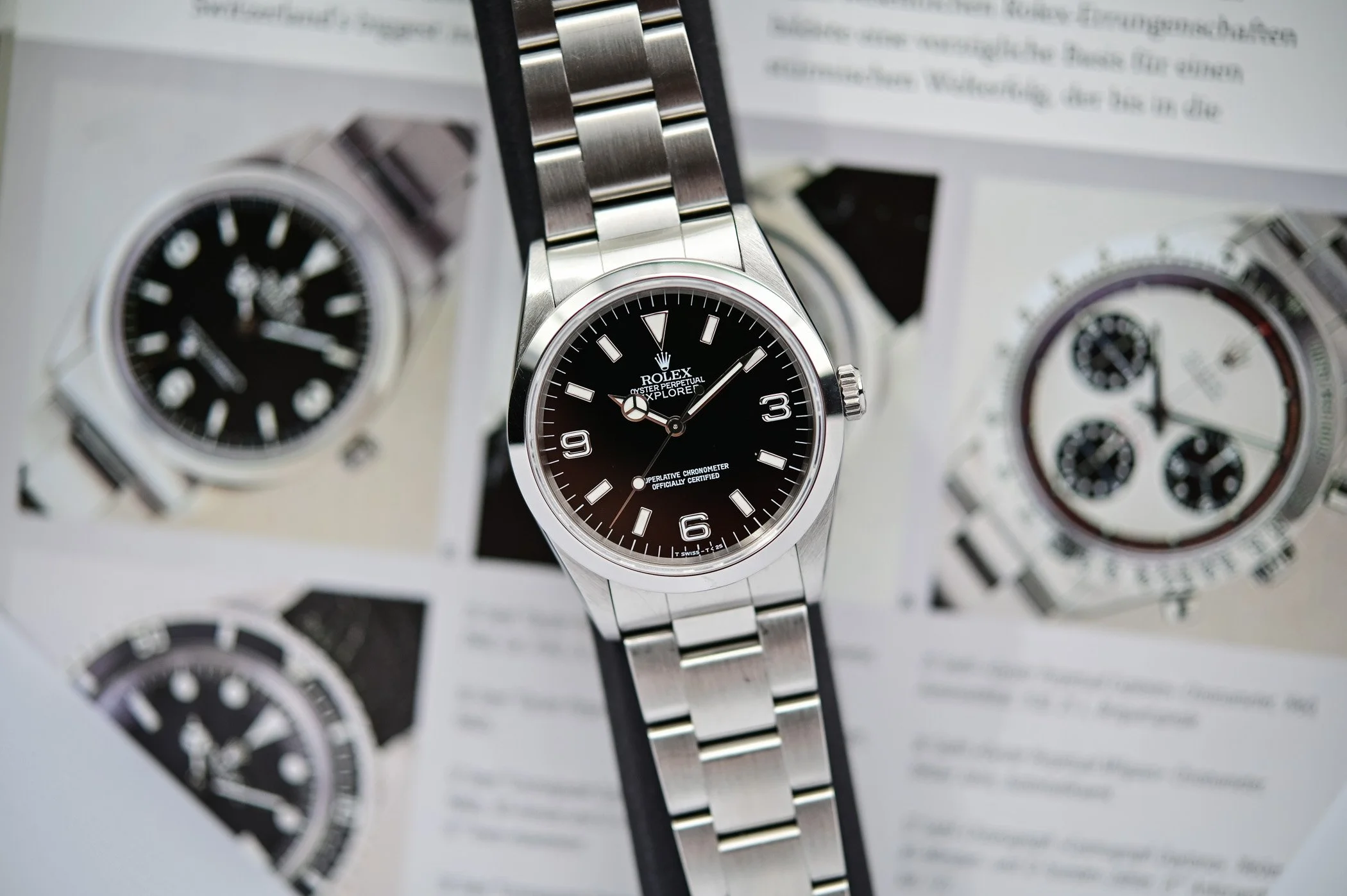
Photo courtesy of Monochrome Watches
While the ref. 1016 — the definitive vintage Explorer, produced from 1963 to 1989 — has achieved commercial escape velocity and can no longer be purchased for under $10,000, its successor reference certainly can. Introduced in 1989 and produced until 2001, the ref. 14270 was made in several series that span the transition from tritium to LumiNova to Super-LumiNova, though all share several key characteristics: 36mm Oyster case, smooth bezel, sapphire crystal, chronometer-certified, automatic Rolex cal. 3000 movement, and a gloss-black dial with applied white gold Explorer-style markers and Mercedes hands. By maintaining the 1016’s unique 3-6-9-triangle-baton arrangement but offering modern conveniences and materials, Rolex hit upon a winning formula that is still largely in play today.
Rolex Explorer II ref. 16570 ($7,000-$10,000)
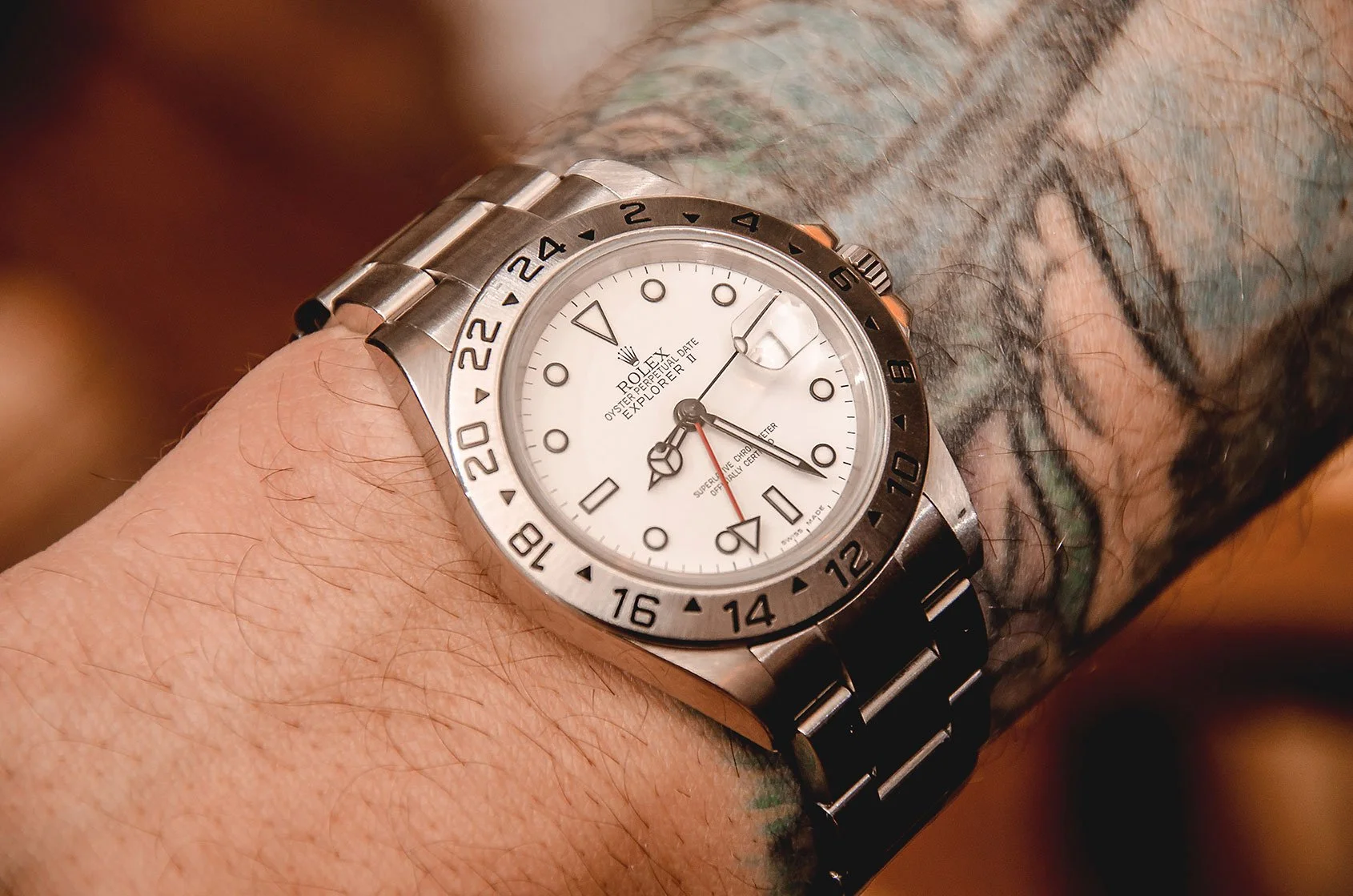
Photo courtesy of Time+Tide
A neo-vintage favorite, the Explorer II ref. 16570 — particularly in its “Polar” white-dial configuration — is still a wildly good value compared to its cousin, the GMT-Master II. Like its predecessor reference, the 16550, it features an independently adjustable local hour hand, meaning that it can track two time zones. (The original Explorer II, made for spelunkers, could only discern between AM and PM hours, as the 24-hour hand was slaved to the main timetelling hands and the 24-hour bezel was fixed.) Measuring roughly 40mm and largely found on a matching stainless steel Oyster bracelet, it moved through several dial variants during its relatively long production run (1989-2011). While “Polar” versions command a slight premium, both white- and black-dialed versions can still be had for well under $10K.
Rolex Submariner ref. 14060 ($8,800+)
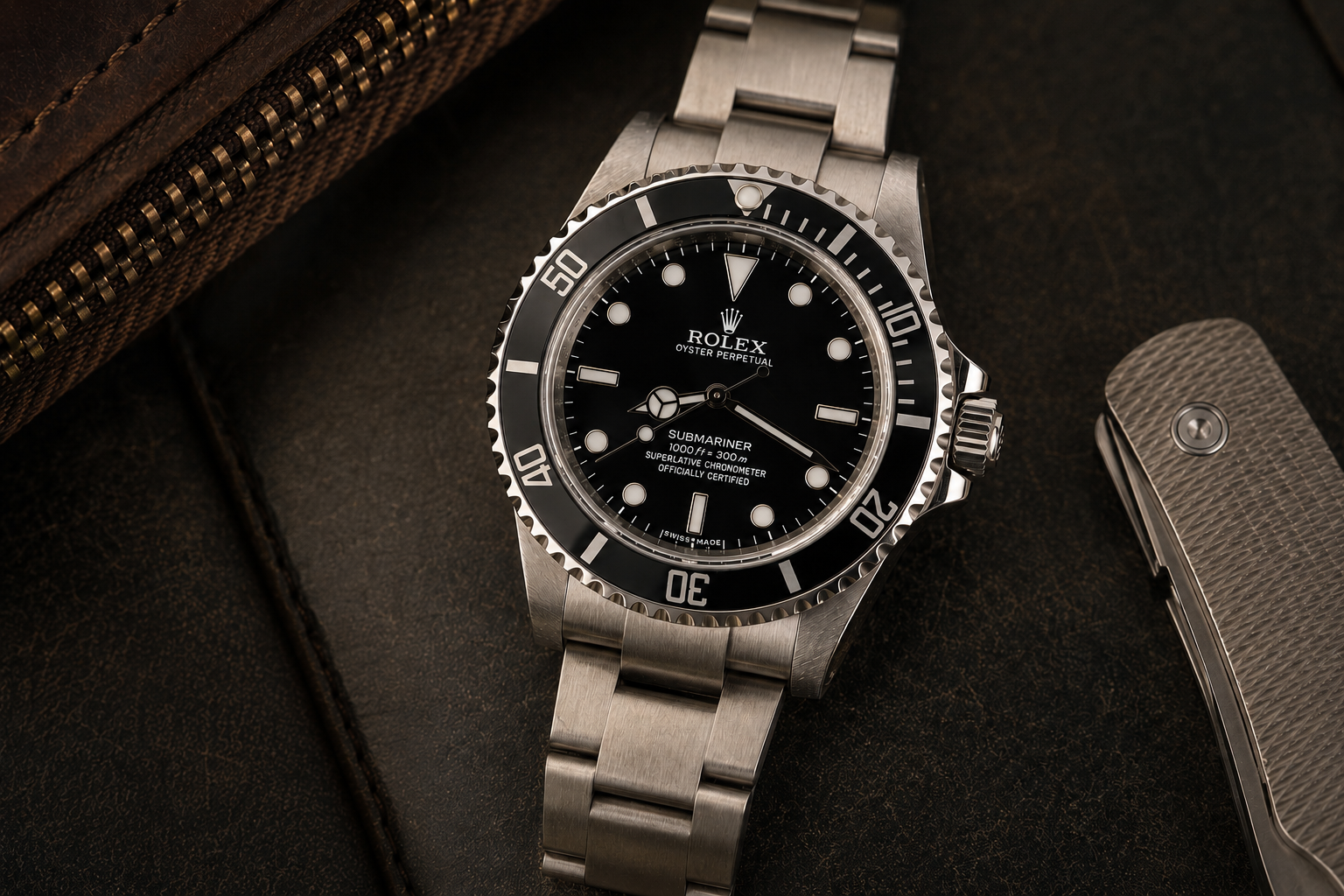
Introduced around 1990, the ref. 14060 (and later 14060M) replaced the ref. 5513, perhaps the most beloved of all Submariner references. While it retained that reference’s key characteristics — ~40mm case, Oyster bracelet, black dial with Mercedes hands and round, triangular, and baton indices, automatic Rolex movement — it added some key improvements that made it the first truly modern Submariner: sapphire crystal, Triplock crown providing 300m of water resistance, white gold surrounds on the hour indices, and LumiNova and SuperLumiNova (on later versions). Despite these improvements, the 14060 looks and feels like a vintage Sub, while successor generations using the brand’s “Super” case take on a completely different identity. Prices for clean 14060s positively exploded during the pandemic; having cooled somewhat, they can reliably be had for just under $10K.