Taking My Rolex Daytona to the Rolex 24: A Collector’s First Daytona Weekend
You don’t bring a three watch roll to Daytona. You bring a Daytona.
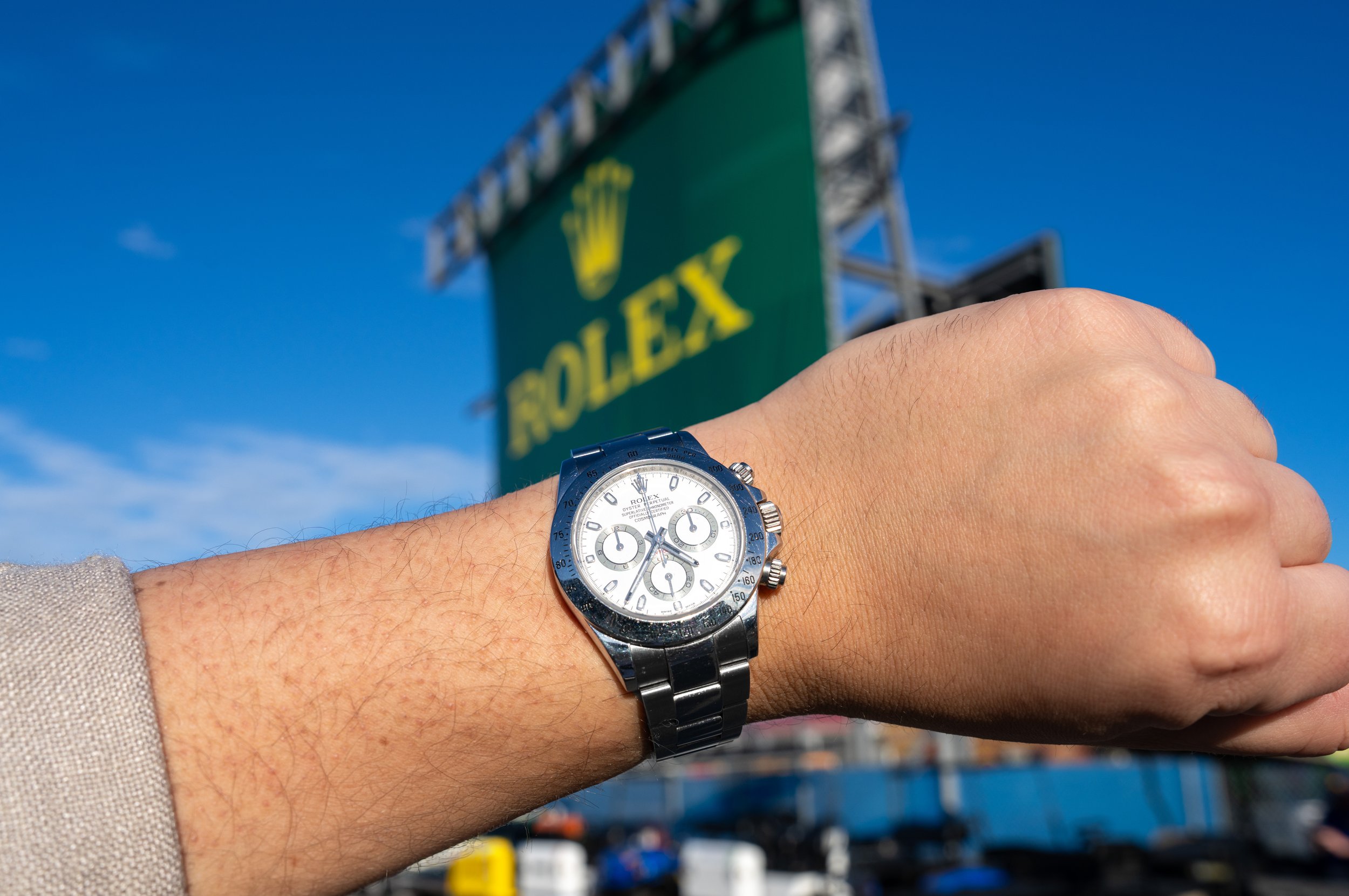
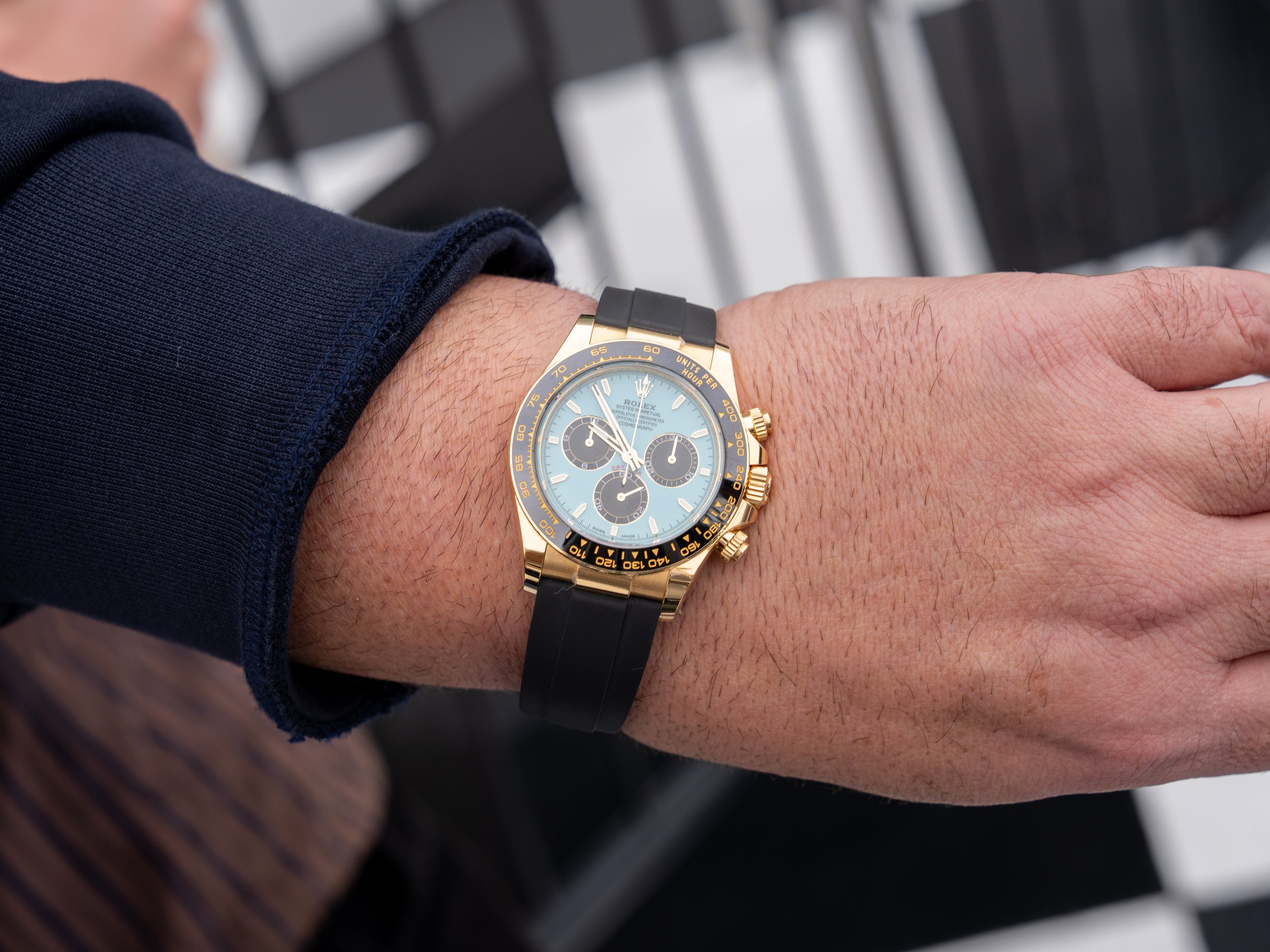
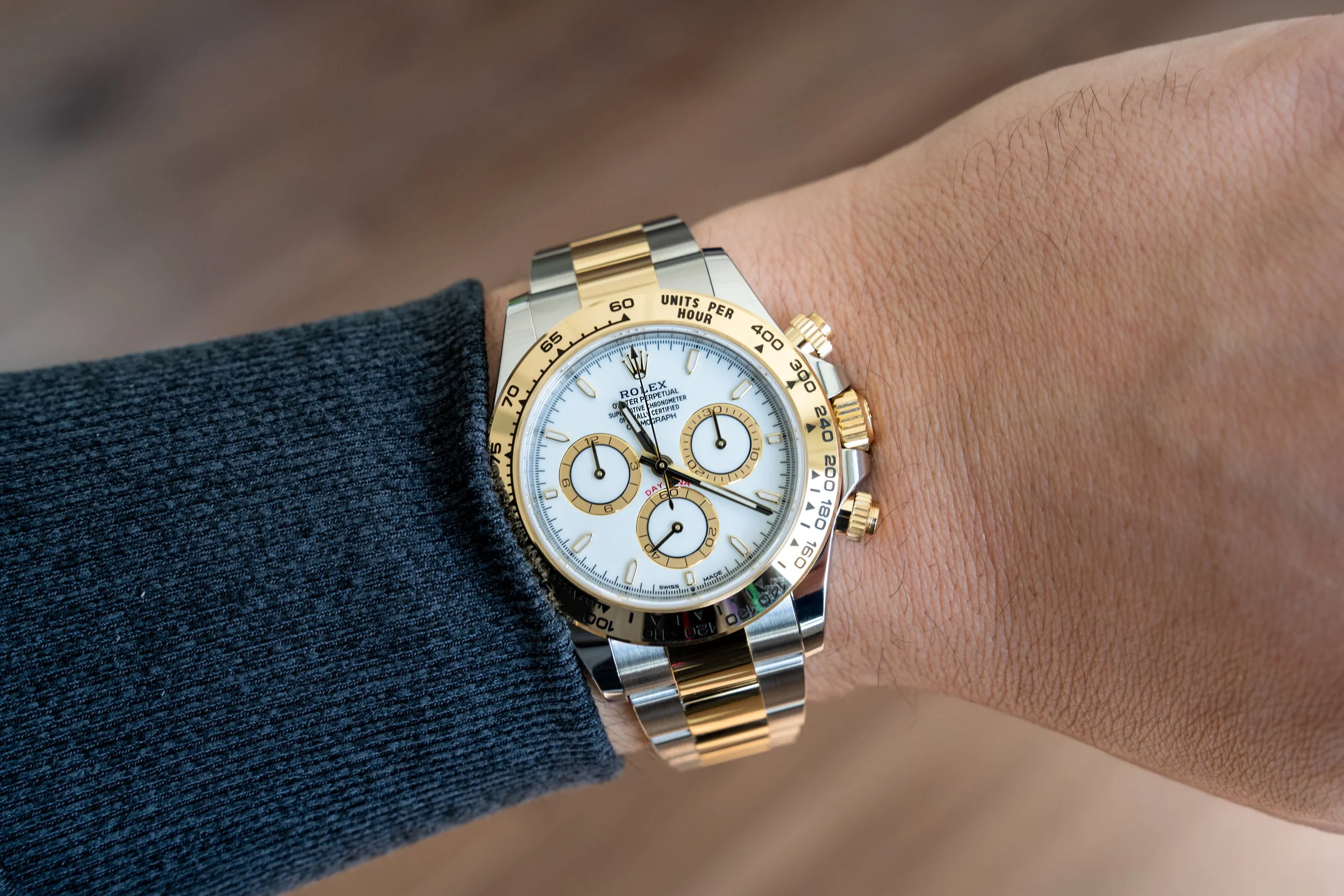
For my law school graduation in 2012, I was given a steel Rolex Daytona Ref. 116520. When I received the watch, it immediately became more than an iconic timepiece to me. It became a milestone watch, and one of the most important such watches I had received at the time (and since). Since then, the watch has seen my move from litigator to watch blogger, many new countries, and plenty of everyday wear. But it had never been to the race that shares its name. When Rolex invited me to the Rolex 24 at Daytona this year, I did something that feels almost unfathomable as a watch collector. I left every watch but my Daytona in my safe. If there was ever a trip to wear a single watch, this was it.
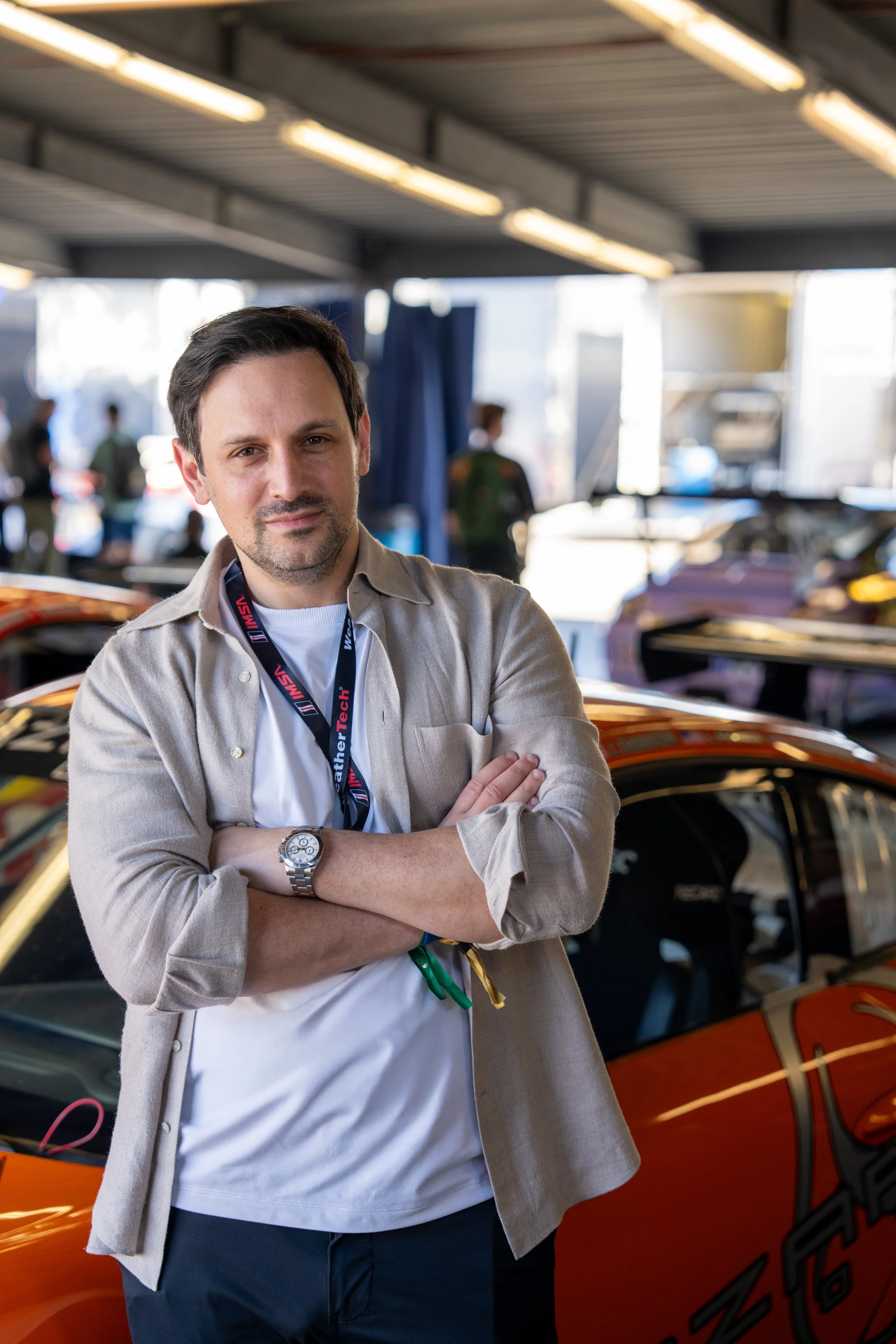
This was only my second time at a race track. My first was the Canadian Grand Prix in Montreal last year, an F1 weekend that kickstarted my interest in motor-racing. F1 feels over the top and like a movie. Endurance racing is kind of the opposite. It takes that same energy of F1, but stretches it over 24 hours, then asks everyone involved, from drivers to journalists, to just be part of it. I arrived in Daytona wondering how my still pretty green track experience, and my not at all green Daytona, would fit into that picture.
I got in on Friday morning and my first clue that this was going to be a different kind of weekend was waiting in the hotel room. Laid across the bed was a dark blue Rolex jacket with a small crown embroidered above the pocket in the same dark blue. It was not some loud influencer kit, more like something you would expect to see on someone who actually works the event. Downstairs, I met the rest of the U.S. press contingent. There was a motorsport journalist from the United Kingdom, a watch influencer from Miami, and two car influencers from Wisconsin. It seemed to be well-rounded group. Our knowledge and expertise were well-suited for a motorsport race sponsored by Rolex. But the overarching feeling among everyone seemed to be that we were stepping into an experience most fans never get anywhere near.
For our first dinner, we were brought to a local steakhouse. Because of the race, it was so crowded we had to sit outside. It was a little chilly, but it was worth it. Inside was loud enough that you could barely hear the person next to you, and the patio was quieter and easier to actually talk. I imagine much of the discussion at tables inside centered on the upcoming race, strategy and what the weekend might hold. At our table, the small talk didn’t last long. Within a few minutes I was mostly just listening, trying to learn any and everything I could about endurance racing before we really got into it. They talked about how it differed from F1, how prestigious a race the Rolex 24 really was, and even the technical details of the cars. It felt like getting a behind-the-scenes version of the weekend without even asking for it.
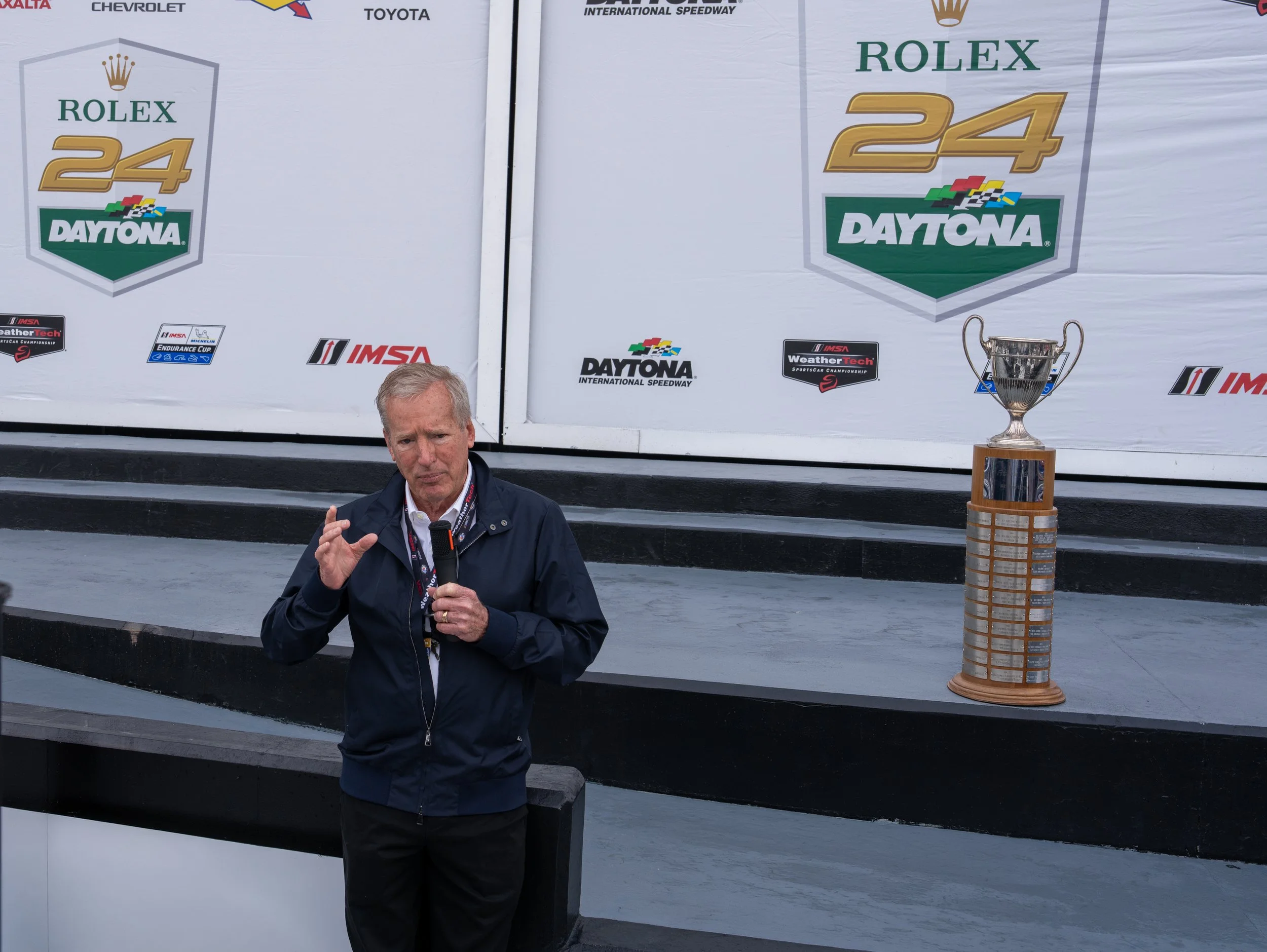
We did not push it late. I wanted to make sure I was in top form for what I knew was going to be a long, jam-packed day. On Saturday morning we were taken to the track and dropped into the wider Rolex bubble: global media, local retailers with their top clients, and various guests, all flowing through the same hospitality areas. Hurley Haywood, 5 time Rolex 24 and 3 time Le Mans winner, welcomed us in the winner’s circle, the exact spot where someone would be handed a trophy and a very specific Daytona the next day. He talked about the race as much more than a flat out sprint, a full day where anything can happen and usually does. Standing there, it was hard not to look at my own watch and think about how rarely we actually experience a whole day as one continuous thing.
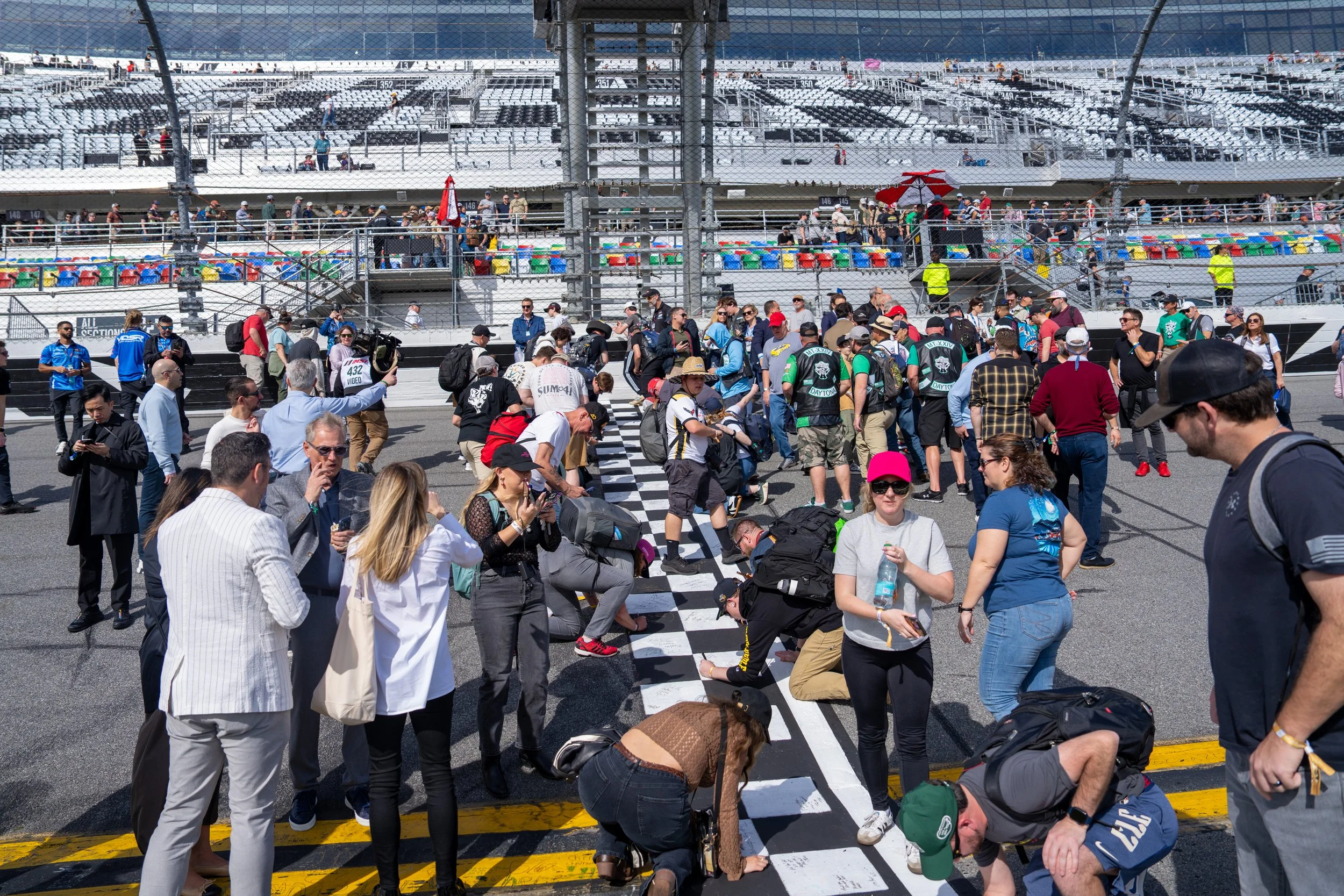
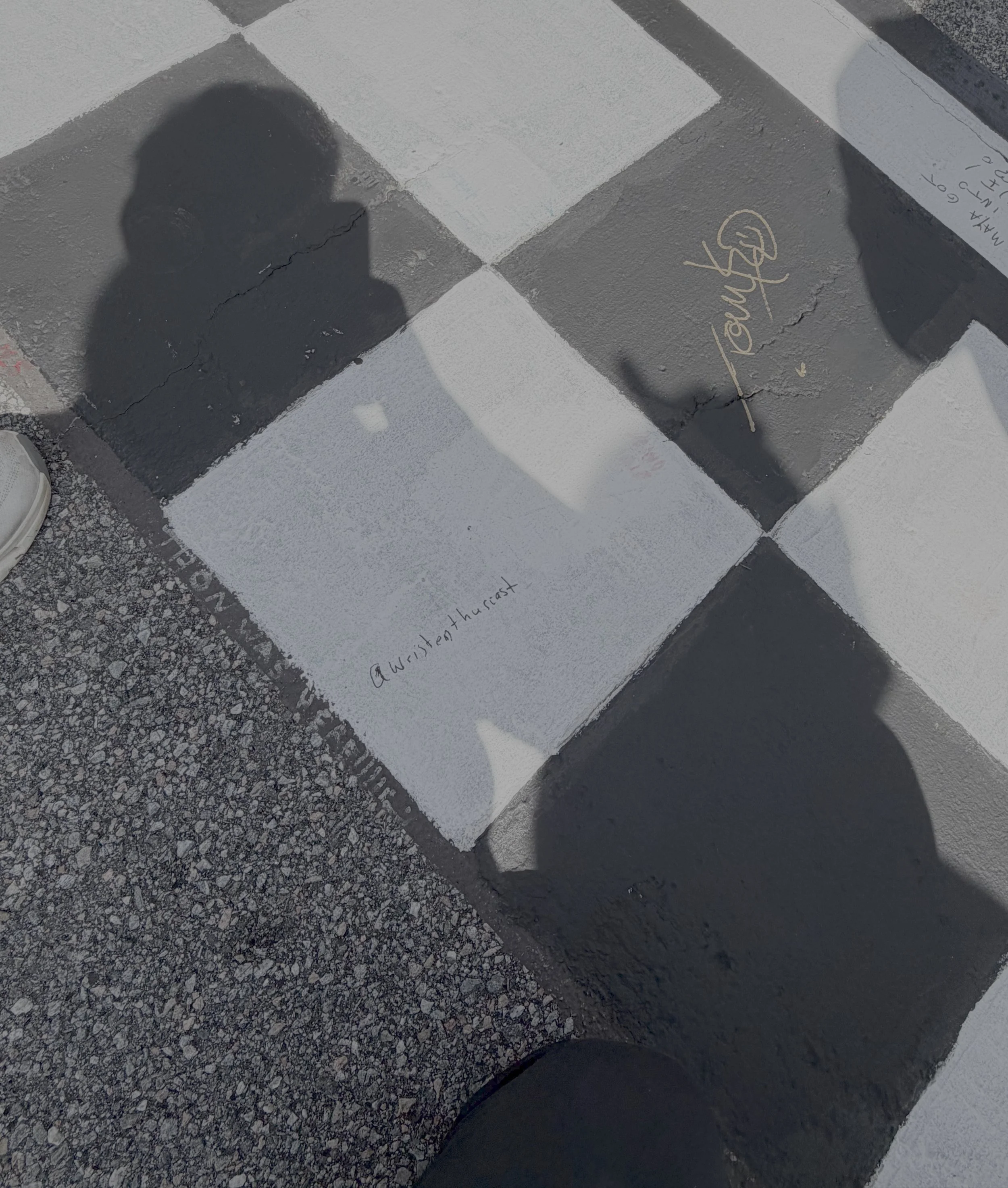
From there we went out onto the track. Being on the surface at Daytona before the start set the stage for the kind of access we were going to be granted. But beyond this, there was something pretty special about being on the track before any spectators arrived. While the stands and the track were empty, you could sense something was about to happen. But admittedly, this was partly due to the bustle already going on in all the teams’ pits. Eventually, someone passed around a marker and pointed at the checkered finish line, allowing us to sign it in any way we wanted. Instead of writing my name, I went with something a little more on brand. I signed @wristenthusiast on the line (knowing full well that after a few laps, the signature would be washed away). Maybe it was branding, maybe it was proving to myself how far I'd come. But it just felt right.
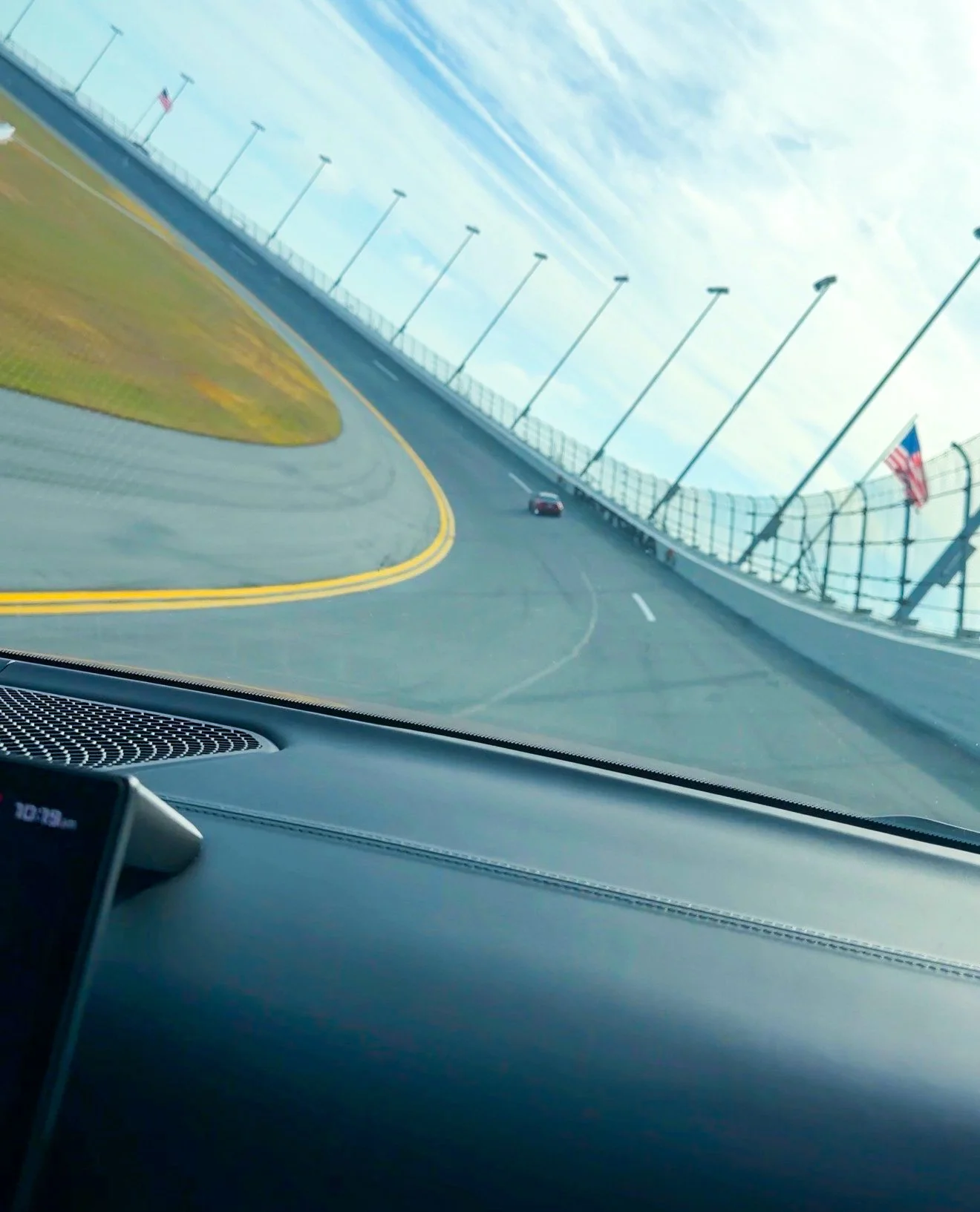
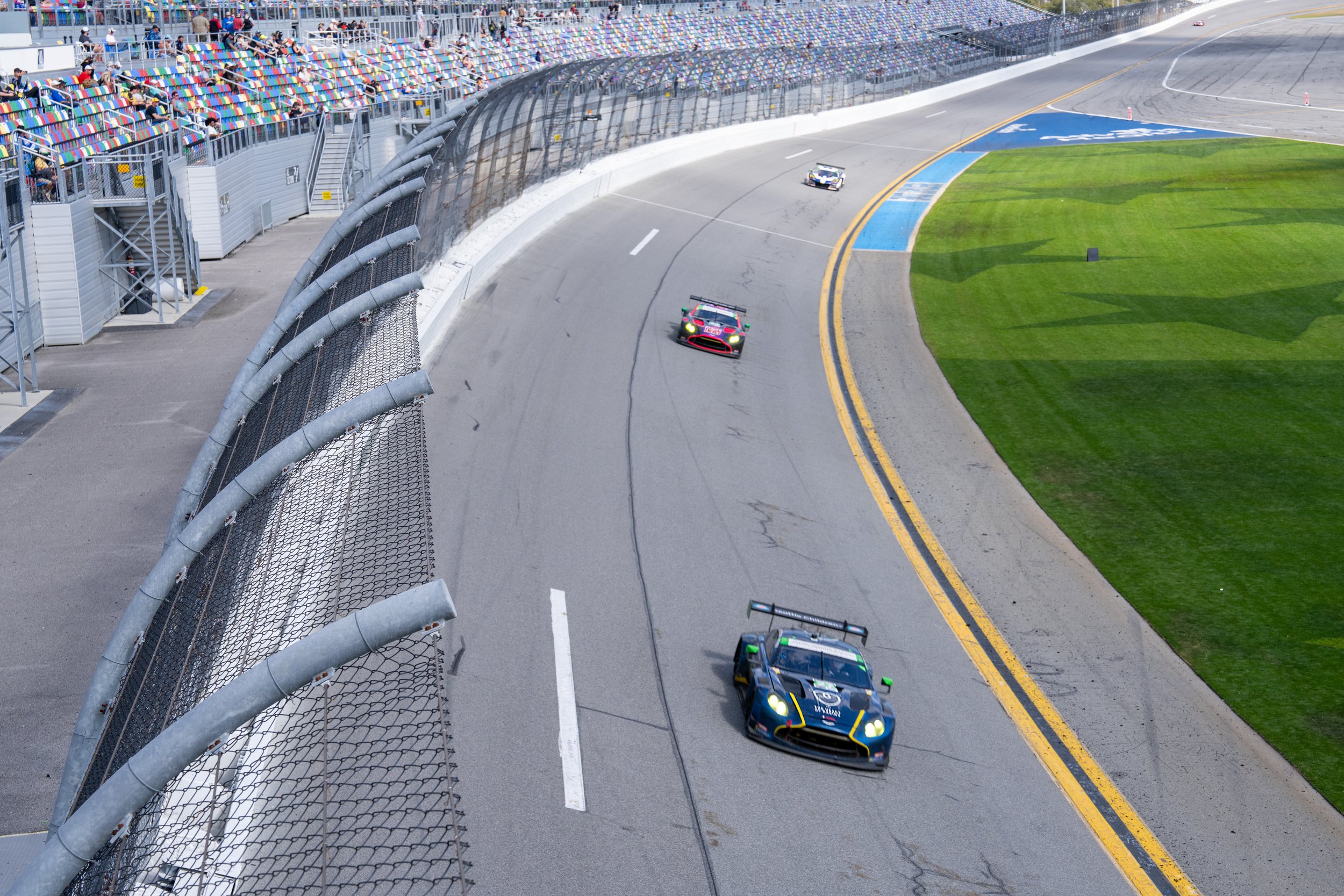
The hot lap was the moment that my “second time at a track” really kicked off. There were plenty of cars to choose from, but the Porsche and McLaren were the most sought after. I managed to secure a front seat spot in a BMW M3. Our driver was an older, former racer who looked like he had plenty of experience. We came out fast, and then turned into the banking. On TV it looks less dramatic than it is in reality. In the car it feels unnatural, and like you might slide down the track at any second.
As the G forces built, I could feel myself pressed into the seat. At one point we came up on another car quickly. Instead of slowing down, he built speed and only eased up as we came directly alongside the car (which happened to be another M3). It was close enough to make me very aware of how little space there really was. On public roads it would have felt reckless. Here, it's part of racing.
After the lap, things calmed down. We headed back to the Rolex suite for lunch and to watch the buildup to the start. The space had that strange mix of comfort and tension: great food, good coffee, and a view of the track that made it impossible to forget what was about to happen.
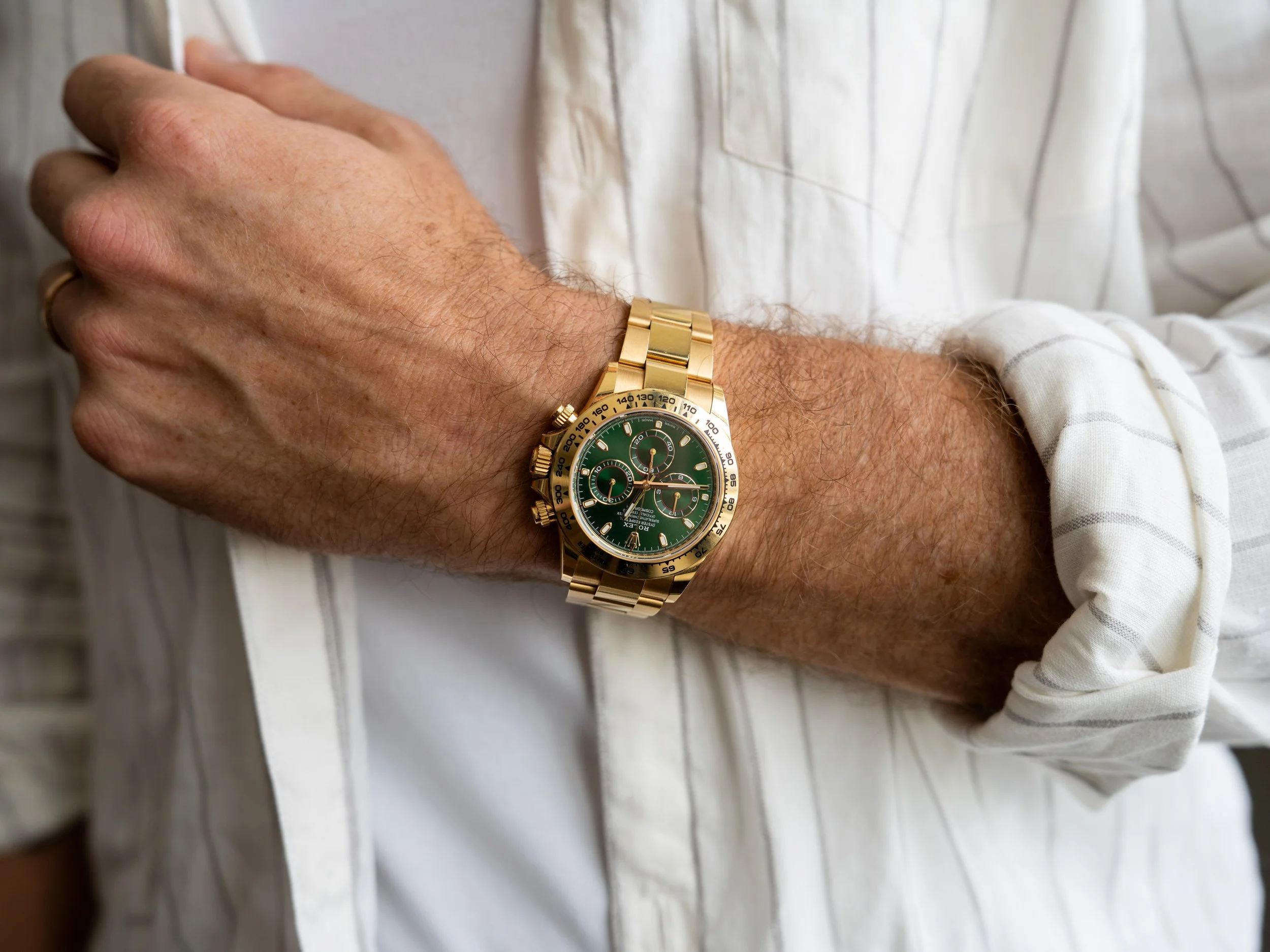
This was also where the sheer density of Daytonas really hit me. They were everywhere: steel, gold, two tone, modern references, older ones, and a few pieces you normally only see in perfectly lit photos or behind glass.
I’m used to watch spotting as a solo sport. Here, it felt like the easiest watch spotting of my life. People noticed my watch, I noticed theirs, and nobody needed much explanation. Most of them were Rolex collectors first and racing fans second, and a surprising number were at their first race ever. But they were exactly what you’d expect collectors to be: excited, curious, and more than happy to share what was on their wrist.
Meeting Jenson Button was one of those “this is actually happening” checkpoints. He has lived through so much of recent racing history, including an F1 Drivers Championship in 2009. While he may not have won a Daytona at the Rolex 24, as a Rolex Testimonee and driver, he knows the importance of the watch in racing.
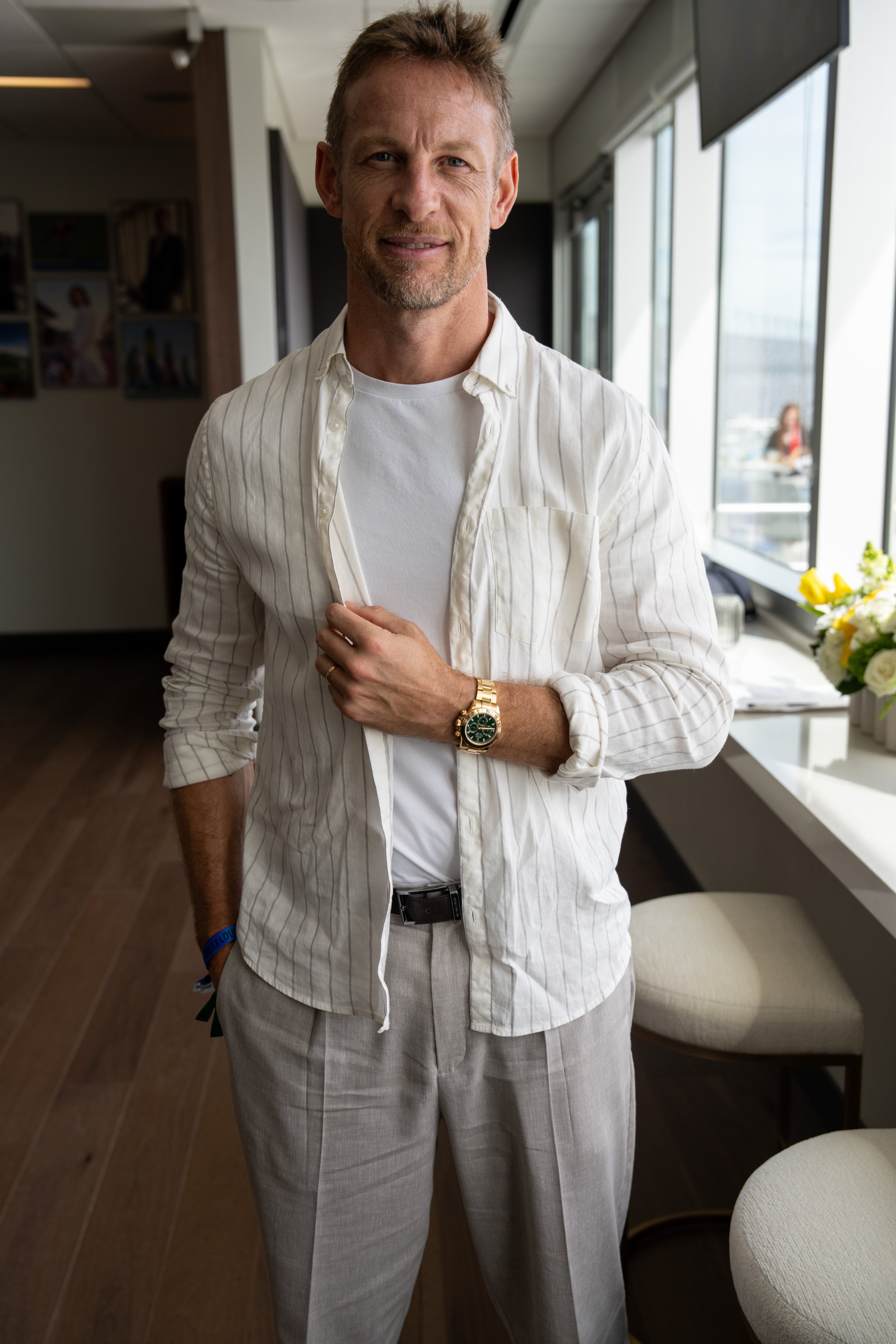
At one point in the conversation, he mentioned that he had recently picked up a rose gold Le Mans Daytona. I had seen one photo of that configuration floating around and had never been completely sure it was a real thing. Hearing him confirm it, casually, from a couple of feet away was a different level of “yes, this exists.” He did not have it with him, which somehow made it feel even more like a rumor that happens to be true. My own steel Daytona felt very normal by comparison, but also weirdly more plugged into that universe than before.
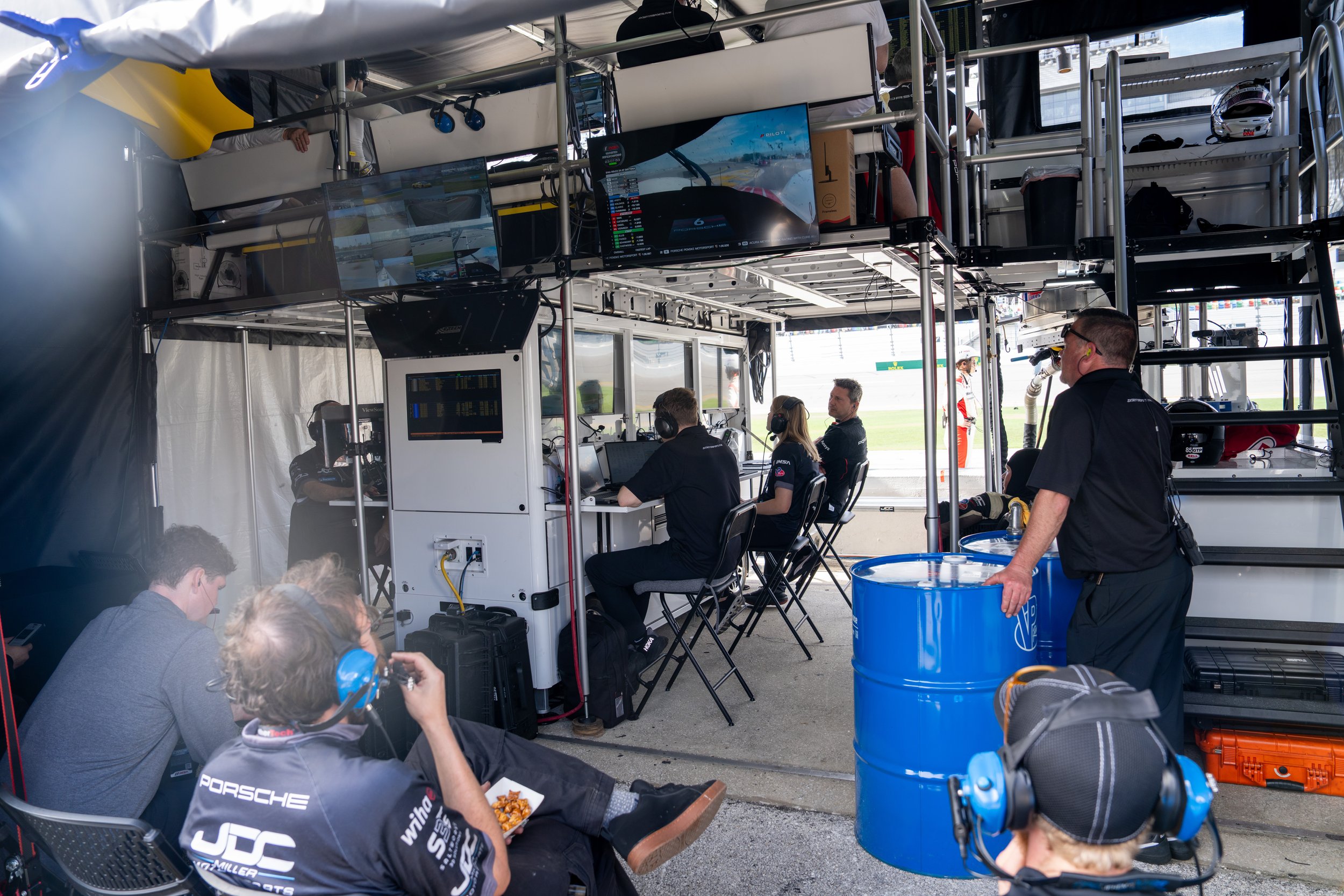
We spent the rest of the afternoon with up-close access to the inner workings of the Rolex 24. IMSA staff took us through the pits, explaining how drivers are able to sleep while their teammates are still driving just a few meters away. This surprised me. Personally, I needed earplugs. And yet, the professional drivers could easily sleep even with the constant noise of engines nearby. Staff also explained to us how the race ran more generally, including how the four classes all share the same bit of track without it turning into chaos.
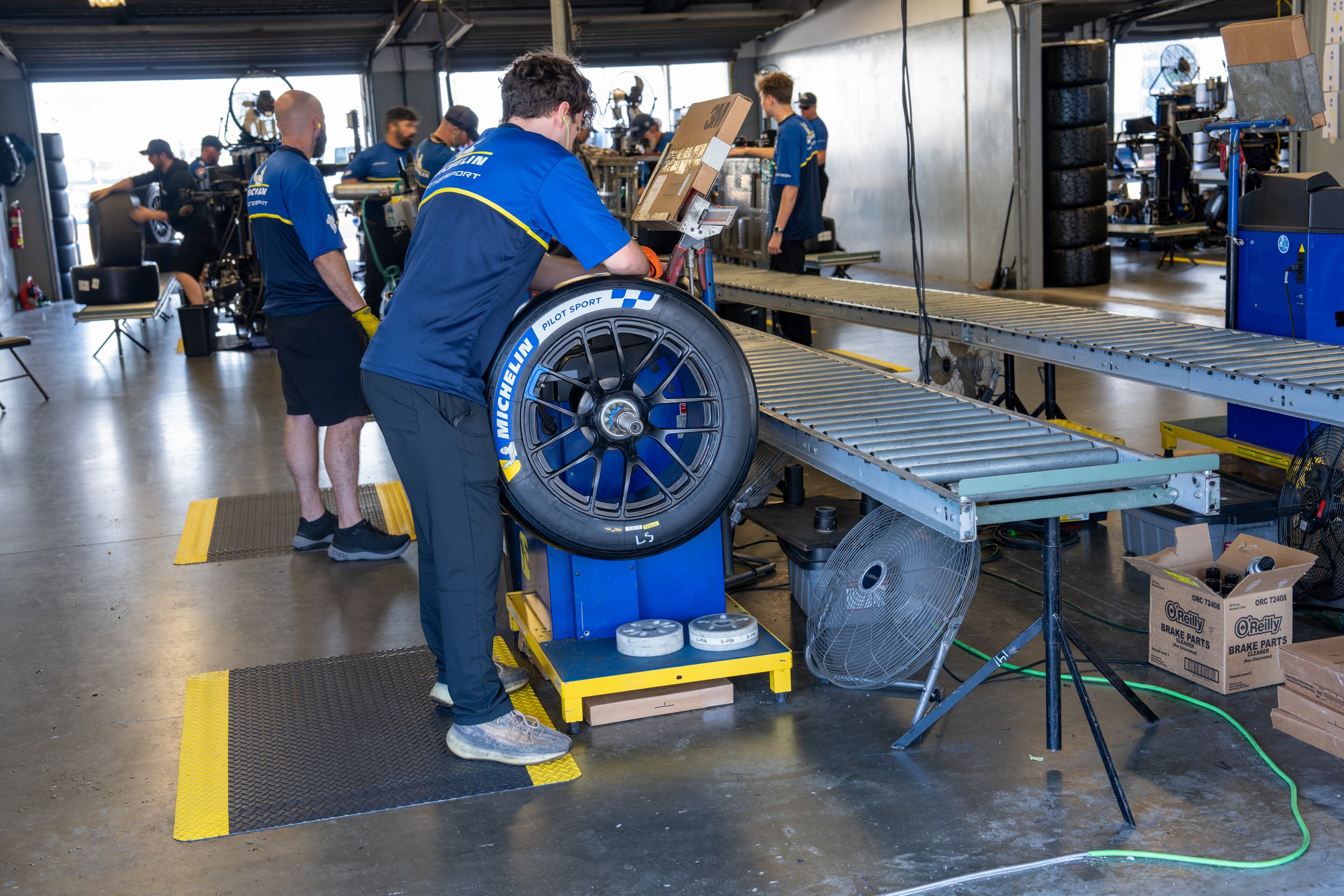
We were also granted special access with BMW. They showed us their pit and garage, and we got to see the hustle and bustle of the team looking at every statistic and piece of data while the race was happening. We stopped by the Michelin tire center and watched the constant movement of wheels and rubber. In between, there was a lot of watch spotting and car spotting, helped along by the motorsport journalists in our group who could identify a car from a flash of livery at 50 meters.
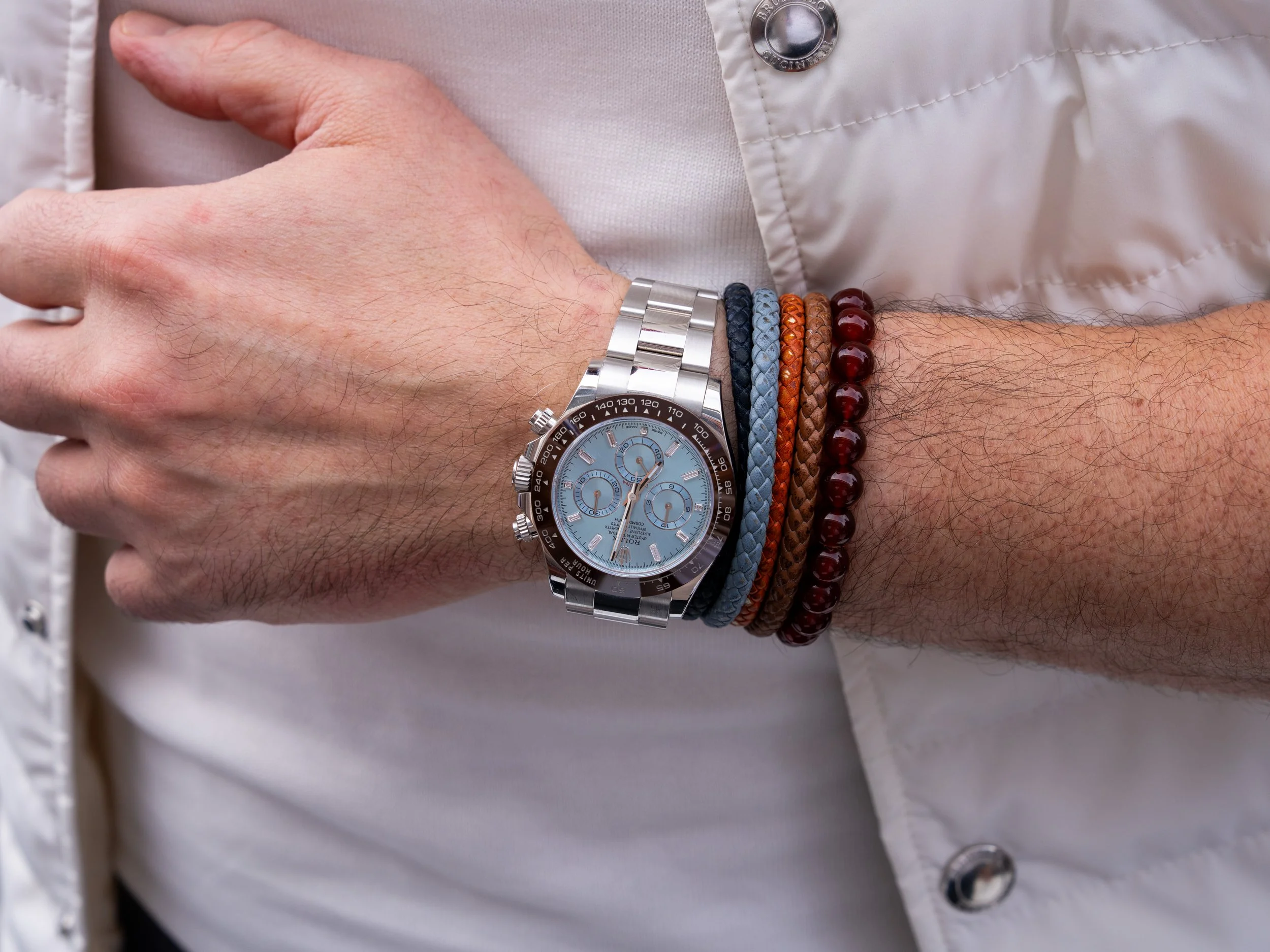
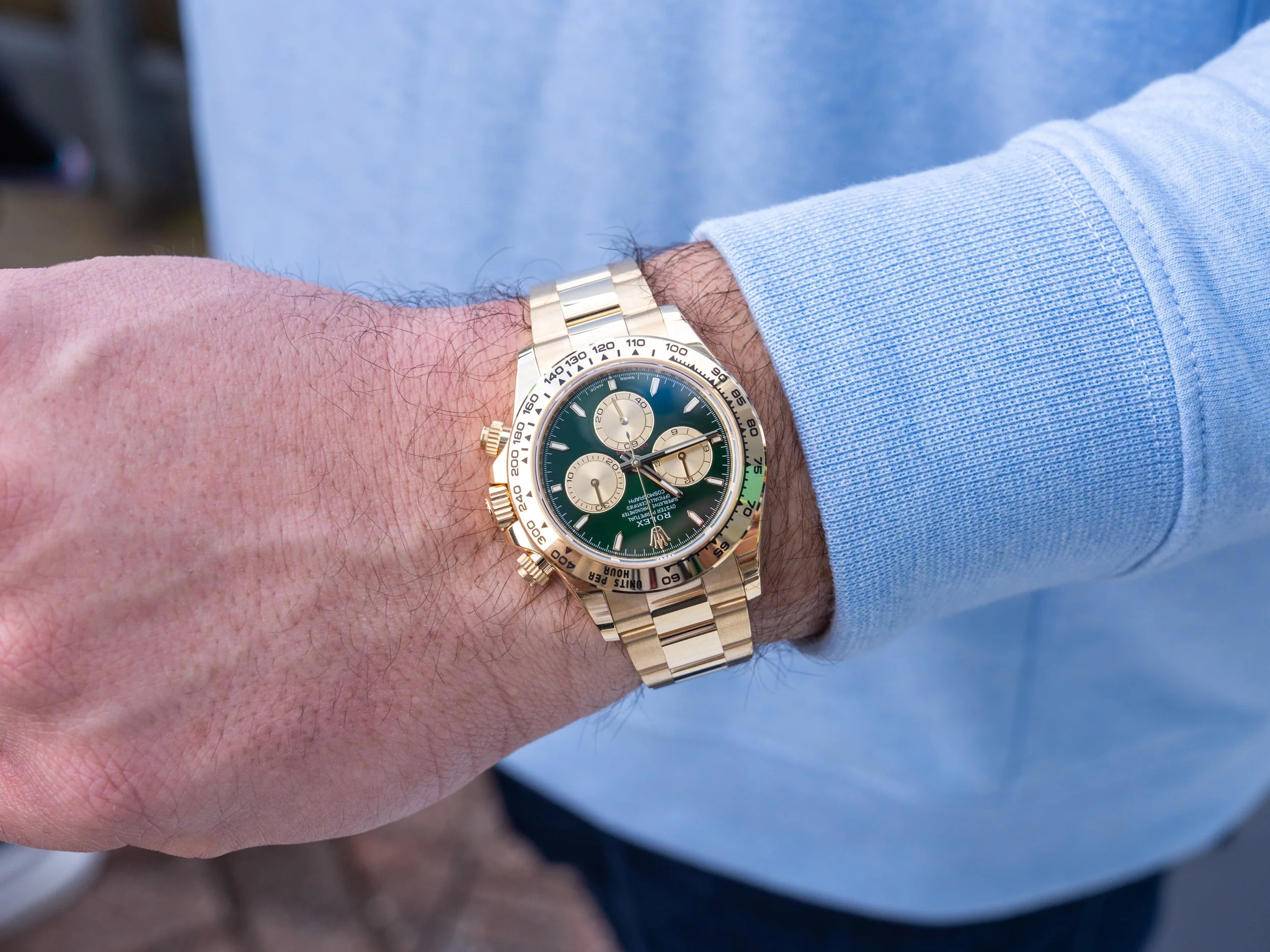
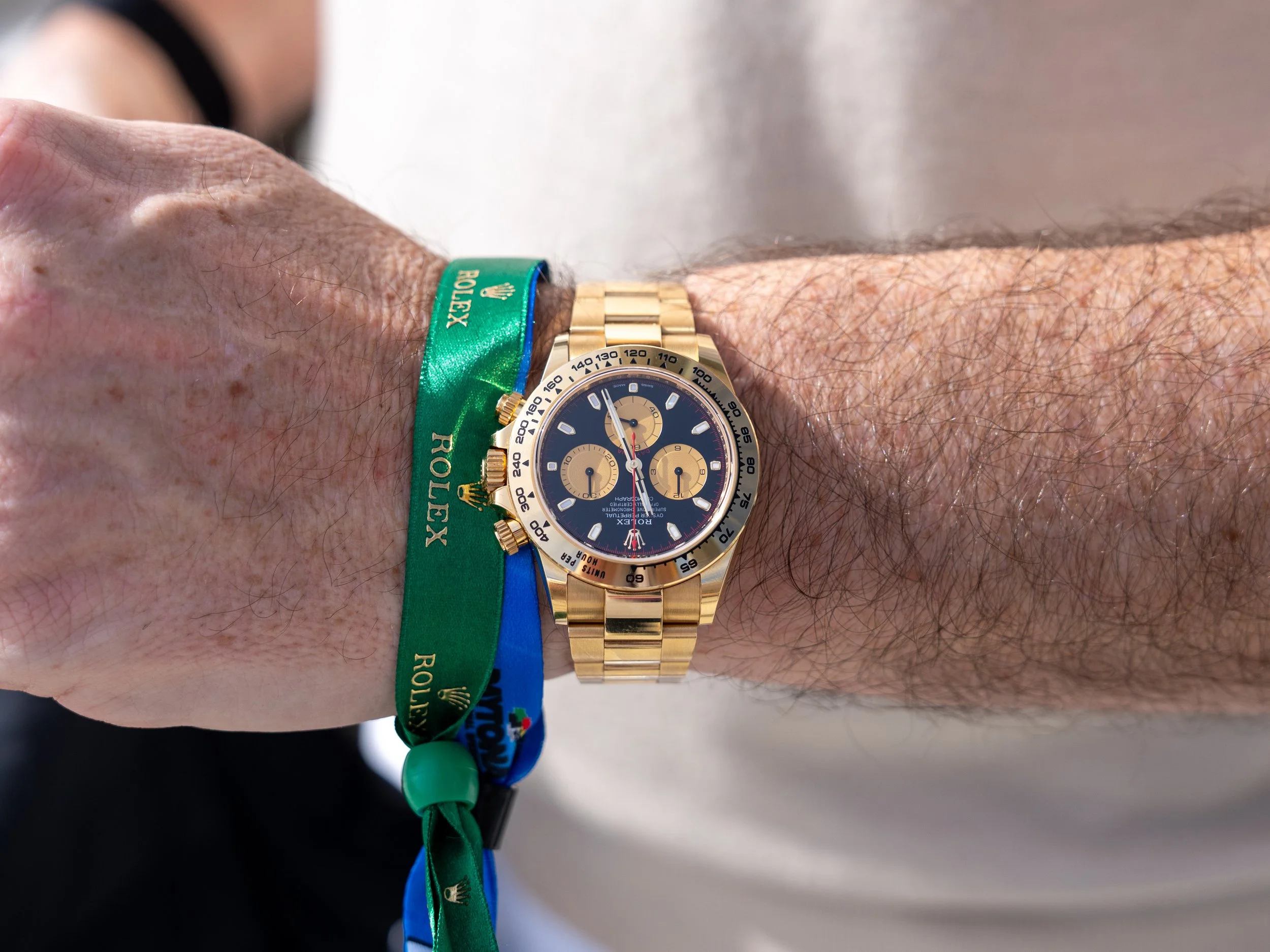
Daytonas were everywhere you looked. Le Mans pieces, a turquoise dial here and there, plenty of yellow gold, rose gold, and steel. None of them were sitting in safes or display cases; they were on wrists that were getting sunburned, ducking under pit gantries, and pointing at timing screens. I had seen rare Daytonas before, but seeing them in that environment, given the nature of the event, and all in one place, was pretty surreal. Wearing my own Daytona, I wondered if this feeling was the same as Porsche collectors feel when they get together. People noticed it, some recognized me or the channel, and the conversations moved very quickly from pleasantries into reference numbers and “did you see what that guy is wearing.”
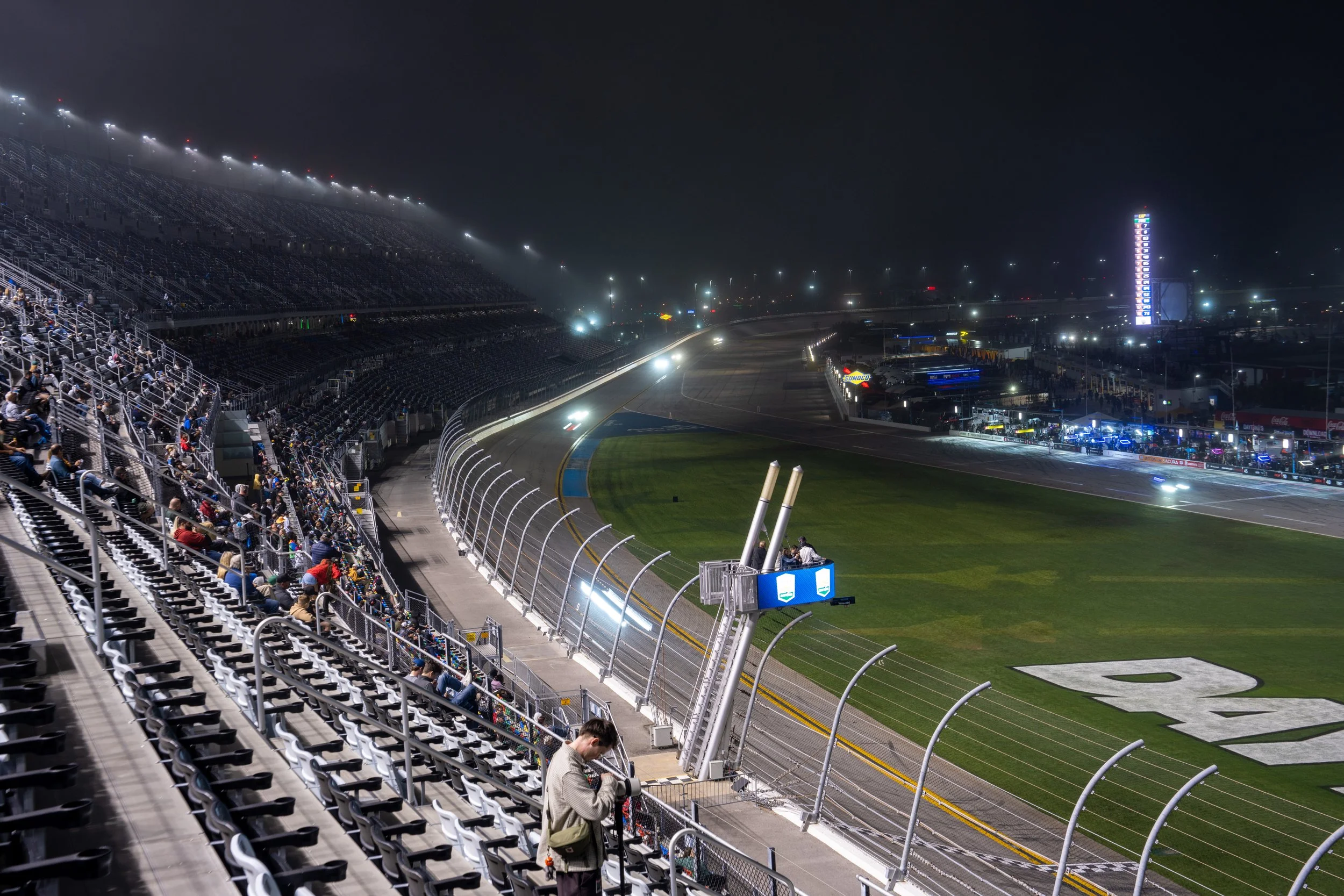
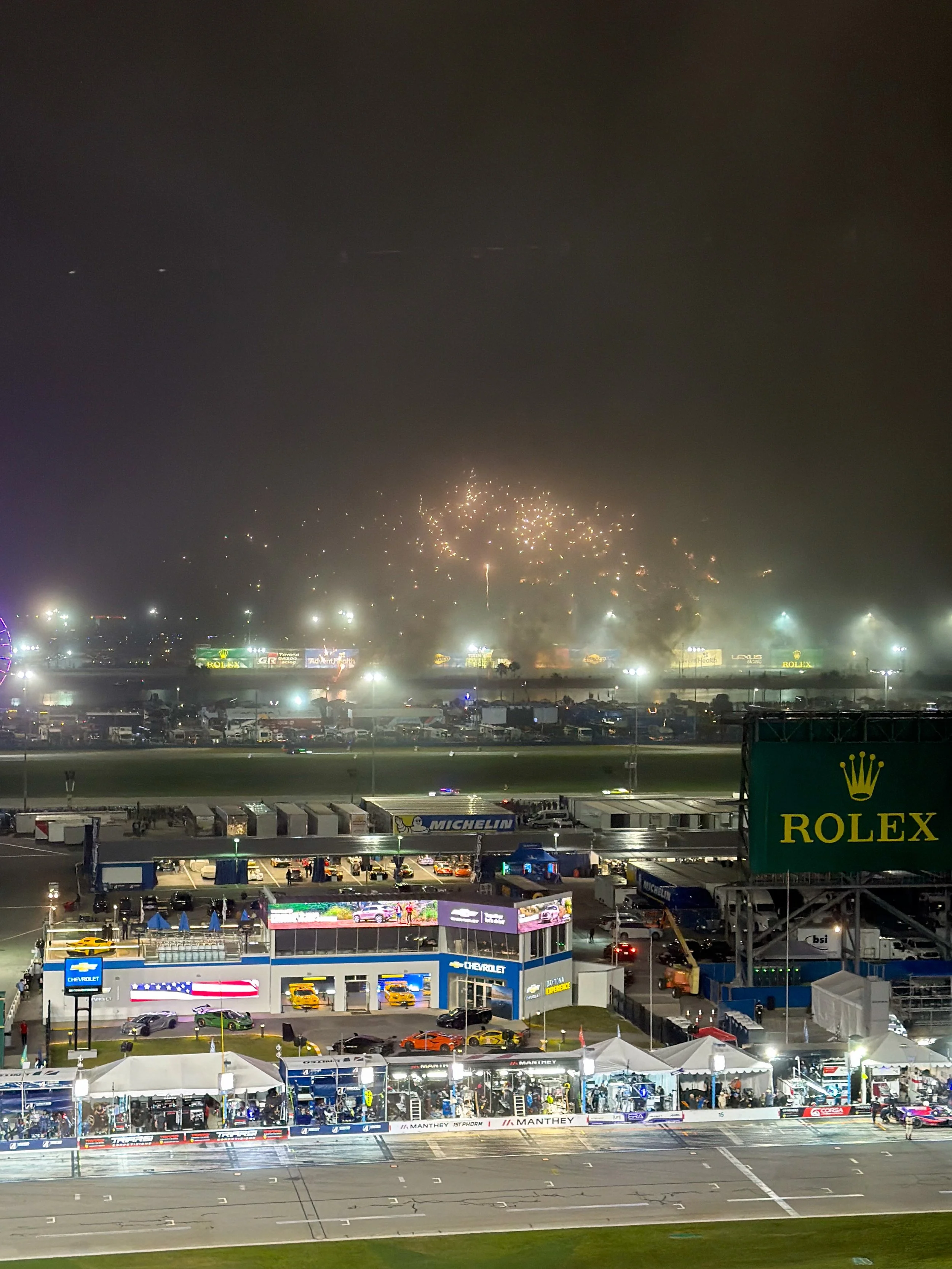
After a dinner break, we headed back for the night portion of the race. When I was in Montreal for F1, I only was able to see day racing, and it was practice. Since the Rolex 24 is a full 24-hours, half of the race happens at night, under the lights. It was incredible to see the cars roaring by, headlights on. It showed me just how relentless the endurance racing really is. During the night, a thick fog rolled in and hung over the circuit. There were fireworks scheduled for 10 p.m., and they did go off, but most of the color just diffused into the mist. Conditions eventually got bad enough that the field spent hours behind the safety car from midnight to six. It was a good reminder that even with all the infrastructure and money in the world, you still do not get to argue with visibility.
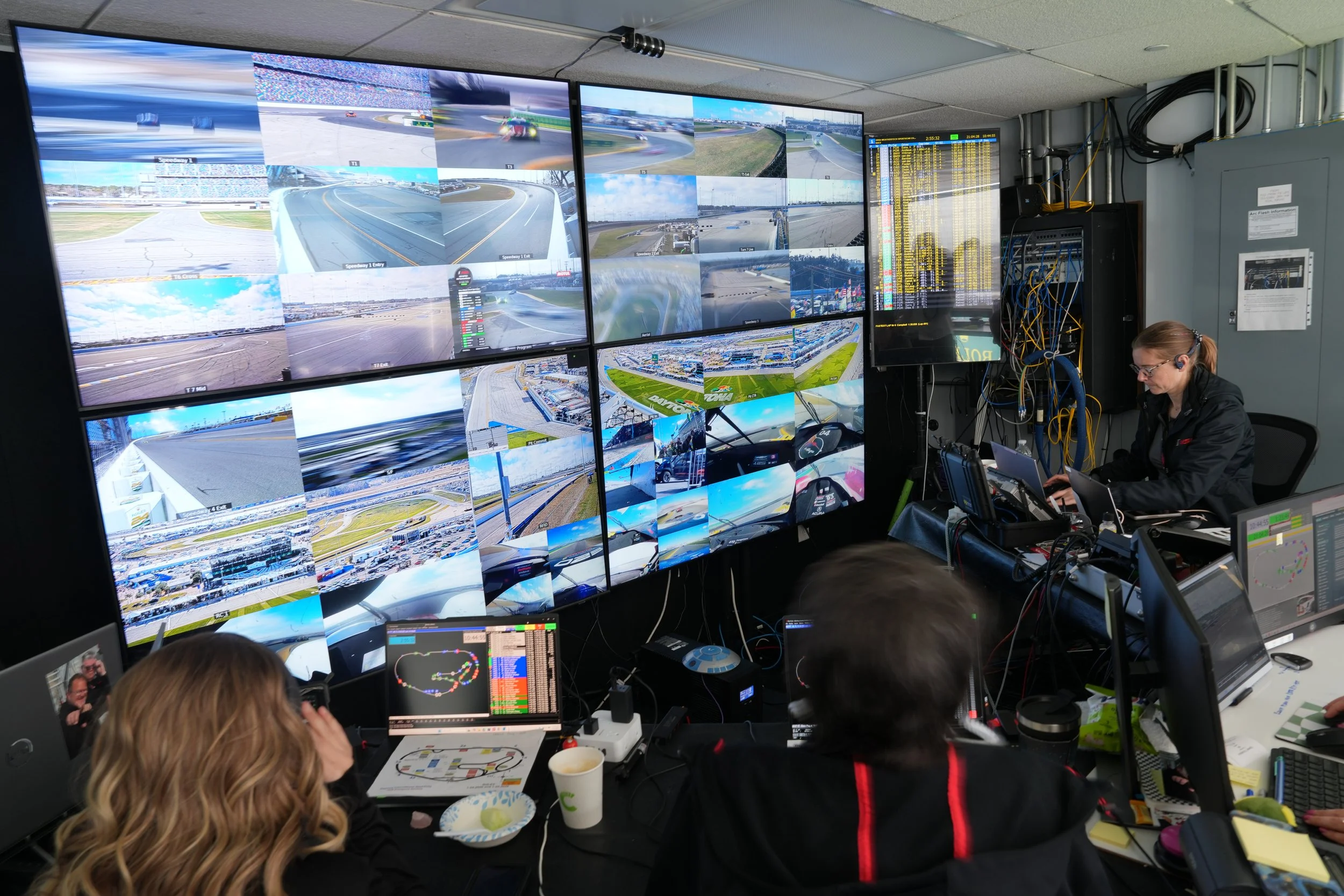
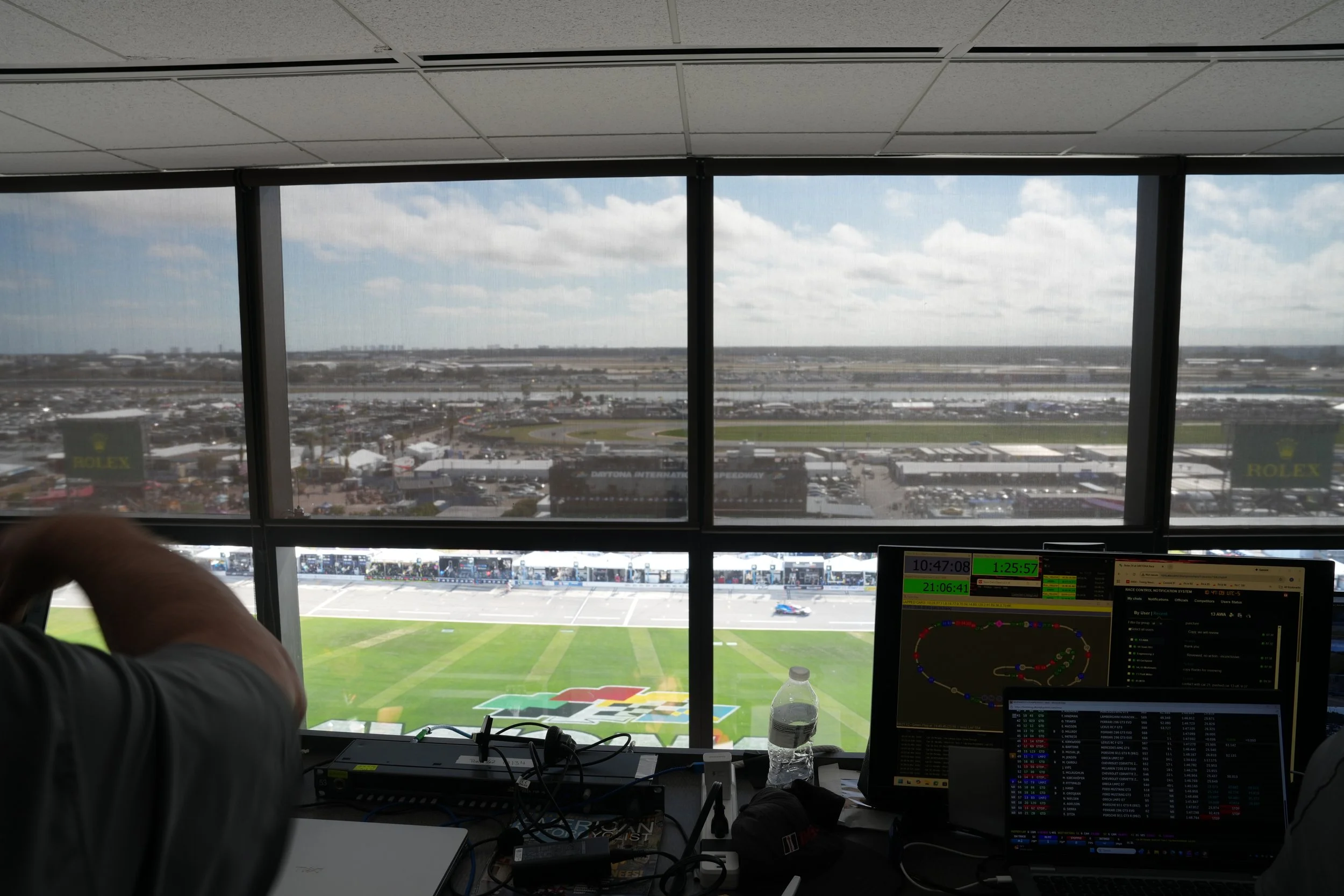
By the next morning we were all a little tired but still wired enough to keep going. We were taken up to race control, which sits high above the track with a clear view, and almost nobody was looking out of the windows. The action in that room is on the wall of screens, the timing feeds, and the incident monitors. The space itself is surprisingly cramped. It feels more like a slightly overstuffed office than a cinematic control room. Scott Pruitt walked us through how it all works, and then through some of his watches. These included Rolexes that he had purchased himself, as well as some of the Daytonas he was awarded for his 5 Rolex 24 wins.
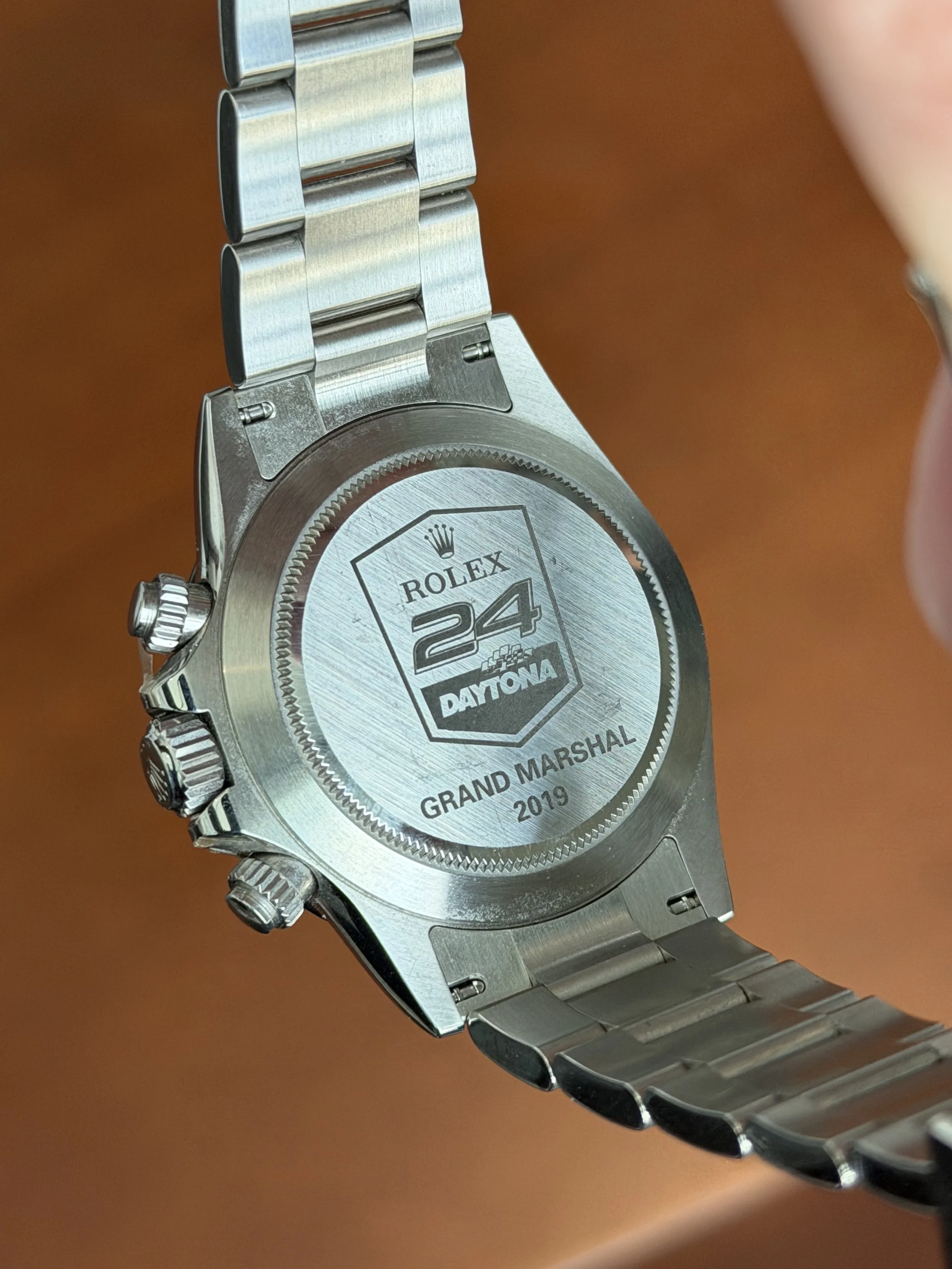
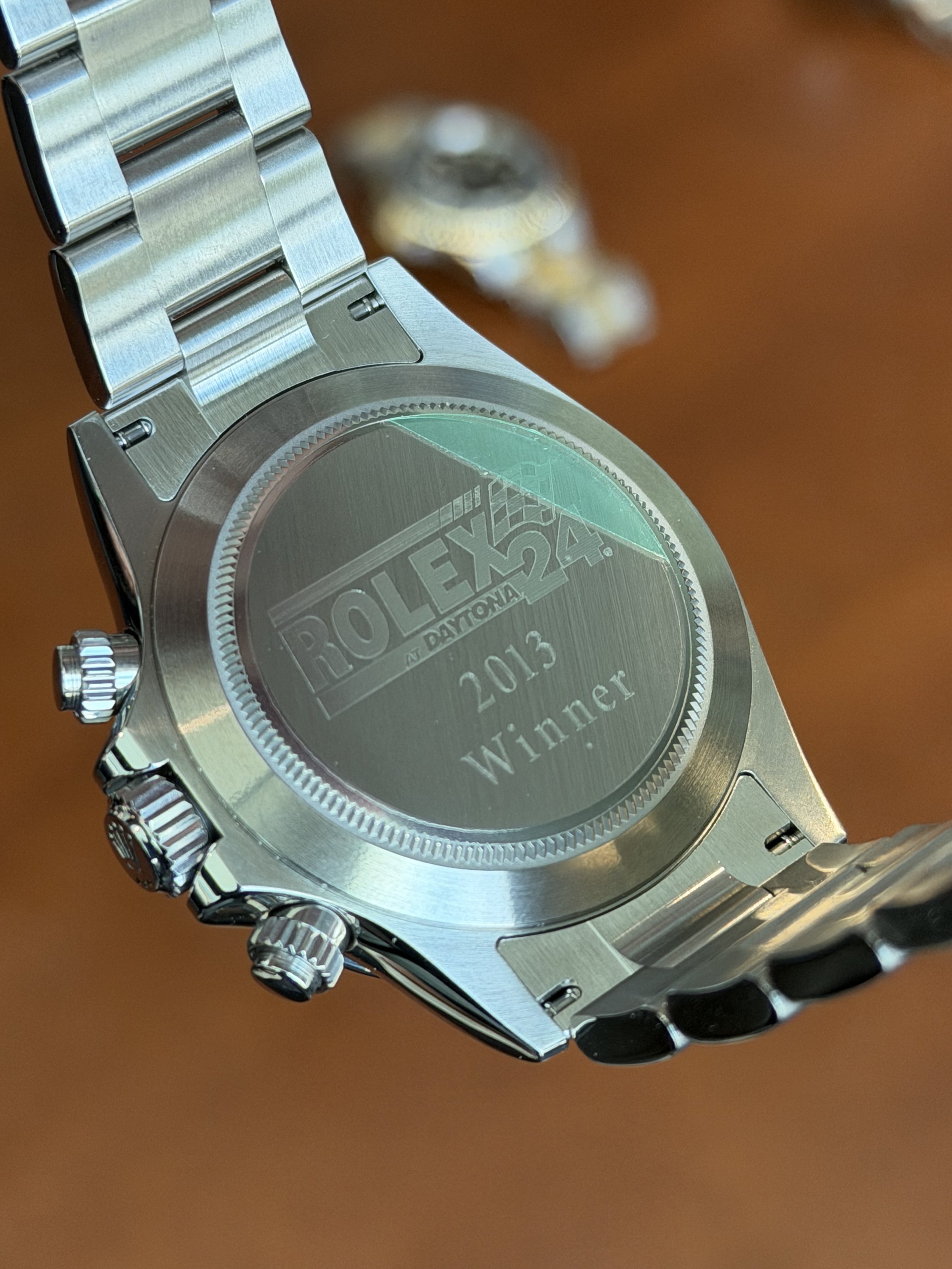
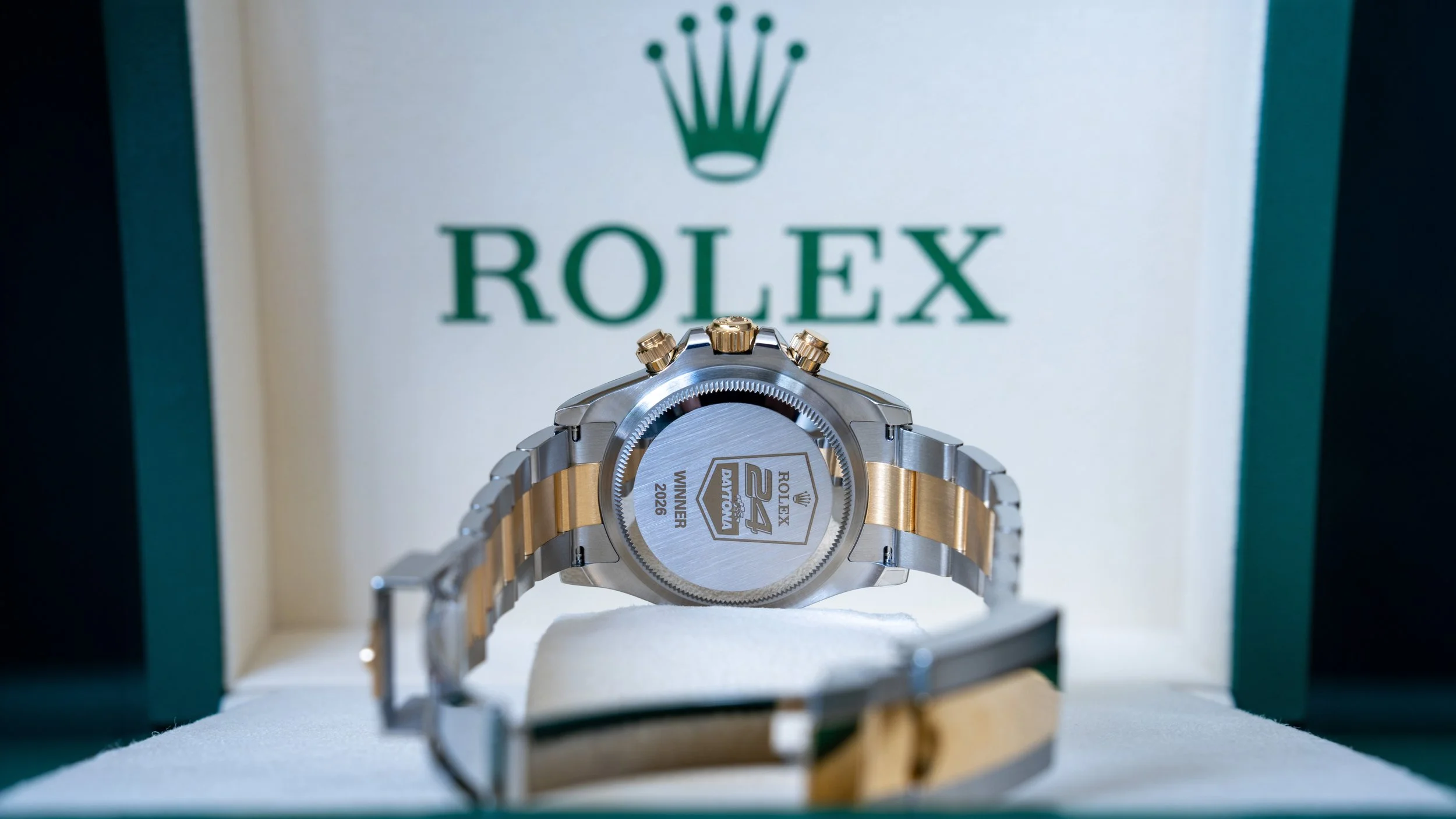
We also spent time with Hurley Haywood before I got pulled aside for a very specific assignment: spending time with one of the actual two tone Daytonas that would be handed out to the winners later that day. The watch was sitting in a special Rolex presentation box on a cushion, already engraved on the back with “Rolex 24 Winner” and the year, 2026. Knowing that within a few hours it would be on the wrist of someone who had just survived 24 hours of racing gave it a weight that had nothing to do with metal. My own Daytona is tied to finishing law school. This one was tied to whatever story the race decided to tell that day.
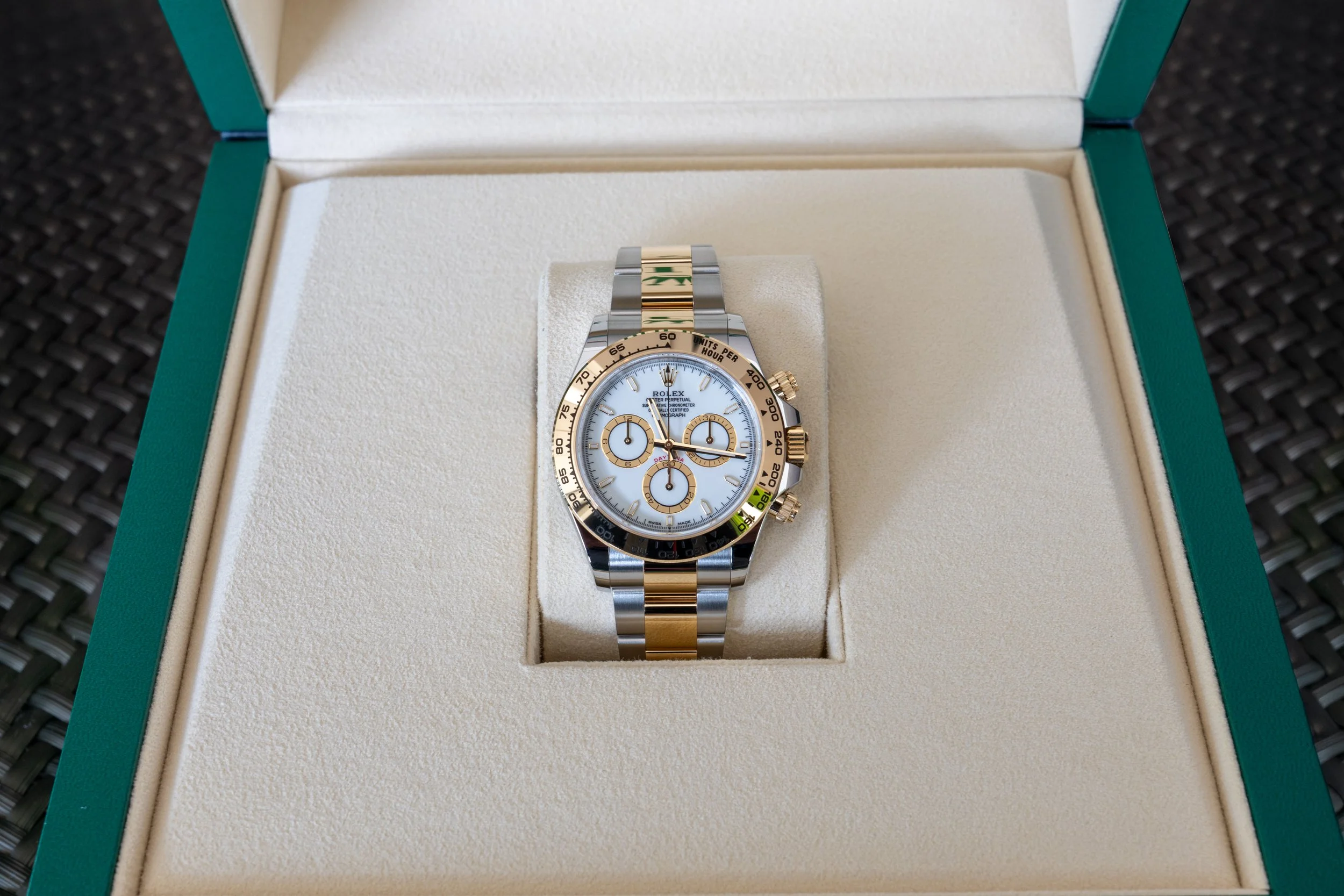
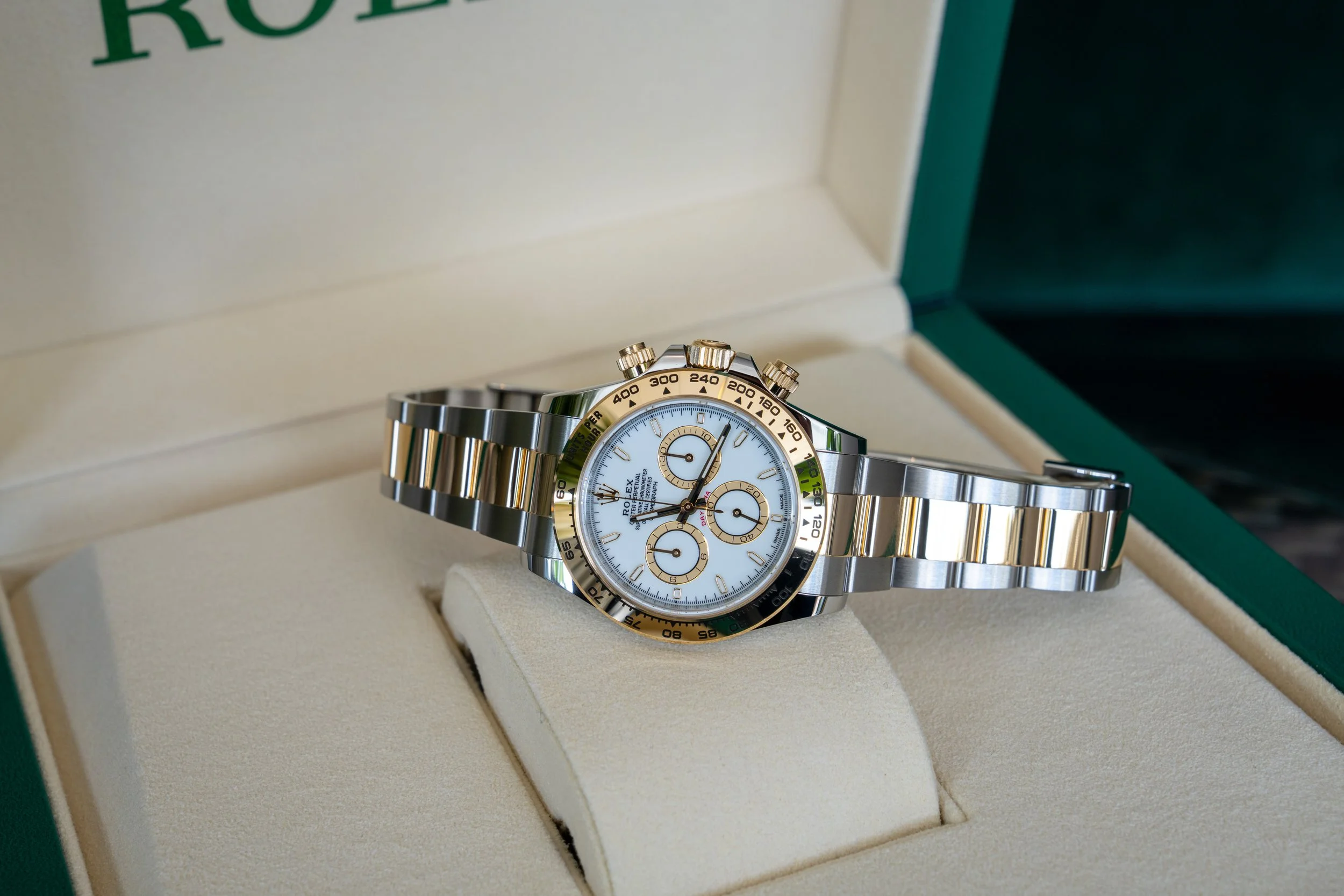
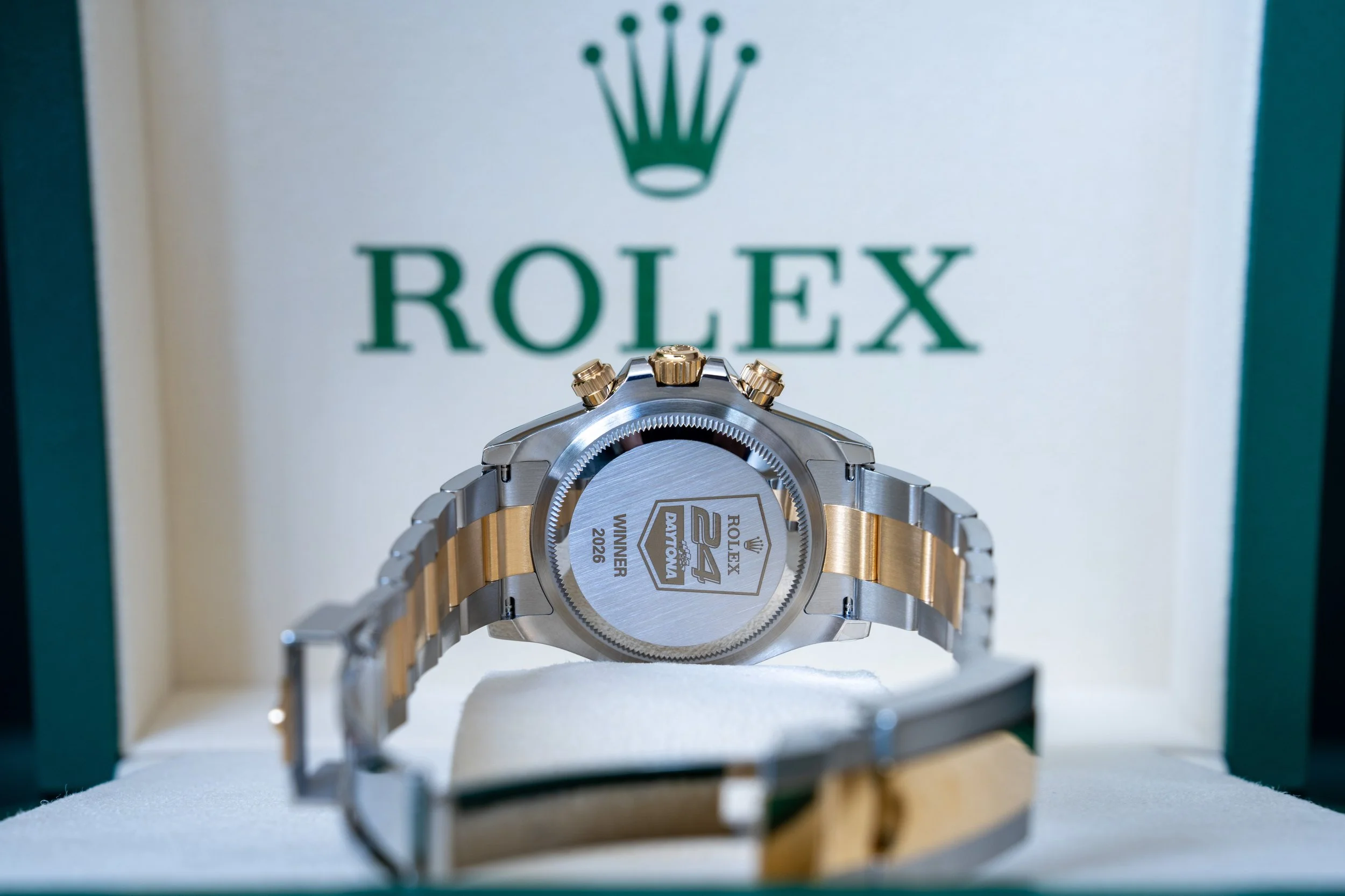
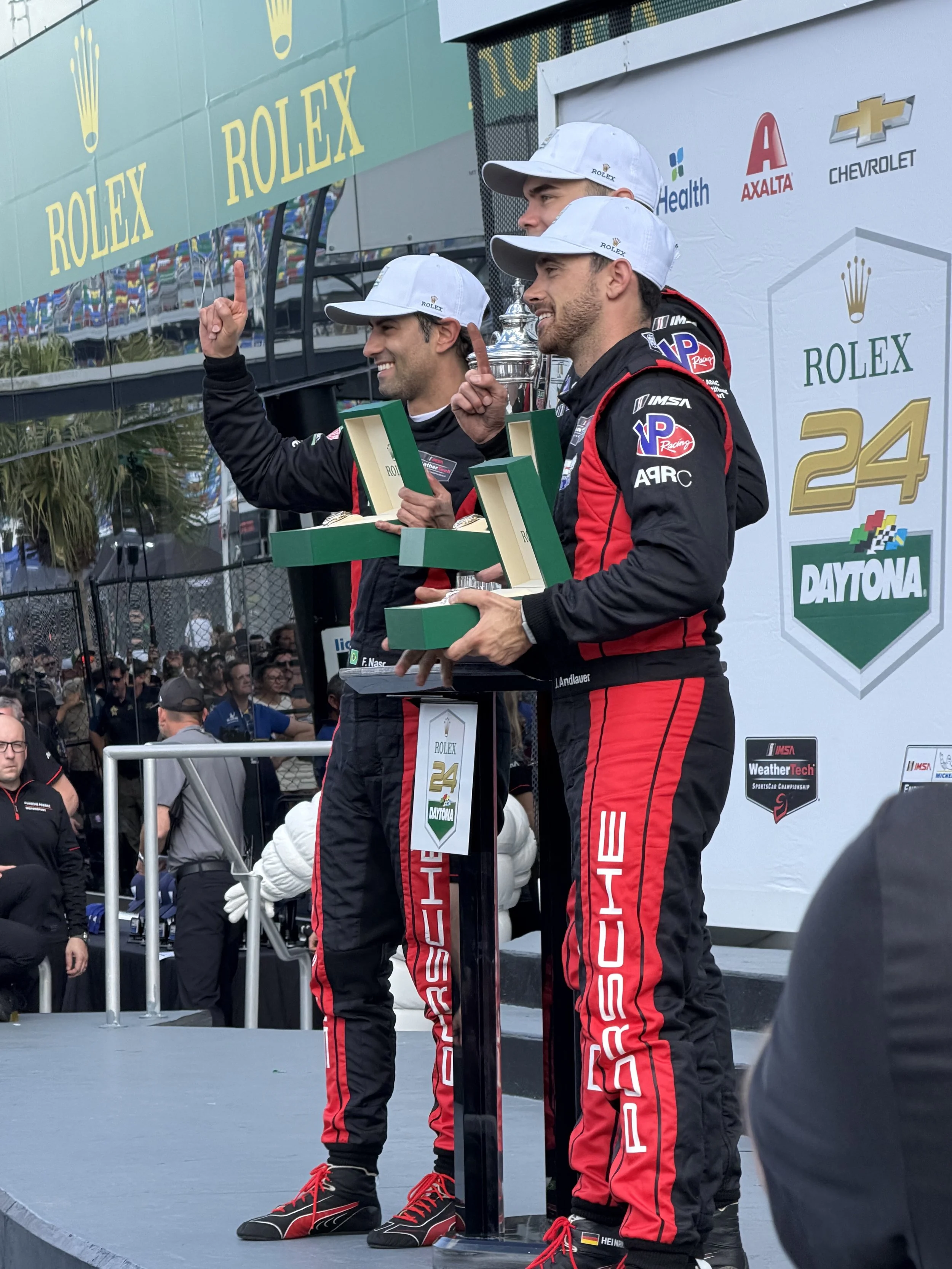
We went back out for the final stretch of the race and then made our way into the area where the trophies and watches would be presented. The winner’s circle where Tom Kristensen had welcomed us at the start of the weekend looked completely different now. It was packed with teams, cameras, officials, and a very visible number of green boxes. When the winners finally stepped up, holding trophies in one hand and fresh Daytonas in the other, the whole idea of “time as a reward” stopped being a metaphor.
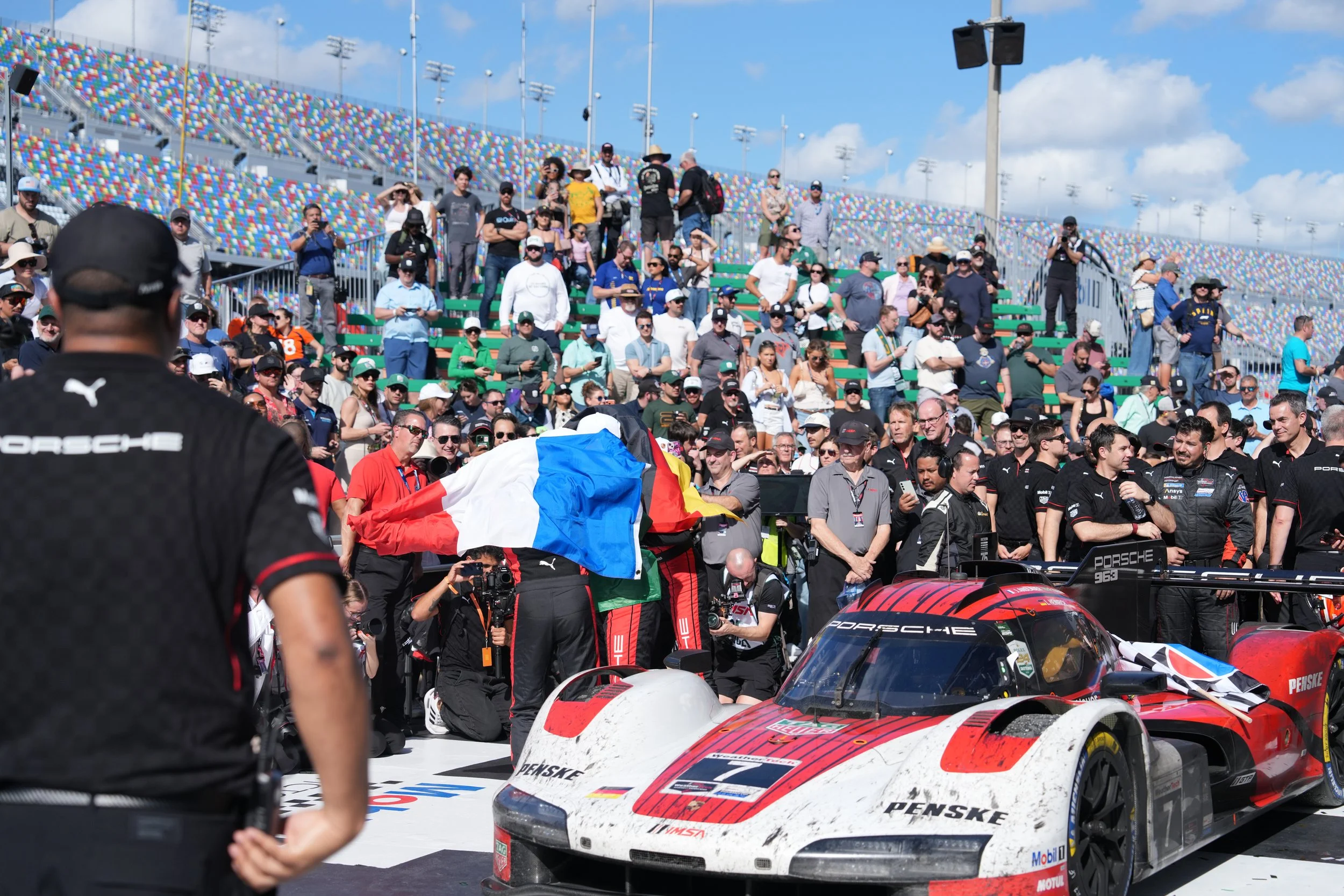
The weekend wrapped with a police escort leading our cars for a slow lap of the circuit. Rolling through the same corners we had been watching non stop, and driving over the finish line where I had written “@wristenthusiast,” was a neat way to close the loop. My watch had basically been along for every version of Daytona the weekend had to offer: quiet hotel room, suite, pits, banking, fog, race control, podium.
Then everything snapped back to normal. A storm hit New York and the rest of the Northeast, flights were cancelled, and suddenly we were just a group of people in a bar sorting out travel plans and watching my Patriots clinch a spot in the Super Bowl. It was a very regular way to end a very not regular weekend.
When I finally got home and took off the 2012 Daytona, it looked exactly the same as when I left. Same bezel, same dial, same scratches. But, in my head I felt a difference. Yes, it was still the same graduation gift it’s always been. But now it has the added meaning of being the watch I wore to Daytona. The one that sat next to the winners’ trophies and spent the whole weekend at the track. It doesn’t need an engraving to hold on to that memory.