

Few timepieces receive the attention and reverence of genuine mil-spec watches — the type issued to commandos, paratroopers, divers, infantrymen, and the like for use in training and at war. While most militaries around the world no longer issue watches, the 20th century is a particularly important time period within the horological story due to this once-widespread practice.
For one highly revered unit in particular, such a practice is inextricably linked to Tudor. Registered as a trademark 100 years ago by Hans Wilsdorf, founder of Rolex, the firm was established in 1946 as a more affordable alternative to its sister brand — a feat accomplished by marrying Rolex cases, bracelets, and other componentry with off-the-shelf Swiss movements. When the Navy SEAL Teams were stood up in 1962, the Tudor Submariner quickly became the outfit’s first watch of choice, establishing a decades-long relationship that continues — albeit in altered form — to this day.
While many other issued military watches are the result of the government effectively “designing” the timepiece it requires and then issuing a request for bids to relevant watchmakers, the Tudor Sub was deemed acceptable “off the shelf.” And though the United States Navy didn’t procure the very earliest Tudor Sub references, it did adopt the ref. 7928 just a few short years after it hit the market in roughly 1959, with the Teams placing an order for 125 ref. 7928 Oyster Prince Submariners the same way that it ordered pistols, web gear, and uniforms: rather than waiting on officially sanctioned military channels to provide the equipment the unit needed, commanders simply used approved Navy funds to purchase items from the civilian market. In the case of the ref. 7928, Roy Boehm, the executive officer of East Coast-based SEAL Team Two, ordered them from Tudor’s New York City office, which shipped them to Naval Amphibious Base Little Creek in Virginia Beach. This de facto go-ahead led to actual approval of the Tudor Sub as official SEAL kit, and soon thereafter, it became available through naval channels.
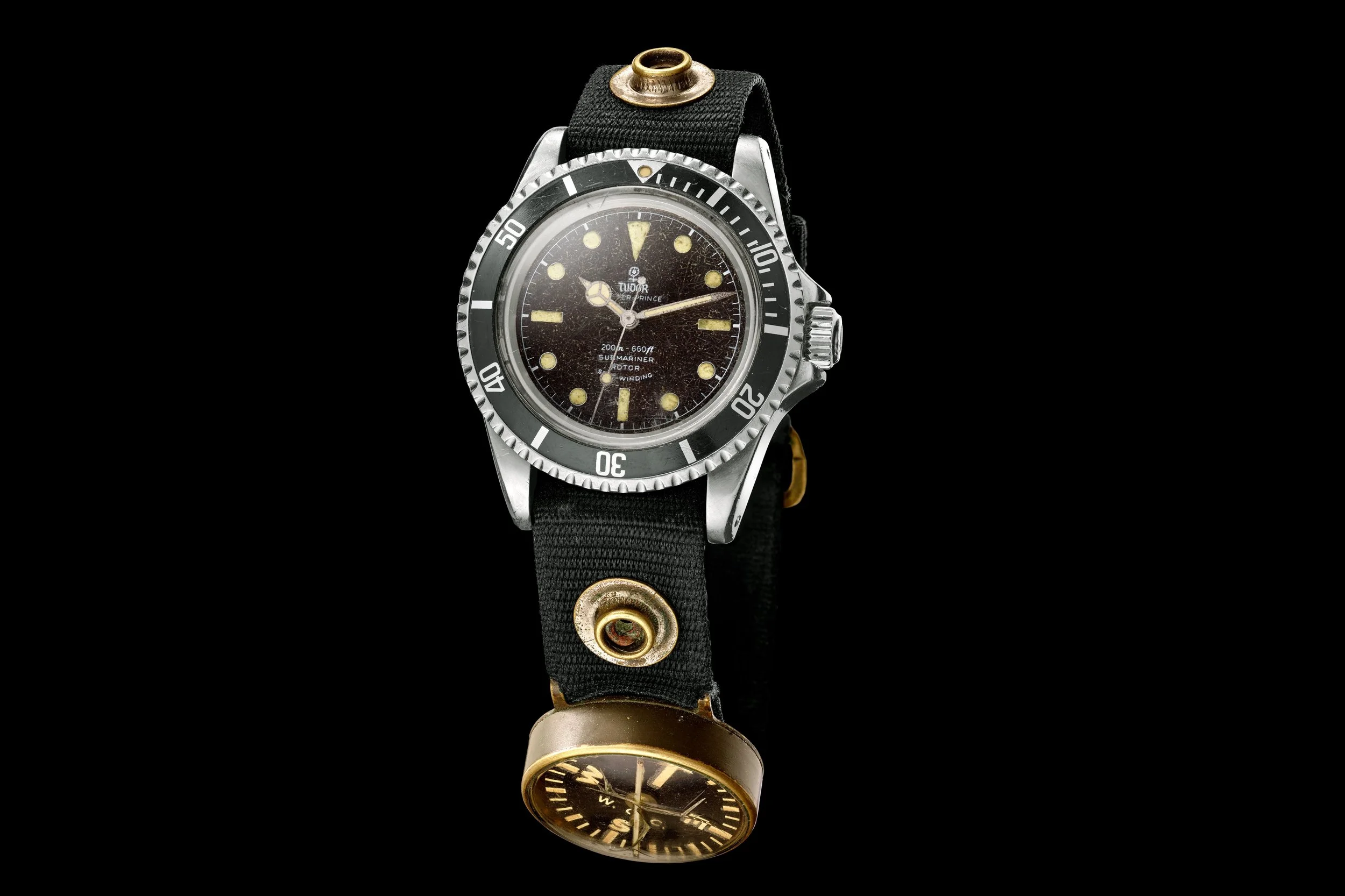
Philip “Moki” Martin’s issued Tudor Oyster Prince Submariner ref. 7928 from 1964, worn on a nylon strap with a wrist compass, now at the Navy SEAL Museum San Diego. Photo: Tudor
These watches were owned by the Navy — not the individual SEALs to whom they were issued. Issuance was roughly as ritualized as signing out a firearm: “It's a very involved ceremonial thing,” deadpanned Captain Bob Rohrbach, a UDT veteran who served in the 1960s. “You walk up to the supply officer, put your hand out, and he puts a watch in it.” Said watch — like an assault rifle, fins, a mask, or any other piece of kit — was just that: equipment with which the SEAL/UDT was expected to accomplish his mission. (The reverence with which watch collectors regard these watches — and these men — would come later.)
Despite the pragmatic lens through which individual SEALs viewed their dive watches, enlisted men and officers from other outfits were perhaps less jaded: John McLachlan, another UDT veteran, recalled attending a training course in Georgia involving coordination with the Army. One morning during PT, an Army sergeant noticed his wristwatch and demanded to know where he had obtained it. The frogman answered casually that the Navy had issued it to him, at which the sergeant complained, “I've been in this man's army 20 years, and they never gave me a watch.” The young operator couldn’t resist replying, “Well, sergeant — if you had joined a good outfit, they’d have given you one, too. (At which point, of course, he was immediately ordered to drop down into pushup position.)
While ultimately destined for combat — particularly, in the 1960s, in the jungles of Vietnam — SEALs (and UDTs) were also hand-picked for other special missions. When the Apollo 11 and 14 capsules touched back down to Earth, for example — landing by parachute in the ocean — America’s finest maritime commandos were there to extract the astronauts from the capsules. During such a task, of course, a dive watch was once again essential kit...though things did not always go according to plan.
In one incident, Bob Rohrbach — who participated in the Apollo 11 recovery — recalled not having received his Tudor yet when he joined the mission; instead, he borrowed one from another frogman for training exercises. During one such exercise, a submerged sea anchor snagged on his watch, first propelling him into the air, and then dragging him underwater. About to cut himself free of the anchor line with his knife, his arm suddenly jerked free of its own accord, and he was able to swim up to safety. The watch’s spring bar had broken — potentially saving his life…though not the watch.
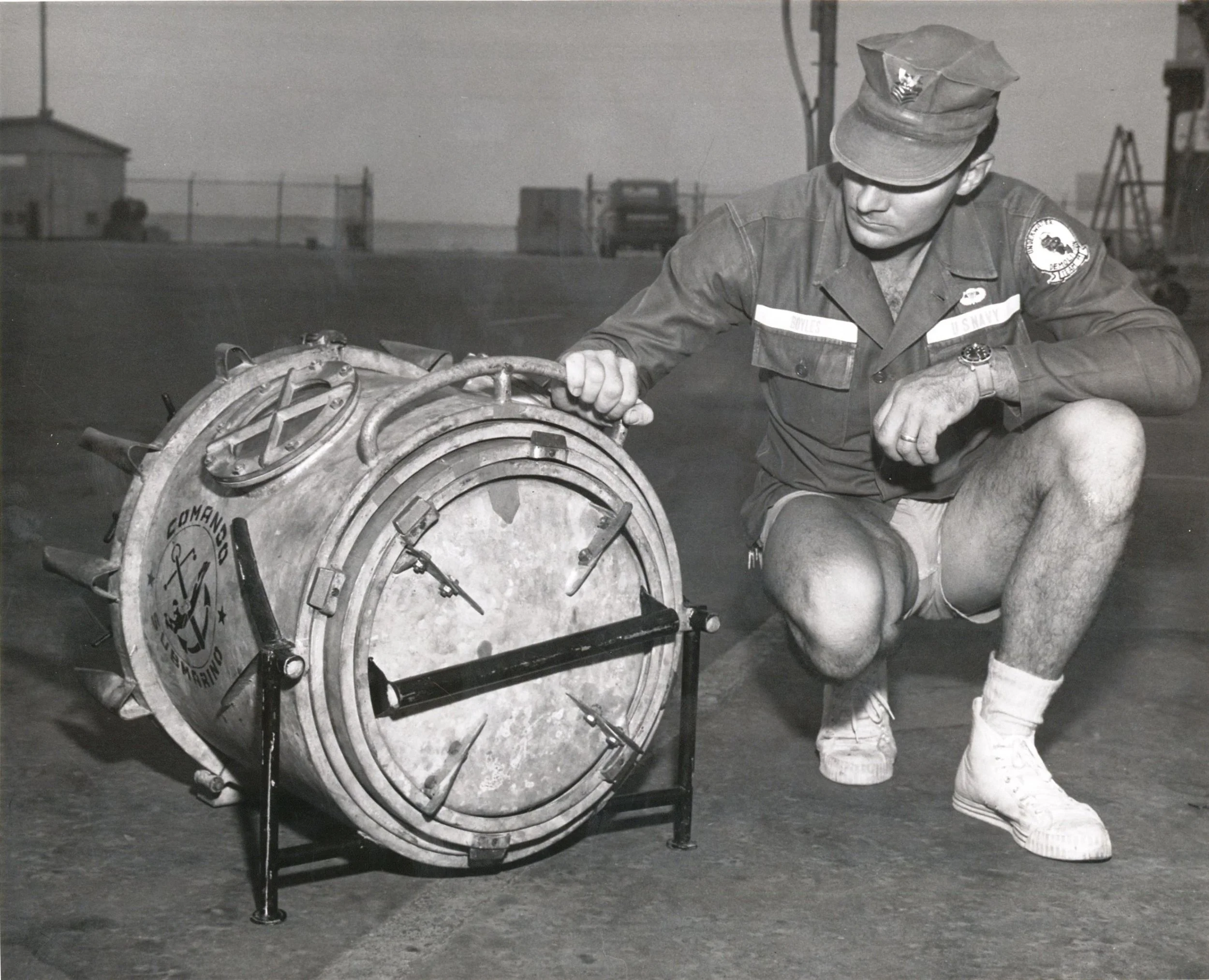
A UDT 11 team member in the 1960s with a Tudor ref. 7928 on his wrist and a portable decompression chamber. Photo: Tudor
Though they’re now heavily associated with the Teams, ref. 7928 Subs were far from the only Tudors used by the Navy. Issued to UDTs, Navy SEALs, Seabees, diving instructors, and other personnel, references 7016/7021 “snowflake”, 9401/9411 “snowflake”, and 76100 — the famed “lollipop” watch with a round counterbalance on the hour hand — all passed through the governmental system. Though these Subs were initially procured directly from Tudor by the Navy, they were given NSN (“National Stock Number”) 6645-01-068-1088 in 1978, allowing a supply officer to purchase and issue a ref. 9411 (later ref. 76100) to a qualified sailor. Interestingly, issue and use of Tudor Subs continued as late as 2004 — well into the age of the digital watch. (Though Tudor released the ref. 79090 in 1989 and produced it through roughly 1995, it doesn’t appear that the U.S. military issued it.)
A 1978 Tudor Oyster Prince Submariner ref. 9401 “snowflake” at the Navy SEAL Museum San Diego. Photo: Tudor
Generally — though not always, as period photographs show — these watches were worn on fabric or rubber straps, and were engraved on their caseback with some sort of tracking number, as well as perhaps an issue date and service brand. One example from 1968, for example, reads:
U.S.N.
ST-2/015
OCT.68
Upon reflection decades after their service, it’s clear just how much these small mechanical talismans meant to the SEALs/UDTs. Capt. Rohrbach, who served on the Apollo 11 recovery as part of UDT 11, experienced an uncommon spat of luck when the supply officer to whom he tried to return his Sub took him around back of the building, calmly explained that the watch had been “surveyed” — Navy speak for missing/stolen/damaged equipment — and that he might as well keep it. Capt. Rohrbach wore the watch until roughly 1997, when his oldest son, Chris, completed SEAL training. Sending it back to Tudor for refurbishment, he then passed it along to Chris at his graduation. Borrowing the watch for a ceremony at the San Diego Navy SEAL Museum recently, Bob was immediately transported some 50 years into the past. “I put it on, and I walked in the backyard, and then I started to have these memories flooding my brain of all the fun times I had wearing this watch,” he explained. “It just felt so comfortable. It was like nothing had ever happened. I was back in my mid-20s — and then I tripped, and I realized I was not in my mid-20s anymore,” he laughed.
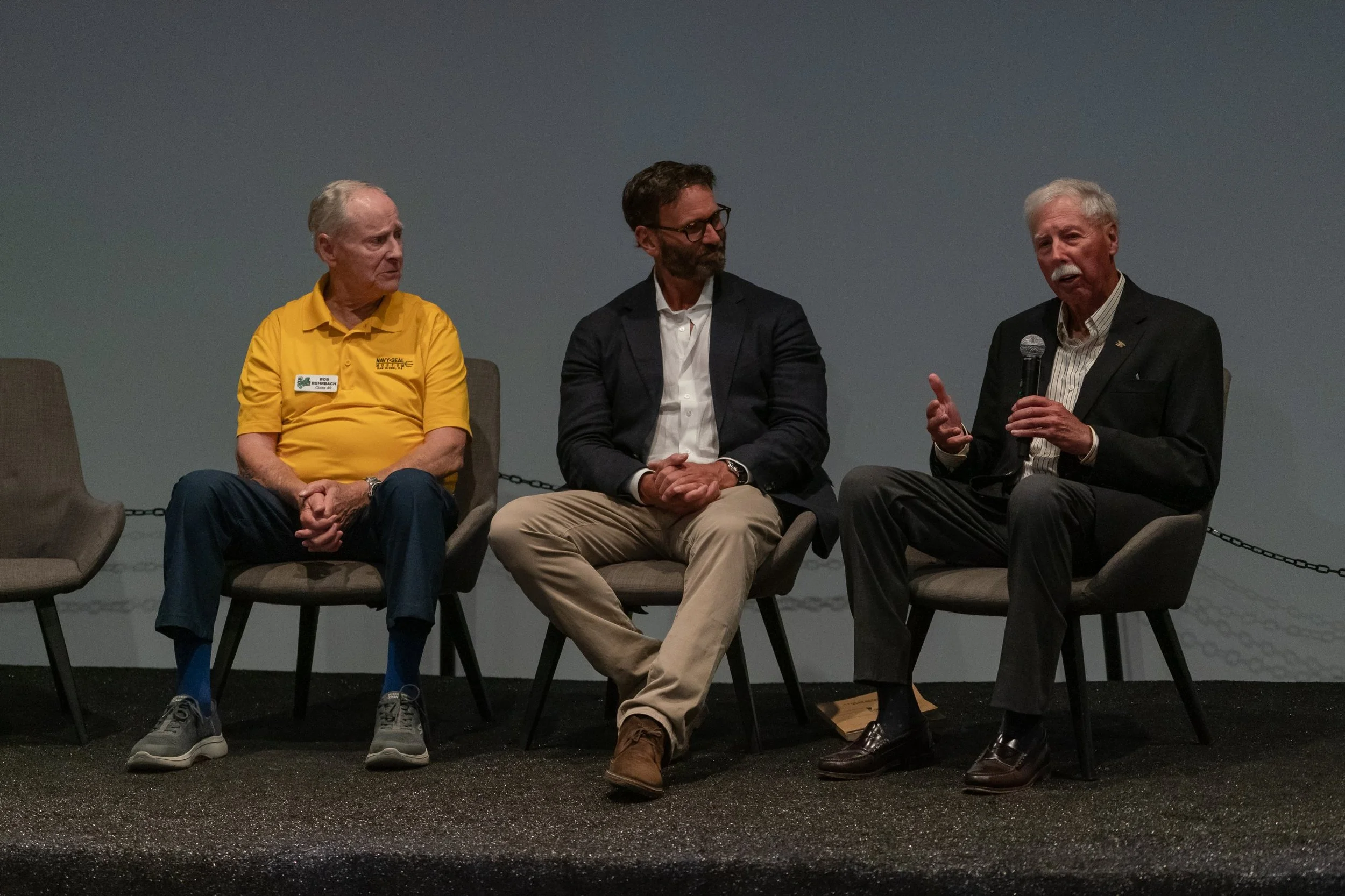
Capt. Bob Rohrbach (left), wearing his issued ref. 7928, with author Jack Carr and fellow UDT veteran John McLachlan at the Navy SEAL Museum San Diego. Photo: Tudor
Having faithfully served the Navy SEALs and UDTs within the US Navy supply system for some 40 years, the Tudor Submariner has become somewhat of a mil-watch legend. (That it was also used in the Canadian, France, Israeli, Argentinian, South African, and Jamaican militaries is further testament to its effectiveness.) Though the Teams no longer issue Tudor watches, the brand is a proud sponsor of the Navy SEAL Museum San Diego, and its modern Pelagos FXD in black takes inspiration from Submariners issued to the unit. Ties between unit veterans and the brand are strong, too, with the passing decades having done little to diminish the pride with which these operators earned their Submariners.
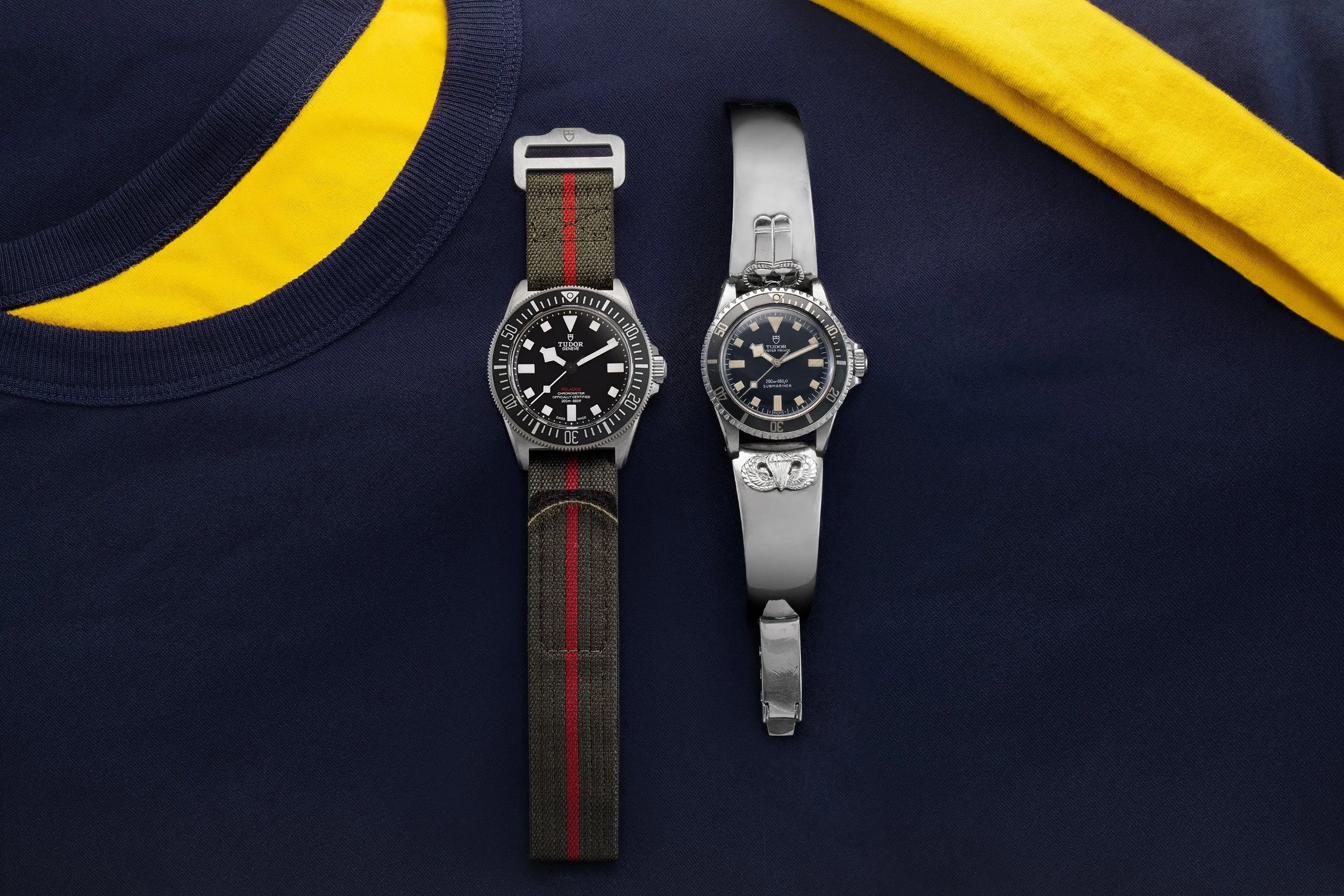
Then and now: a 1968 Tudor Oyster Prince Submariner ref. 7016 beside the modern Pelagos FXD ref. 25717N that draws on the watches issued to the Teams. Photo: Tudor
In being asked which other pieces of equipment they valued, McLachlan and Rohrbach named their swim fins, uniforms, and other important objects.
“But the watch was the most special thing,” said Rohrbach.
“Yeah,” echoed McLachlan. “The watch was the special thing.”