
Tudor Black Bay Family Guide: History, Models, and How to Choose
The Tudor Black Bay. One of the most talked about watches, yet a watch that can never truly be spoken about too much. It wears so many hats for different collectors. It’s a vintage/heritage-inspired design, yet it’s simultaneously incredibly modern in construction and robust in execution. It has a capable spec sheet to go head to head with any premier dive model, yet it’s still refined and elegant, not taking on a brutish personality like many other robust tool watches. It comes in large sizes, but it also is offered in far more modest proportions, providing an option for collectors of all kinds to access the same compelling design. And finally, its price is nearly unrivaled in the segment. This watch would go head to head with many far more expensive pieces and to some it would come out on top. The value proposition is simply impossible to ignore.
Today we are taking a look at the core of the Black Bay family. Where it comes from, what the brand offers to whom, and why the model line is so beloved by collectors worldwide.
History
Tudor watch company was established by Hans Wilsdorf, the founder of Rolex, as a way of bringing the award winning innovations of the Rolex brand to a wider audience. By coupling technical enhancements like the oyster case and perpetual winding rotor with more economical movements, Wilsdorf allowed serious divers and explorers to take full advantage of the capabilities of a Rolex, but at a more affordable price point. Over time, Tudor has blossomed into its own distinct brand. Where Rolex today makes small iterations on their underlying designs, Tudor explores vintage inspired pieces, more striking designs, and ever more adventurous executions. Once the affordable extension of Rolex, today, Tudor has its own distinct identity.
The origins of the Black Bay of today go way back to 1954, just one year after Rolex launched the Submariner. That year, Wilsdorf presented the Tudor Oyster Prince Submariner, Tudor’s very first official dive watch. From 1954 through the 1960s, the Tudor Sub iterated alongside the Rolex Sub with incremental changes. By the end of the 60s, Tudor had presented the reference 7016, called the “Snowflake” for its distinctive squared hour hand, a detail that has continued into the modern collections. Production of Snowflake Tudors continued through the early 1980s before it was phased out.
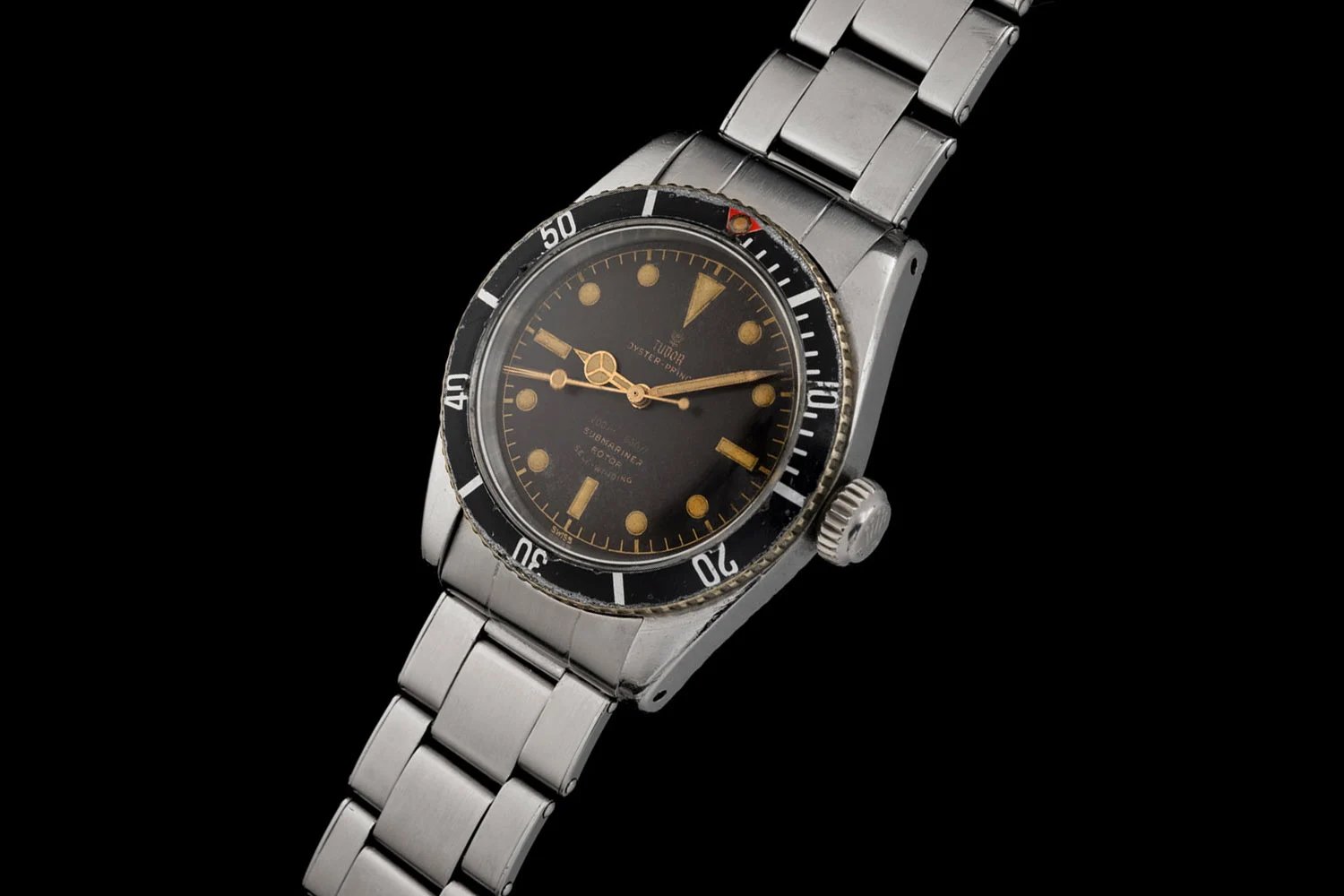
The relaunch of the Tudor Black Bay collection occurred in 2012 with the presentation of the Heritage Black Bay.
Tudor Heritage Black Bay
The very first in the evolution of the modern Black Bay, the 2012 Heritage Black Bay set the stage for all that was to come. The classic heritage-style diver featured a burgundy diver bezel on a black dial with gilt finishes, the iconic snowflake hand, and a host of other heritage elements to obsess over, including the Tudor rose emblem seen on many vintage Tudor Oyster Prince Submariners.
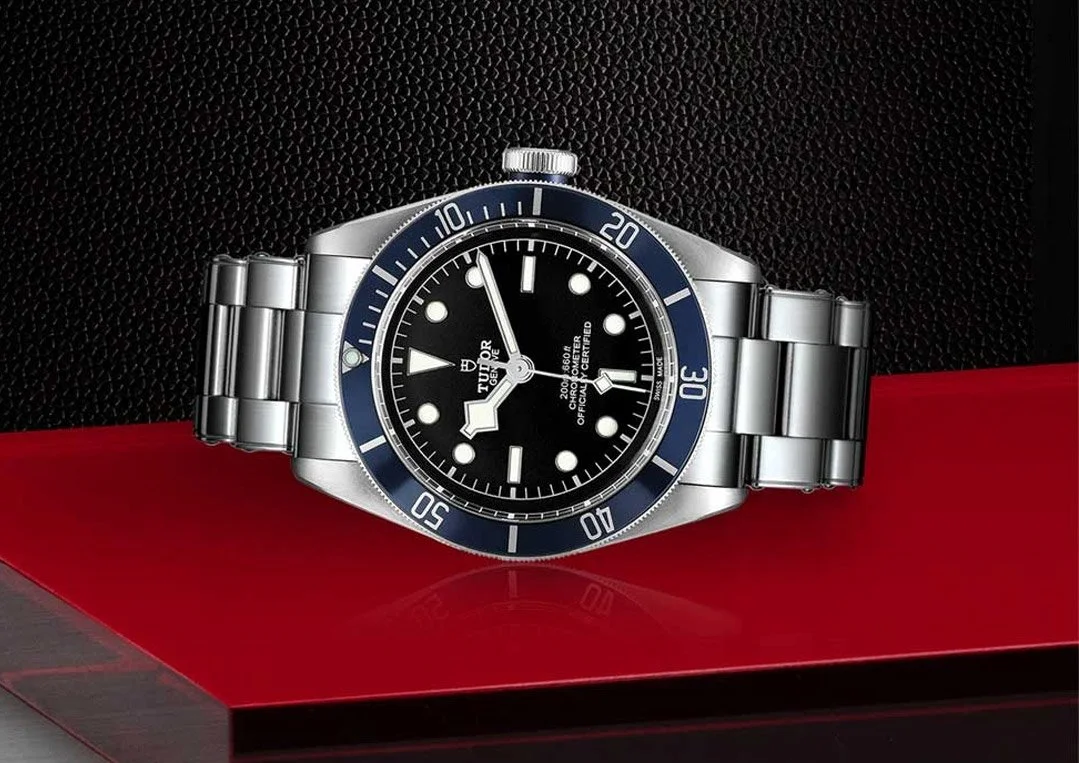
Following the burgundy Heritage Black Bay, Tudor presented an additional blue bezel variant and another sporting a black insert. In addition to a compelling case and dial design, many of the Black Bay models were paired with classic vintage-style bracelets featuring faux rivets as a callback to early Submariners. A beloved and hated detail by collectors of different kinds, the assertion Tudor sought to make was that while their brand was new in the Black Bay direction, these watches were founded on an age-old history. These models formed the backbone of what would become Tudor’s most popular collection in the coming years.
The Heritage Black Bay provided the market validation to justify Tudor investing in the development of their own movement. For the first time, instead of placing ETA movements in well-built cases, Tudor was taking a step into building its own sovereign identity distinct from Rolex. While early Black Bay models featured ETA movements, Tudor quickly moved to the caliber MT5621 which was not just developed as a Tudor project, but also was extremely capable. It featured a 70 hour power reserve, COSC certification, and a silicon balance wheel. This was a high performance movement and it was a statement about Tudor’s trajectory in the coming years.
Black Bay
A direct outgrowth of the Heritage Black Bay, the Tudor Black Bay is a substantial 41mm in diameter, consistent with the conventions of the industry’s most famous dive watches. Incredibly popular from launch, the Black Bay featured a black dial with black bezel, gilt finishes throughout, and a red triangle at 12 on the bezel as a nod to vintage Tudor Subs. Alongside Rolex’s Ceramic Submariners, the Black Bay felt like the reserved, retrospective glance into Rolex and Tudor history, and it remains a compelling offering for those desiring a larger dive watch today.
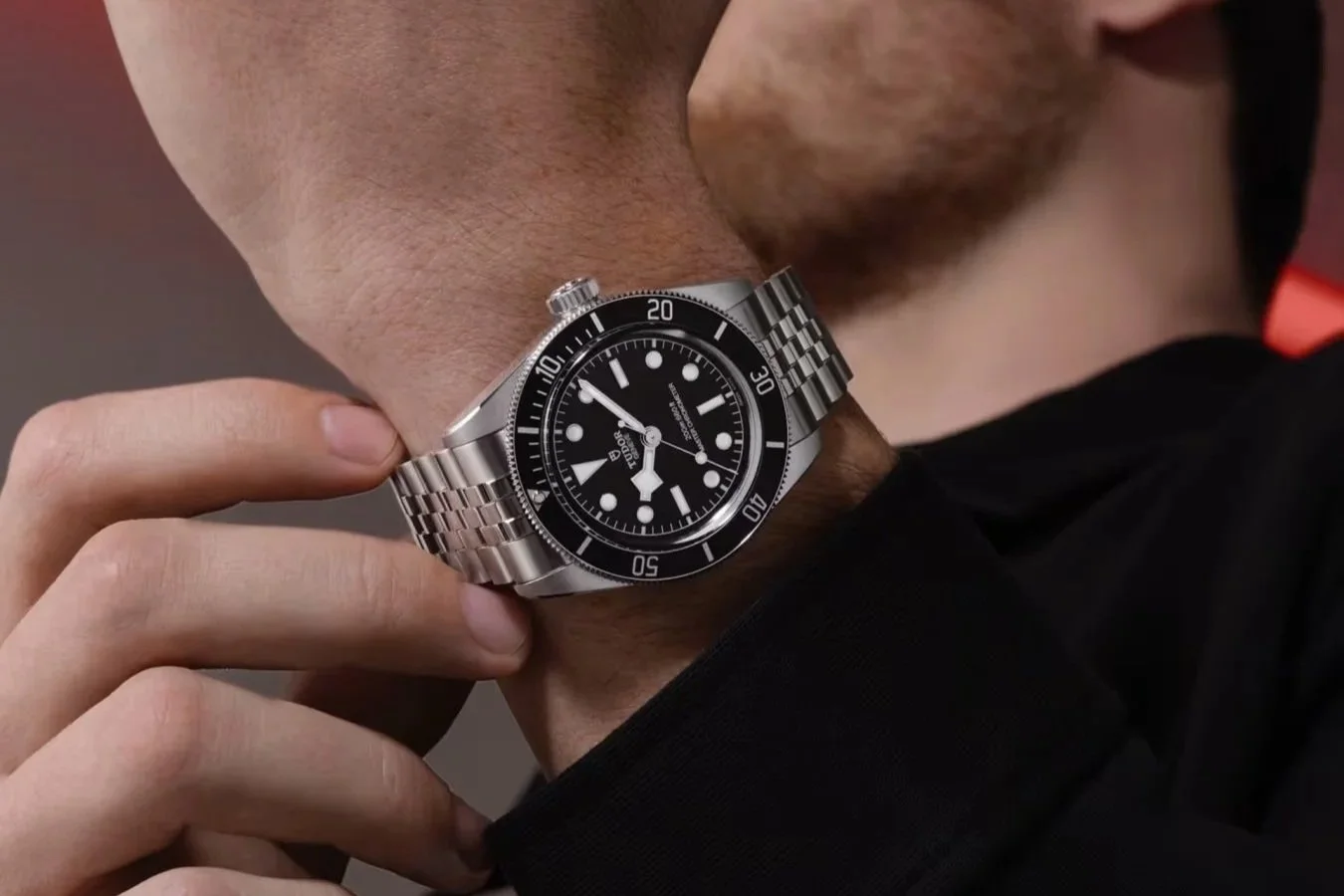
This piece solidified the design piloted with the Heritage Black Bay, refining the execution slightly, and also establishing the groundwork upon which the subsequent additions to the collection are built. The Black Bay has subsequently been made in a variety of alternative materials, including the Black Bay Bronze (at an even larger 43mm) and the Black Bay Ceramic. The proportions of the Black Bay at 41mm x 13.6mm thick definitely make this a serious piece on the wrist. While many loved the Black Bay design and execution, there was still a whole contingency of the Black Bay customer base that physically couldn’t fit in a BB41. That’s where the BB58 comes in!
Black Bay 58
Released to wild acclaim in 2018, the Black Bay 58 was a complete game changer for Tudor as a brand. Sized at a stunning 39mm in diameter, the Black Bay 58 was released as a tribute to the 1950s Tudor Subs we spoke about earlier. This watch coupled the Black Bay aesthetics that collectors already loved with all their vintage details with a sizing befitting a vintage-inspired piece. Dive watches are rarely offered in sub-40mm sizing, and the BB58 was executed so well that collectors all over scrambled to add the accessibly priced diver to their collections.
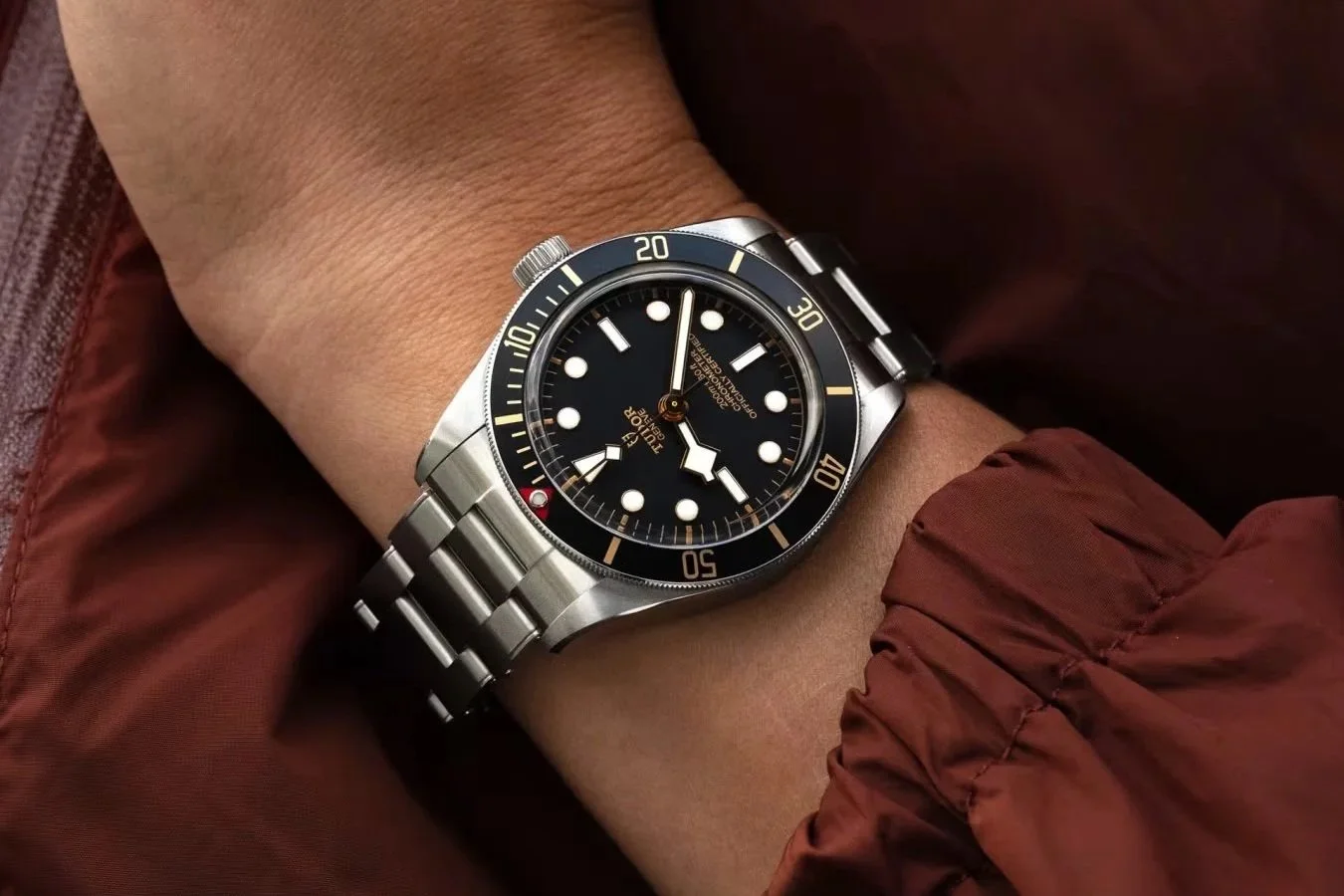
Notably, not only did the size shrink to 39mm, the BB58 also was a svelte 11.9mm thick. This made this watch supremely wearable, with a true vintage feel on the wrist through and through. For those that liked the BB58 sizing and feel but wanted something less obviously vintage inspired, Tudor also offered the Black Bay 58 in a more modern bright blue dial variant.
The BB58 remains the most popular Tudor dive watch, and Tudor have built additional outgrowths of the model, including a BB58 in yellow gold, bronze, sterling silver, and additional dial colors. This watch put Tudors on more wrists than ever before and made the Black Bay a go to recommendation for one of the best dive watches under 10k. And much under 10k at that!
Black Bay 54
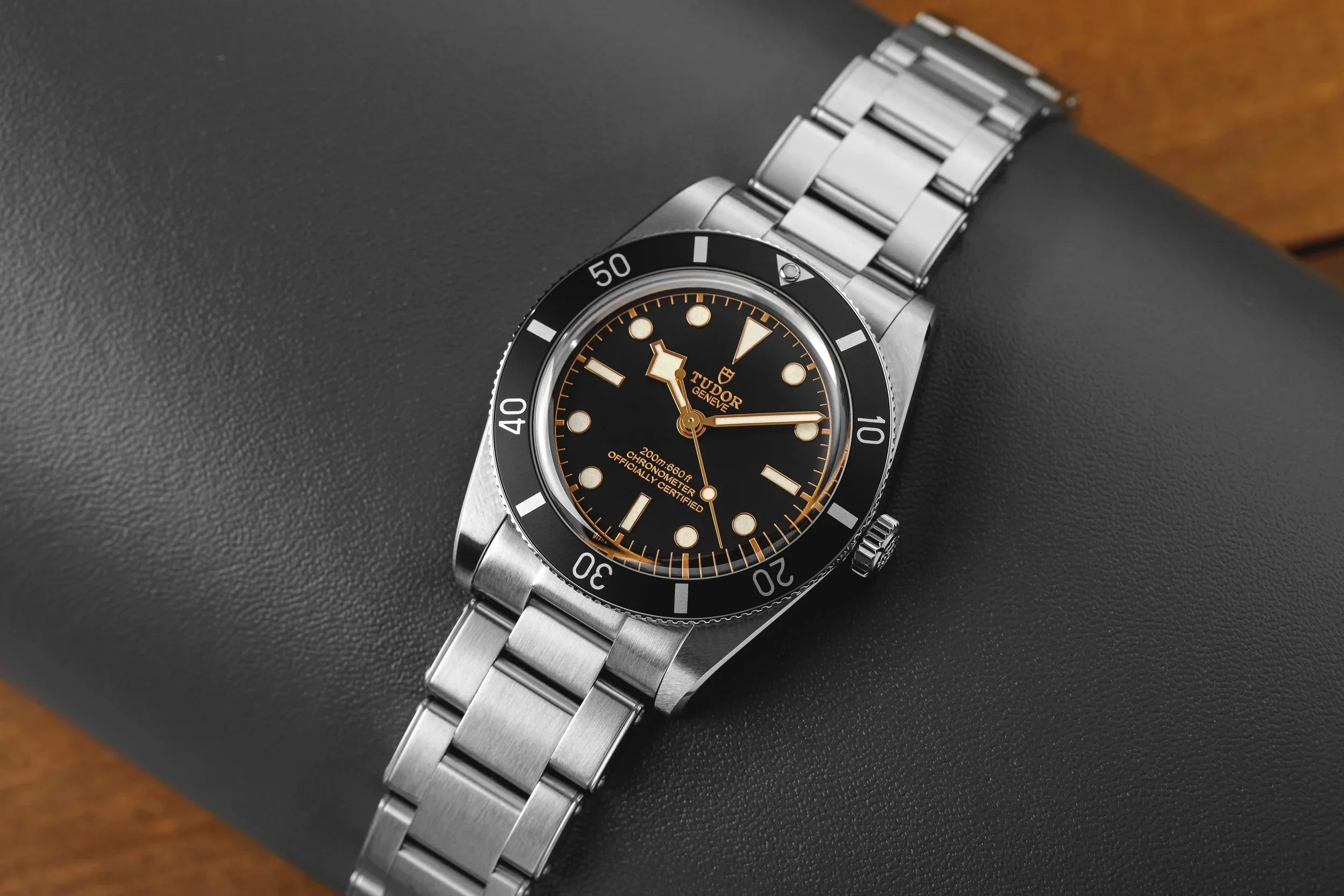
Almost all collectors felt they were set between the Black Bay and Black Bay 58, but in 2023, Tudor presented the Black Bay 54 at 37mm by a mere 11.24mm thick! This took Tudor’s dominance of the vintage-sized dive watch category to new heights. The BB54 went even further back into the Tudor archive, making slight tweaks to the 58 design language and mimicking the aesthetics of the Tudor Oyster Prince reference 7922 dating to 1954. Its sizing effectively made a beautifully proportional option for smaller wrists and for women who want a robust dive watch without wearing a dinner plate on their wrists.
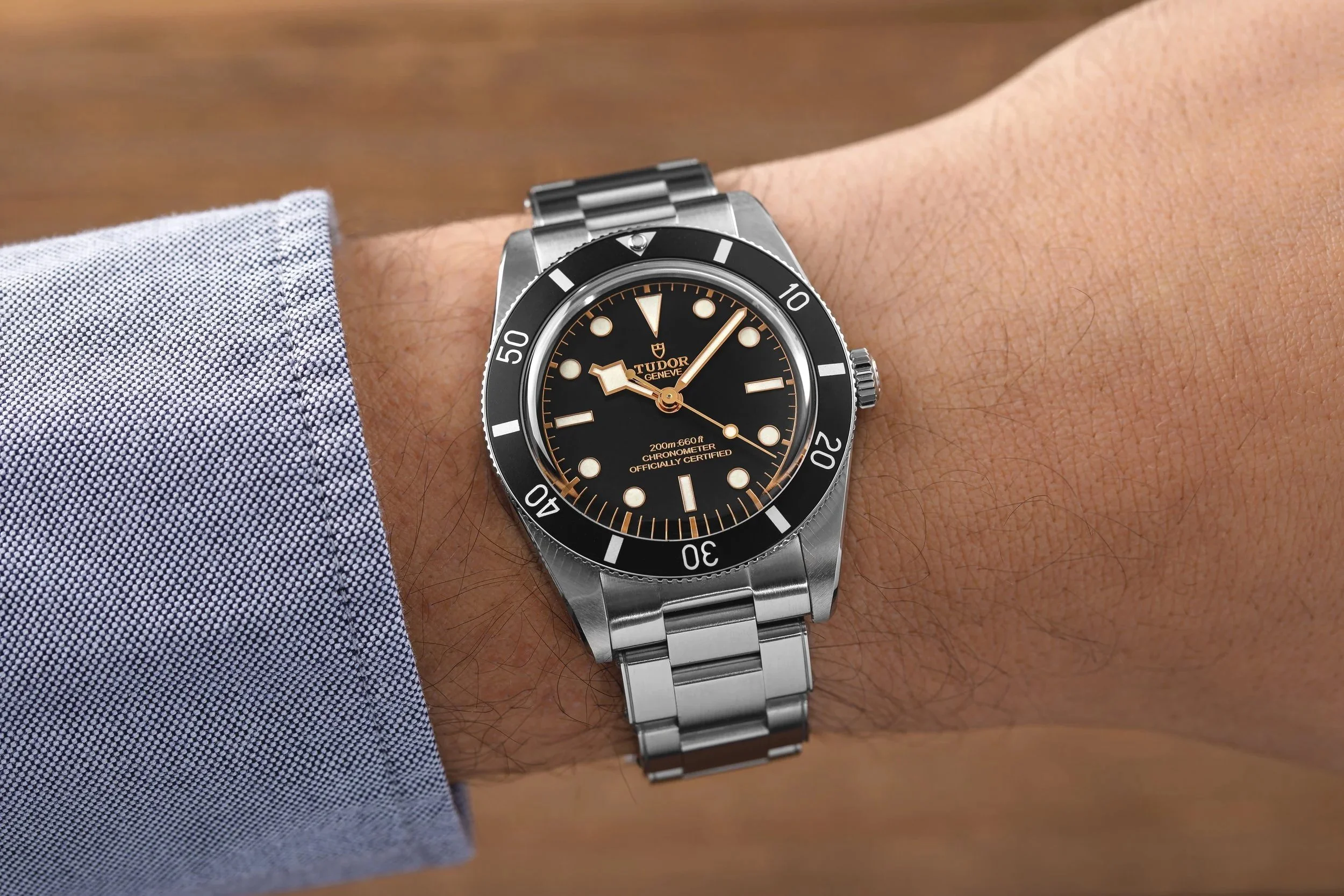
The brilliance of the BB54 is that for its size, it is simply so robust in construction, affording no less than 200 meters of water resistance. The watch industry is full of overbuilt, purpose-first timepieces, but rarely are watches this petite. Combining the technical spec of a capable diver with the compact proportions of a vintage elegant early diver yields a wonderful balance of solidity and elegance that is quite hard to find in the industry to this day. And again, all at an incredible price.
So how to choose?
So there you have it: three main models. The Black Bay collection is now a broader family including a variety of other complications and outgrowths. The Black Bay Pro and Black Bay GMT dual time watches, Black Bay Chronographs and more all comprise the now rapidly expanding family of well-executed pieces that honestly hold their own against watches twice the price. Within the core family of Black Bay, Black Bay 58 and Black Bay 54 models, there are now a range of sizing conventions that allow collectors to fine tune the feel they are looking for.
If you have a smaller wrist or really love vintage proportions, the BB54 is probably the slam dunk. That said, if you are used to more sizable divers, perhaps you’ve worn a sub or a seamaster, or something else contemporary, the BB54 might feel fragile with that precedent. In that case, the BB58 will feel like the perfect vintage inspired alternative to more sizable tool watches. The 58 is likely the solution for most wrists, wearing on a whole host of different wrist sizes and profiles incredibly well. For lovers of contemporary sizing, who appreciate the aesthetic package of the family, the standard Black Bay still outperforms many divers in objective metrics. Trying on all three pieces will immediately give collectors an intuition for which piece best suits their wrists, and most gravitate strongly to one or the other.
The Black Bay model line completely redefined the standard for divers under 5k. Pushing traditional design, capable engineering, dependable movement architecture, and a range of proportions, the Black Bay, for the first time, brought Tudor out from under the Rolex umbrella to define its own brand identity. And let’s be honest, the result is a pretty damn good watch.