The Wren Vessel Is Built Around a Sapphire Crystal Almost All Manufacturers Refused to Make
When Wren was still just a few dive watches, I moved to New Jersey, to a place directly across the Hudson from Manhattan. From my window there is a straight line of sight to the Vessel at Hudson Yards, so I saw it every day.
I can't tell you the day it went from being part of the view to being an idea. What I liked about it was simple. It is faceted from top to bottom, it looks like it belongs to the future, and it doesn't resemble anything around it. Those were the three things I wanted from the next Wren.
The brief
The watch I had in mind was an integrated-bracelet sports watch, which is a risky thing to want. It is the most crowded idea in watchmaking, and almost every example traces back to the same few drawings Gérald Genta made in the 1970s. I didn't want to make another one.
So the brief I wrote was short. An integrated-bracelet sports watch that doesn't look like another '70s Genta design. Built for 2075, not 1975. And a faceted sapphire crystal at the center of it, as the reason the watch exists and not a detail added at the end. I wanted people to pick it up and say "wait, this is a Wren?" and then be able to wear it every day.
There was a second reason for it. For our first two years, Wren was defined entirely by dive watches. This was meant to be the watch that showed what else we could do, and I wanted every major part of it, the crystal, the bracelet and the case, engineered for this watch and not chosen from a supplier's catalog.
Two years with Max
Every Wren before this one, I designed myself. This one needed someone else. Max Resnick is a British designer who trained in automotive design before he moved into watches, and you may know his work from the Anoma A1 and VPC. I gave him the brief and pointed him at the Vessel.
"The brief was harder than it sounded," Max says now. "Faceted sapphire is usually something you add at the end. Craig wanted the crystal to be the reason the rest of the watch existed, which meant the case had to be drawn around a shape nobody had made yet. Most of the two years went into finding out what that shape could actually be."
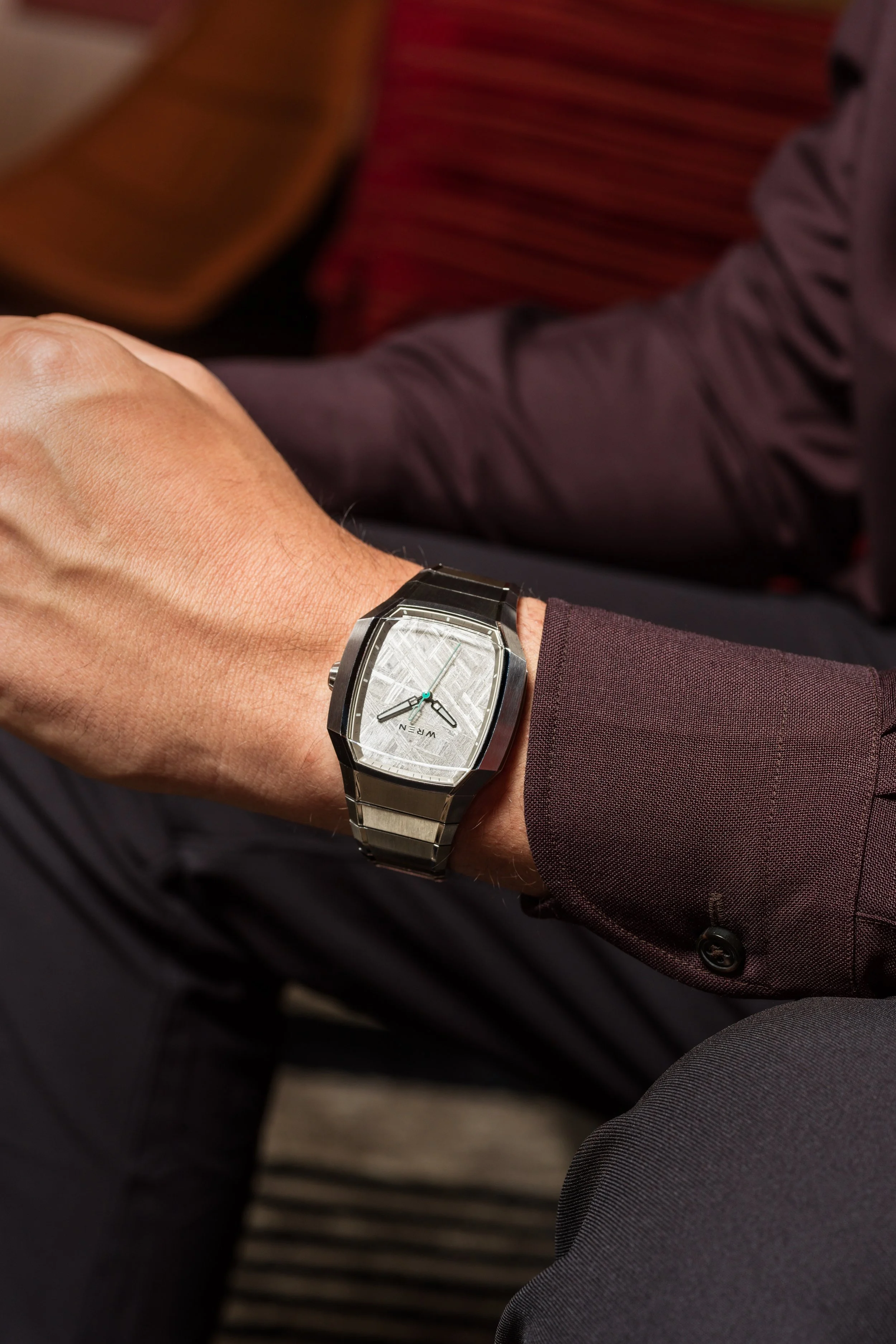
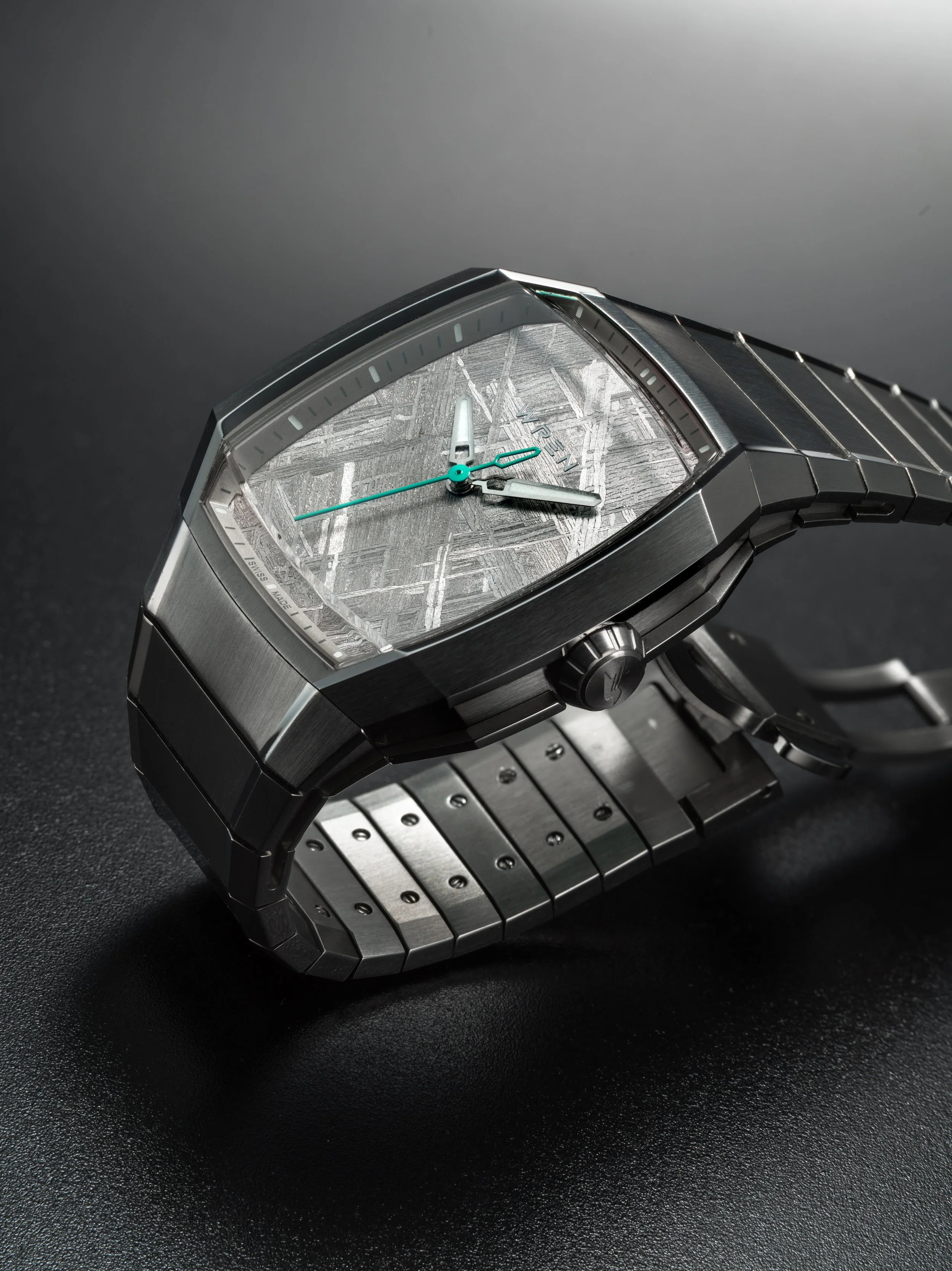
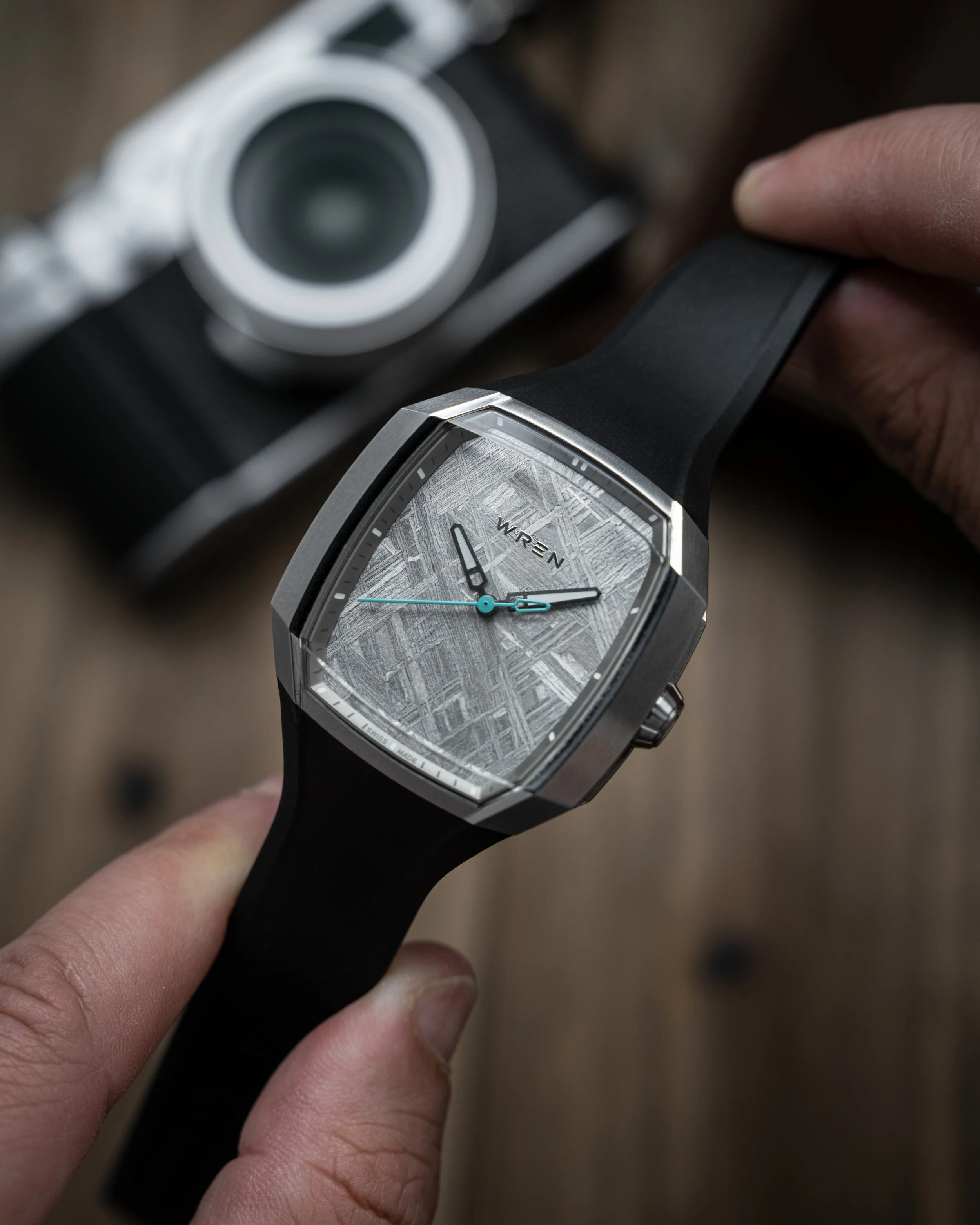
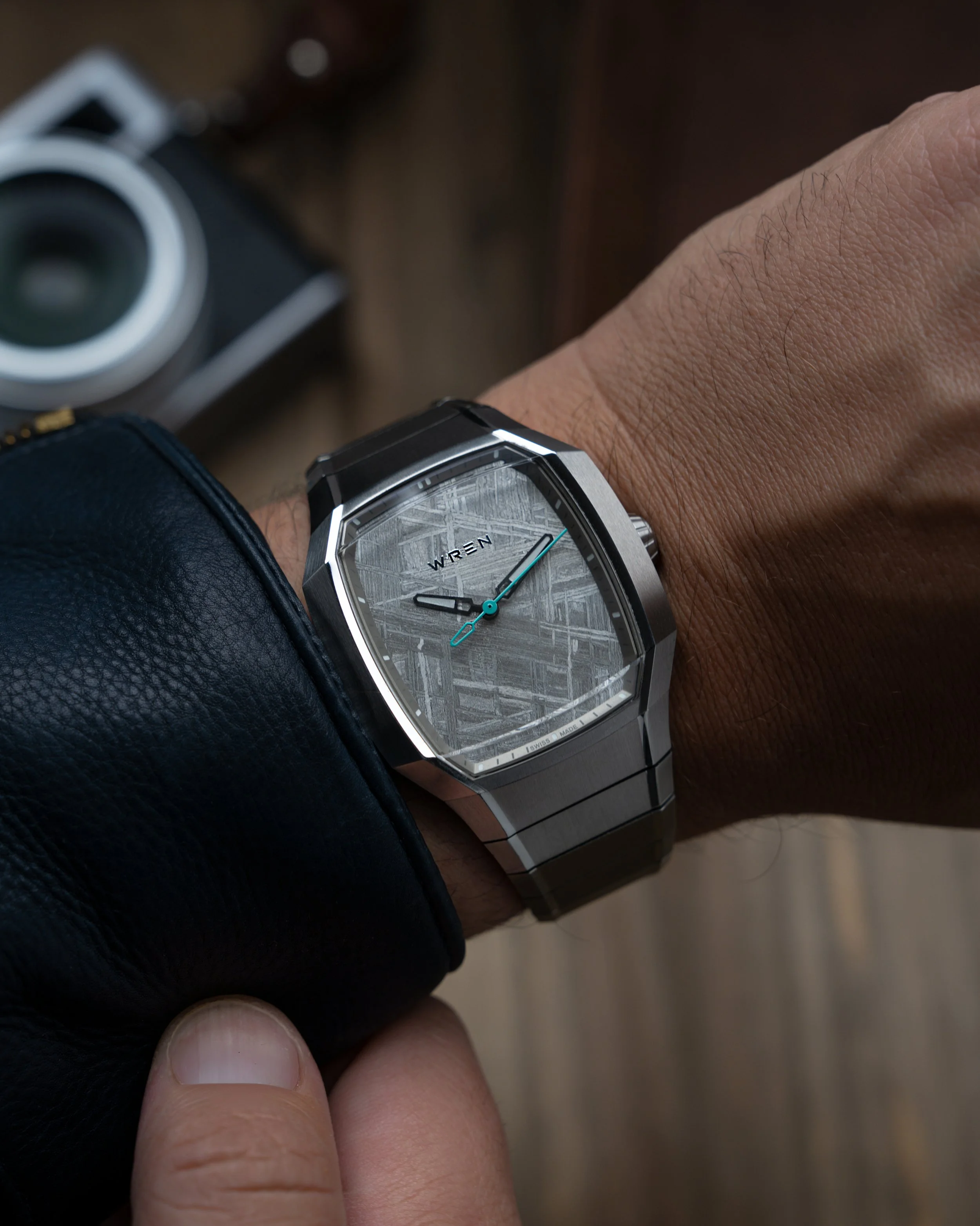
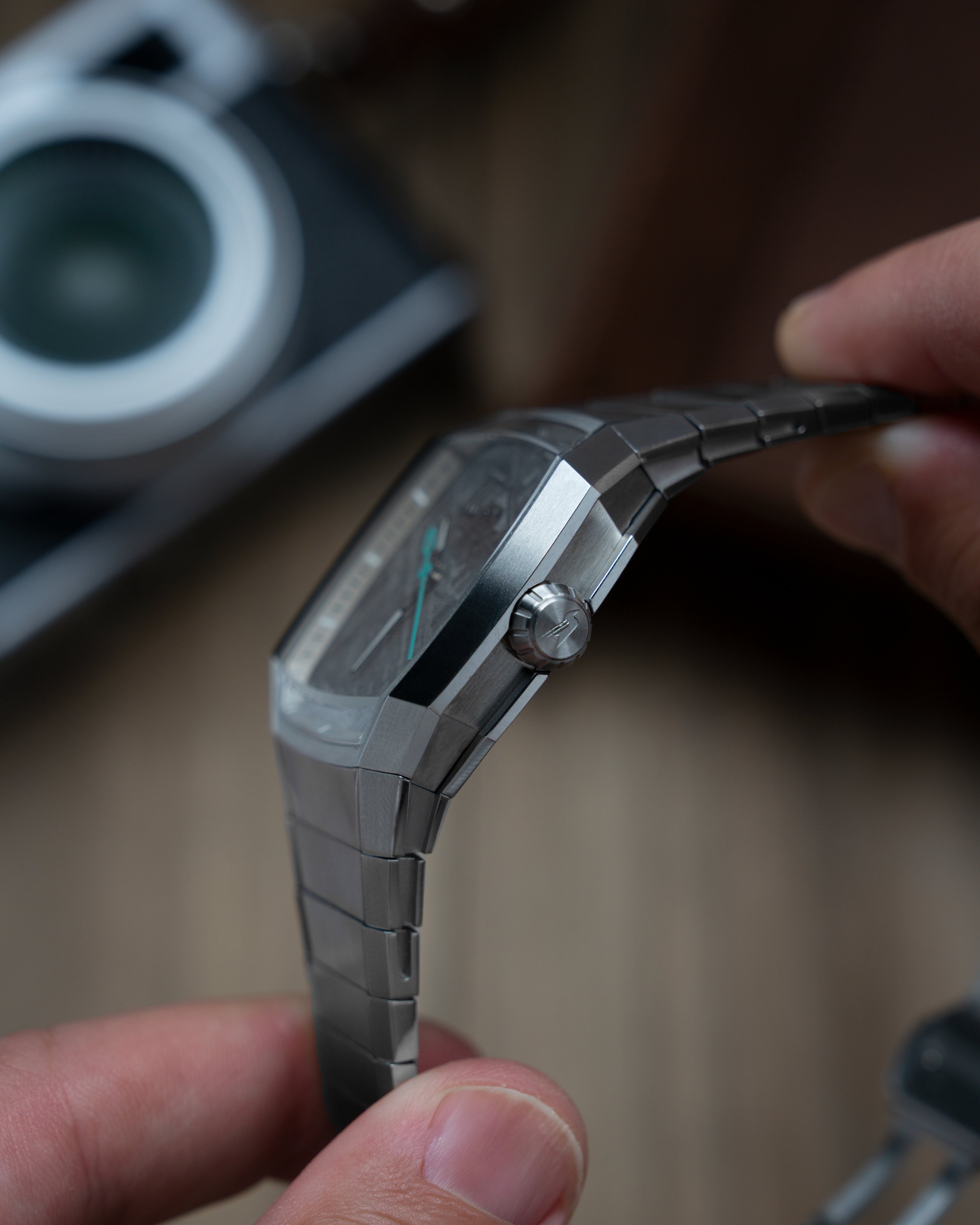
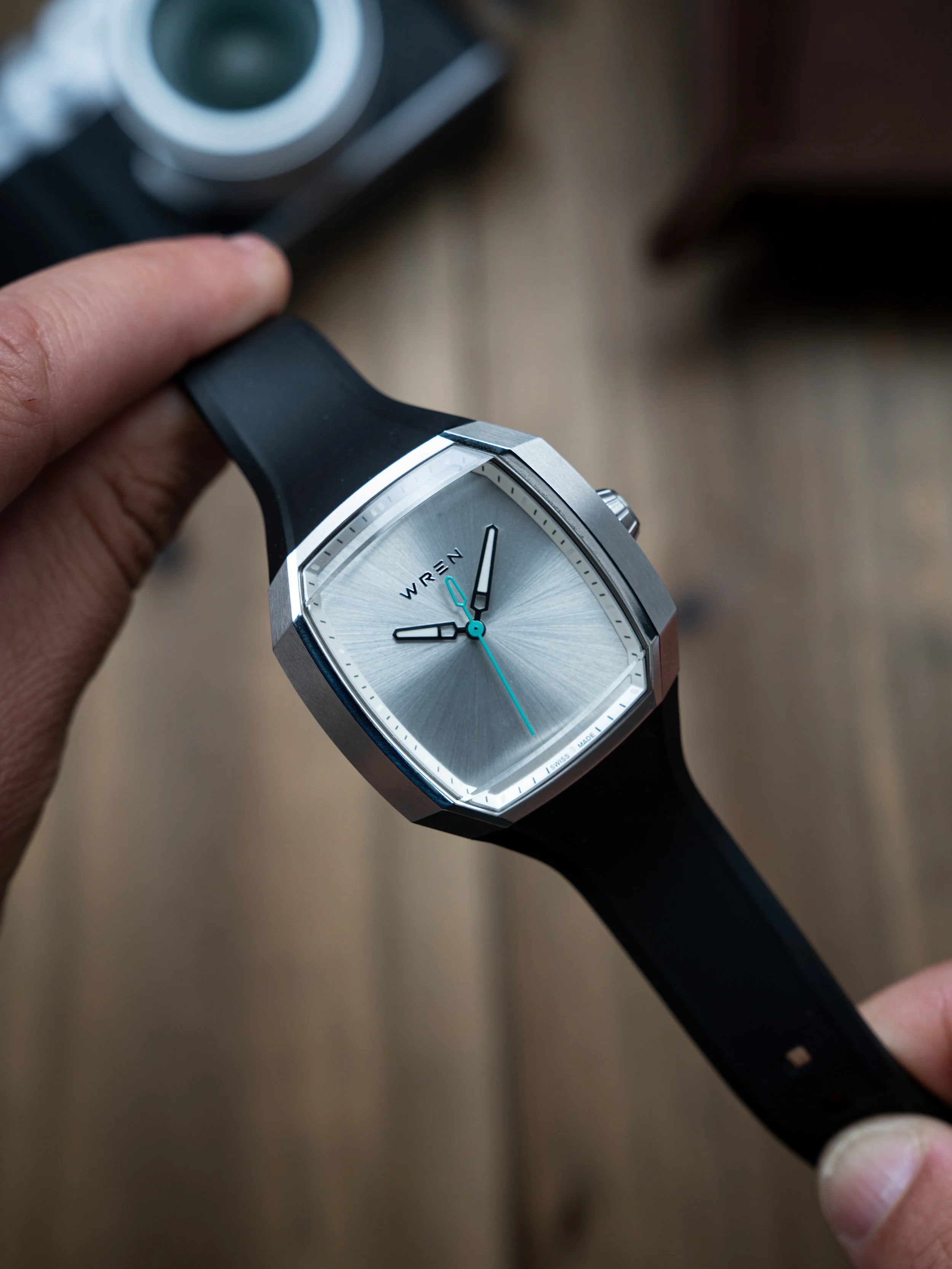
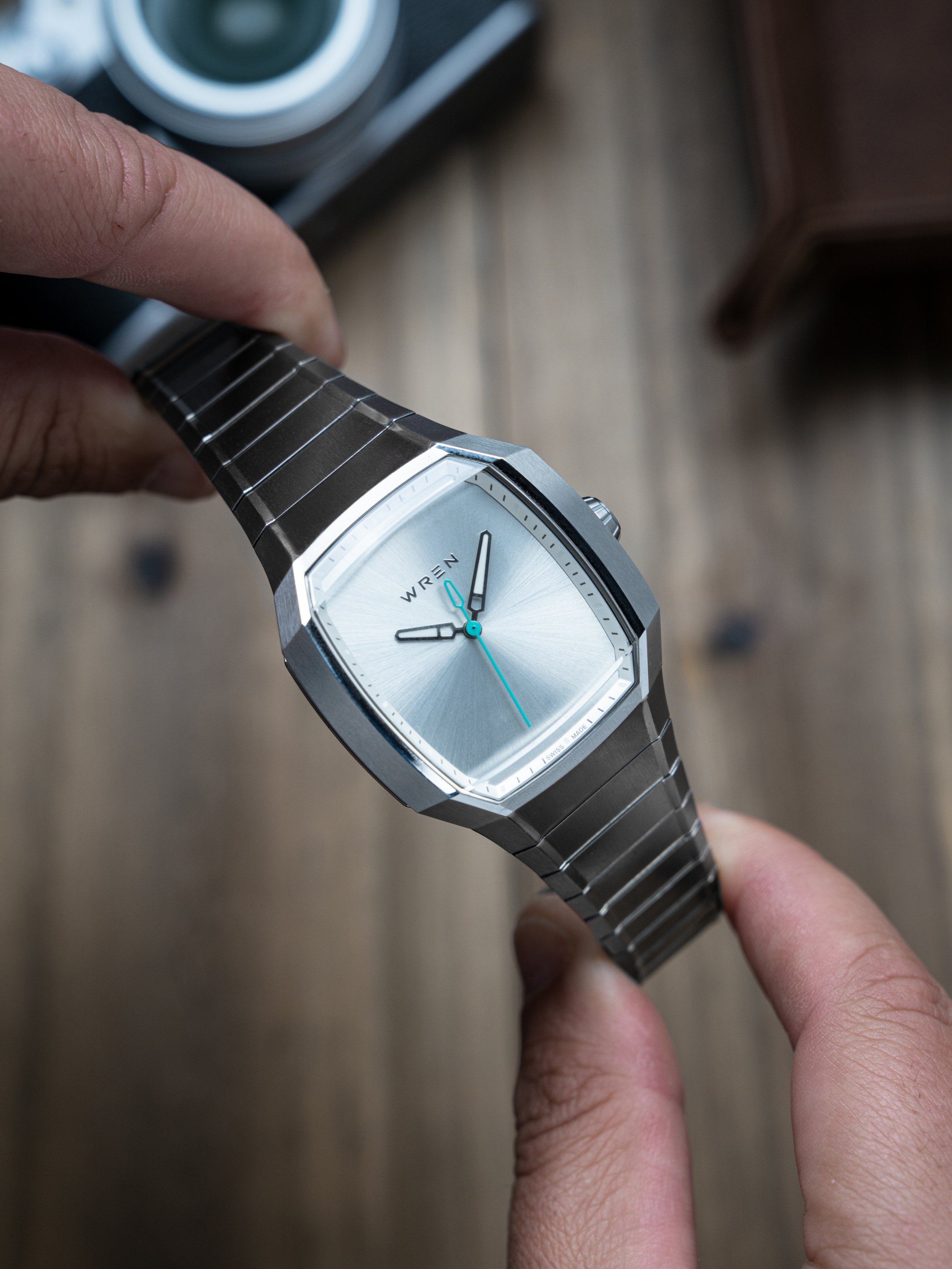
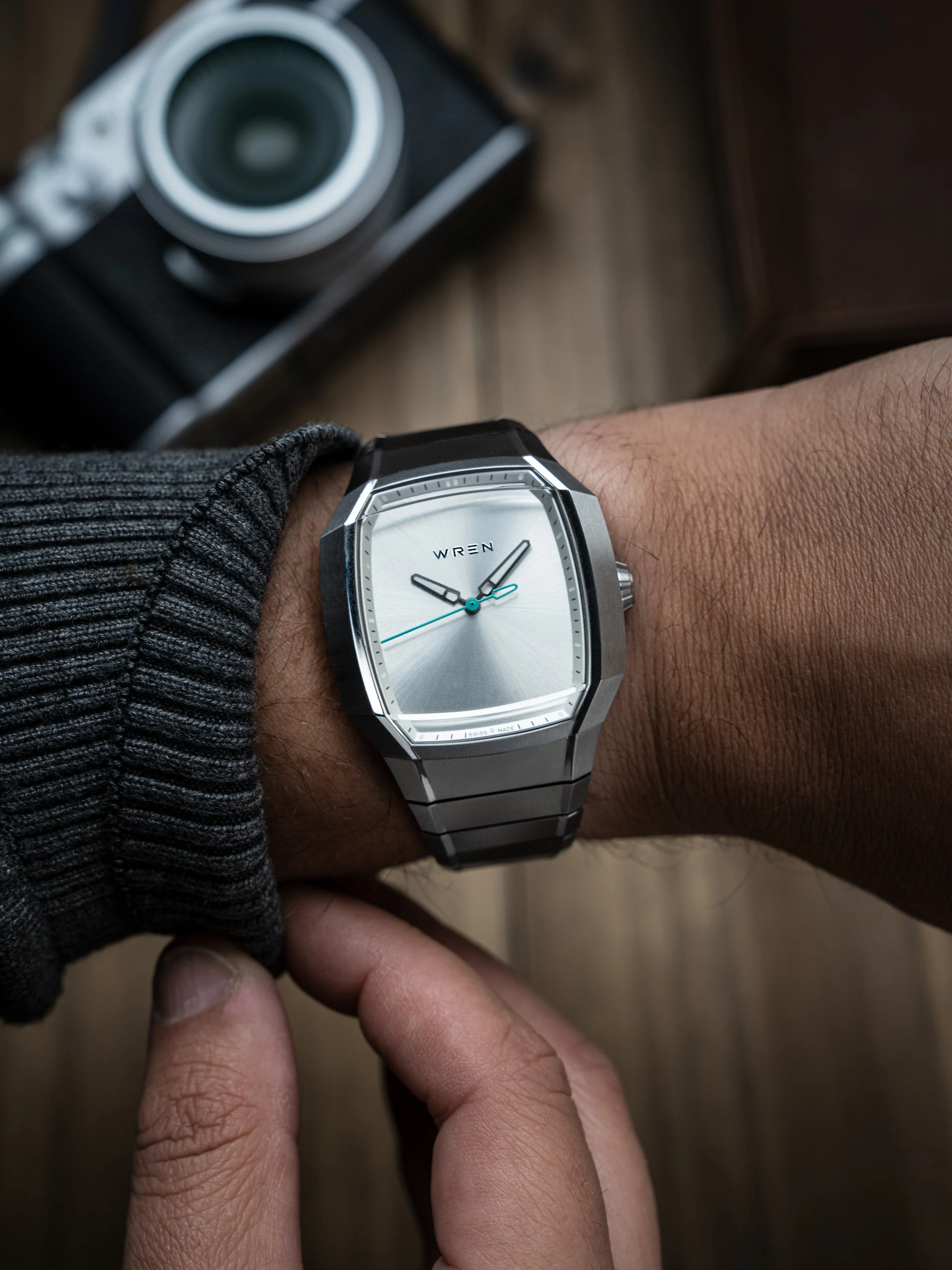
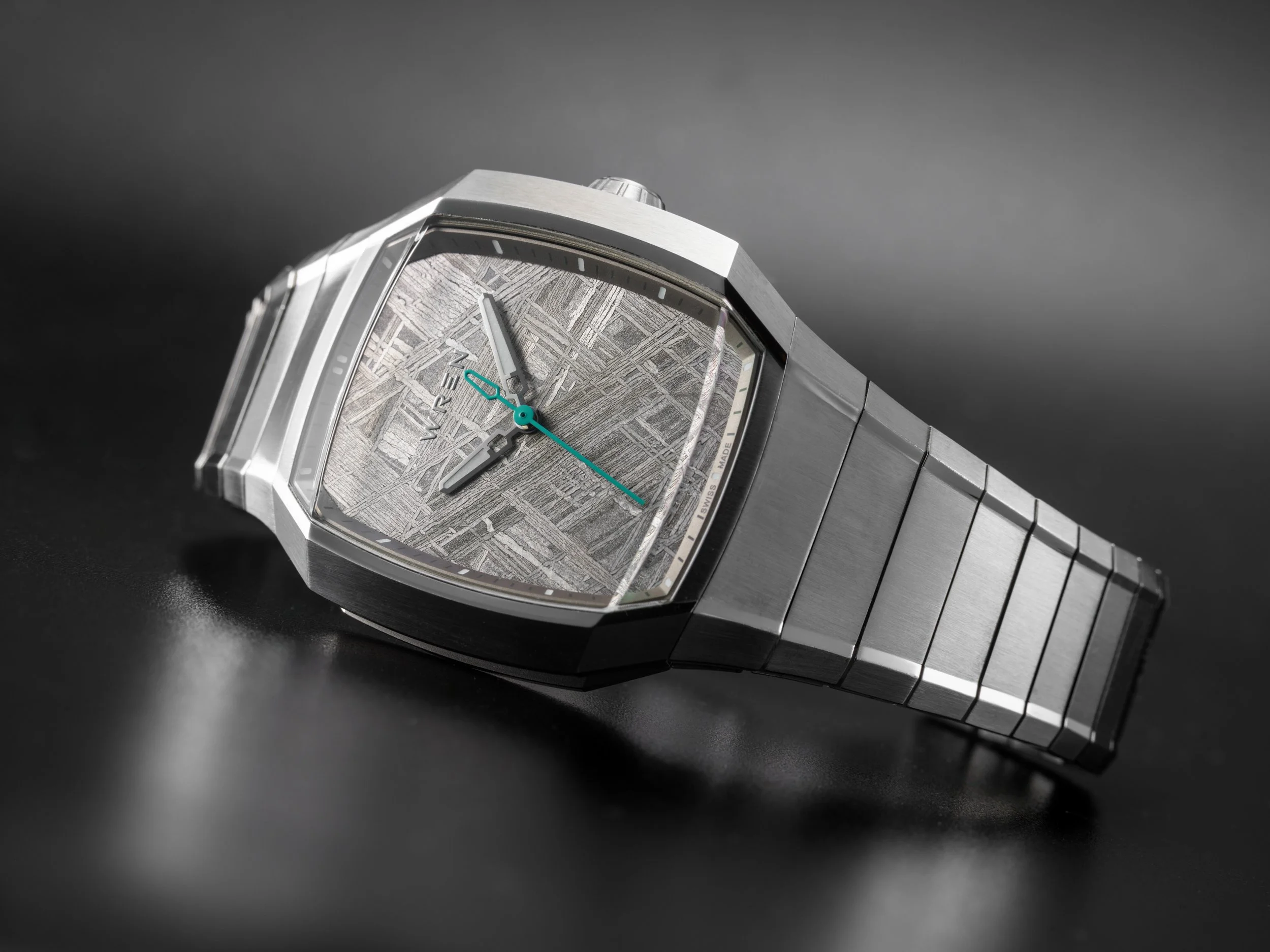
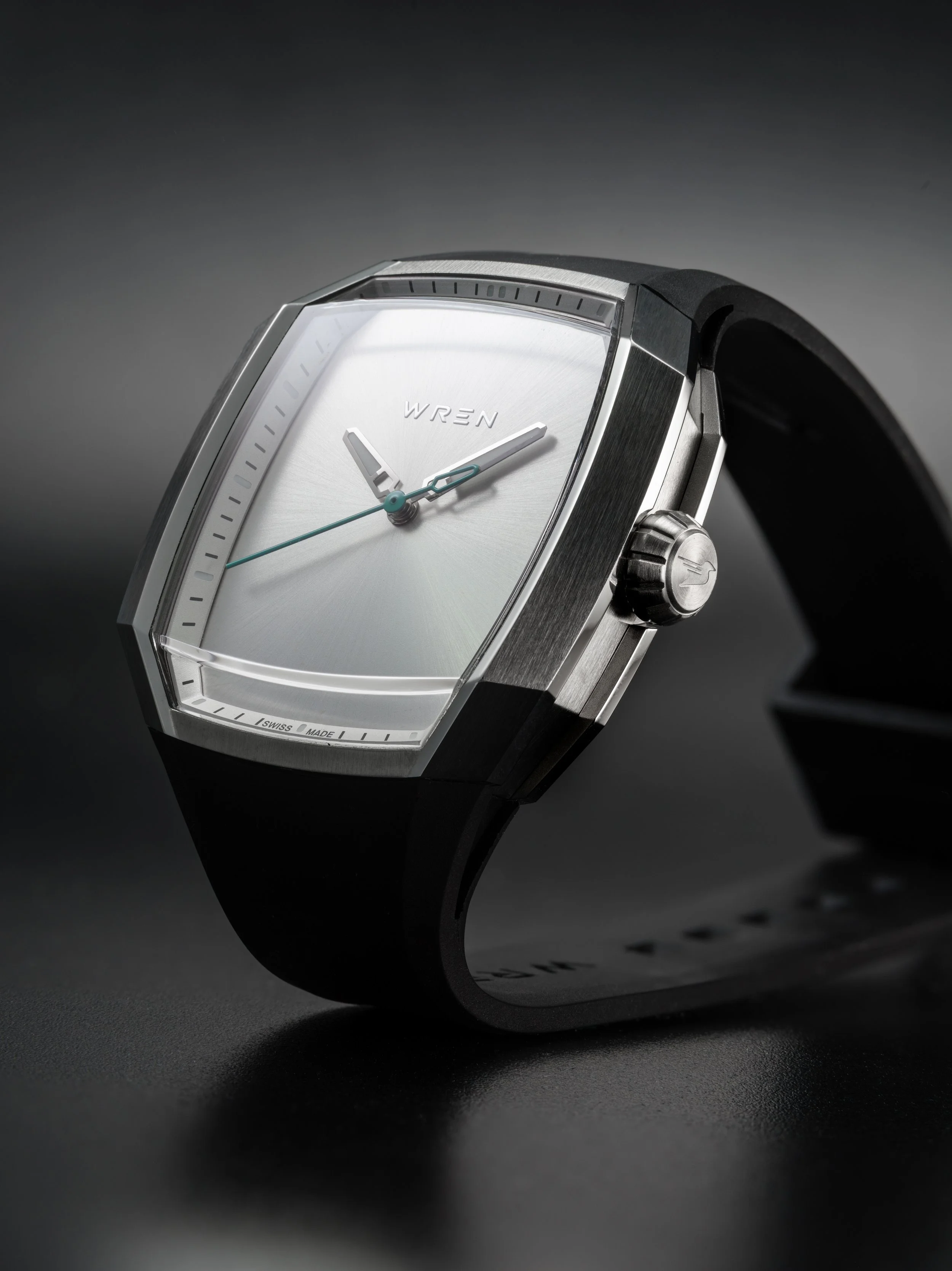
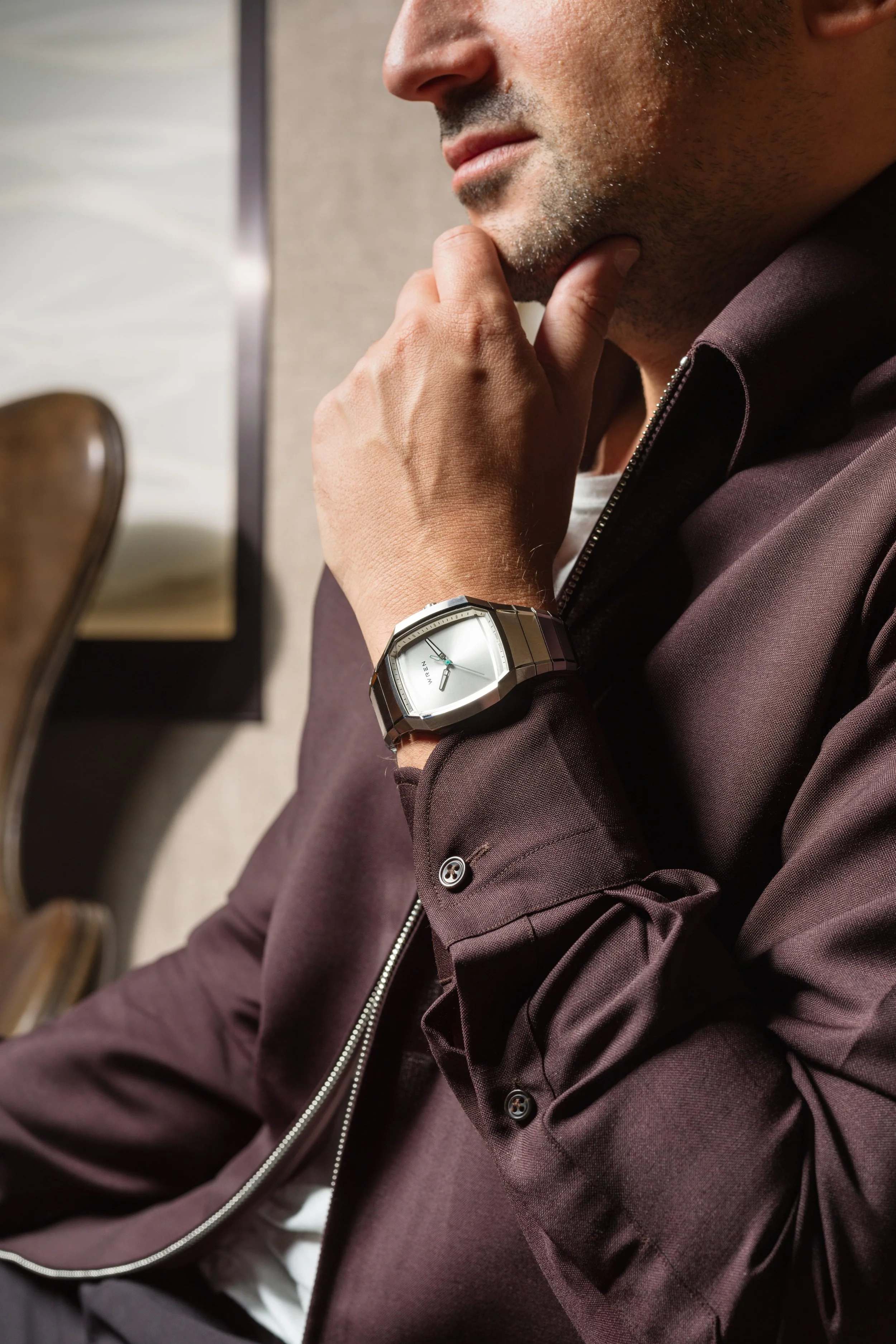
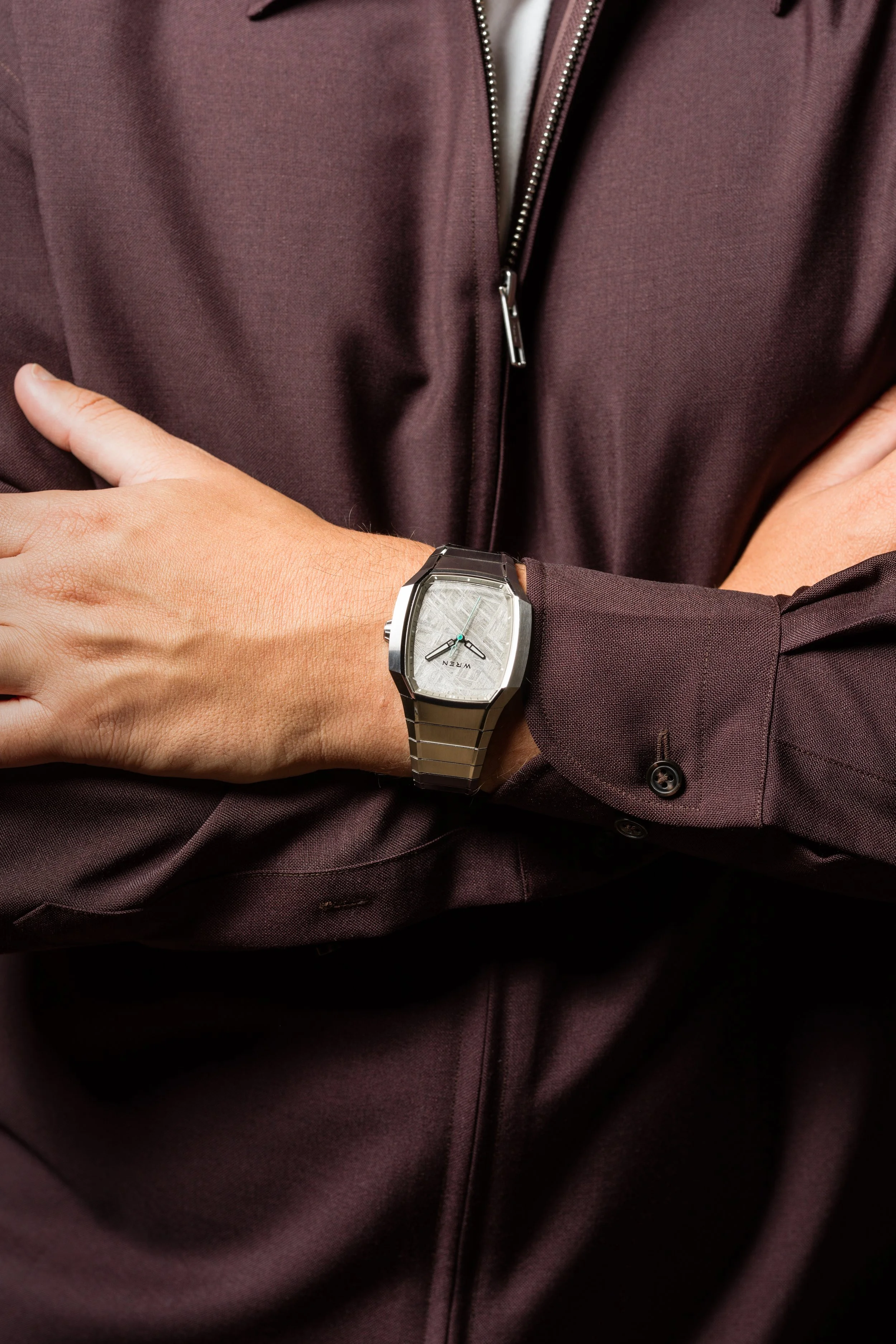
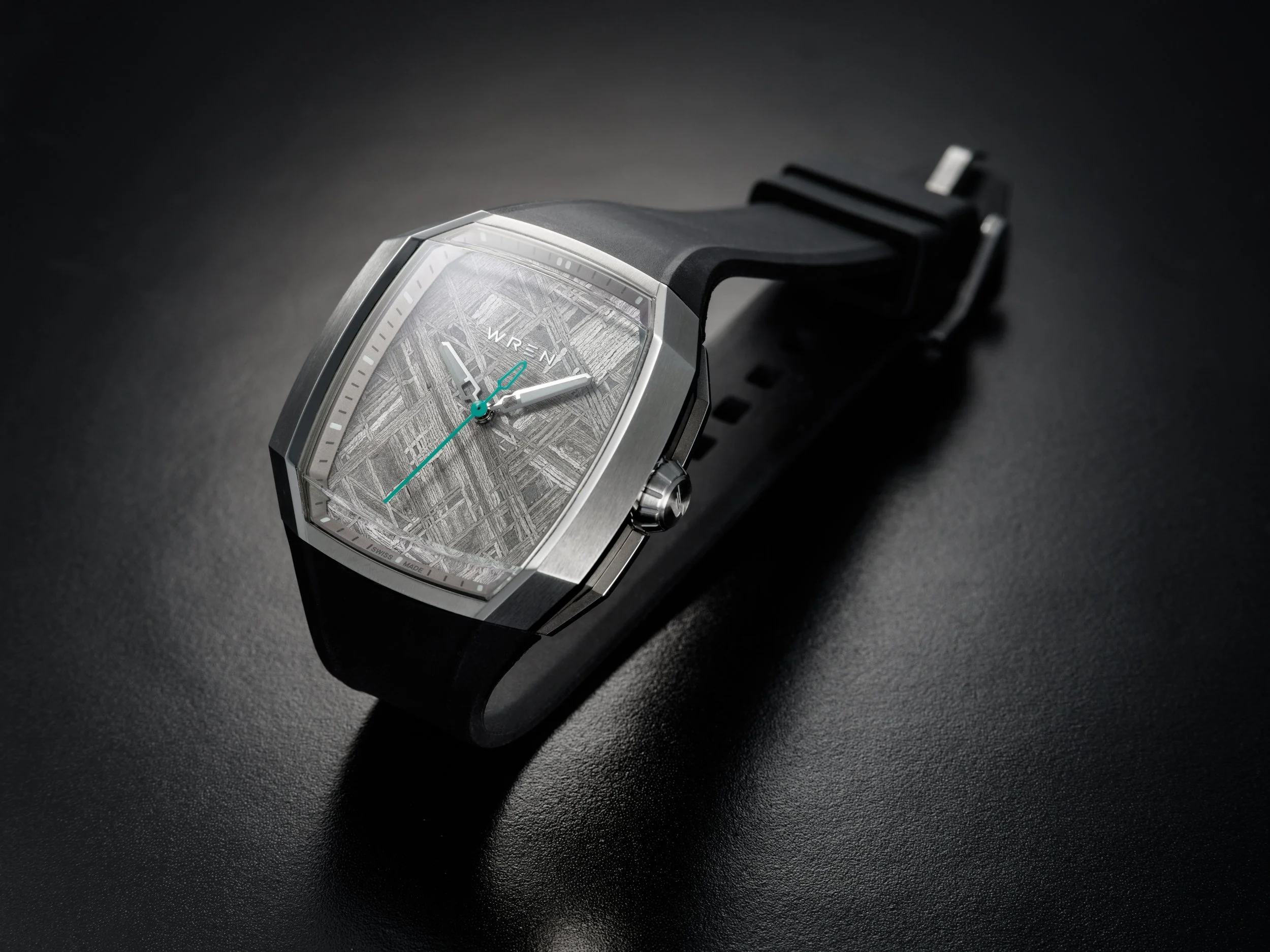
What he drew is a 39mm cushion case in 904L steel, built around a square and softened through its curves, 10.6mm thick, with a bracelet that flows straight out of it. It looks like nothing else we have made, and it is the first Wren that isn't a diver.
We took prototypes to three watch fairs this year and showed them at the table, no photos allowed, mostly to find out whether anyone else saw what we saw. The reaction told us to keep going.
Five out of a hundred
Then we had to make the crystal, and that is where the story nearly ended.
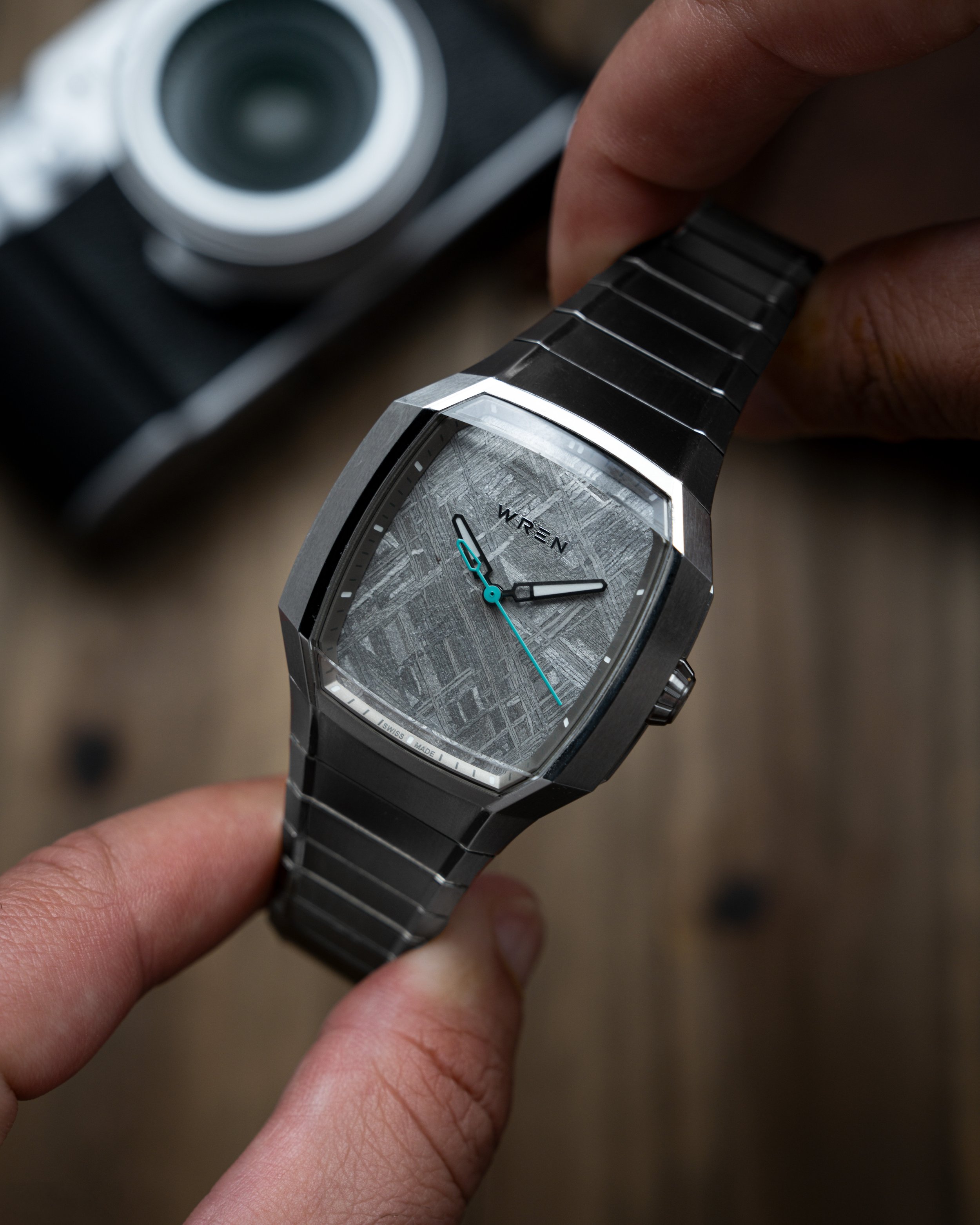
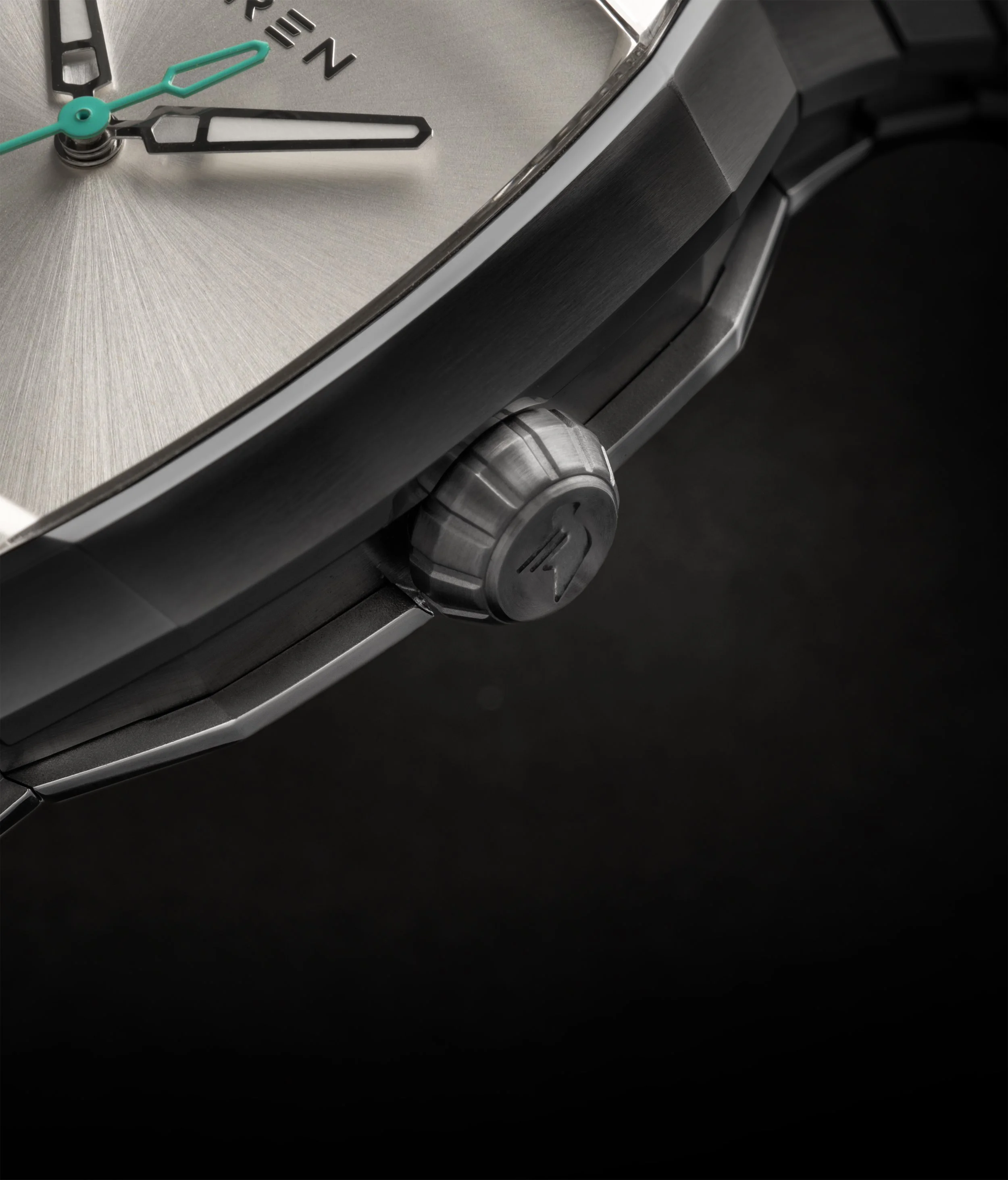
Faceted crystals are not new. The problem with them is what happens underneath. Cut facets into the top of a crystal and leave the underside flat or domed, and the dial bends and shifts as you tilt your wrist. I wanted the opposite: curved facets on top, and then the same curved facets cut again underneath as a precise negative, every inner facet lined up with its partner on the outside, so the dial reads clean from every angle.
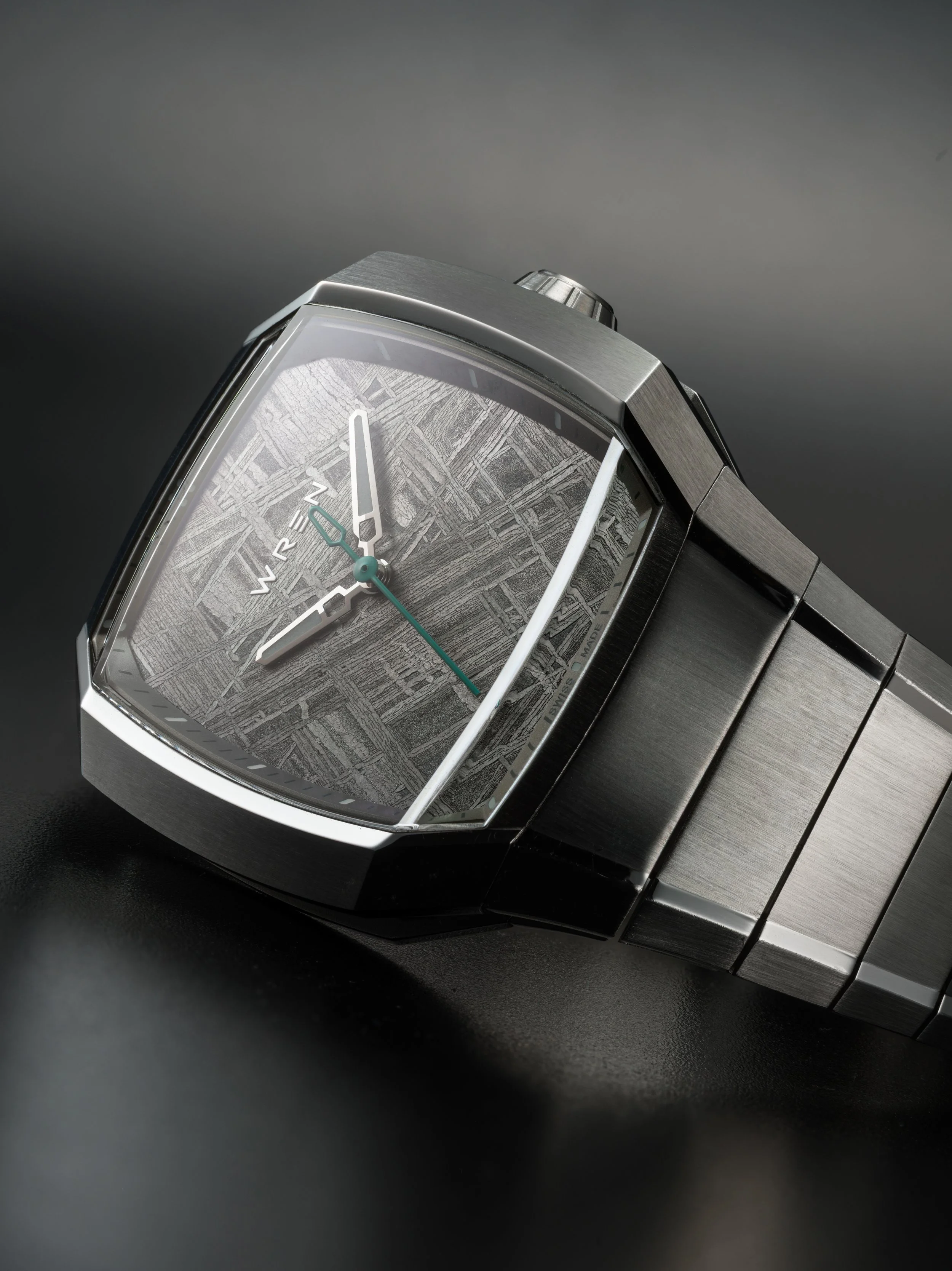
Our first prototypes were a compromise. The outside had the curved facets, but the underside facets ran straight. Out of a batch of 100, five were usable, and even those weren't what I had asked for.
When we went back and asked for the underside to mirror the top exactly, our manufacturer refused. So did every other manufacturer we called. It took a specialist better known for making entire watch cases out of sapphire to say yes.
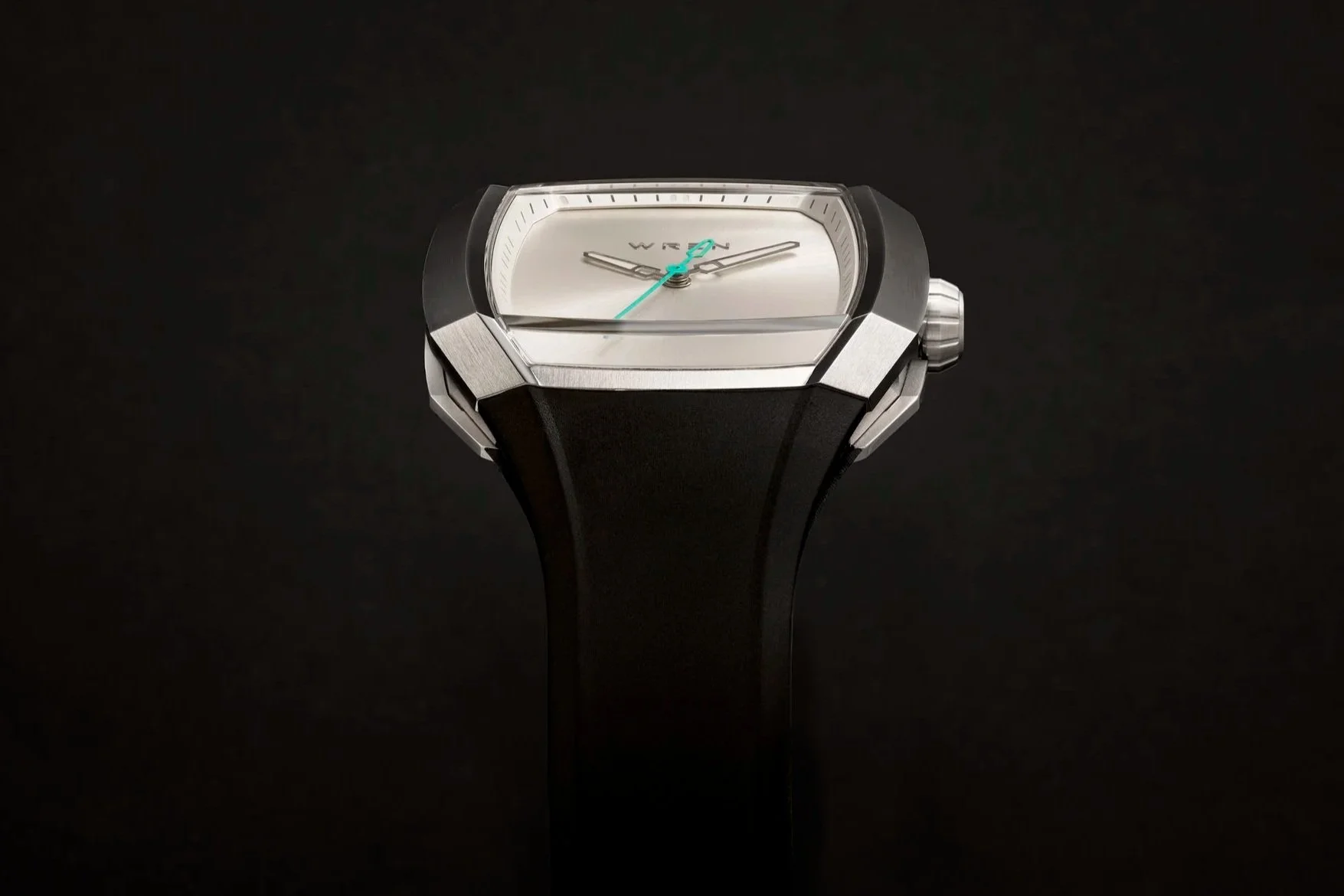
I understand why the others said no. A normal sapphire crystal is one repeatable shape: flat, domed, box. This one is none of those. Every curved facet has to be shaped and polished as its own surface, with a clean edge where it meets the next, and then the whole job has to be done again on the other side and lined up exactly. If the two sides are off by even a small rotation, you see it the moment you tilt the watch.
The second prototypes came back exactly as drawn. Four out of five survived.
Curved crystals, faceted crystals and sculpted undersides have all been done before. To our knowledge, nobody has combined them in a single crystal with mirrored geometry top and bottom.
I'd go a step further, with the caveat that I can't be certain. I believe we are the first brand to both facet and curve the underside of a crystal in a production watch, even setting aside what is happening on top. I haven't seen anyone else do it, and I've seen very few production watches that facet the underside in any form.
It also turned the economics of the watch upside down. The crystal costs us significantly more to make than the movement underneath it.
Everything else had to keep up
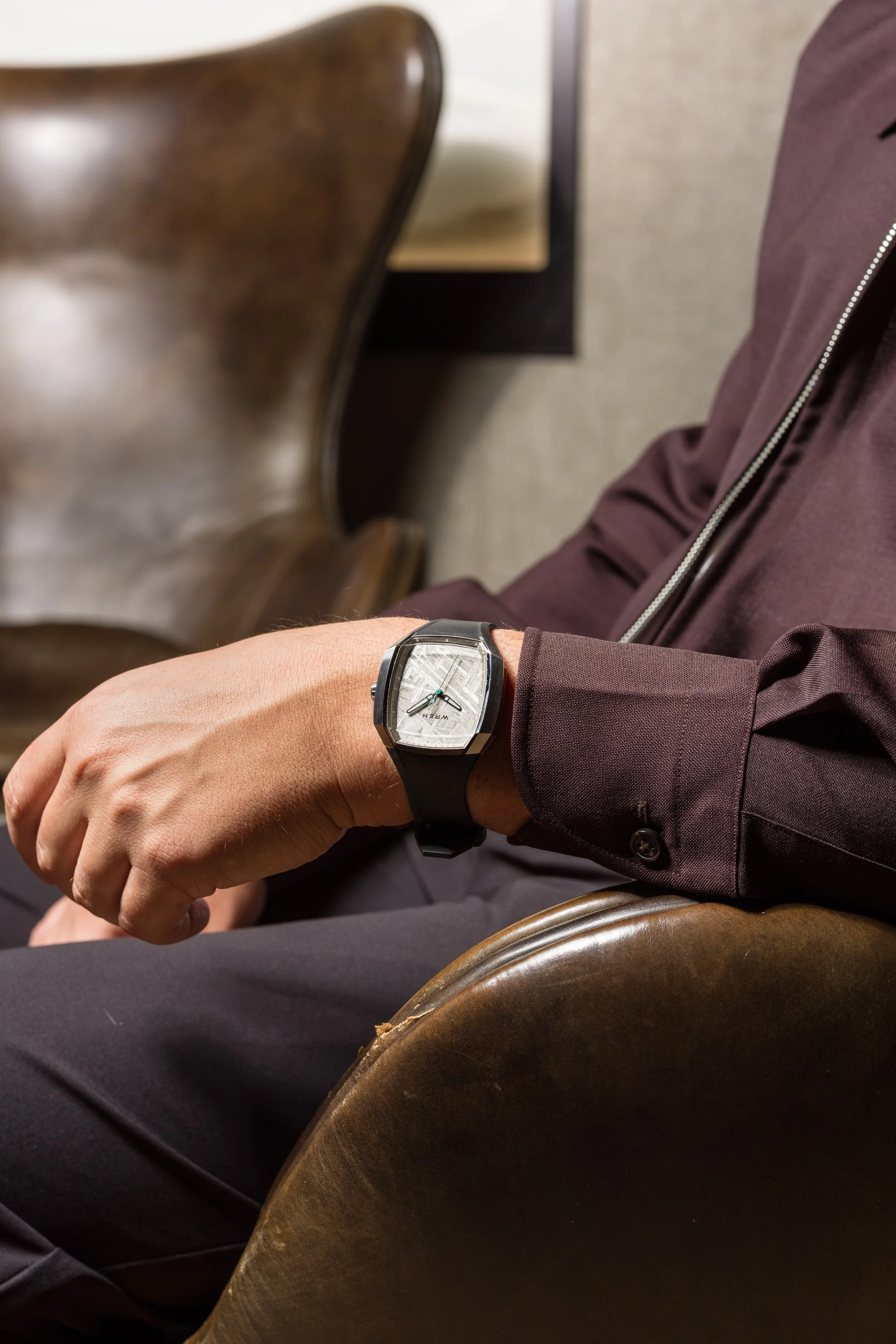
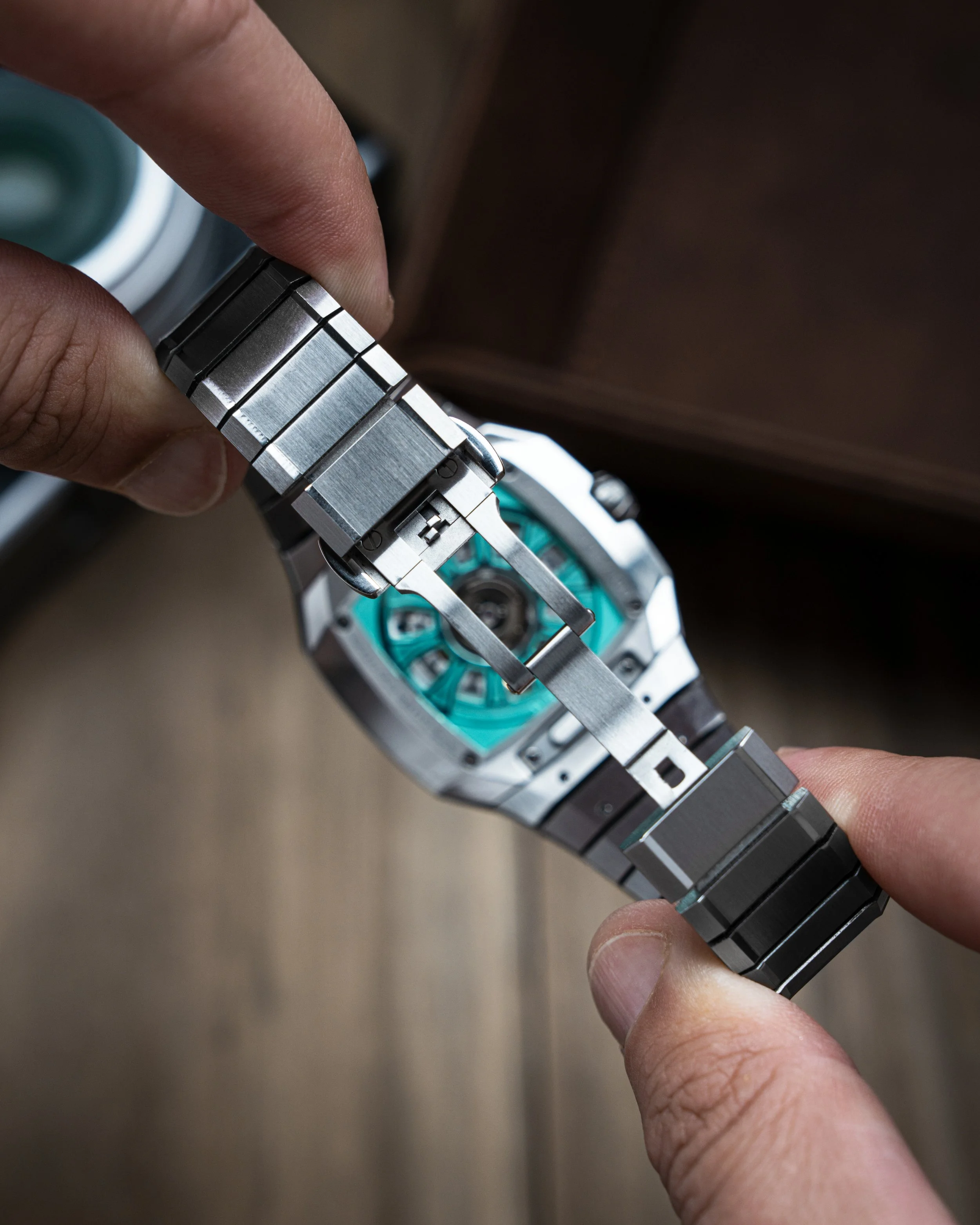
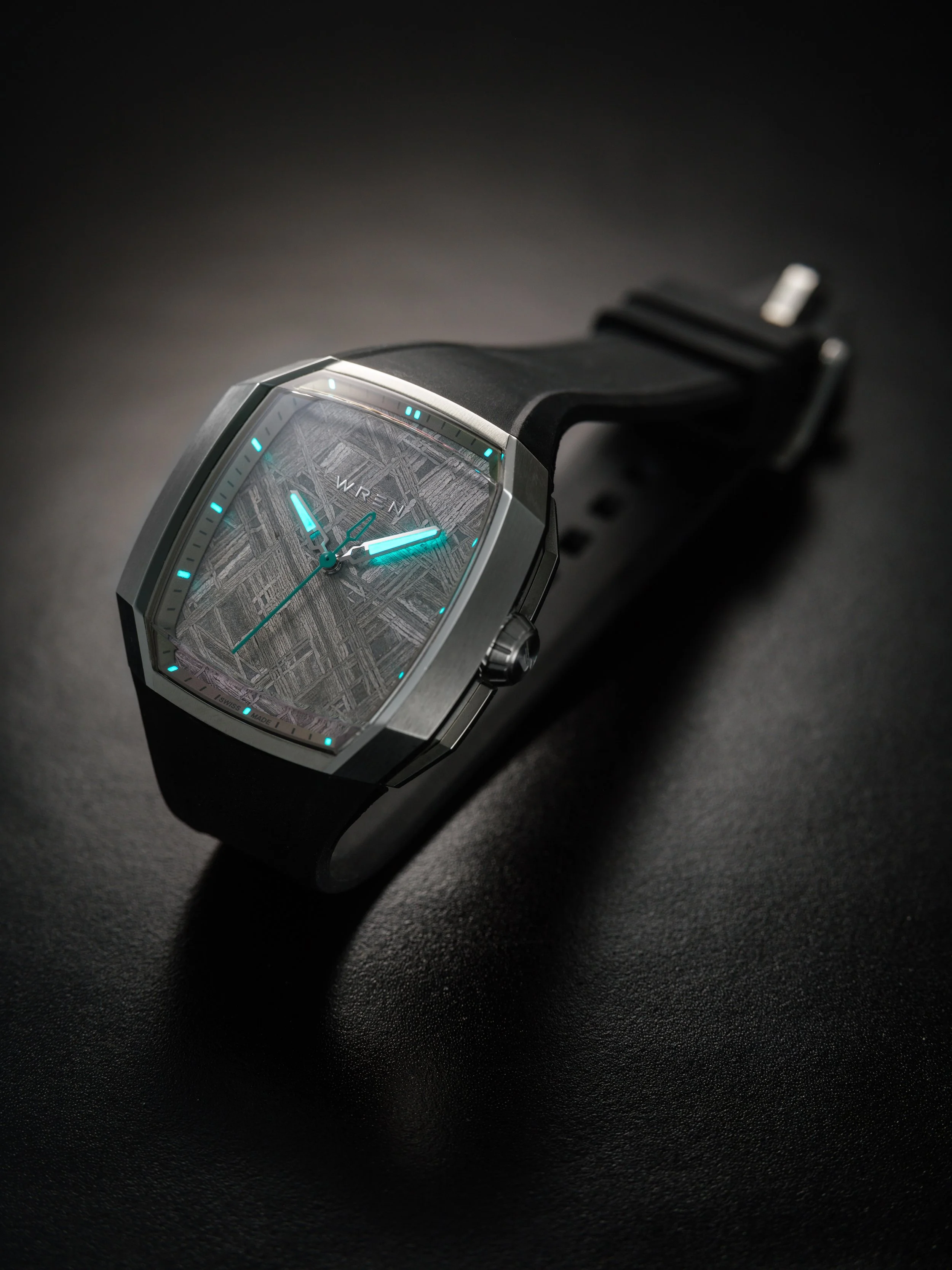
Once the crystal was that hard, nothing else on the watch could come out of a catalog. The bracelet uses a quick-release system we developed ourselves, and the microadjustment is built into the links instead of the clasp. A black rubber strap on the same quick-release is available separately for $195.
That sounds like a small thing. It meant custom components, dedicated tooling and a long stretch of tolerance testing, which is why most young brands buy their bracelet hardware off the shelf. Wren is not yet three years old.
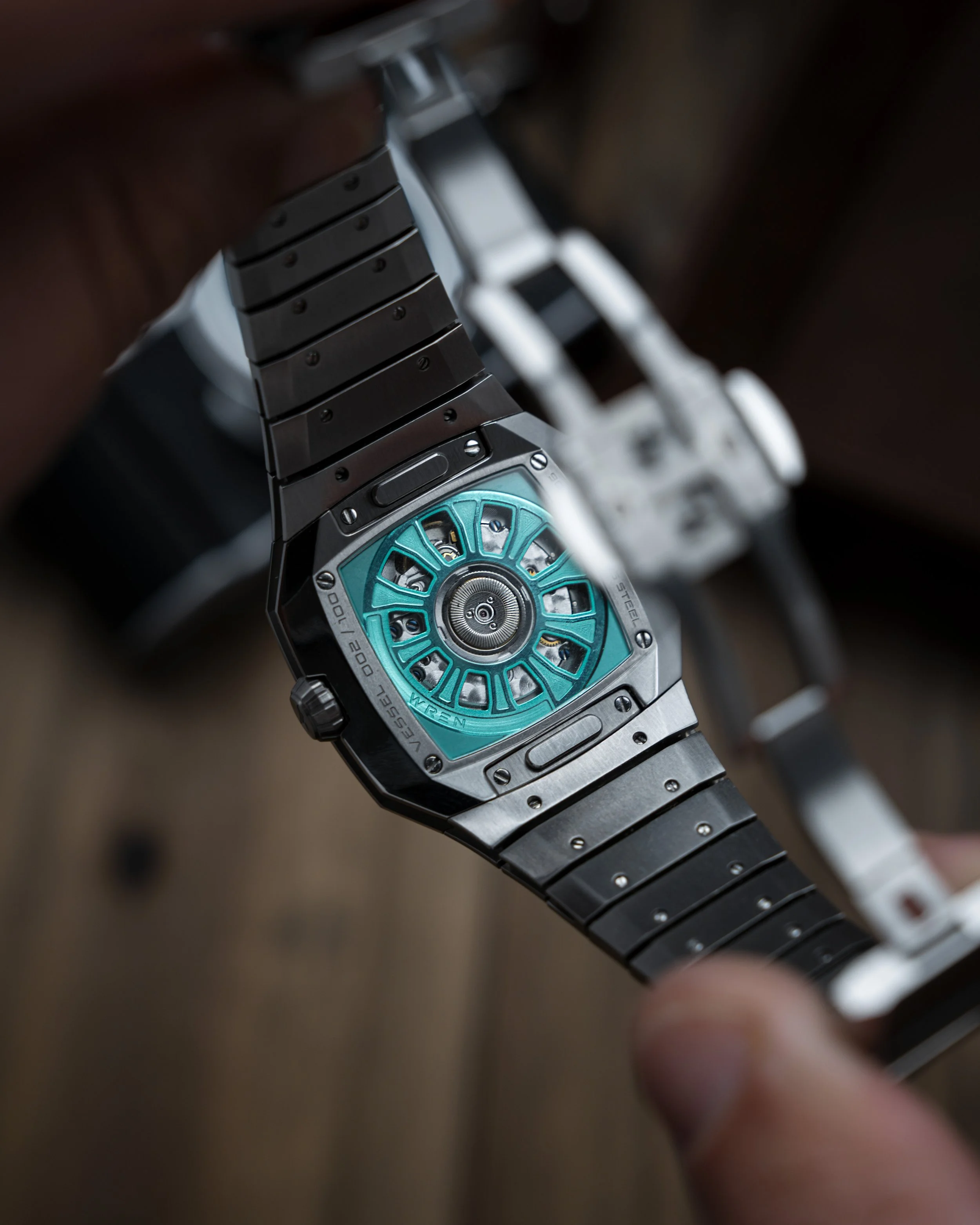
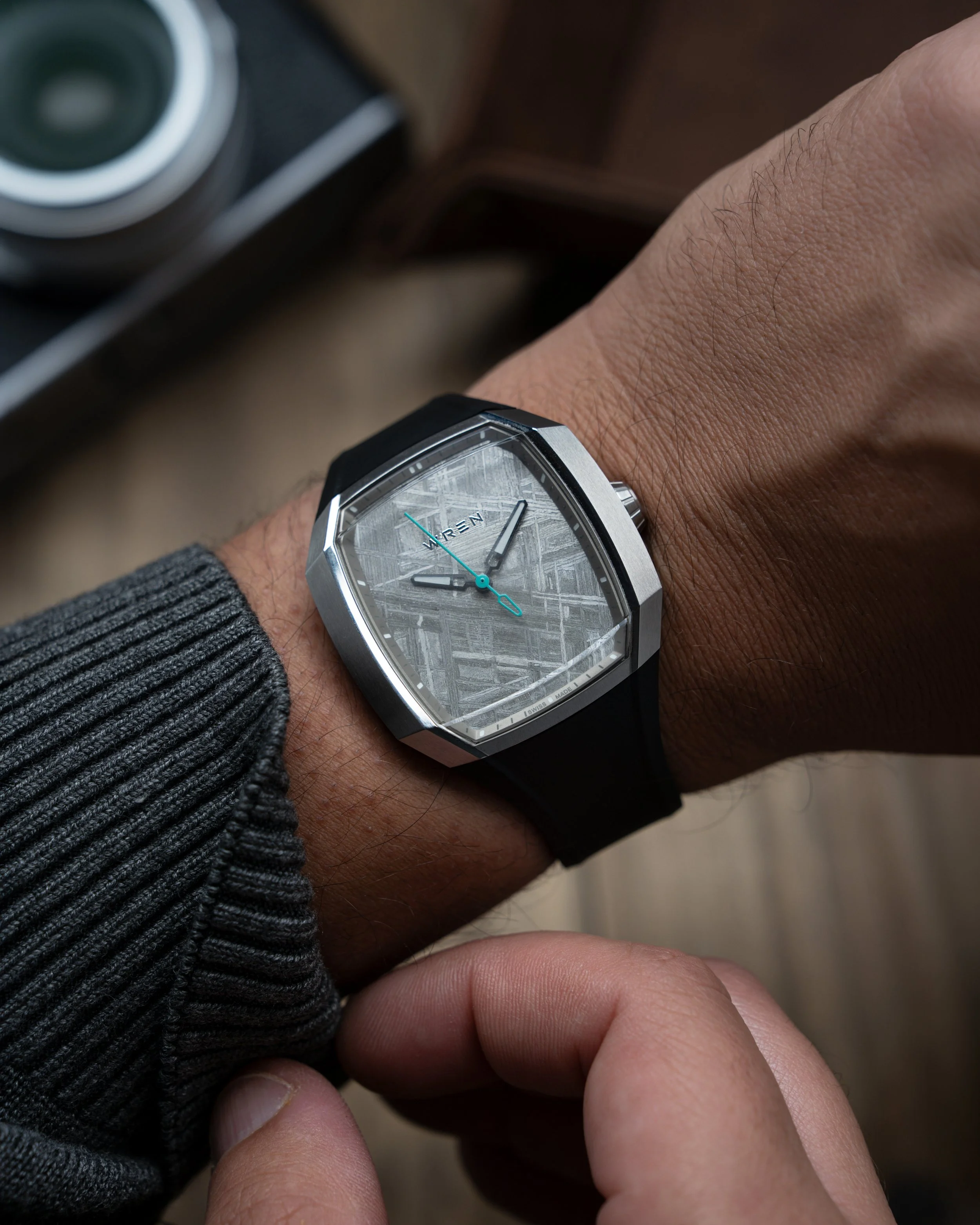
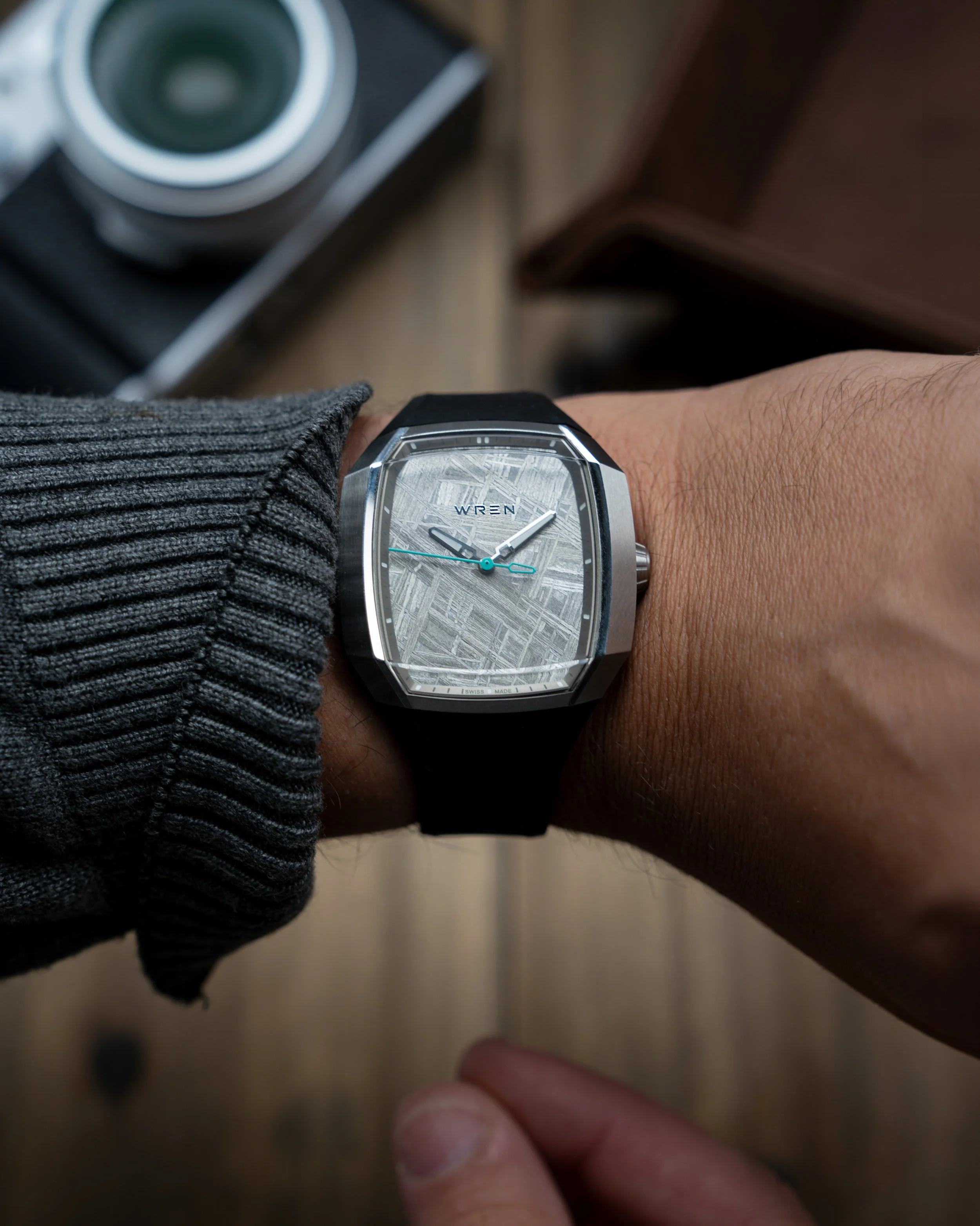
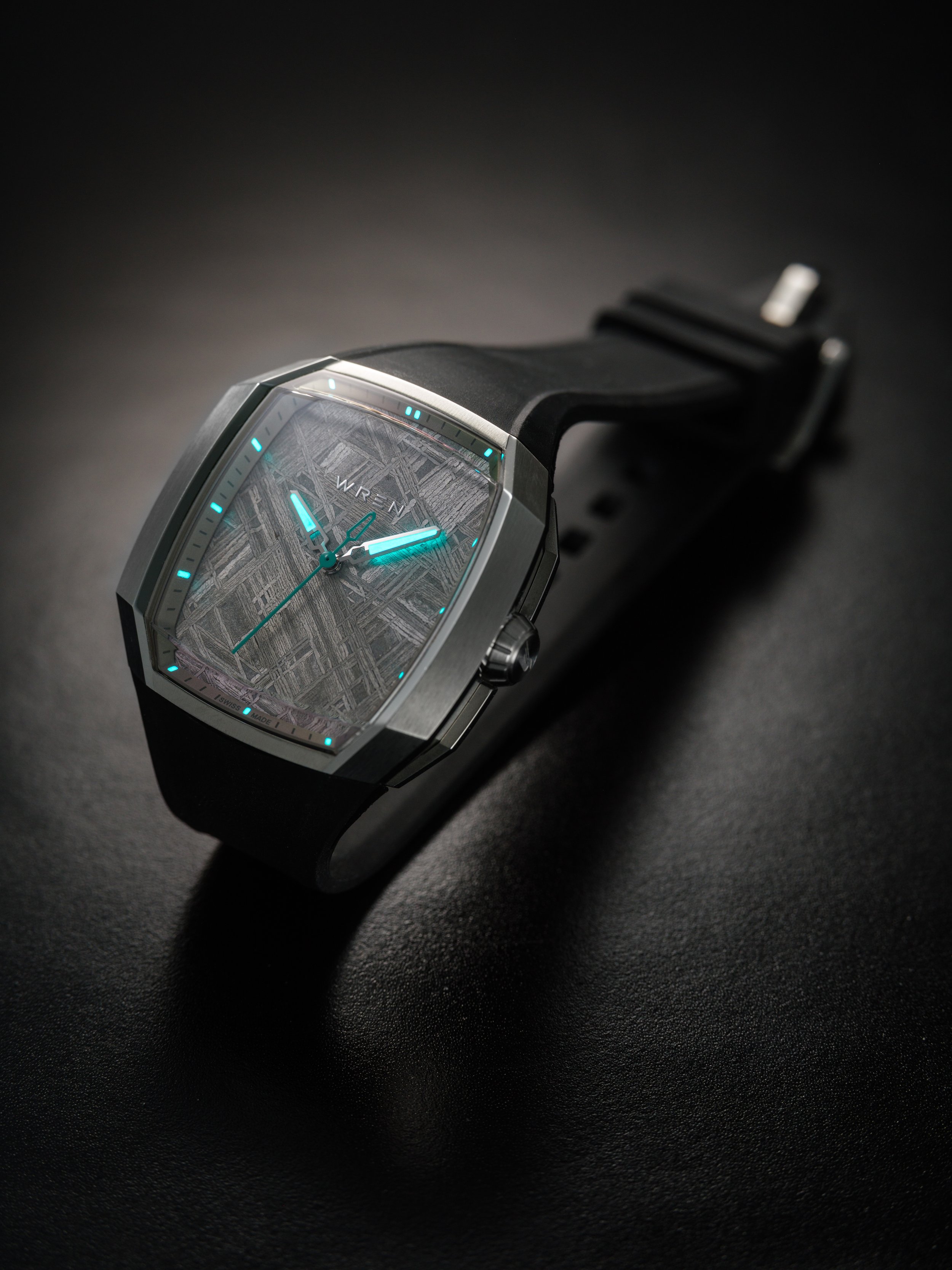
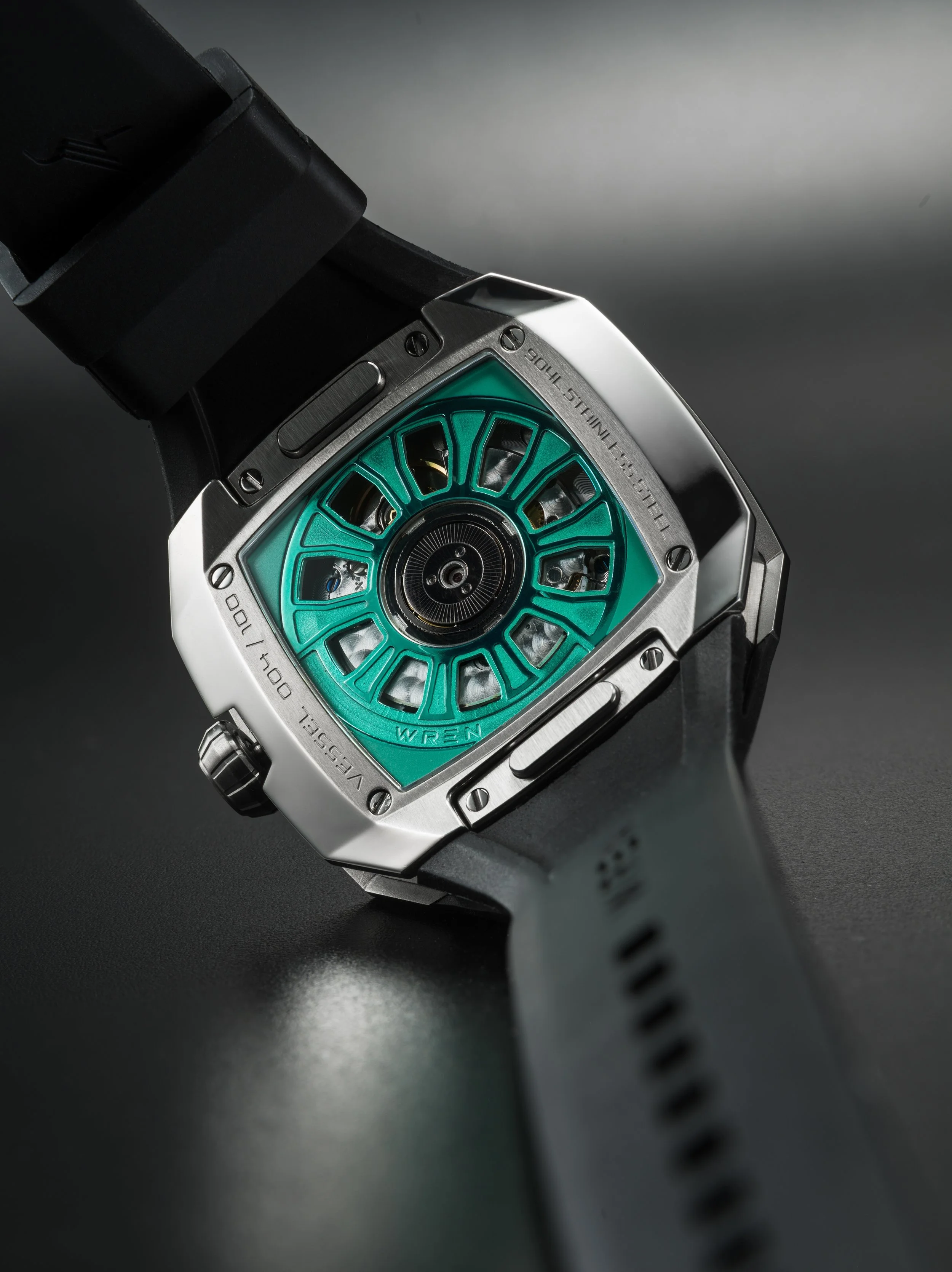
Inside is the Swiss-made Sellita SW300-1, a slim automatic running at 4 Hz with a 56-hour power reserve, visible through an exhibition caseback. Water resistance is 70 meters. There are two dials, steel sunray and meteorite, and both carry an aqua seconds hand and an aqua rotor, a nod to the Diver One Aqua, the first watch we ever made.
Price and availability
The Wren Vessel is $2,900 with the steel sunray dial and $3,400 with the meteorite dial. Each is limited to 150 individually numbered pieces, 300 in total, and neither launch configuration will be produced again.
Preorders are now open, exclusively at wrenwatches.com, with delivery scheduled for the first quarter of 2027.
I spent two years looking at this watch on a screen and then on a bench. I'm glad you finally get to look at it too.