
Why Did Watches Get So Big?
Here is something I noticed while researching this piece, and it bothered me more the longer I thought about it.
Brands are very willing to explain why watches are getting smaller. There are press releases about it, interviews about it, and Watches and Wonders coverage this year was full of executives talking about a return to classical proportions and listening to what customers actually want.
But ask why watches got so big in the first place and things get much quieter. I could not find a single brand executive, speaking at the time, explaining why a dive watch suddenly needed another six millimeters of diameter. Yet over roughly fifteen years, much of the industry moved in exactly that direction.
So rather than pretend there is a neat explanation, I think it is worth looking at what actually happened.
They really were that small
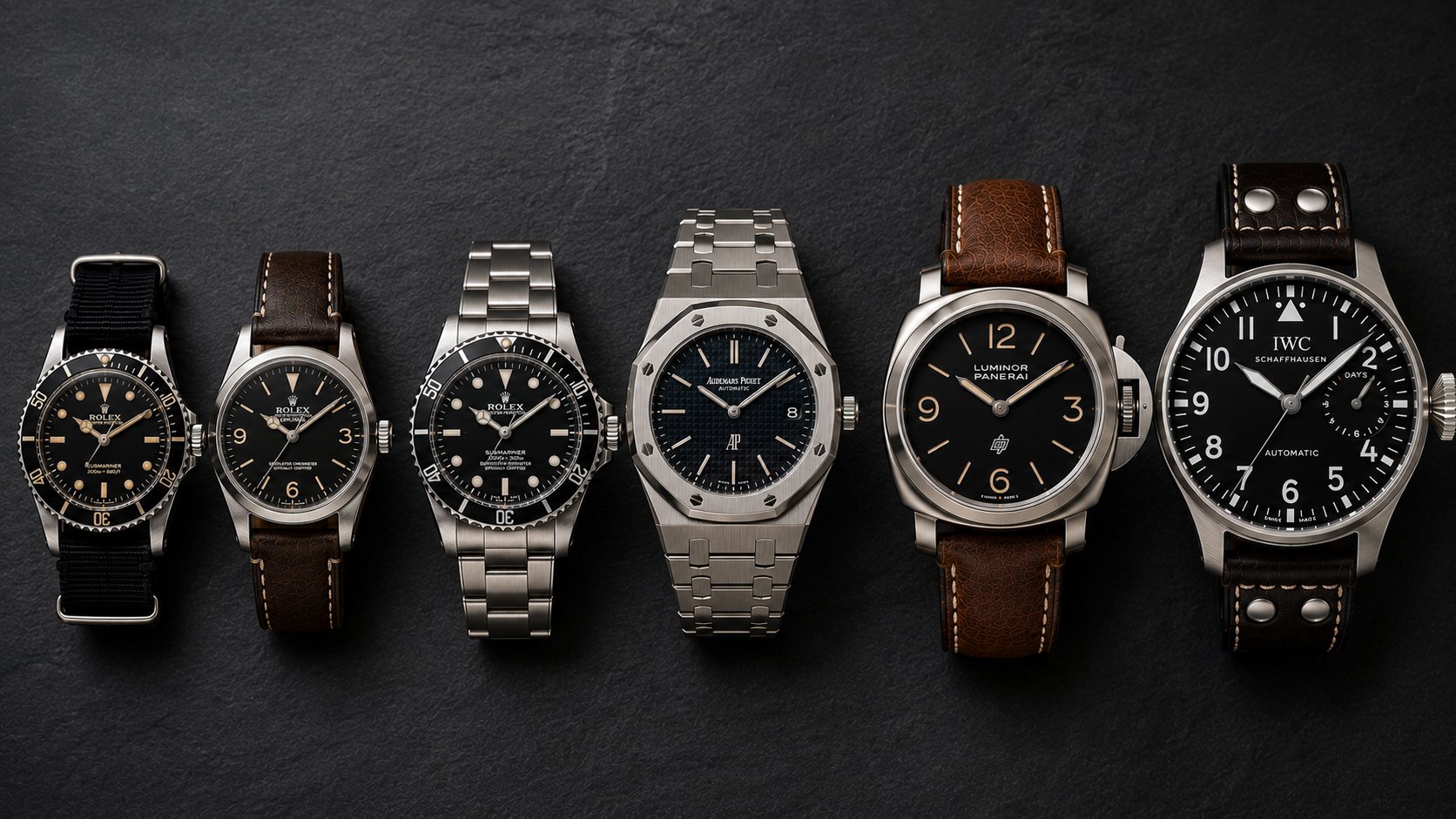
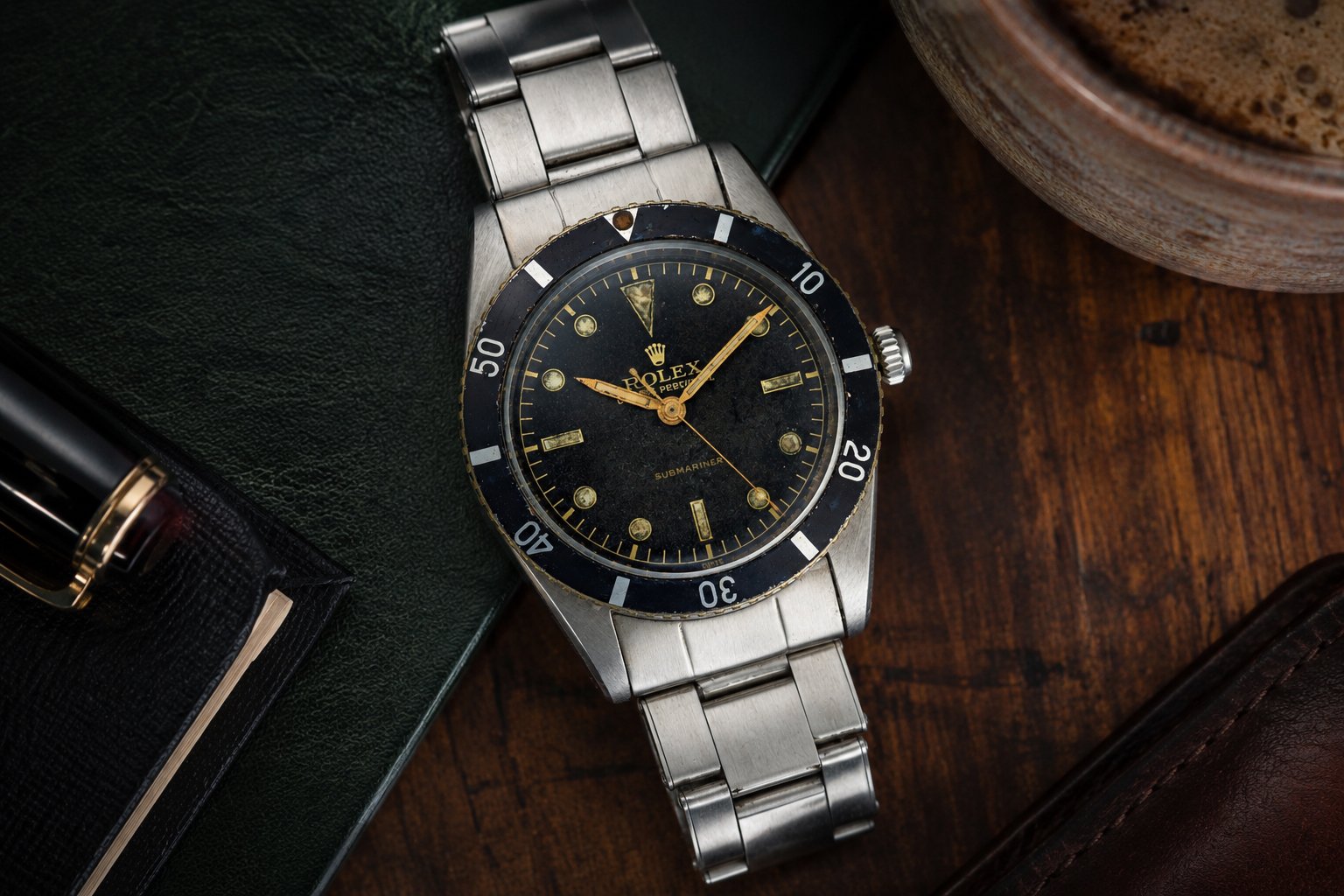
The first Rolex Submariner, the reference 6204 from 1953, measured 37mm. The Explorer arrived the same year at 36mm and stayed there through the 1016, 14270 and 114270. That is more than half a century at essentially the same size.
Dress watches were routinely 34mm to 36mm. That was not considered small, and it certainly was not because every man in the 1950s had tiny wrists. It was simply a normal size for a men's watch.
One notable exception was the Blancpain Fifty Fathoms. It arrived in 1953 at roughly 41mm to 42mm, depending on the source, and at the time it was considered enormous. Part of that size was functional. Blancpain needed room for the rotating bezel, which itself was a relatively new concept. The Fifty Fathoms stood out precisely because watches that large were unusual.
The Submariner eventually settled at 40mm with references like the 5512 and 5513, and then Rolex basically stopped changing the diameter for decades. If you want a useful benchmark for what a sports watch looked like before case diameter became something enthusiasts constantly debated, the 40mm Submariner is probably it.
Then came the 1990s
There is no single moment when the industry decided watches needed to become larger, but 1993 is an interesting place to start.
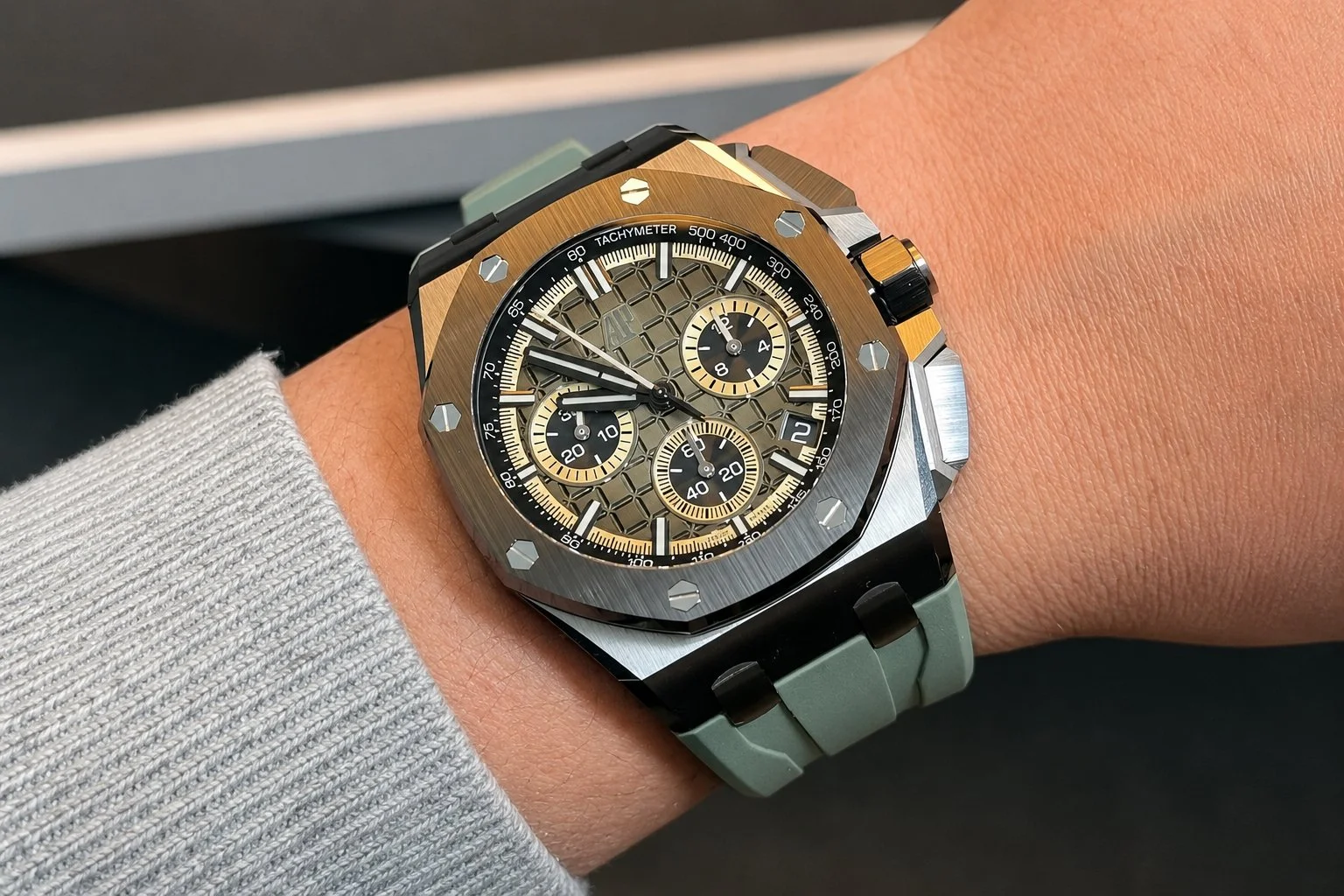
That year Audemars Piguet introduced the Royal Oak Offshore. It was 42mm wide and 14.05mm thick. The largest men's Royal Oak before it had been the 39mm model we now know as the Jumbo. Gérald Genta, who designed the original Royal Oak, was famously not impressed. When he saw the Offshore at Basel, he reportedly accused AP of ruining his watch and compared the Offshore to a sea elephant. Everyone else called it The Beast.
That same year Panerai introduced its first civilian watches, with all three references measuring 44mm. IWC also released the Portuguese Jubilée at 42mm, which was a major statement for the brand at the time.
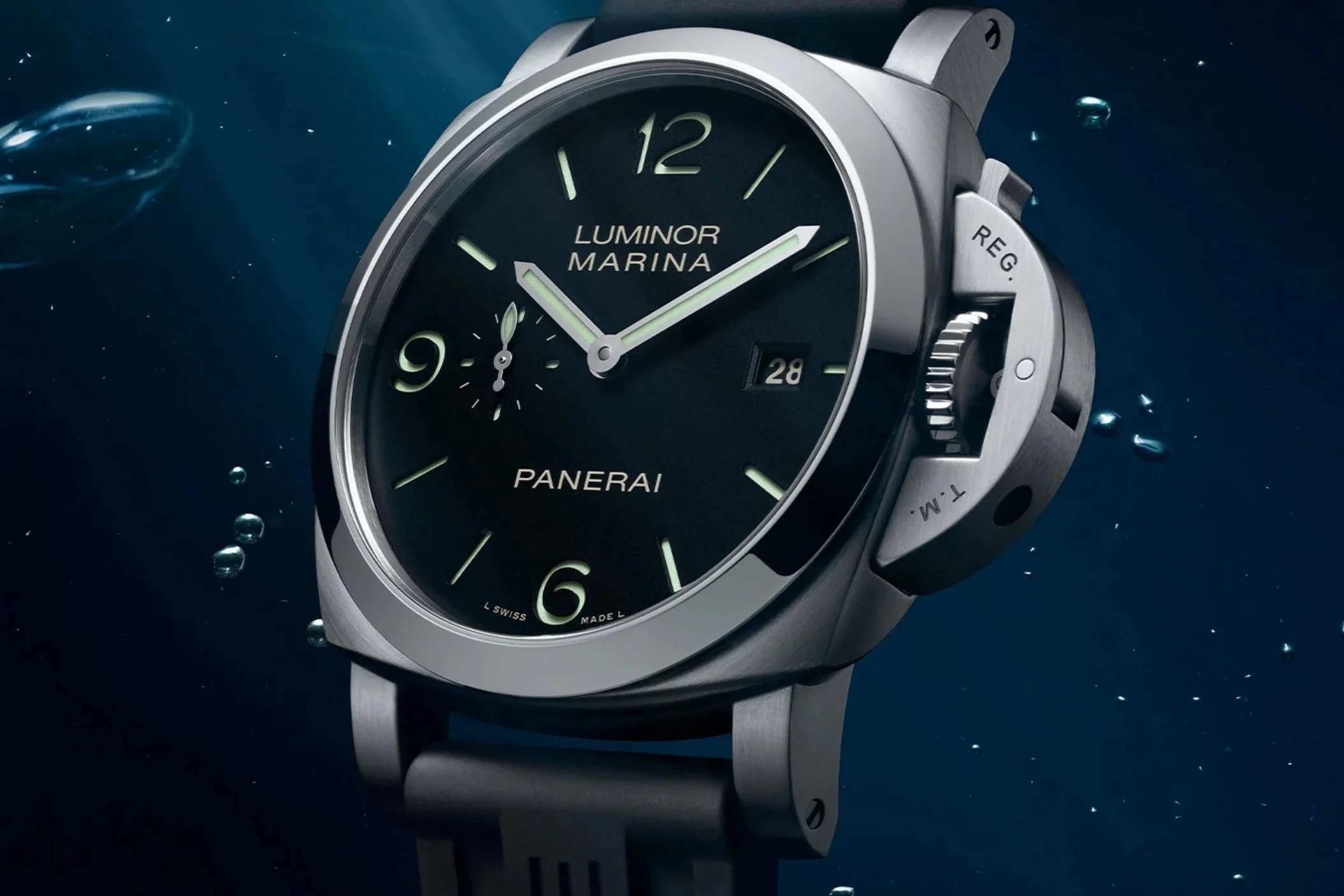
Then Hollywood got involved. In 1996, Sylvester Stallone wore a pre-Vendôme Panerai Luminor 5218-201/A in Daylight. Richemont acquired Panerai the following year and began taking the brand international in 1998. If you are looking for a moment when an extremely large watch stopped being an obscure military-derived object and started becoming aspirational, the rise of Panerai in the late 1990s is difficult to ignore.
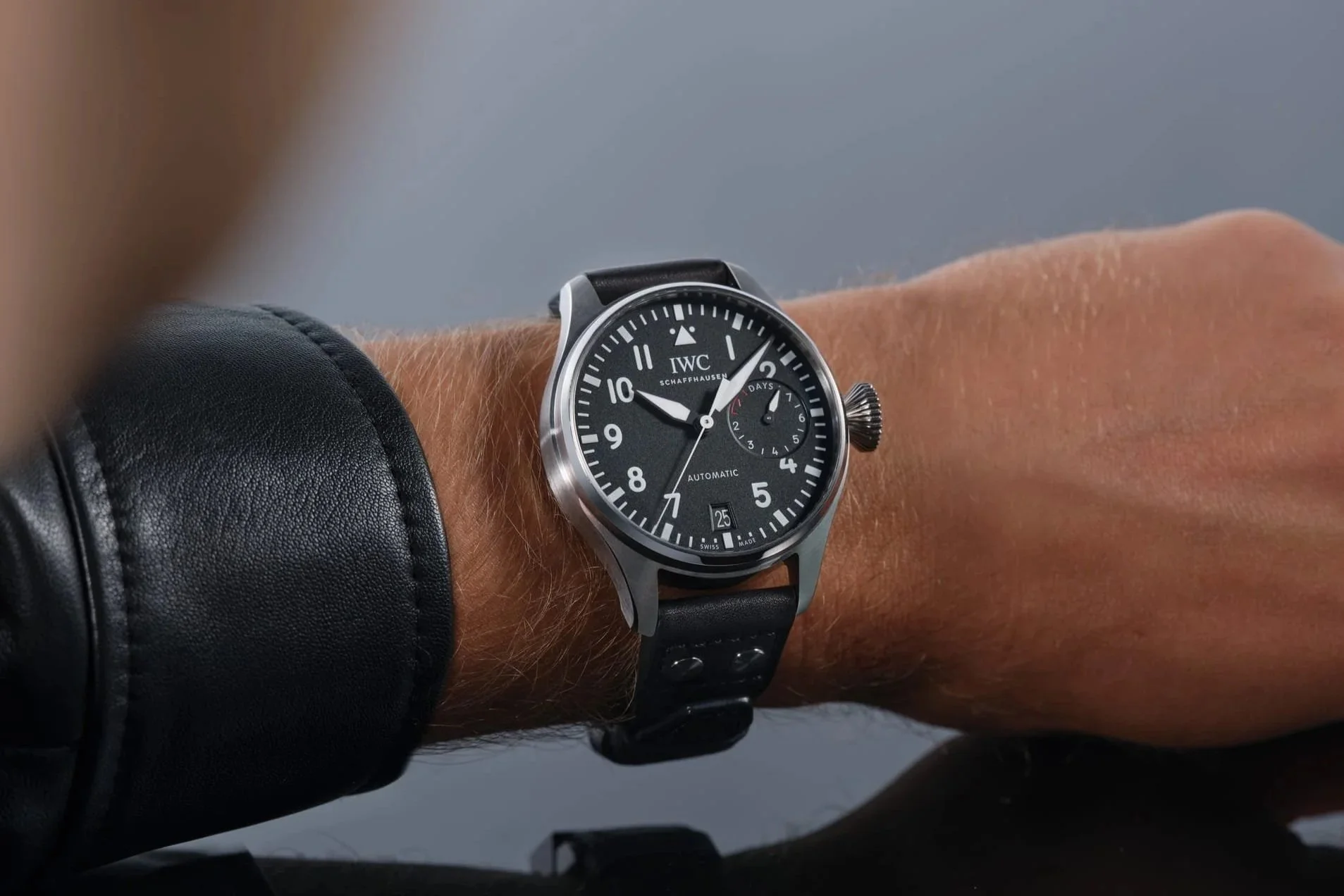
By 2002, IWC was selling the Big Pilot at 46.2mm wide and 15.8mm thick. That second number is worth remembering because it becomes important later. The watch was nearly 16mm thick and offered 60 meters of water resistance. That is the sort of thickness we now associate with serious dive watches, except the Big Pilot was never pretending to be one.
So why did everything get bigger?
This is where the story gets frustrating. There are plenty of theories, and most of them sound reasonable.
Large watches communicate status. Complications need more dial space. Celebrities helped normalize oversized watches. There is also acclimatization: once someone gets used to wearing a 44mm watch, a 39mm or 40mm watch can suddenly feel small. Ariel Adams discussed several of these ideas more than a decade ago, and they are all plausible.
But plausible is not the same thing as proven.
I could not find contemporary executives explaining that they were increasing case sizes for any one of these reasons. I could not find internal documents showing a coordinated strategy either.
There is another explanation I have repeated myself: large watches perform better in display cases because they are more noticeable, photograph better and look more expensive from across a counter. I went looking for evidence of that too. I wanted a retailer saying it, a brand executive saying it, or even trade coverage documenting it.
I could not find anything convincing.
So I am going to stop repeating it as fact. What we actually know is much simpler. Much of the industry moved toward larger watches for roughly fifteen years, and then it began moving in the opposite direction. Interestingly, brands have been much more willing to explain the return to smaller watches than they ever were to explain the move toward larger ones.
The correction is real
Until recently, I would have described the move toward smaller watches as something you could see and feel but not easily quantify. Then ScrewDownCrown published an analysis of 5,957 watches entered into the Grand Prix d'Horlogerie de Genève between 2001 and 2026. As far as I can tell, it is one of the first serious longitudinal datasets looking at this question.
The median round watch entered in the GPHG measured between 43mm and 43.5mm in 2008 and 2009. Through much of the 2010s, the median sat around 42mm. It reached 41.5mm in 2021, and for the last three editions it has been 40mm.
The distribution tells the story even better. In 2009, 76 percent of entries measured 42mm or larger. This year, that figure is 29 percent. Among 67 brands that entered watches during both periods, 49 reduced their case sizes while only 11 increased them.
There are important limitations to the data. GPHG entries are watches brands choose to submit for awards. They are not necessarily the watches consumers are buying, so this tells us more about what brands want to showcase than what is actually selling at retail.
There is another interesting detail: the percentage of watches measuring 38mm and under remained relatively stable. So the industry is not suddenly racing toward tiny watches. What we are seeing is compression toward the middle, with watches that used to live above 42mm increasingly moving into the 38mm to 41mm range.
Still, this is the clearest evidence I have seen that the downsizing enthusiasts have been talking about for years is actually happening.
But only one dimension really changed
This is the part that changed how I think about the entire trend.
Diameter came down. Thickness barely moved.
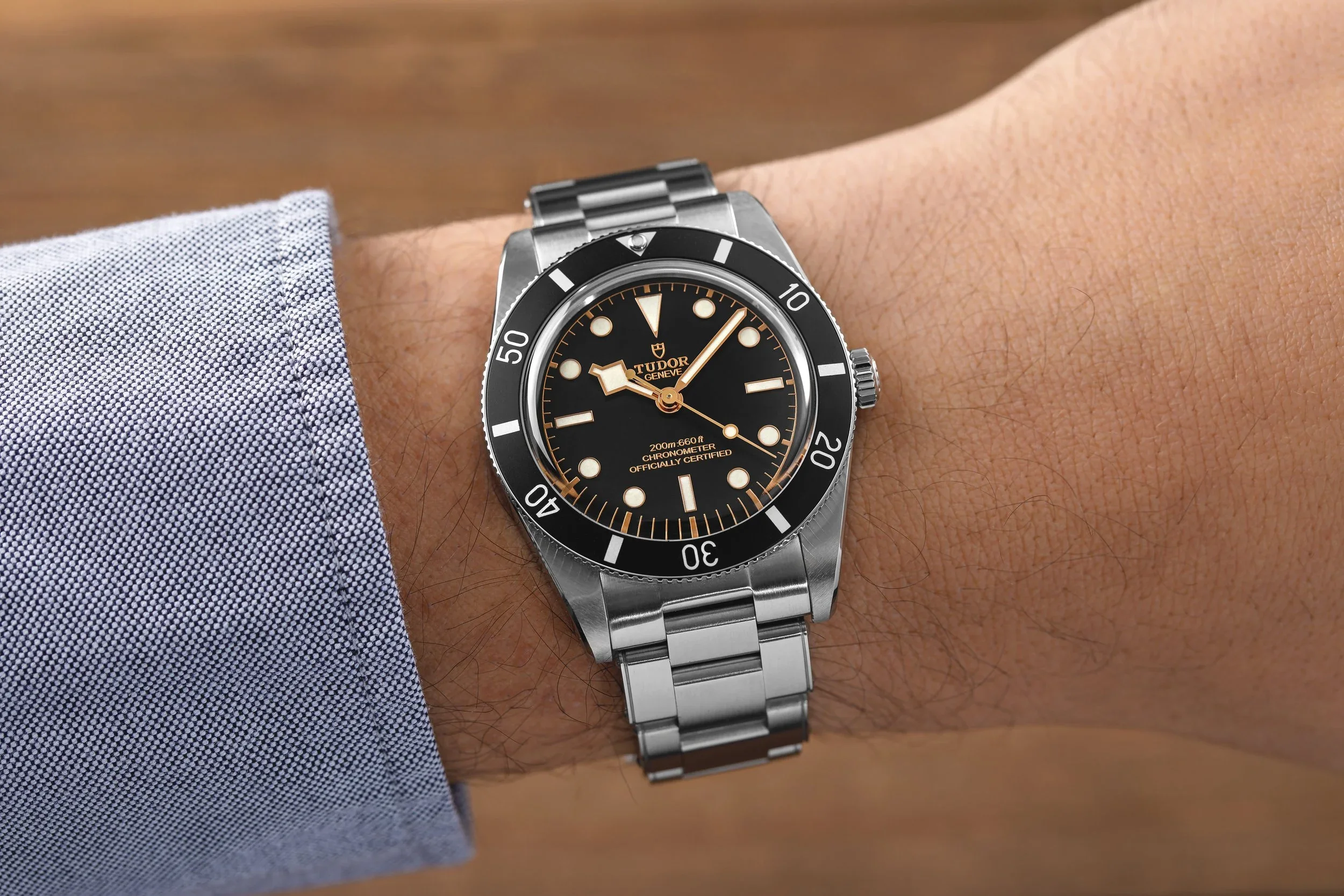
Take the Tudor Black Bay 58. The original watch from 2018 was roughly 12mm thick. The 2026 version has a new Master Chronometer movement and eight additional years of engineering behind it, yet its thickness is 11.7mm. That is a reduction of just three tenths of a millimeter.
The Black Bay 54 was celebrated for shrinking the formula even further. It measures 37mm across and 11.2mm thick. Again, most of the change happened across the case rather than through it.
Sometimes making a watch smaller can actually make its proportions worse. When Bulgari reduced the Octo Finissimo from 40mm to 37mm this year, WatchTime reported that creating the smaller watch required a new movement that added roughly a millimeter of thickness. Bulgari has spent years turning thinness into an engineering competition, yet even it had to sacrifice thickness to reduce diameter.
And I do not think we can simply blame physics. Blancpain's Bathyscaphe 38 offers 300 meters of water resistance in a case that is 10.77mm thick. Christopher Ward manages 300 meters at roughly 11mm thick in a 38mm case at a fraction of the price. Certina offers 300 meters and full ISO 6425 compliance at 12.2mm for under $1,000.
Then remember the IWC Big Pilot from earlier: 15.8mm thick and 60 meters of water resistance.
Thickness is not simply a consequence of water resistance. It is also a design decision, and for much of the last twenty years, it feels like the industry was far more interested in competing over diameter than thickness.
I have some firsthand experience with this because thickness is something we have spent a lot of time thinking about at Wren. The original Diver One measured 41mm across and 13.3mm thick. When we developed the Diver 38, we got the watch down to 10.7mm including the box sapphire crystal while maintaining 200 meters of water resistance.
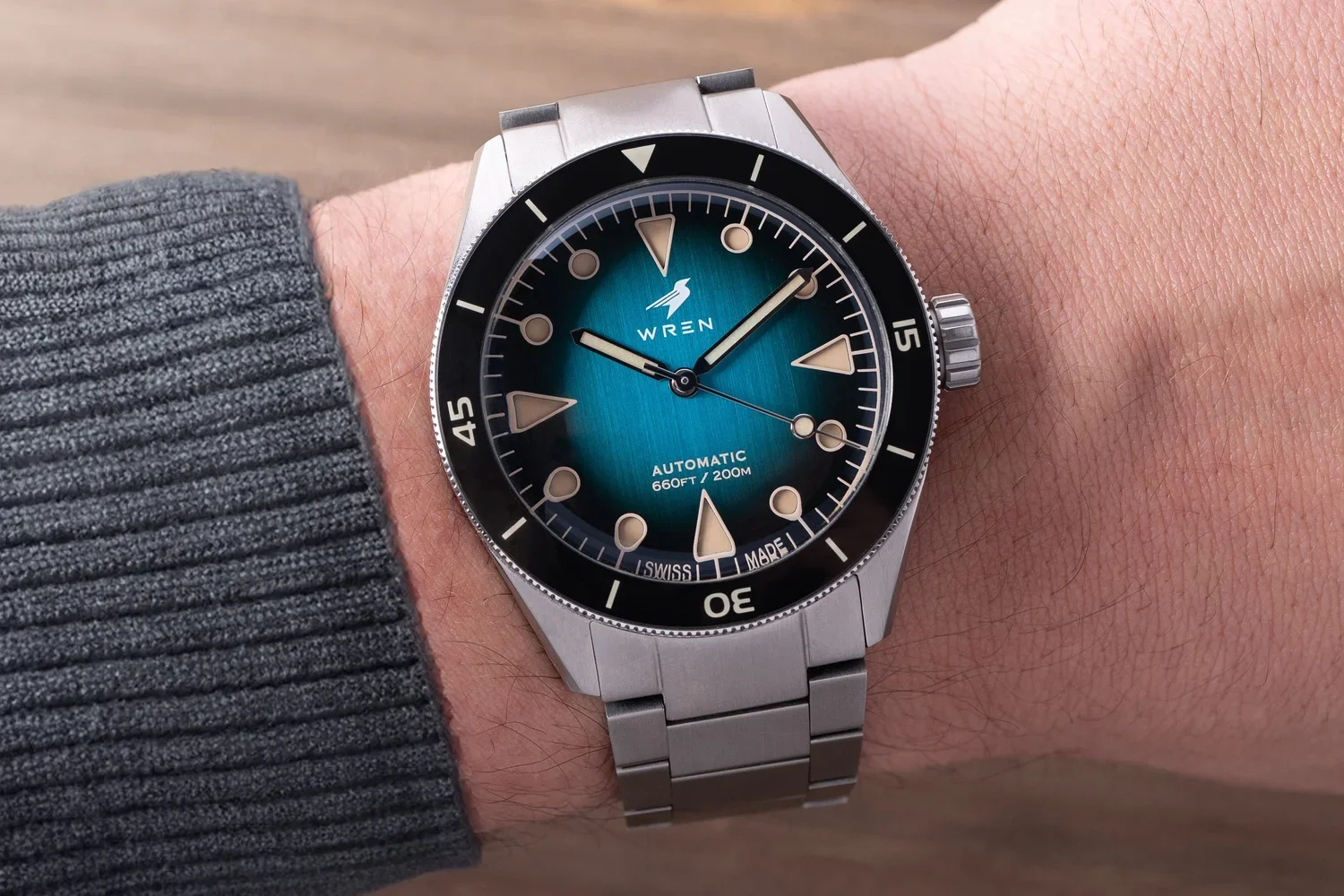
I will admit immediately that this is not a perfect comparison because the watch also lost three millimeters of diameter. The more interesting comparison came afterward.
We took what we learned developing the Diver 38 and applied it back to the 41mm Diver One platform for the Diver One Titanium. That watch came in at 12.4mm thick. It had the same diameter as the original Diver One, but we removed nearly a full millimeter from the height.
It is the kind of change that barely registers when you read the specifications online, but it changes how the watch actually feels on the wrist.
I also want to be fair about where that leaves us. Blancpain has been producing the 300-meter Bathyscaphe 38 at 10.77mm thick for years. That is a more difficult problem solved in less space. Of course, Blancpain is also charging accordingly.
The number almost nobody publishes
Even thickness is ultimately a proxy for something more useful. What you actually feel on your wrist is largely determined by the mid-case, the portion of the case beneath the crystal.
Worn & Wound measured the Black Bay 54's mid-case at roughly 6mm. Quill & Pad has pointed to that architecture as one of the reasons the watch feels so different from the Black Bay 58 despite the relatively small difference in total stated thickness.
Almost nobody publishes mid-case height.
Lug-to-lug measurements are only slightly easier to find. Rolex, Tudor, Blancpain and Longines generally do not include them in their official specifications. Certina's own page for the DS Action Diver 38 lists a lug-to-lug measurement of 19mm, which is clearly the lug width rather than the actual lug-to-lug distance.
That matters because lug to lug can tell you more about how a watch occupies your wrist than diameter alone. Consider the Submariner and Black Bay 58. The Submariner is approximately 40.5mm wide with a lug-to-lug measurement around 47.6mm. The Black Bay 58 is 39mm wide with a lug-to-lug measurement around 47.8mm.
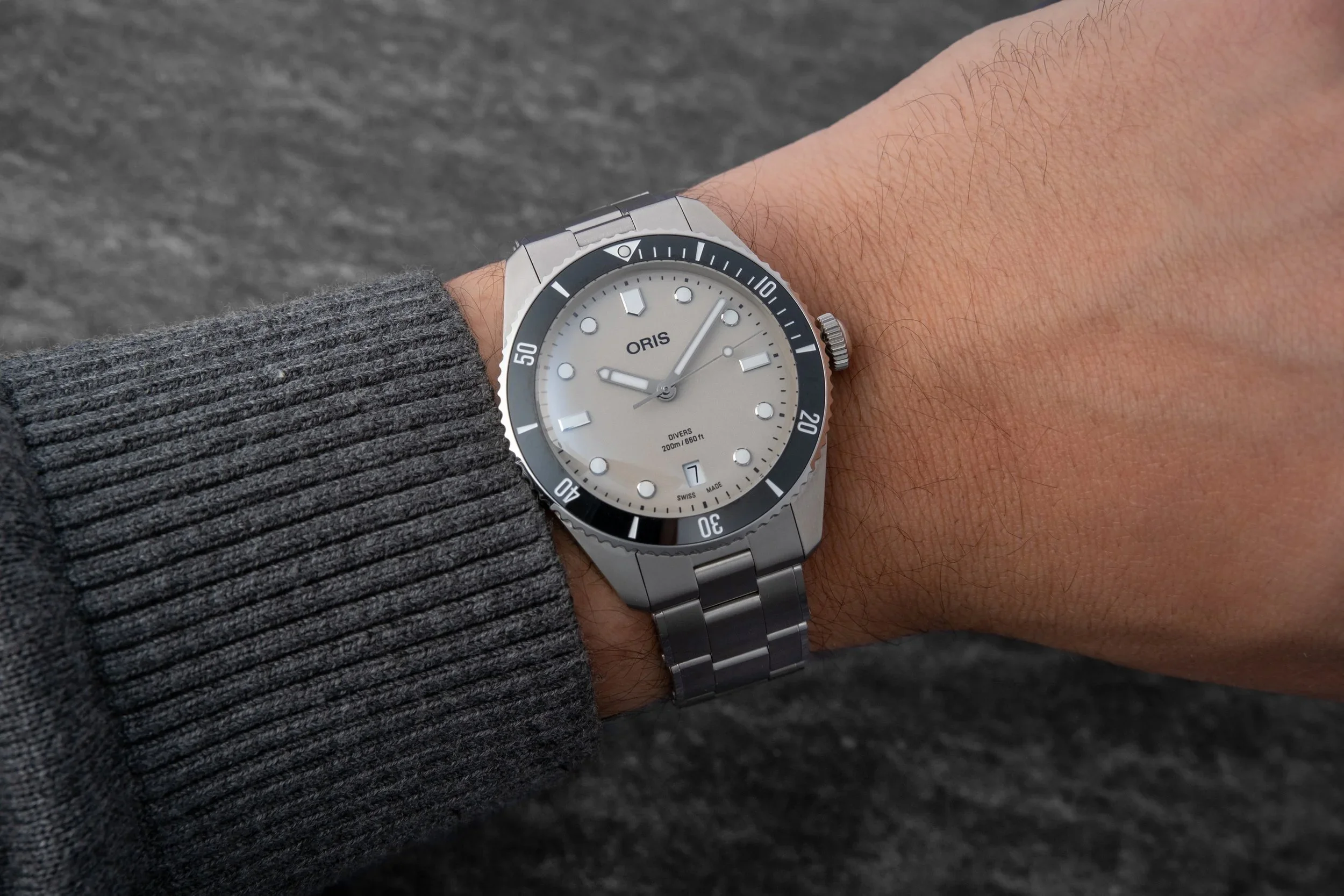
On the specification sheet, the Tudor is roughly a millimeter and a half narrower. On the wrist, it actually stretches slightly farther from top to bottom.
If you have been shopping entirely by diameter, you may have been paying attention to the wrong measurement. That is something I discussed in more detail in our guide to dive watches 38mm and under.
So why did watches get so big?
I do not think there is one clean answer. The evidence does not support pretending there was a single decision, trend or executive mandate that pushed the entire industry toward larger watches.
But I do think there is a broader lesson in what happened afterward.
Diameter became the dimension everyone talked about. It was printed prominently in specifications, appeared in headlines, came up constantly in reviews, and became one of the first numbers collectors used when deciding whether a watch was worth considering.
So diameter became something worth competing over.
For years that competition pushed watches larger. Now it is pushing them smaller. Meanwhile, thickness has changed much more slowly. Mid-case height is rarely published at all, and lug to lug remains missing from the specifications of some of the biggest brands in the industry.
Maybe the real problem was never simply that watches got too big. It was that we reduced something as complicated as how a watch wears to a single number.
For the last decade, enthusiasts have been telling brands that diameter matters, and brands responded. Maybe it is time to start asking about the other dimensions too.
What is the thickest watch you have ever convinced yourself to keep, and what finally made you stop wearing it?