
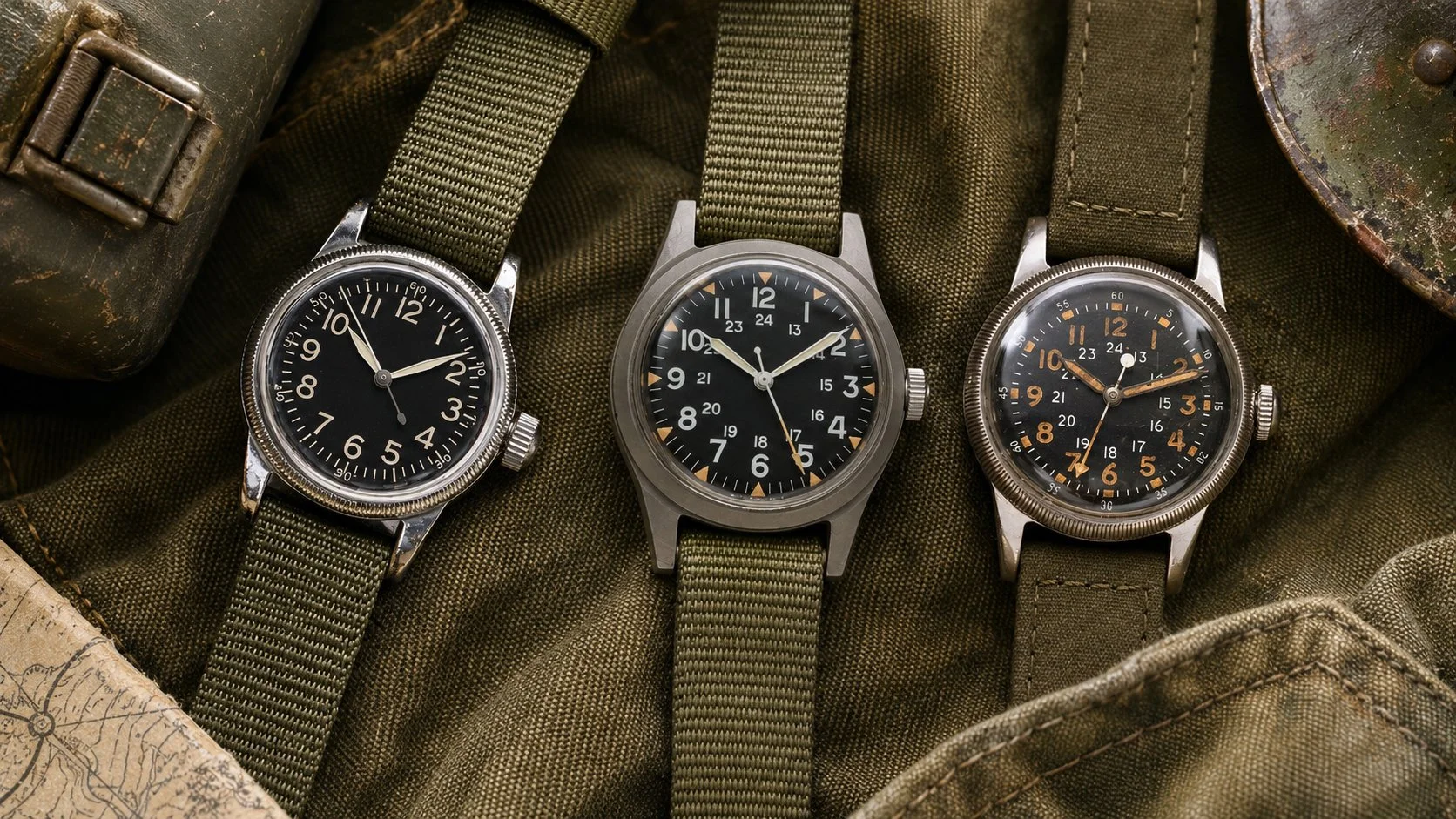
Fascinating history, beautiful patina, approachable prices, and incredible variety make them one of the best places to start your horological journey.
I will stand behind the following statement definitively: someone looking to buy their first watch should buy a new watch. Full stop. Not a vintage watch in great condition; not a pre-owned watch from a dealer. A new one, under factory warranty, with all the fixins’.
This isn’t to say that you should stretch your budget to the breaking point to buy a wildly expensive luxury product right out of the gate. But buying pre-owned or vintage watches — ones that can reasonably be expected to need service sooner rather than later — can ruin the collecting experience before you’ve even had a chance to enjoy it.
However.
Once you have that first watch, I propose something interesting: vintage military watches.
Because if you’re going to open the pre-owned/vintage Pandora’s box, why not do it in a way that checks a remarkable number of boxes simultaneously? Fascinating history. Beautiful utilitarian design. Cool patina. Relatively approachable prices. Incredible variety. Excellent unisex sizing. And, in the case of American military watches, the opportunity to own a genuinely American-made piece of horological history.
Have the scratch to buy an early-’50s Submariner without taking out a HELOC? Go for it — you have my full support. But for everyone else, have I introduced you to my friends Waltham, Elgin, Bulova, and Hamilton? If you’re not aware, the United States was, for a time, a positive horological tour de force. We didn’t really make super-complicated, chronometer-grade, wildly decorated whatchamacallits for robber barons. (We let the Swiss do that.) What we did make were millions upon millions of reliable pocket watches and wristwatches for railroad workers, soldiers, businessmen, and all manner of ordinary people.
American watchmakers developed a highly efficient, vertically integrated, assembly-line-like methodology based around interchangeable parts. And the system was so productive that European firms sent representatives to the United States to study American production methods. Unfortunately, this is no longer the case with respect to watchmaking, and looking upon a vintage American-made hairspring is now akin to a medieval serf gazing upon Roman concrete and wondering how the hell they did that 1,000 years ago.
Alas. Anyway: military watches.
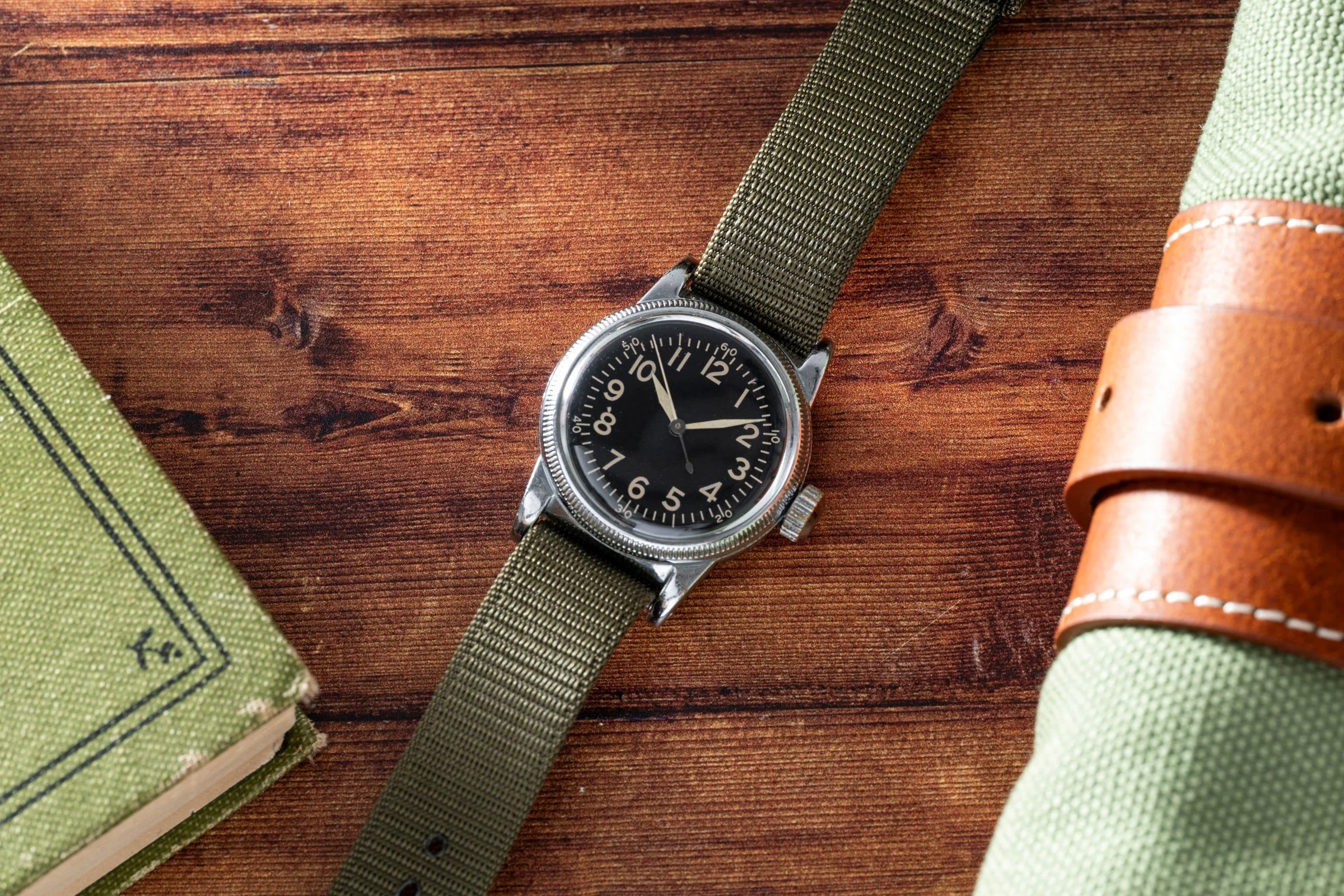
A 1940s Elgin A-11, the USAAF navigation watch. Photo: Analog:Shift
During the Second World War, American factories churned out millions of timekeepers of all sorts for use by our armed forces and those of our allies. Millions. For years, relatively few collectors paid much attention to these timepieces. They were small by contemporary standards; American-made watches weren’t especially fashionable; and the sheer glut of vintage inventory meant that collectors could afford to prioritize larger, more robust pieces.
This has changed, however.
As more has been published about these watches, collecting tastes have shifted toward smaller case sizes, and the supply of good vintage examples has dwindled, prices have risen. Back around 2016, an American-made A-11 navigation watch from WWII could be found on eBay for perhaps $100 or less; today, a good example can cost several times that. Even so, vintage military watches remain remarkably accessible.
Let’s say a NOS-quality A-11 — a tough thing to find, given its chrome-plated case — might cost $1,500 from a top-notch dealer, and significantly less through an online auction. A good-quality example might be $700-$800. For an American-made watch with a fascinating history — this is “the watch that won the War,” after all — and a timeless design, that still seems like a pretty reasonable outlay. It’s not a watch you should swim with, of course, and at roughly 31mm, it’s certainly small by today’s standards. But in terms of pure cool factor, it’s pretty tough to beat.
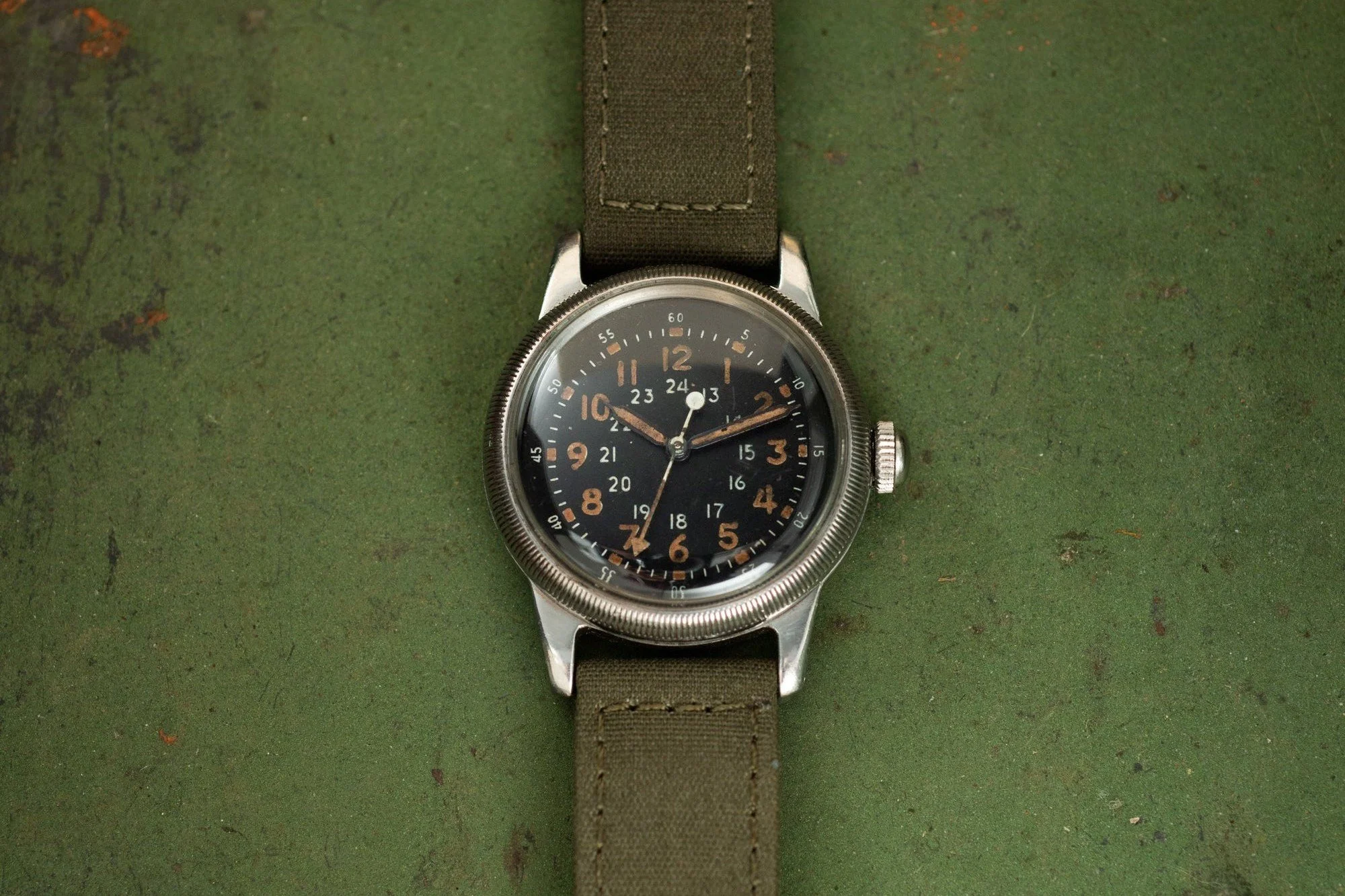
A 1950s Waltham A-17, the Korean War-era successor to the A-11. Photo: Analog:Shift
The same could be said of other WWII-era field and pilot’s watches, including Ordnance Department and FSSC-88W-800 watches, as well as Korean War- and Vietnam War-era pieces such as the A-17, A-17A, MIL-W-46374, GG-W-113, and others. And this is where things get especially interesting for a new collector: there are an enormous number of watches to choose from.
You’ve got to be careful about mission creep, of course: once you get into military-issued dive watches, chronographs, and other complicated or particularly rare fare, price premiums — rather than discounts — start to come into play. Such watches can exist at the confluence of so many factors — originality, configuration, military markings, movement, dial, case, and provenance — that authentication becomes considerably more difficult.
For someone relatively new to collecting, I’d largely leave those watches alone. Simple little field watches, on the other hand — not to mention military-issued pocket watches and stopwatches — are plentiful, versatile, and still relatively affordable. The fact that many are American-made is merely a compelling bonus. And because most are simple, time-only designs that were produced in large numbers, service costs are generally much less intimidating than they can be on a high-end vintage chronograph.
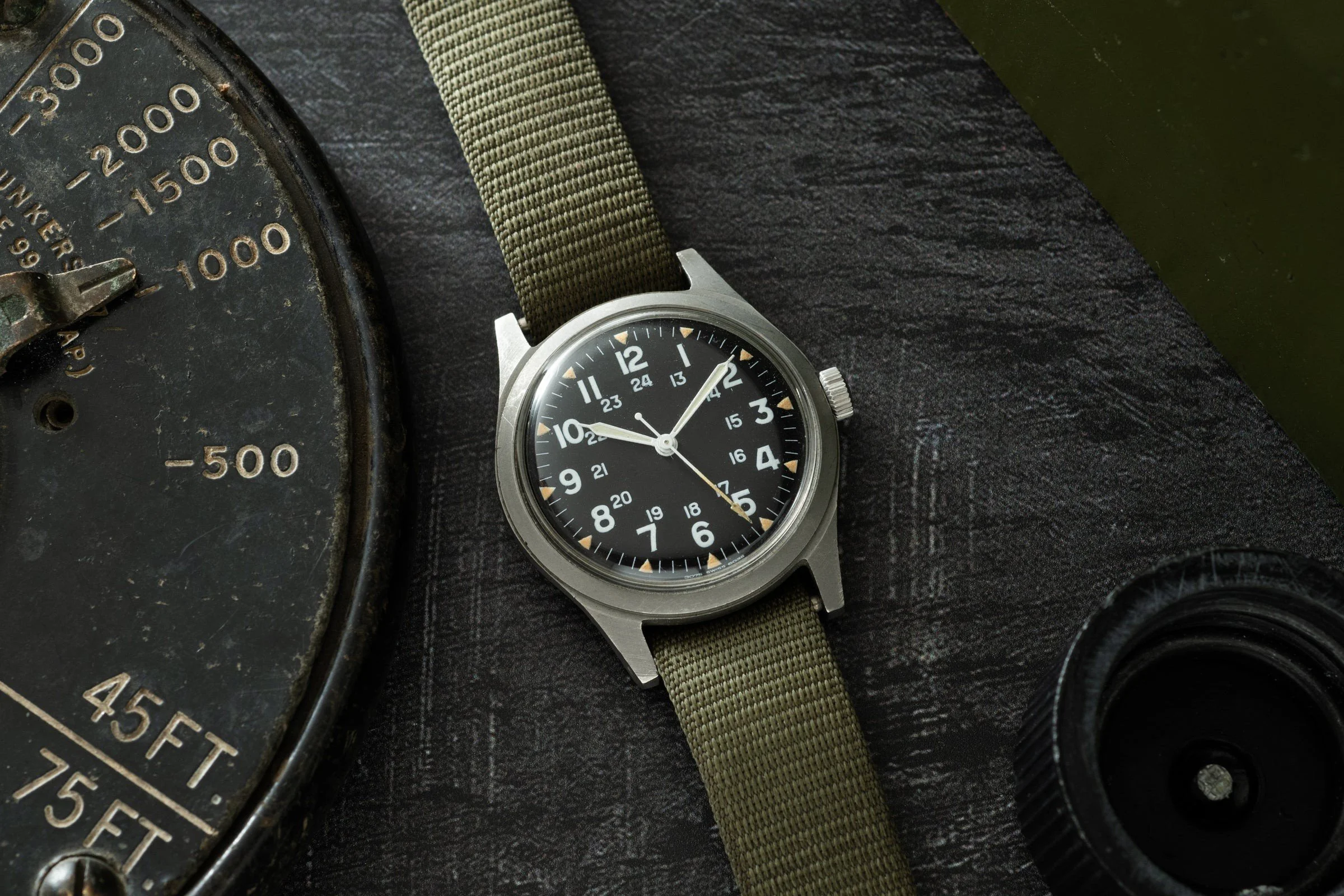
A 1974 Hamilton GG-W-113, the Vietnam-era pilot’s field watch. Photo: Analog:Shift
So what should you actually buy? Find a design of a simple, time-only, genuine mil-spec field watch from the ’40s, ’50s, ’60s, or ’70s that you dig. Then look for a great example. For a first vintage military watch, I’d strongly consider buying from an established dealer such as Analog, Craft + Tailored, or Wanna Buy a Watch. Yes, you’ll pay a premium over an example found at an online auction. But you’re also buying some degree of assurance: the watch has been examined, photographed properly, and either serviced or determined to be in excellent working condition. Depending on the dealer, it may even carry a warranty.
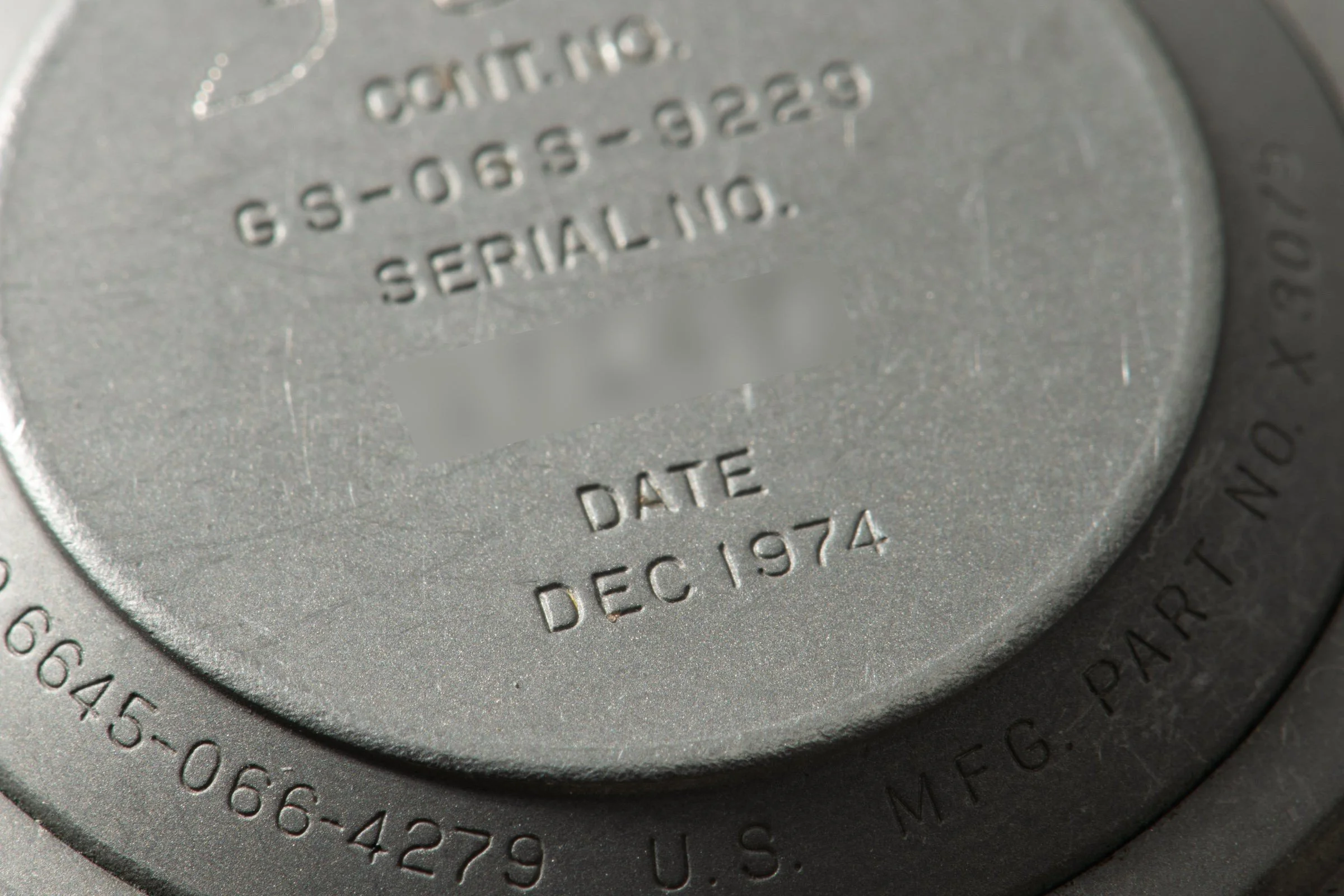
Contract number, part number and issue date on a GG-W-113 caseback. Check these against known examples before you buy. Photo: Analog:Shift
If you do buy at auction, do your homework. Double-check the specification and issue numbers on the caseback against comparable examples online. Look closely at the dial, hands, case, movement, and markings. The more you learn about the particular watch you’re buying, the easier it becomes to spot something that doesn’t belong. And, as always, buy the best example you can afford…but don’t be too precious about it. These watches were made to be worn, and worn hard. Wear it around town. Wear it up a mountain. Wear it to your local RedBar meetup.
(Just don’t wear it in the ocean. Stick with a dive watch — or a modern field watch — for that.)
In short: enjoy it.
Then look up the history of the model sitting on your wrist. Go down a rabbit hole. Learn who made it, when it was made, who used it, and why it looks the way it does. Get snooty with your significant other when they tell you that you’re becoming just like your father, addicted to WWII documentaries. End up spending lots of your time on this website and others just like it. Become slightly obsessed. Be accused of having become an absolute nerd by your old high-school friends. That, after all, is the point.
You didn’t just buy an old watch. You bought a little piece of history — something designed for a very specific purpose, produced in enormous numbers, and worn by people who depended upon it. And you did it without taking out a HELOC.
Not a bad way to start collecting.