
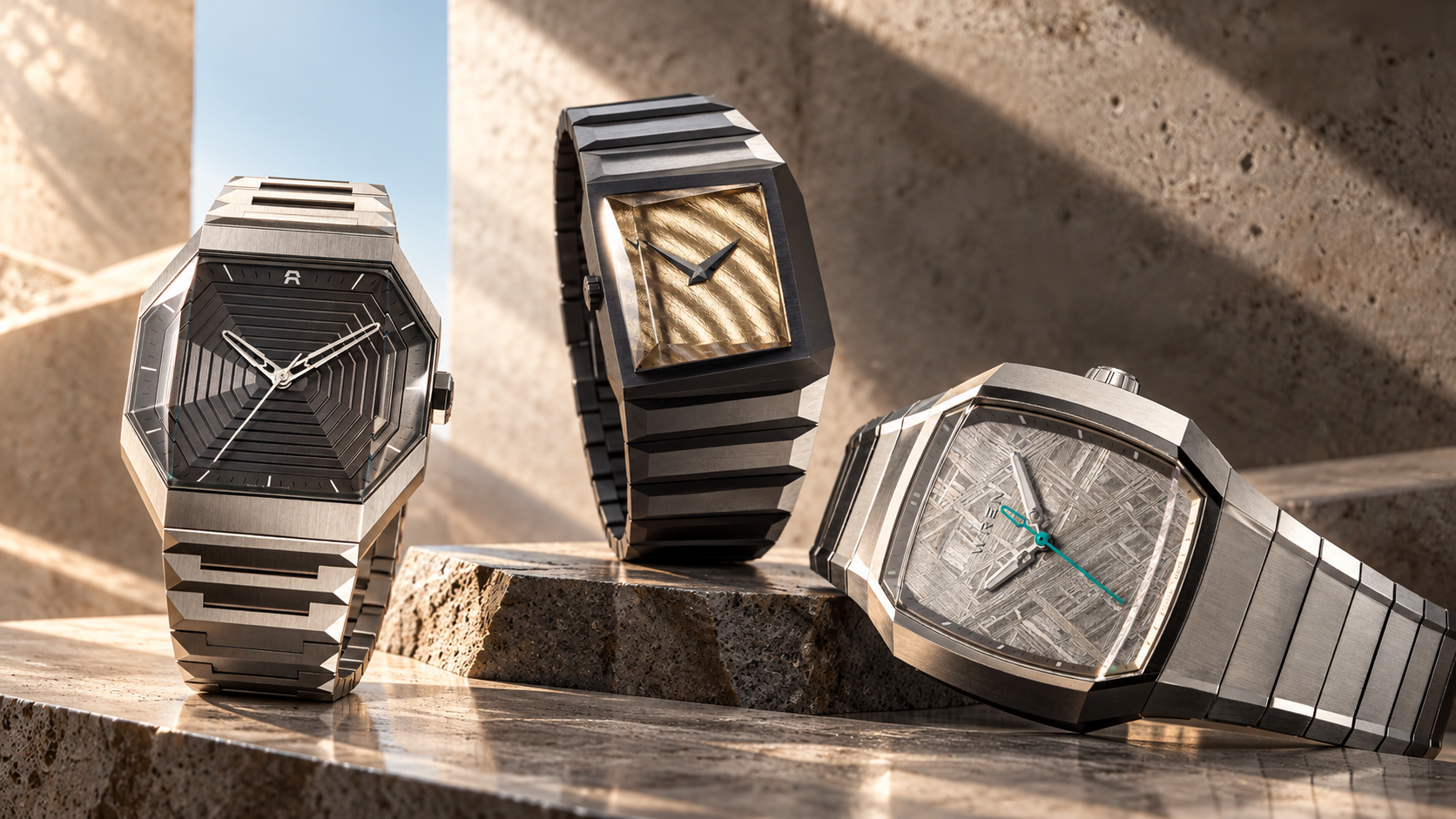
Faceted crystals are back. For forty years the glass on a watch was a flat or lightly domed disc you were not supposed to notice, and the cut-glass crystals Seiko put on its 1970s dress watches were a footnote for collectors who liked things a little strange. Then, in a little over two years, a Singapore microbrand, two New York independents, a Paris startup, the relaunched Gérald Genta and Audemars Piguet all put faceted sapphire on the front of a watch, and a detail that used to mark a piece as a 1970s oddity became the most interesting thing on new releases from $648 to $143,000.
It is easy to see why it travels. A faceted crystal is the one part of a watch that changes every time you move your wrist. Flat panels meet at hard lines, light breaks across them, and the dial underneath shifts and bends depending on where you are looking from. It photographs, it reads from across a table, and it does not depend on a dial color or a case shape to get noticed. It was common in glass and then disappeared, because it was easy to do in glass and very hard to do in sapphire. Seven brands are doing it in sapphire right now, and this is the list.
Where it started
Seiko owned the faceted crystal in the 1970s. The Grand Seiko 61GS "Arabesque" of 1970 had a three-sided cut crystal, and from June 1972 the King Seiko Vanac line put faceted crystals over colored dials across more than fifty references. The Seiko Advan, the Lord Matic and the Chariot "Desert Dial" followed in 1973, all with crystals that rose off the case in angled planes. They could do it because the crystals were hardened mineral glass, the material Seiko would later brand Hardlex. Mineral glass sits around 5 to 6 on the Mohs scale and cuts with ordinary tooling, so a facet was a grinding step rather than an engineering project. The trade-off was that the edges chipped, replacements were scarce, and by the 1980s Seiko had put the whole idea away. Rado went the other direction with the DiaStar in 1962, pairing a hardmetal case with a sapphire crystal so the watch would not scratch at all, and the current DiaStar Original still carries parallel facets on its sapphire as a nod to that.
Why sapphire is the hard part
Sapphire is 9 on the Mohs scale, one step below diamond. It cannot be heated and folded the way glass can, so every facet has to be milled out of a solid block with diamond tooling and then polished without rounding the edges you just cut. Audemars Piguet's head of research said it plainly when the [Re]master02 came out: glass you fold, sapphire "is a stone that you cannot fold." There is also an optical problem. A flat facet bends light at a different angle than the panel next to it, so the dial jumps at the facet line, and the usual fix is to curve the entire underside and accept some distortion. Seiko brought faceted sapphire back on the SARB001, 003 and 005 in 2006, and when it revived the Vanac in 2025 it moved the facets to the case and left the crystal plain. The watches below did not take that way out. Prices are list as of October 2026.
Vario Futurist ($648)
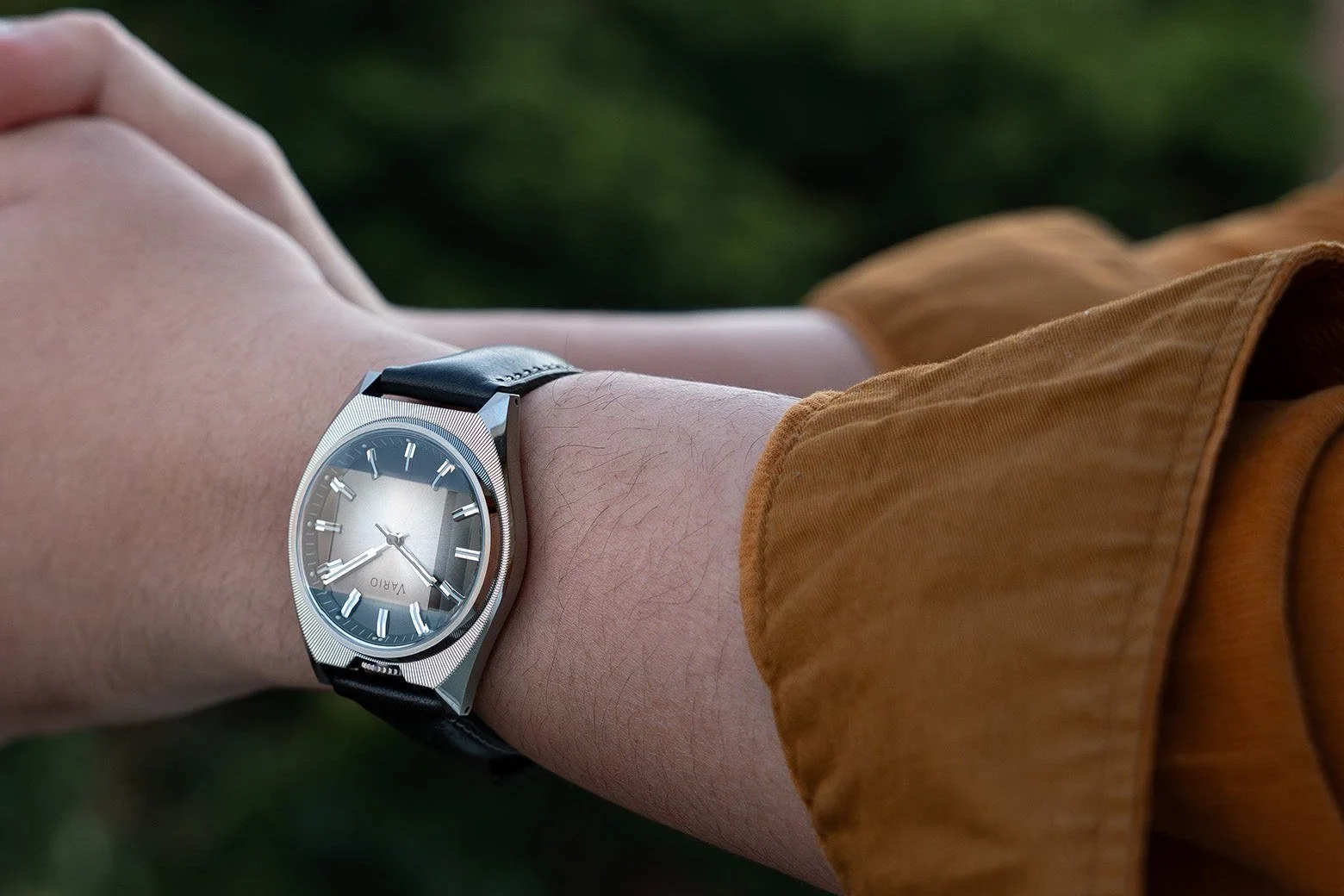
Diameter: 39mm; Lug to lug: 48mm; Thickness: 10mm; Movement: Miyota 9039; Water resistance: 100m; Crystal: faceted sapphire with inner AR
Vario's Futurist, from November 2025, is the direct descendant of the Vanac and the Advan: a 39mm steel tonneau with a radially grooved case top, a disc crown at 12 and an astronaut engraved on the caseback. The crystal is the point. It is sapphire cut with nine facets on the top surface, rising about a millimeter above the bezel, and it does exactly what the 1970s Seikos did, splitting the fume dial into panels that shift as the wrist turns. Inside is a Miyota 9039 and the whole thing is 10mm thick and 100m rated. Nobody else sells a new faceted sapphire crystal for under $1,000, and the first batches of silver, red and orange have already sold out.
Wren Vessel ($2,900 steel sunray, $3,400 meteorite)
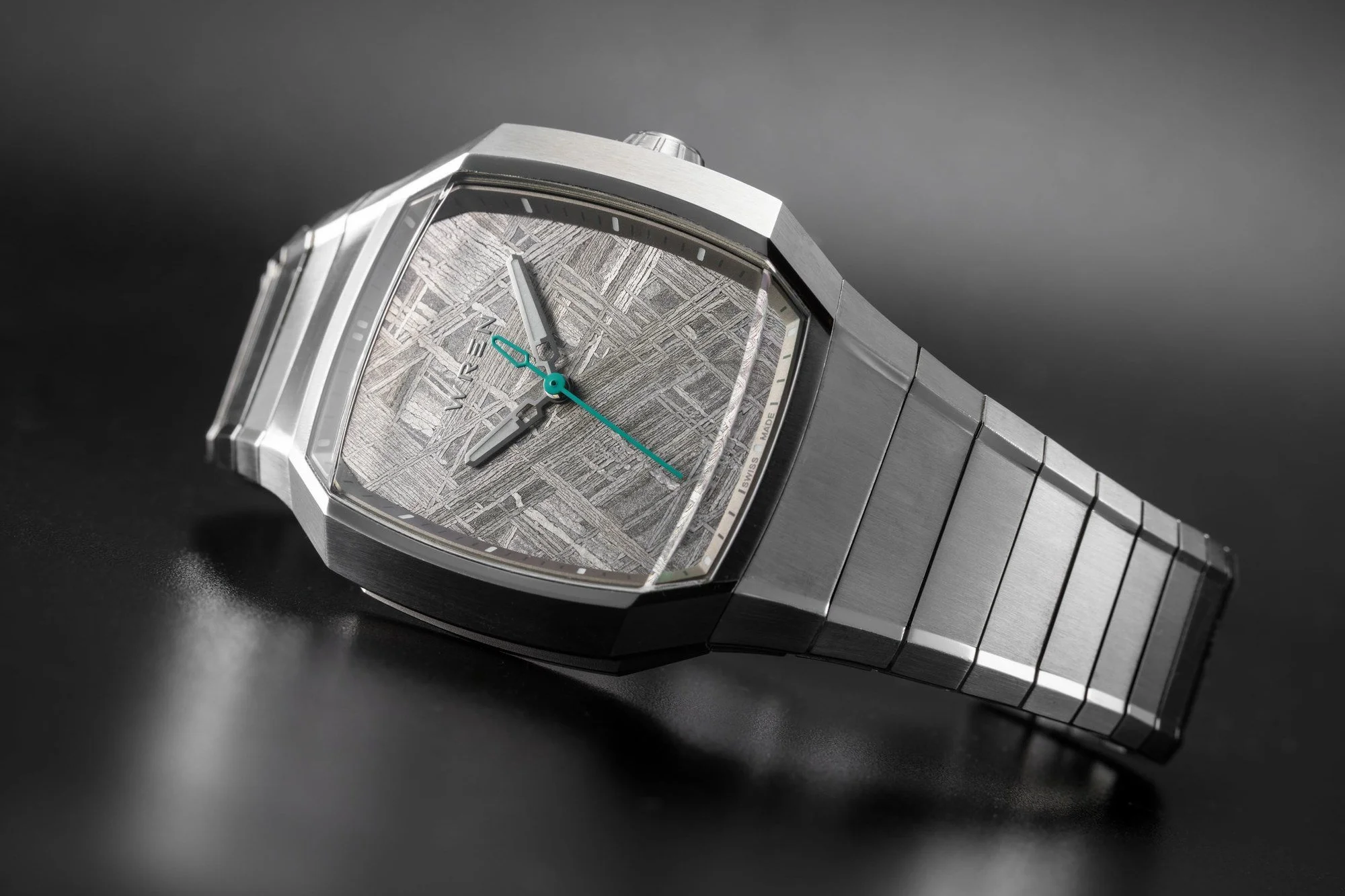
Diameter: 39mm; Thickness: 10.6mm; Case: 904L steel; Movement: Sellita SW300-1; Power reserve: 56 hours; Water resistance: 70m; Production: 150 pieces per dial
Wren is Wrist Enthusiast's own in-house brand, so take this one with that in mind. The Vessel is a 39mm integrated-bracelet sports watch designed with Max Resnick over two years, and its crystal is the most complicated piece of sapphire on this list. The top surface is faceted at 12 and 6, and the facets are curved rather than straight, so the edge bows across the dial instead of running in a line. Then the underside is cut again as a curved faceted negative of the top, with every inner facet following its partner on the outside. That second cut is what makes the dial read without distortion: the facet on top bends the light and the matching facet underneath bends it back. As far as we can find, it is the first watch whose sapphire crystal is faceted and curved on top and cut again underneath as a curved faceted negative. The first manufacturer refused the job, the first prototype round lost 95 of every 100 crystals, and the house that finally made it is one that cuts sapphire cases. The crystal costs more to produce than the Sellita SW300-1 behind it, which is the opposite of how a $2,900 watch is usually built. That a two-year-old independent brand that only made dive watches until this October got this made at all is the surprising part, and it is the clearest sign yet of where Wren is trying to go, from a small independent toward a design-led one. The meteorite version sold out in 14 days; the steel sunray is still available on preorder for Q1 2027.
Toledano & Chan B/1 ($7,700 to $10,200)
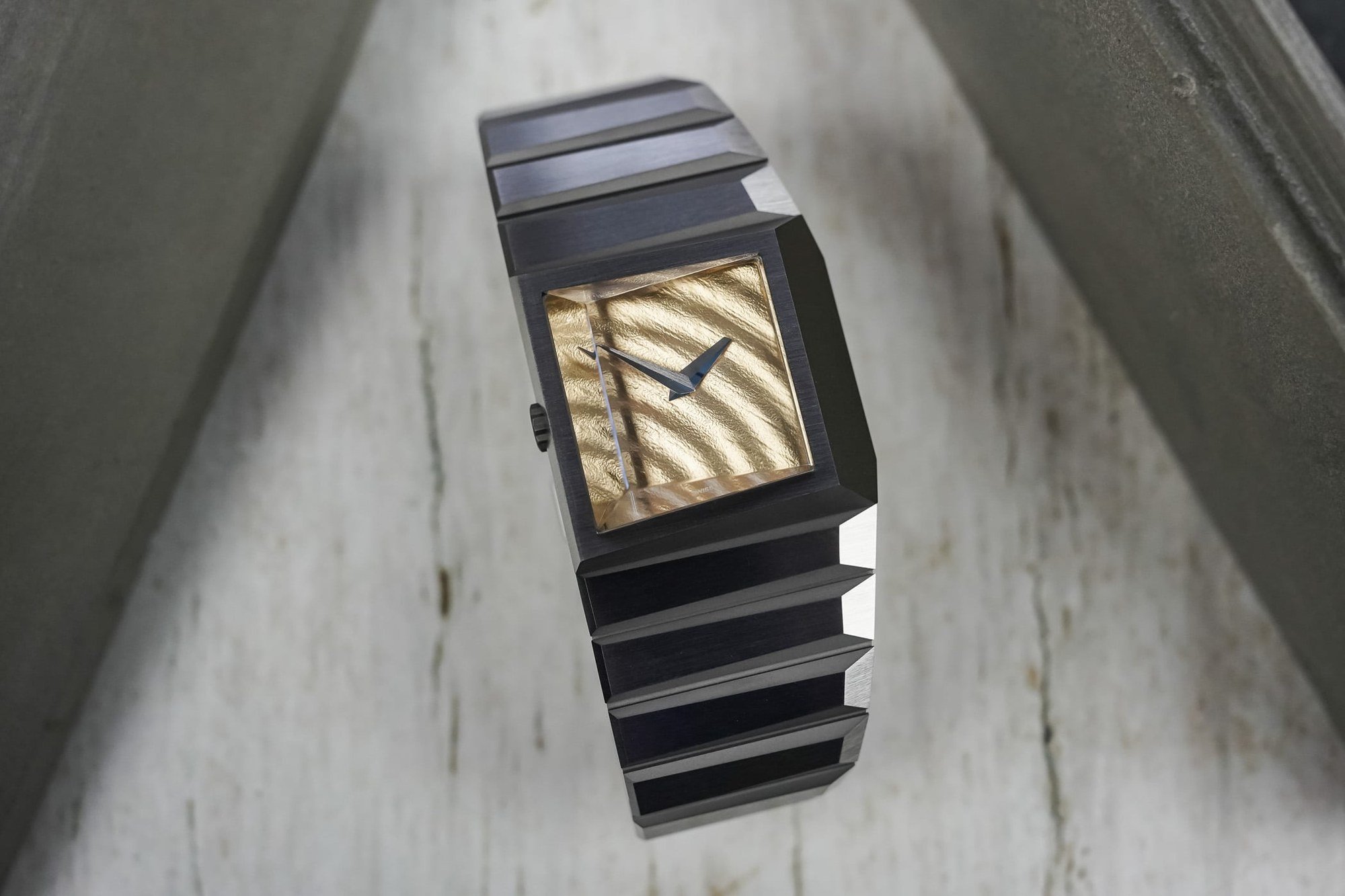
Photo: Monochrome Watches
Diameter: 32mm; Thickness: 9.1mm to 10.4mm; Case: grade 5 titanium; Movement: Sellita SW100 manual; Water resistance: 50m; Crystal: faceted asymmetrical sapphire
Phil Toledano and Alfred Chan built the B/1 around Marcel Breuer's old Whitney Museum on Madison Avenue, the Brutalist block with the trapezoid window, and the first version of May 2024 sold out in under an hour with a plain flat crystal over a lapis dial. The faceted crystal arrived on the B/1.2 in January 2025 and has been on every B/1 since: a solid asymmetrical wedge of sapphire that rises off the case, with its top plane tilted against the slope of the case. The part we like most is the direction it leans. The bracelet links are cut on a slant, every one of them tipped the same way, and the crystal's facet runs at the opposite angle, an opposite match that makes the head and the bracelet read as one carved object rather than a case with a bracelet bolted on. It is a small decision and a clever one. The brand calls it an asymmetrical sapphire and says nothing more; everyone who has handled one calls it rare and costly to make. The B/1.3R of February 2026 put the crystal over a solid 18k gold ripple dial that took the pair about six months to get right, in a 32mm grade 5 titanium case made in Switzerland for the first time, 300 pieces at $10,200. The B/1 Dazzle of October 2026 engraves WWI dazzle-camouflage lines across the case, the titanium dial and the bracelet in one continuous pattern, alternating frosted and brushed, 188 pieces at $7,700, with a 12-piece Double Dazzle adding 350 pave diamonds at $9,700. Every one of them runs a hand-wound Sellita SW100, hours and minutes only, crown on the left. The Dazzle is sold on Toledano & Chan's own site or through Time+Tide; the B/1.3R is Time+Tide only.
Alto ART 02 (EUR 13,100 before tax, about $15,200)
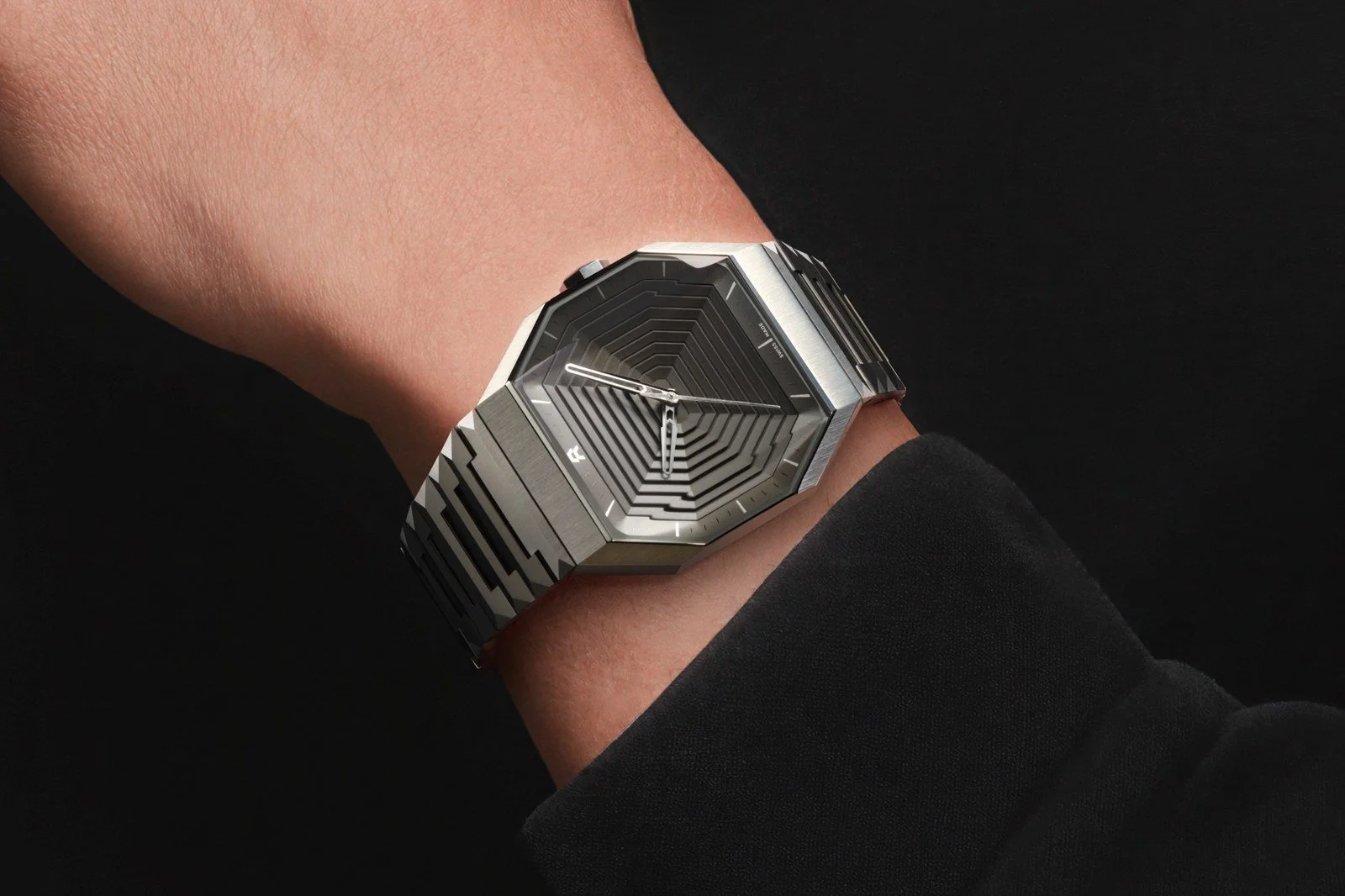
Diameter: 36mm; Lug to lug: 42.3mm; Thickness: 10.2mm; Case: grade 5 titanium; Movement: caliber A02 micro-rotor, 5Hz; Power reserve: 50 hours; Water resistance: 50m
Alto, founded in Paris by Thibaud Guittard after years at Audemars Piguet, built its whole identity on the crystal. The ART 01 of 2024 put a domed sapphire with two flat 17-degree bevels and a hemispherical underside on a 25-piece titanium watch at CHF 18,450, and said the crystal alone took more than 300 hours to get right. The ART 02, announced at Geneva Watch Days in September 2026, is the first permanent model: 36mm grade 5 titanium on Alto's first bracelet, 10.2mm thick, with the caliber A02 micro-rotor from Le Cercle des Horlogers running at 5Hz with a counterclockwise seconds hand. The front crystal curves from 12 to 6 with sharp bevels at 3 and 9 and a softly domed inner surface, and the caseback is a single piece of sapphire cut with nine facets and screwed straight into the case. Shipping starts in November 2026, and it can be ordered through Time+Tide's New York studio.
Gérald Genta Gentissima Oursin (from CHF 19,000)
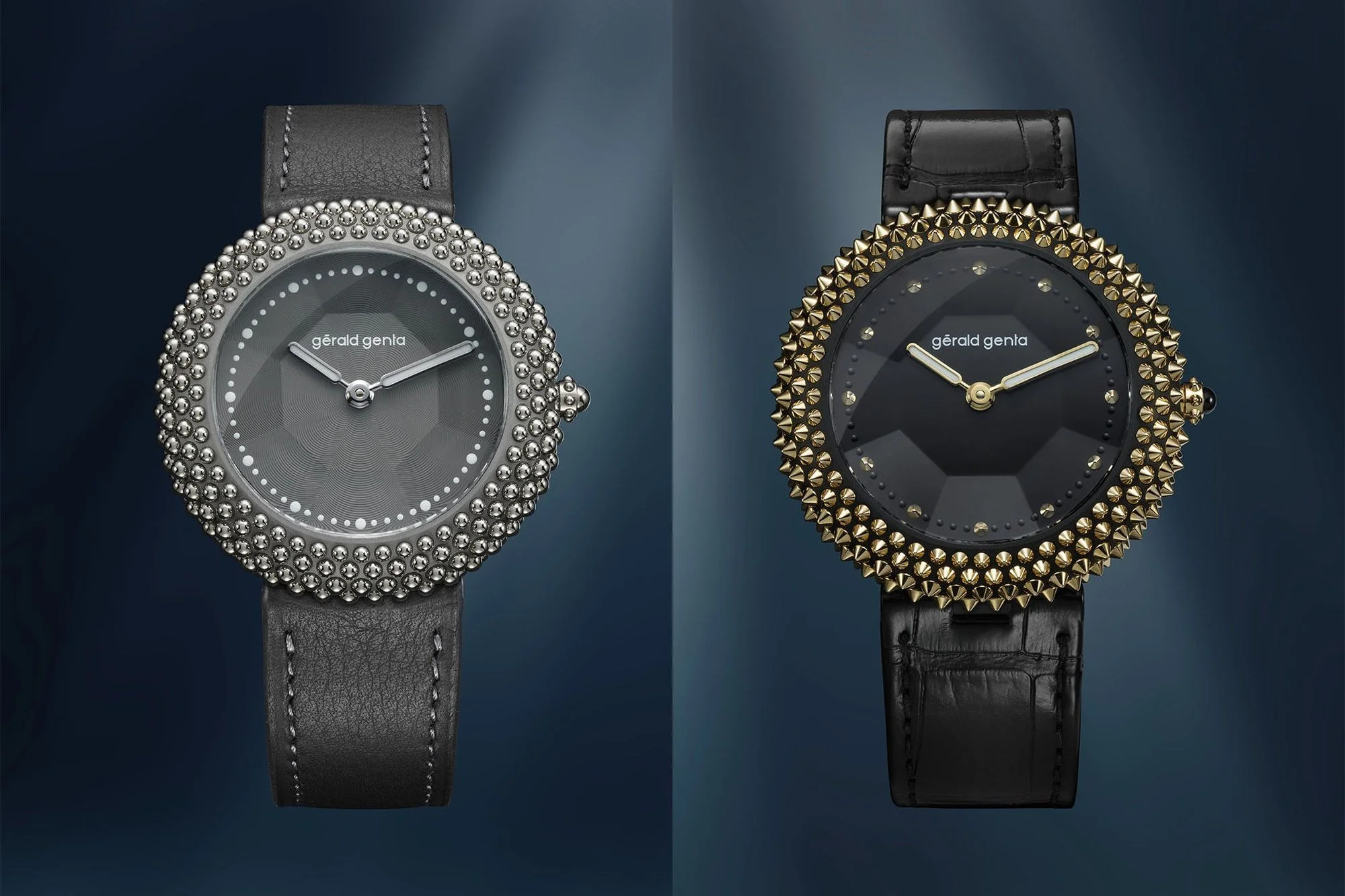
Diameter: 36.5mm; Thickness: 9.6mm; Case: grade 5 titanium or gold; Movement: GG-005; Power reserve: 50 hours; Water resistance: 30m; Crystal: eight-facet sapphire
Genta's own manufacture developed faceted sapphire crystals in the 1980s and 1990s because he wanted an octagon in the glass as well as the case, and when LVMH's La Fabrique du Temps relaunched the brand in June 2024 the Oursin came back with exactly that. The crystal has eight planes meeting in an octagon at the center with a flat top, and the case around it is a 36.5mm bead-blasted titanium sea urchin, 223 individually screwed beads on the bezel and lugs. Inside is the GG-005, built on a Zenith Elite base with an octagonal rotor. The 2025 Fire Opal version swapped the beads for 137 fire opals in yellow gold, and the Oursin 41 Meteorite of November 2025 moved to a 41mm titanium case with a crystal that is curved outside and faceted inside, at CHF 25,000. It is the only watch here where the facets are an homage rather than an experiment, and it looks like nothing else.
Audemars Piguet [Re]master02 ($47,200)
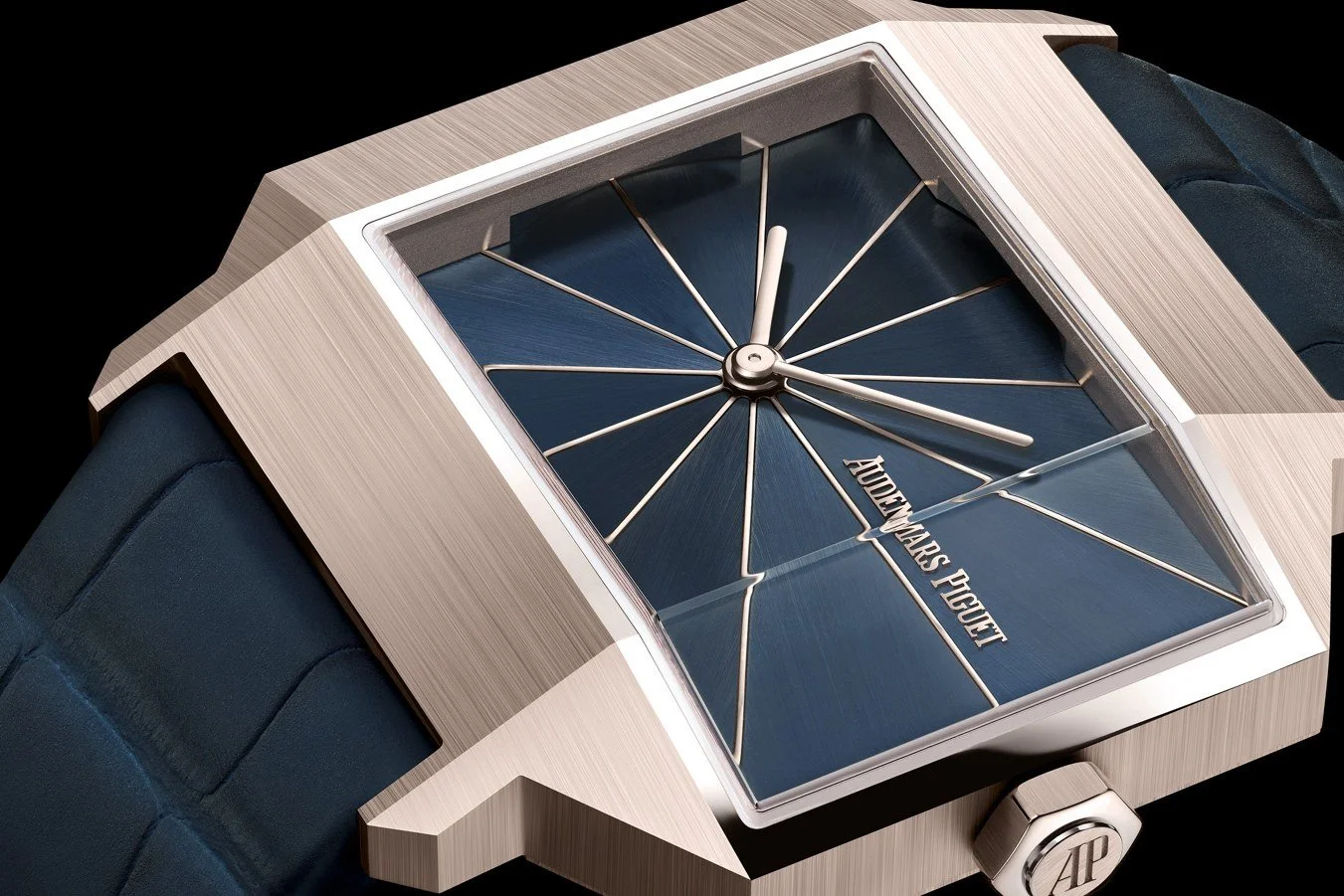
Diameter: 41mm; Thickness: 9.7mm; Case: 18k sand gold; Movement: caliber 7129; Power reserve: 52 hours; Water resistance: 30m; Production: 250 pieces
The [Re]master02 of May 2024 is a 41mm reissue of the 1960 model 5159BA, one of about thirty asymmetrical AP designs from 1959 to 1963 that were mostly made in fewer than ten pieces. The original had a mineral glass crystal. AP remade it in sapphire, with a 15.8-degree bevel at 3 o'clock that follows the slope of the case, and its head of research said the crystal had to be milled from a block of sapphire in four steps with tooling made for that one angle. It took two years to get the water resistance right. The case is sand gold, an alloy of gold, copper and palladium that sits between pink and white, 9.7mm thick, over the extra-thin caliber 7129, and the dial is twelve satin-brushed brass triangles with no hour markers. 250 were made and the list price is $47,200, if you can find one.
Hublot Spirit of Big Bang Sang Bleu (from $28,300, $143,000 in sapphire)
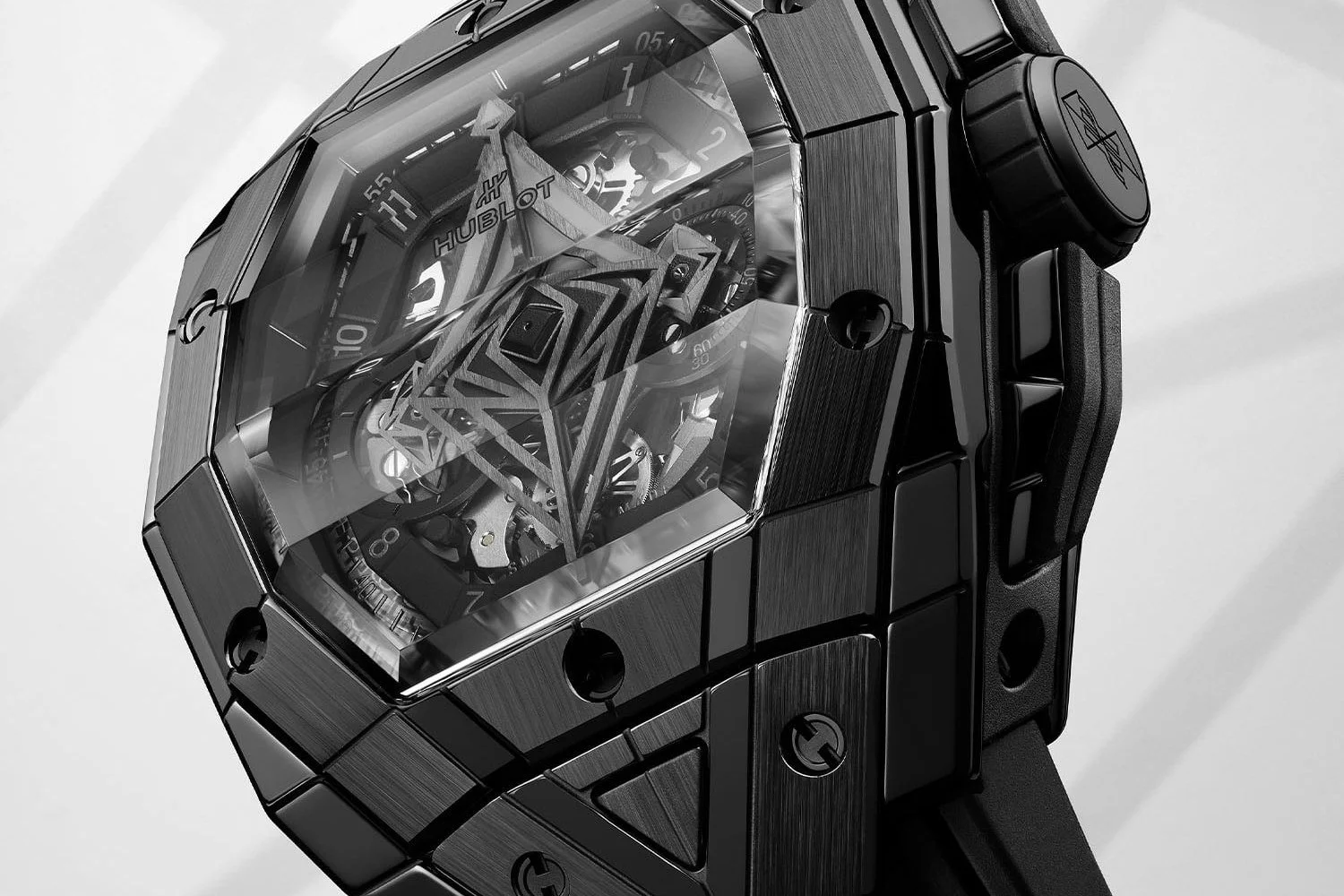
Diameter: 42mm; Thickness: 15.7mm; Case: titanium, ceramic, King Gold or sapphire; Movement: HUB4700, 5Hz; Power reserve: 50 hours; Water resistance: 100m
Maxime Plescia-Büchi, the tattoo artist behind the Sang Bleu studio, has been drawing on Hublot cases since the first Big Bang Sang Bleu, and the Spirit of Big Bang Sang Bleu of 2023 is where the crystal joined in. The 42mm case is built from hexagons and triangles around a ten-sided bezel, and the sapphire on top is cut to match: it reads as four arched panes with ten bevels that dive down to meet the bezel, so the skeletonized HUB4700, a 5Hz El Primero chronograph reworked by Hublot, sits under a piece of glass with more angles than most cases. Titanium came first at 200 pieces, then black ceramic at 200 and King Gold at 100, and in 2024 Hublot cut the entire case from sapphire as well, 100 hours of machining per watch, at $143,000. It is the loudest watch here, and the only one where the crystal is just one of a dozen faceted surfaces.
Also worth knowing
Rado's DiaStar Original (about $1,500) is the cheapest faceted sapphire crystal from a major brand, with parallel facets on a 38mm case. The Seiko SARB001, 003 and 005 are discontinued but sell for $500 to $1,000 secondhand, and they are the only modern faceted Seikos. Casio's Oceanus OCW-S6000SW puts curved facets on a sapphire bezel rather than the crystal, which is its own kind of hard.