
Introducing the IWC Pilot’s Venturer Vertical Drive
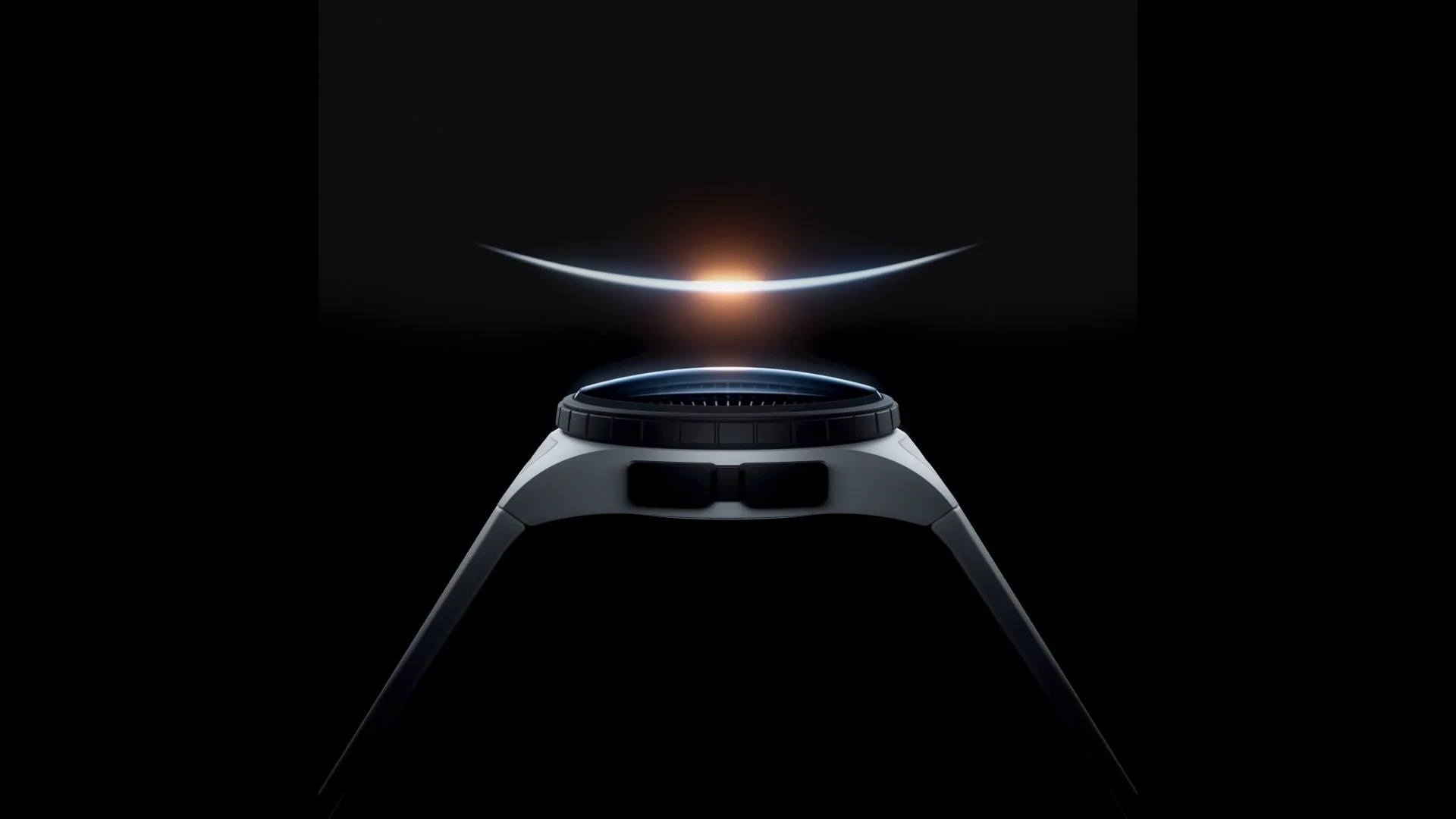
When we think about tool watches, we usually think about GMT’s, field watches, or pilot’s watches. And when we think about certified professional watches, we almost instantly think about dive watches. These types of watches are designed with a specific use case in mind. So, when you are pushing the boundaries of space, you need something really specific. That is exactly what IWC are doing here with the Pilot’s Venturer Vertical Drive. Instead of just adapting a pilot’s watch for spaceflight, IWC have started from scratch and asked a more direct question: what does a watch actually need to function in space? This is more of an engineering problem than a question of design choices. While the name might indicate an evolution of the Pilot’s Watch collection, this is a separate category of watch entirely.
The Basics
Case: 44.3mm, White Zirconium Oxide Ceramic.
Crystal: Sapphire.
Movement: Automatic, IWC-manufactured calibre 32722.
Water Resistance: 100 Meters.
Strap Options: White FKM rubber strap with Ceratanium pin buckle
Price: $28,200 USD.
Availability: Not specified.
The Juice
Aside from the evident space-era design, the most immediate difference is the lack of a crown. But why? In space, astronauts are often operating equipment while wearing gloves, which makes traditional crown manipulation impractical. IWC replaces it entirely with a rotating bezel system that controls all functions of the watch. This is a purely functional choice that allows for a really cool design.
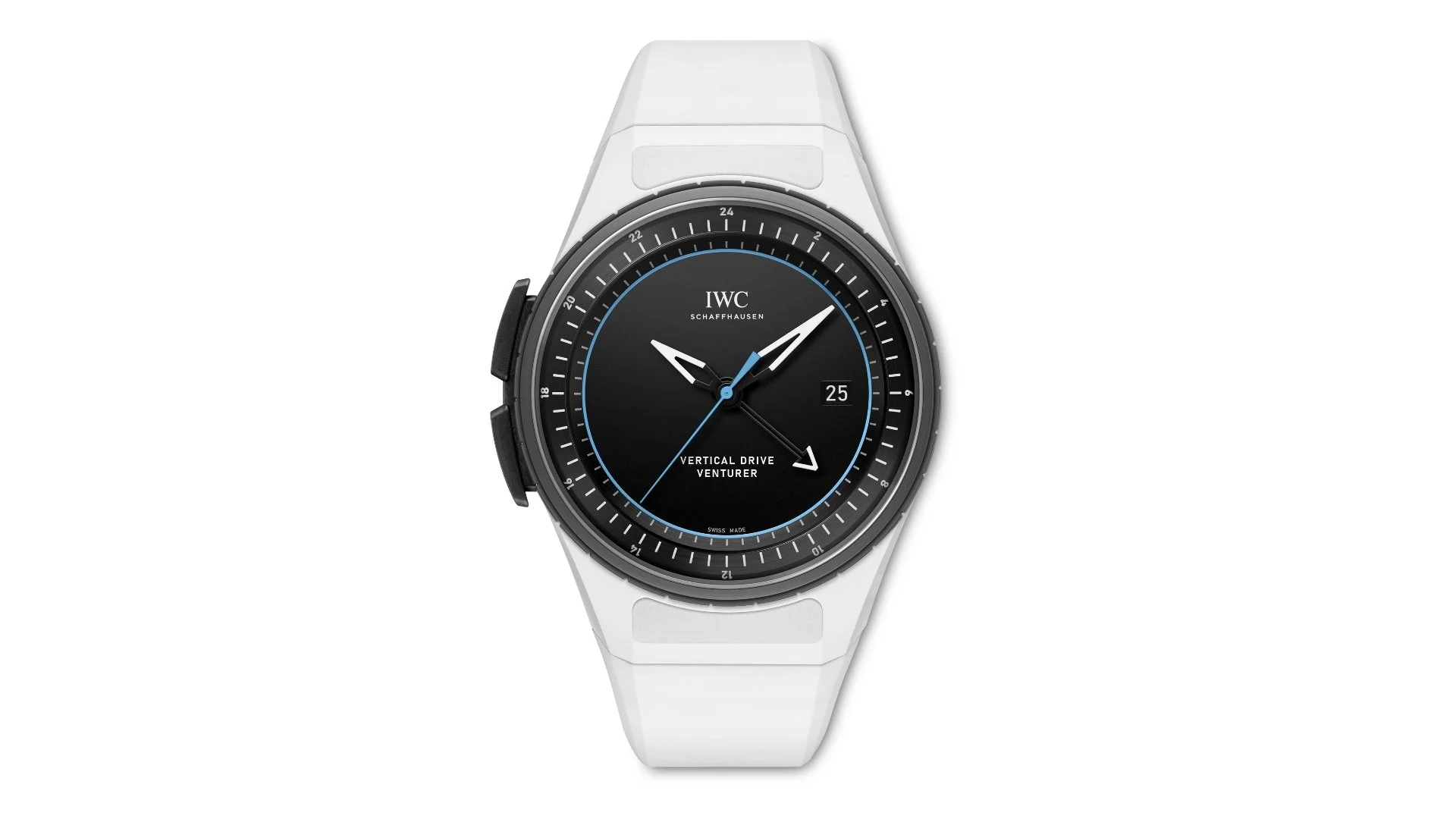
This is also where the “Vertical Drive” concept comes in: there is no translation of horizontal to vertical movement like there would be on a normal watch with a crown. The bezel’s motion is transmitted through a clutch system to the winding stem, allowing the user to wind the watch or set different functions without ever touching a crown.
Obviously, there does need to be some sort of control that the wearer can use easily. This where the rocker switch on the side of the case that allows you to change between modes: winding, setting local time, or adjusting the second time zone. It’s a completely different interaction model, and one that’s clearly been designed with a specific use case in mind.
The display follows the same logic. The dial has been completely stripped back, painted matte black, and designed to avoid reflections. Legibility is the priority. You get two time displays: a central hour and minute hand for the mission reference time, and a 24-hour hand running along the outer scale. That 24-hour format isn’t just a design choice. In orbit, astronauts will experience multiple sunrises and sunsets every day: the sun, or lack thereof cannot help you figure out what time it is. This is where the 24-hour indicator comes in. In practice, this hand would be tied to UTC keeps things consistent.
There’s also the ability to jump the hour hand in one-hour increments, which allows for a second time zone without interrupting the movement. It’s a practical feature that translates well back to Earth. I guess the idea is being able to check on the time in Houston, or at home with the family. Powering this watch is the Calibre 32722, which brings a 120-hour power reserve: I would say this is crucial given isn’t a given where this watch has been designed to operate.
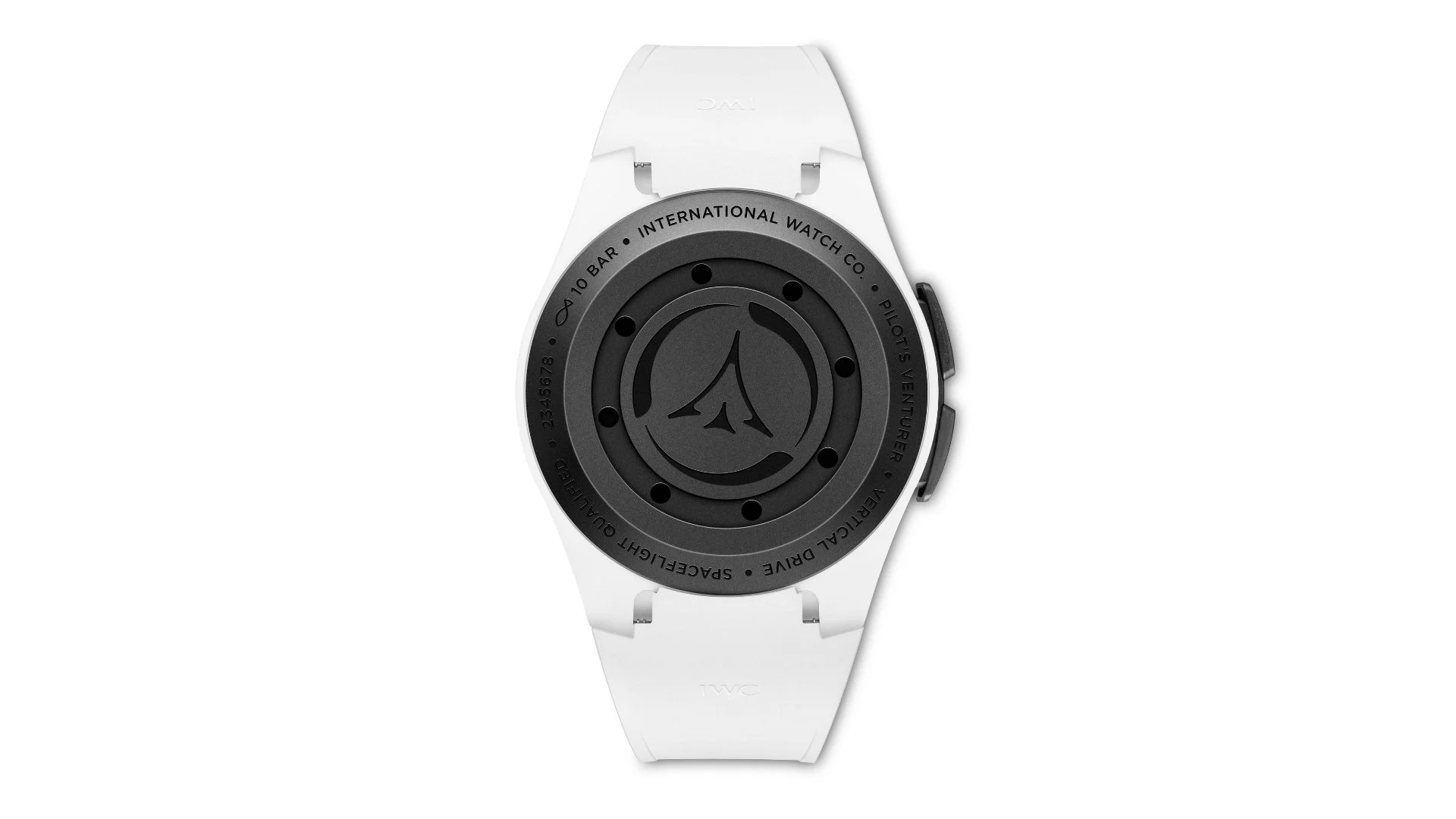
The materials are equally deliberate. The case is made from white zirconium oxide ceramic, while the bezel and caseback use Ceratanium, IWC’s hybrid material that combines the lightness of titanium with the hardness of ceramic. Again, this combination isn’t about aesthetics. It’s about creating resistance to temperature extremes, vibrations, radiation, and corrosion.
The watch has been tested under conditions exceeding typical launch forces, including vibration tests up to 10G. Few people will ever experience anything more than 3G, but this watch definitely will. The strap is FKM rubber, chosen for its resistance to UV exposure and temperature variation. Again, it’s a material decision driven by function rather than style.

Final Thoughts
The Pilot’s Venturer Vertical Drive is possibly the most exciting watch release in the current context: just a couple of days before writing, the Artemis II mission just splashed-down after the first human mission to the Moon in decades. Innovative and groundbreaking, this watch is the start of a new era for horology and an even bigger one for human-kind.
Find out more about this watch here.