
Introducing the IWC Ingenieur Tourbillon Flying Minute
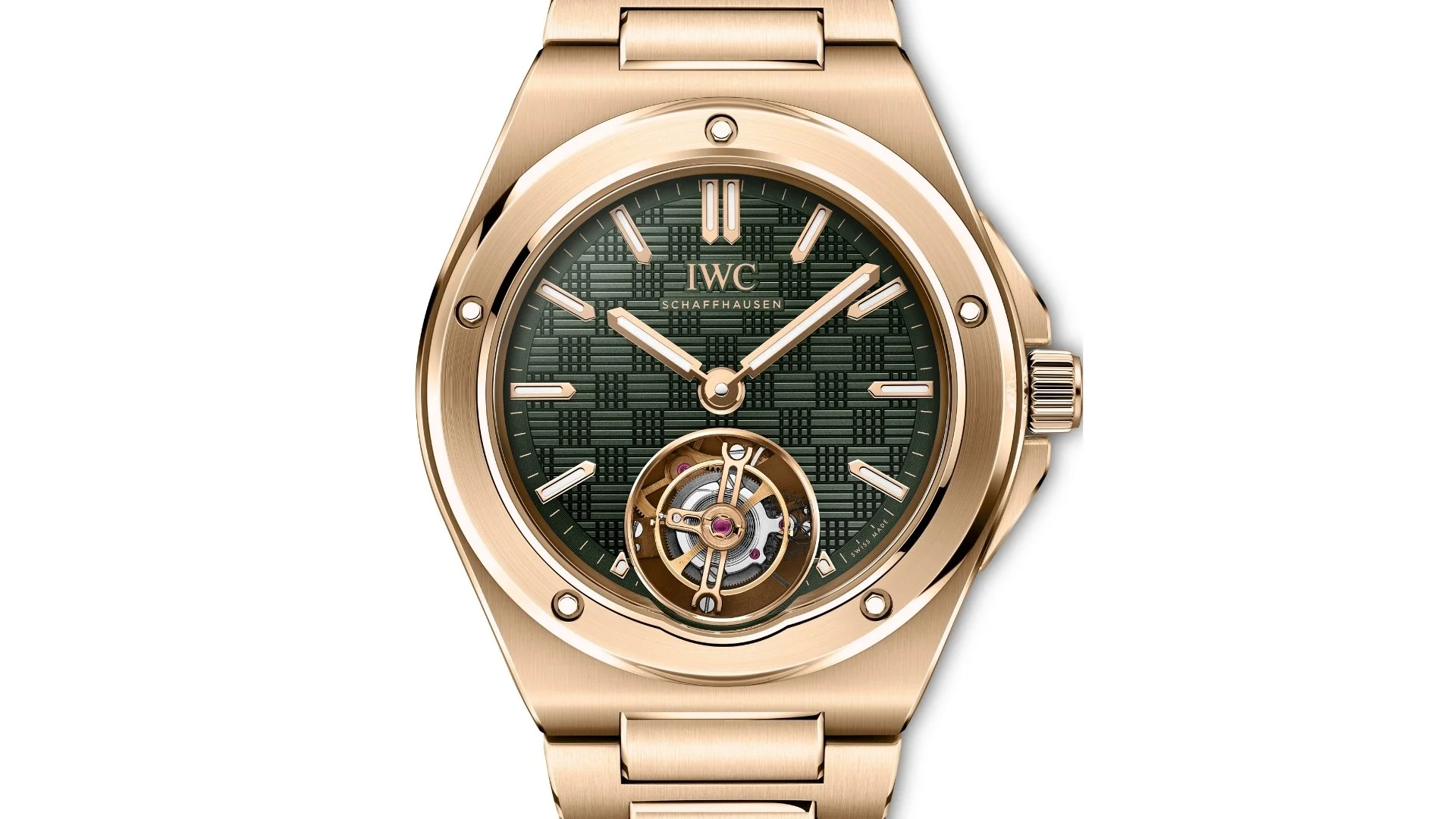
Perhaps this watch is the most underrated of Gerald Genta’s designs, and wrongfully so. The Ingenieur is exactly as the name suggests: structured, measured, never excessive. Even in the past when IWC have added complications or precious metals, it has never felt like too much. You might think that the new Ingenieur Tourbillon 41 would change that. On paper, it’s a huge shift: a full gold case and bracelet, as well as the mother of all complications. But the reality is that it still presents as a cool and technical watch, nothing frivoulous. Let’s get stuck in to the details!
The Basics
Case: 41.6mm, 18k Gold.
Crystal: Sapphire.
Movement: Automatic, IWC-manufactured Calibre 82905.
Water Resistance: 100 Meters.
Strap Options: Integrated 18k 5N gold bracelet with butterfly clasp.
Price: Not specified.
Availability: Limited to 100 pieces.
The Juice
Let’s start with the obvious: all of the Ingenieur’s usual elements are there: the 5 screws, circular bezel, and criss-cross patchwork dial. But what really stands out is the material. Full gold for the case and bracelet. It gives the watch a really imposing look. Obviously, it will carry a serious physical and metaphorical weight. The Ingenieur’s design is inherently architectural with a lot of flat surfaces, sharp transitions, and defined edges. Gold can change the way that looks, but IWC used different finishes to create contrast instead.
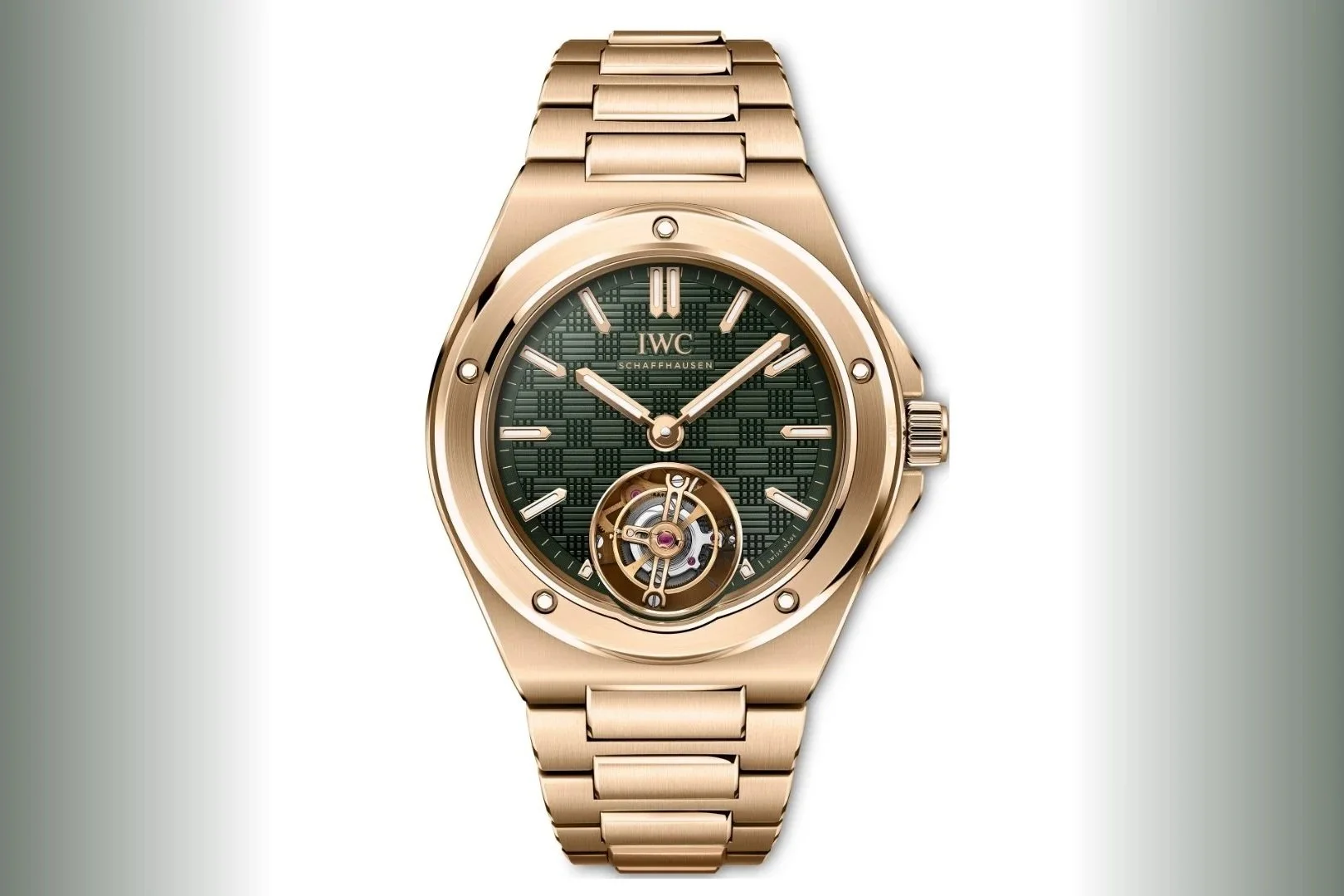
Upon closer inspection, you’ll notice that what looked like a small-seconds counter from afar, is actually the flying minute tourbillon. Essentially, a very fancy small seconds. There’s been no attempt to reframe the dial around it, and that’s a good thing. The familiar “Grid” pattern remains untouched. If IWC tried to do anything major to that pattern, the watch wouldn’t be as charming.
Technically, this a serious piece. Being an IWC, this is to be expected. The escapement components are treated with Diamond Shell technology, which reduces friction and improves energy transfer. The tourbillon consists of 56 components and weighs just over half a gram. It’s also fitted with a stop mechanism, allowing you to halt the cage entirely for precise time setting. This kind of practicality and technicality is not what we would usually associate with a tourbillon. It also goes to show that such a historic mechanism still has room for improvement.

The rest of the Calibre 82905 is just as high-performance. It uses IWC’s Pellaton winding system: ceramic components are used in high-stress areas, which improves durability over time. It delivers an 80-hour power reserve, which is solid given the presence of a tourbillon. Evidently, finishing is in line with IWC’s higher-end pieces: you get Geneva stripes, gold-plated bridges, and a rotor with a gold medallion.
Final Thoughts
Did I ever think that IWC would dote the Ingenieur with a spec-sheet worthy of a completely different kind of watch? No. Did I believe that there was any room to improve the Tourbillon mechanism? Also, no. What does this all prove? Well, I think it shows two things. Firstly, IWC is ultimately one of the most technical watchmakers in the industry, who consistenly challenge assumptions and tradition. Speaking of tradition brings me to my second point: they also prove that they can are masters of their heritage designs. Have they fundamentally changed the Ingenieur to accommodate the tourbillon- not really. They also haven’t overdone it with frivolity and excess. As the name has always implied, this is a watch that is perfectly measured.
Find out more about this watch here.