
How to Choose the Right Watch Size: Lug to Lug, Diameter, and Everything in Between
You’re not actually choosing a watch. You’re choosing how a watch looks on you. That is an uncomfortable truth most enthusiasts only discover after a few regrettable purchases and a few too many “this looks nothing like I imagined” unboxings.
Spend any time in watch forums or on social media and you will see the same sizing language repeated over and over again. “Forty millimeters is perfect.” “Anything under 38 is too small.” “Forty two is massive.” These rules sound authoritative and simple. They are also responsible for a lot of watches that look slightly off on the wrist.
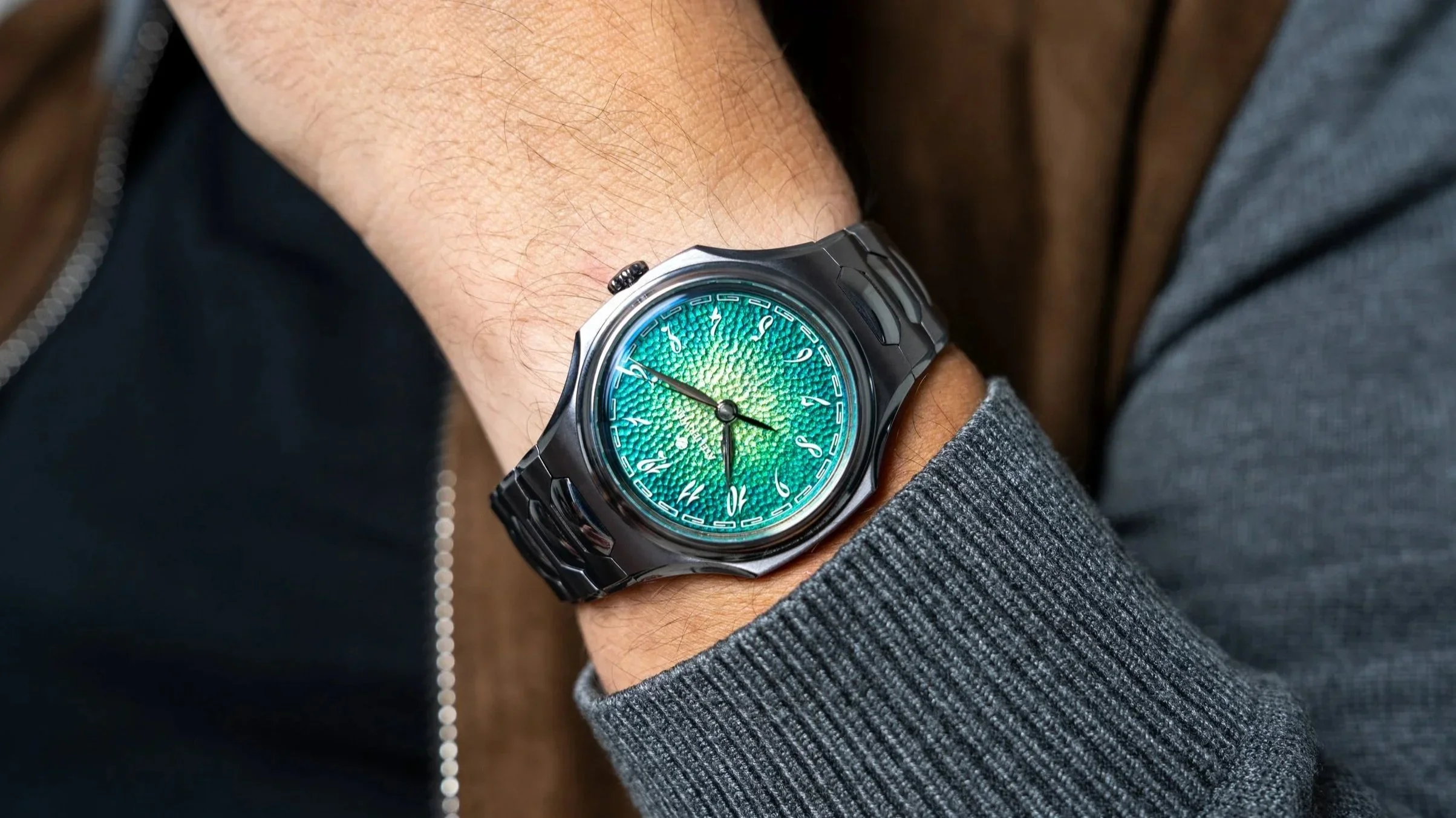
On paper, sizing seems straightforward. You have a diameter, maybe a thickness, and you assume that is enough to predict how a watch will wear. In reality, those numbers only tell a small part of the story. The way a watch actually sits on your wrist has as much to do with lug to lug, case shape, bracelet design, wrist shape, and visual weight as it does with the diameter printed on the spec sheet.
This is not a guide to the “correct” size, because there is no such thing. It is a framework for understanding why certain watches work on your wrist and others do not, and for making more deliberate choices the next time you reach for your wallet.
The Diameter Myth We All Start With
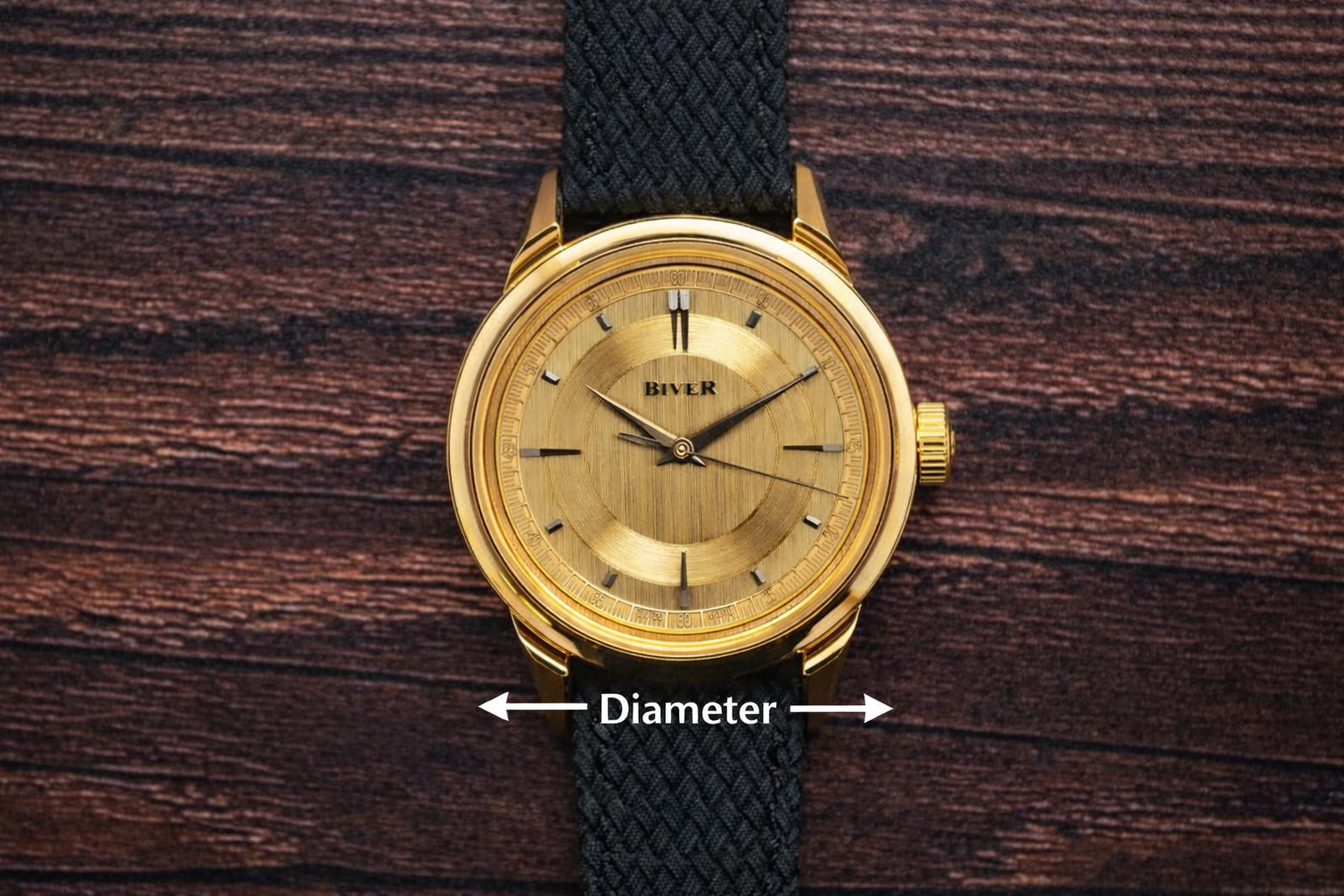
Most new enthusiasts latch onto one spec: diameter. It is the only number many retailers highlight and it becomes the shorthand for “size.” Forty millimeters becomes the default, anything under 38 is dismissed as too small, and 42 is treated as oversized.
The problem is that diameter, on its own, tells you very little about how a watch will actually wear. I have worn 41 millimeter watches that feel huge and 42 millimeter watches that somehow wear smaller. Rectangular pieces at 45 millimeters can dominate the wrist. Integrated bracelet watches can feel larger than their specs simply because the bracelet cannot fully drop around the wrist.
On paper, these numbers look tidy. On the wrist, they often fall apart. You are not choosing a measurement. You are choosing a footprint, a silhouette, and how that interacts with your wrist.
Why Diameter Fails and a Better Spec to Obsess Over
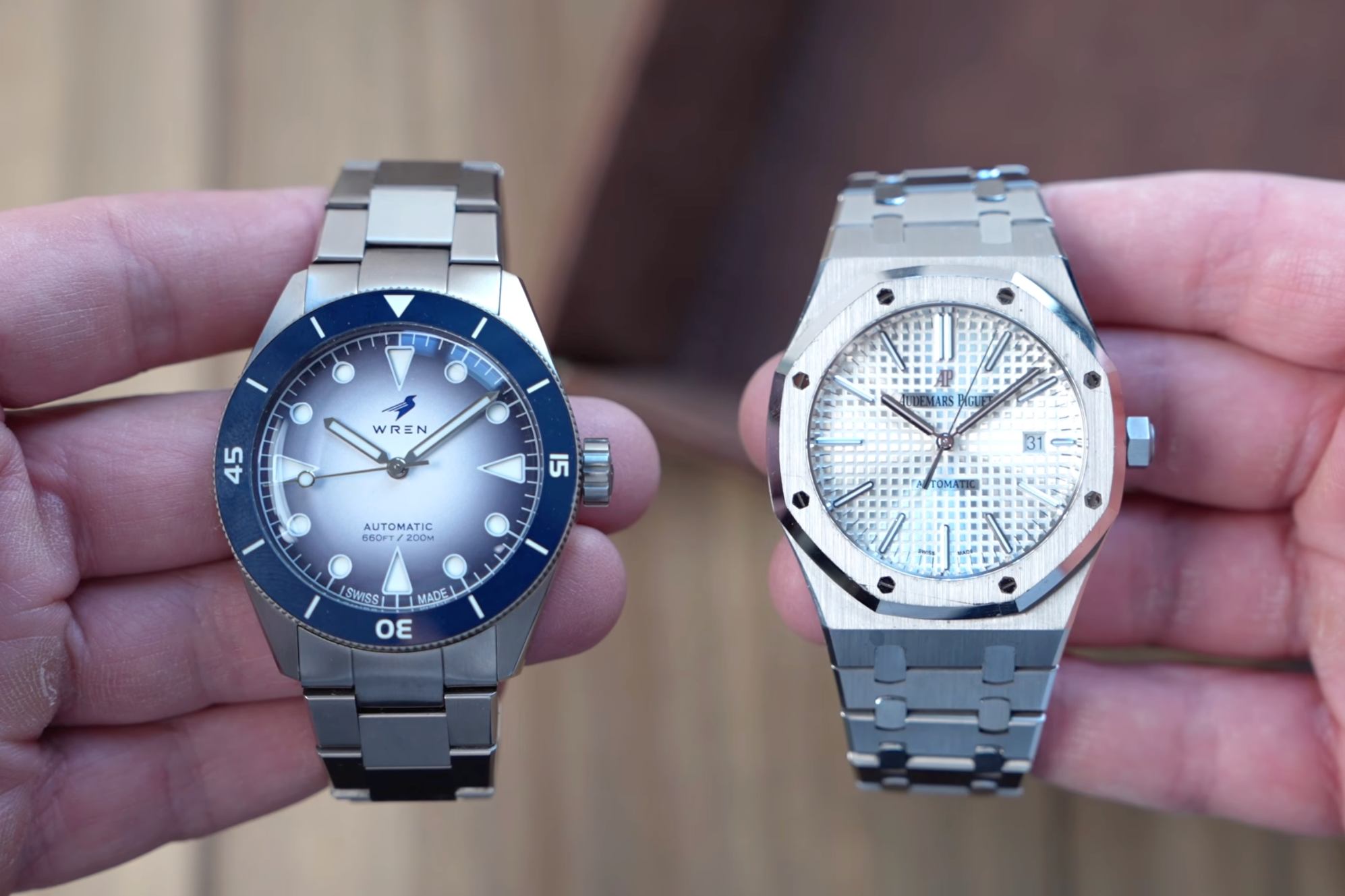
The central myth in watch sizing is that case diameter is the most important number. It is not. Diameter can be a useful reference, but it is a blunt tool. Two watches with the same diameter can wear completely differently.
Take two watches in my collection:
A 41 millimeter Audemars Piguet Royal Oak
A 41 millimeter Wren Diver One
Yes, Wren is my brand, but I am using it here because this comparison makes the point perfectly.
On paper, they sound identical. Same diameter, similar “size.” On the wrist, they have almost nothing in common. The Royal Oak wears larger because of its effective lug to lug. The true lug to lug is 51.6 millimeters, but once you factor in the first bracelet link that does not freely drop, the effective footprint is closer to 56.7 millimeters. That rigid section extends the watch well beyond what the case alone would suggest.
The Diver One is also 41 millimeters, but with a lug to lug of 47 millimeters. The result is a noticeably smaller, more compact presence on the wrist, despite the identical diameter. Same wrist, same number, completely different experience.
Diameter is the headline spec. Lug to lug is where the story actually lives.
Lug to Lug: The Real King of Watch Sizing
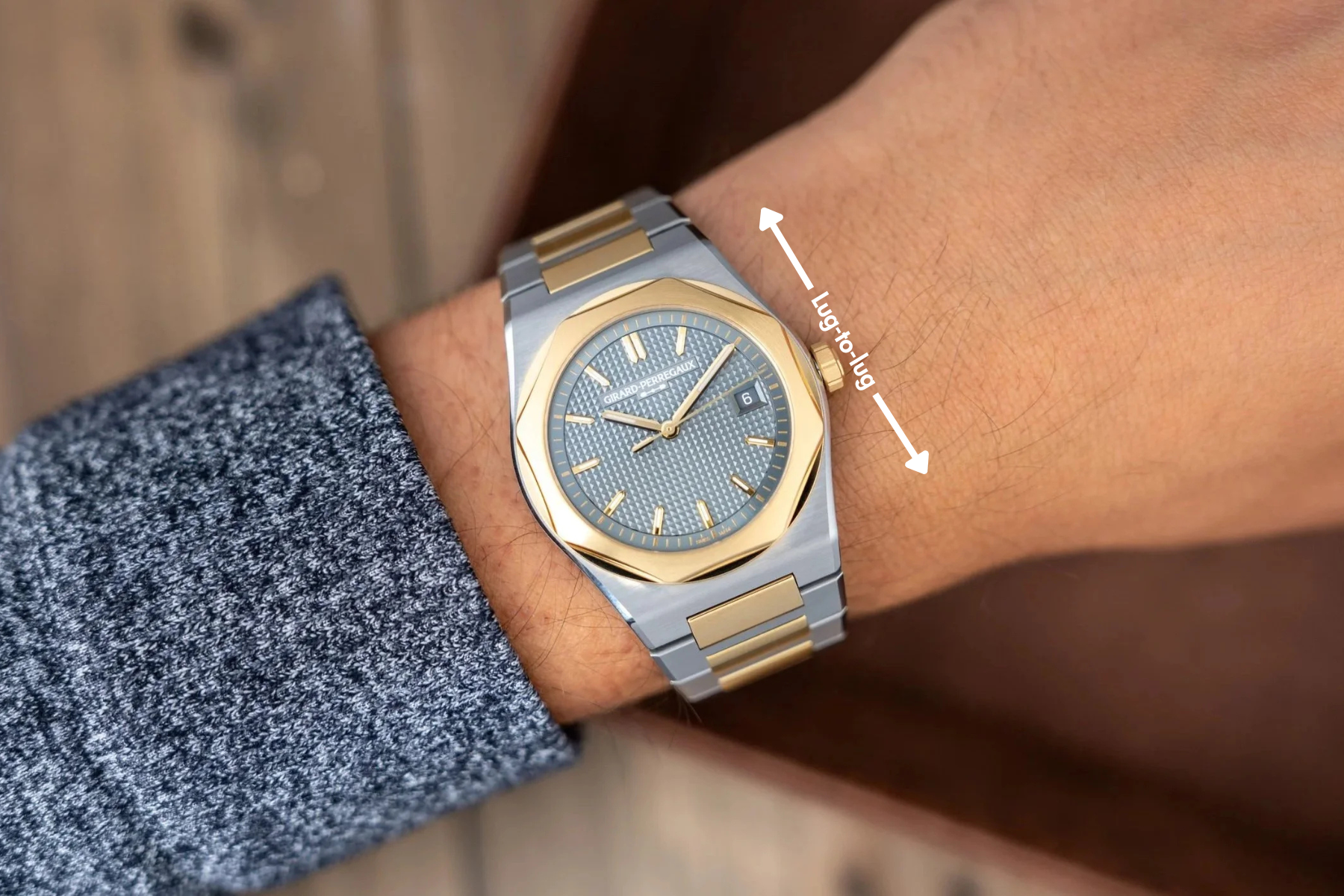
If there is one measurement worth obsessing over, it is lug to lug. This dimension tells you how much vertical real estate a watch will occupy from top to bottom on your wrist. Your wrist does not care how wide the dial is. It cares how far the watch reaches across the flat part of your arm.
On my 6.75 inch wrist, the sweet spot tends to be around 45 to 50 millimeters lug to lug. I can push a little beyond that, but once a watch gets to around 52 or 53 millimeters, overhang becomes visible and you can feel the case extending past the natural edges of the wrist.
A good illustration of this is the comparison between the Royal Oak and the IWC Ingenieur 40. On paper, there is only a millimeter difference in diameter. In practice, the Ingenieur has a lug to lug of about 45.7 millimeters and wears dramatically smaller and more manageable. The genre is similar, the design language overlaps, but the footprint is entirely different.
Once you start thinking in lug to lug instead of diameter, sizing decisions become much more predictable.
The Hidden Variable: Wrist Shape, Not Just Wrist Size

Another factor that quietly shapes how a watch wears is wrist shape. Not all “six inch wrists” are created equal.
Two wrists can have the same circumference but very different topography. A rounder wrist has less flat surface area on top, which makes watches look and feel larger. They sit higher, rock more, and are more likely to overhang. A flatter wrist offers a broader platform for the watch to sit on, which allows larger or longer pieces to wear more naturally.
My wrist is relatively flat, which means I can comfortably wear watches that might overwhelm someone with the same circumference but a more rounded profile. That person might find the same watch looks oversized, awkward, or simply out of proportion.
It is a nuance you rarely see discussed, yet it explains why “Will 40 millimeters be too big on a six inch wrist” never has a universal answer. The shape of your wrist matters just as much as the number on the measuring tape.
How Case Shape Distorts the Numbers
Most sizing conversations assume a traditional round case, standard lugs, and a strap. In that scenario, lug to lug usually gives a reasonably accurate picture. As soon as you move outside that template, the specs start to mislead.
Square cases
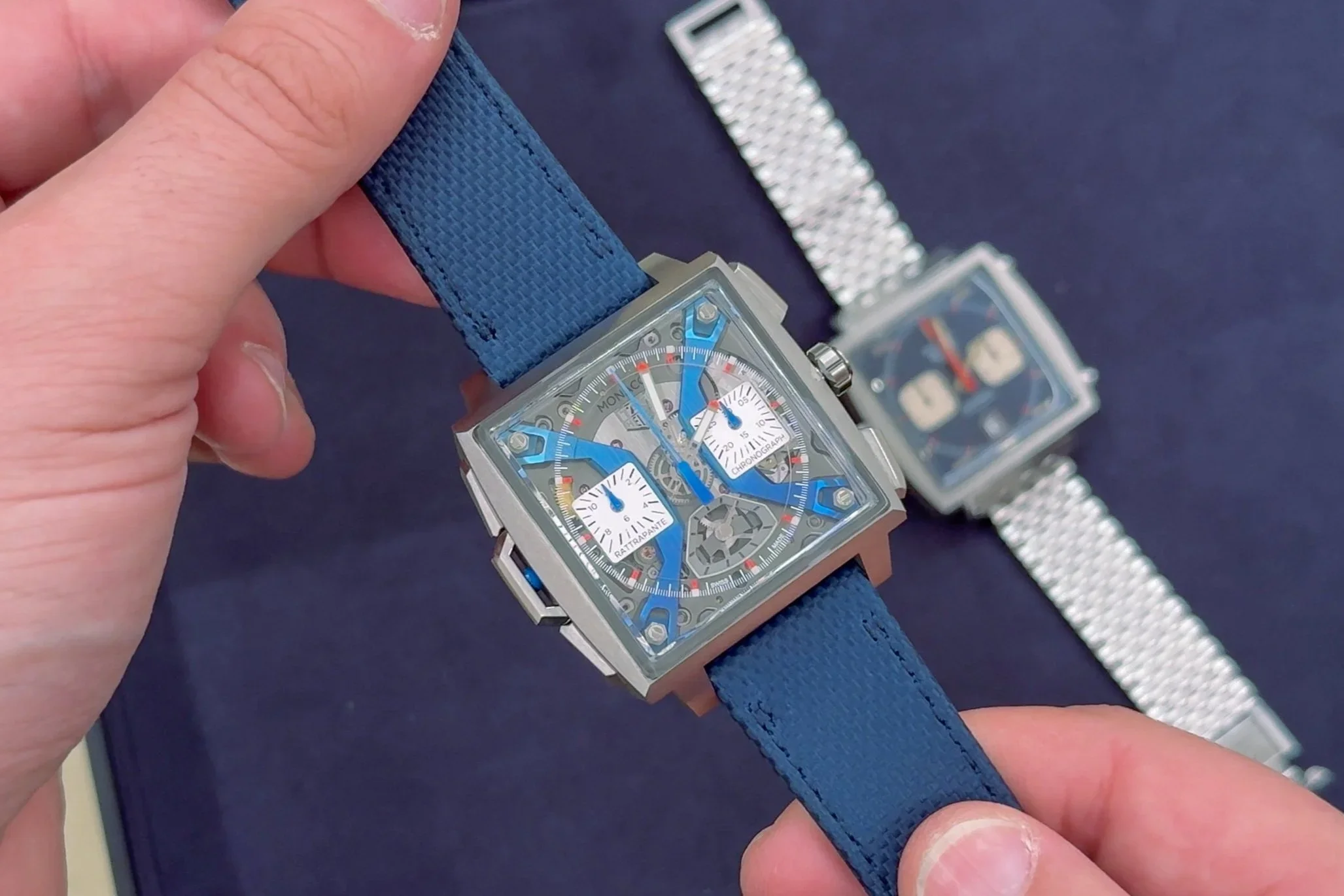
Square watches are the most obvious offenders. A 45 millimeter round case is already substantial. Translate that into a square, and you are in an entirely different league. The same number now applies in both height and width, which dramatically increases the watch’s presence.
I recently tried on a 45 millimeter Cubitus. On paper, it sounded big but potentially manageable. On the wrist, it felt enormous. The square footprint filled the wrist in every direction and left no visual escape.
Rectangular cases
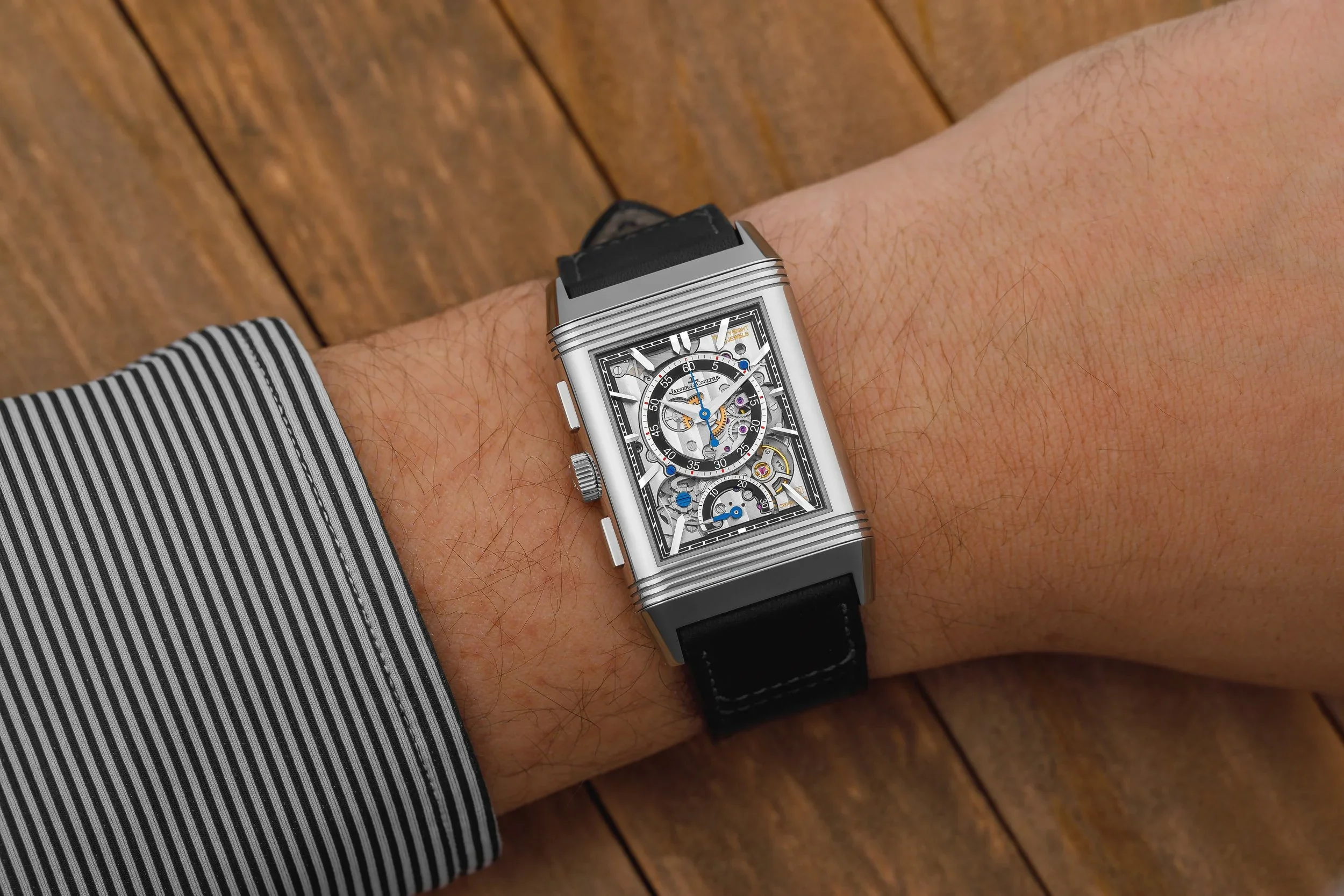
Rectangular pieces behave differently again. A Jaeger LeCoultre Reverso, for example, can be quite tall from top to bottom, but the narrow width and extremely short, curved lugs let it sit close and hug the wrist. The dimensions might look intimidating in isolation, yet the watch wears far more compact and elegant than the numbers suggest.
Integrated bracelet designs
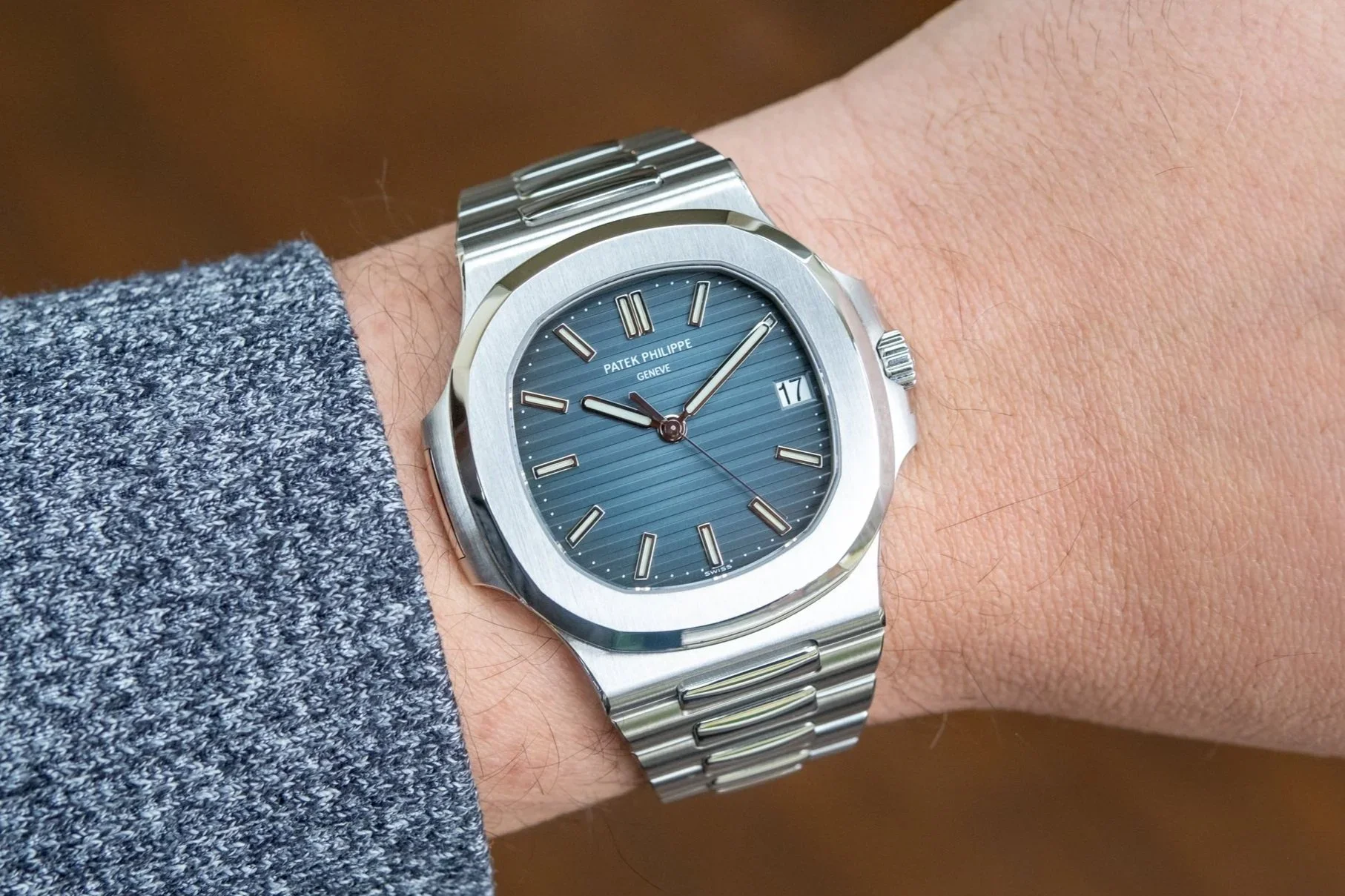
Integrated bracelet watches introduce another wrinkle. With many integrated designs, the bracelet does not immediately drop away from the case. Instead, the first link or two remain relatively rigid. That structure effectively extends the watch beyond its nominal lug to lug.
The Royal Oak is the classic example. The case itself measures 51.6 millimeters lug to lug, but once that first non articulating link is accounted for, it wears closer to 56.7 millimeters. This is not a defect. It is simply the physical reality of the design. It is also why integrated watches so often “wear larger” than their listed dimensions.
Visual weight
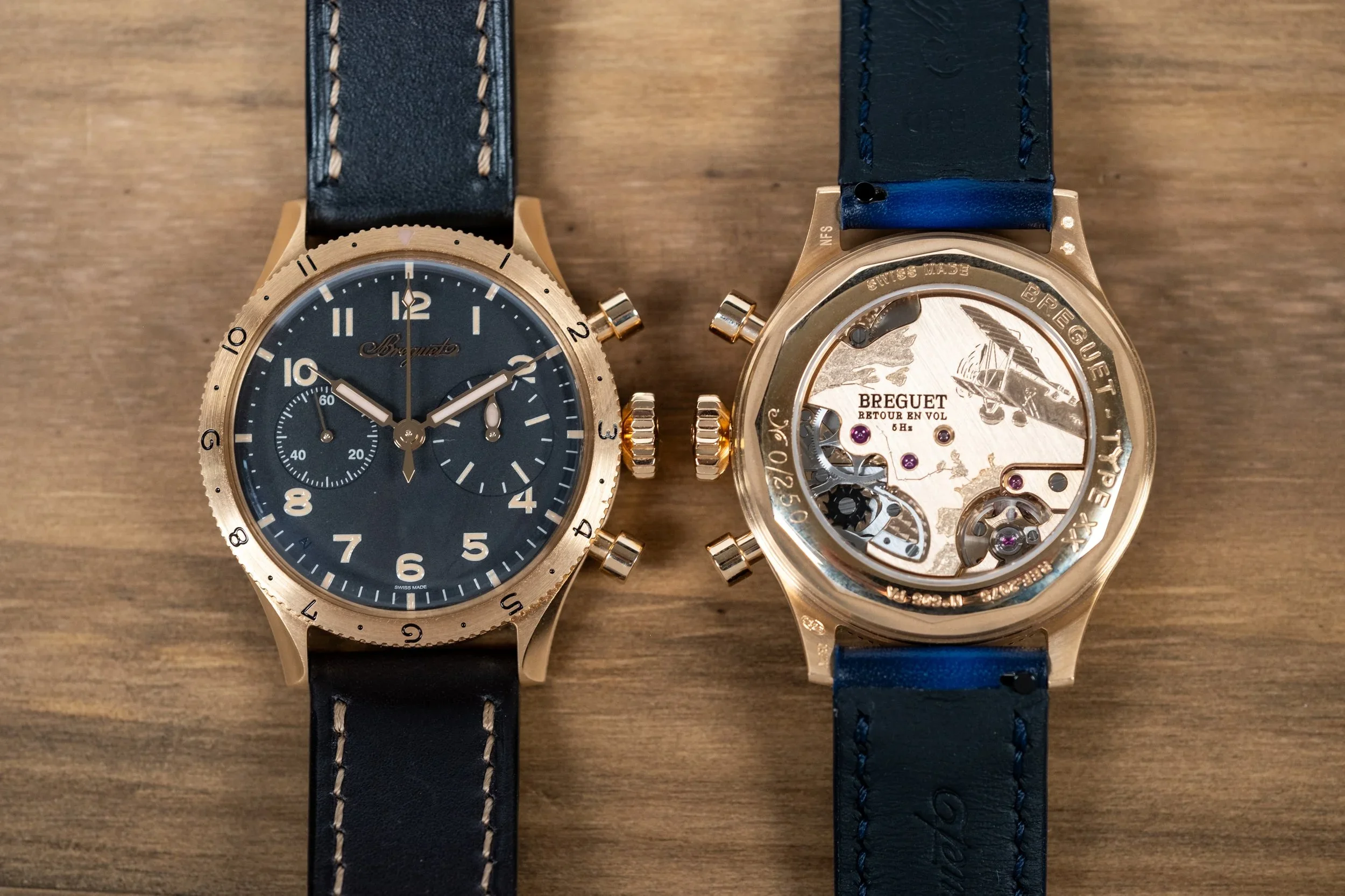
Finally, there is visual weight, another element that never shows up on a spec sheet. Dial color, bezel thickness, and dial layout all change how large a watch appears. White or silver dials tend to look larger than black ones because they reflect more light and expand visually. Minimal, open dials often read bigger, while busy or textured dials can break up the surface and make the watch feel smaller.
By the time you combine case shape, bracelet architecture, and visual weight, you are a long way from a simple diameter number.
Thickness: More Than a Millimeter Count
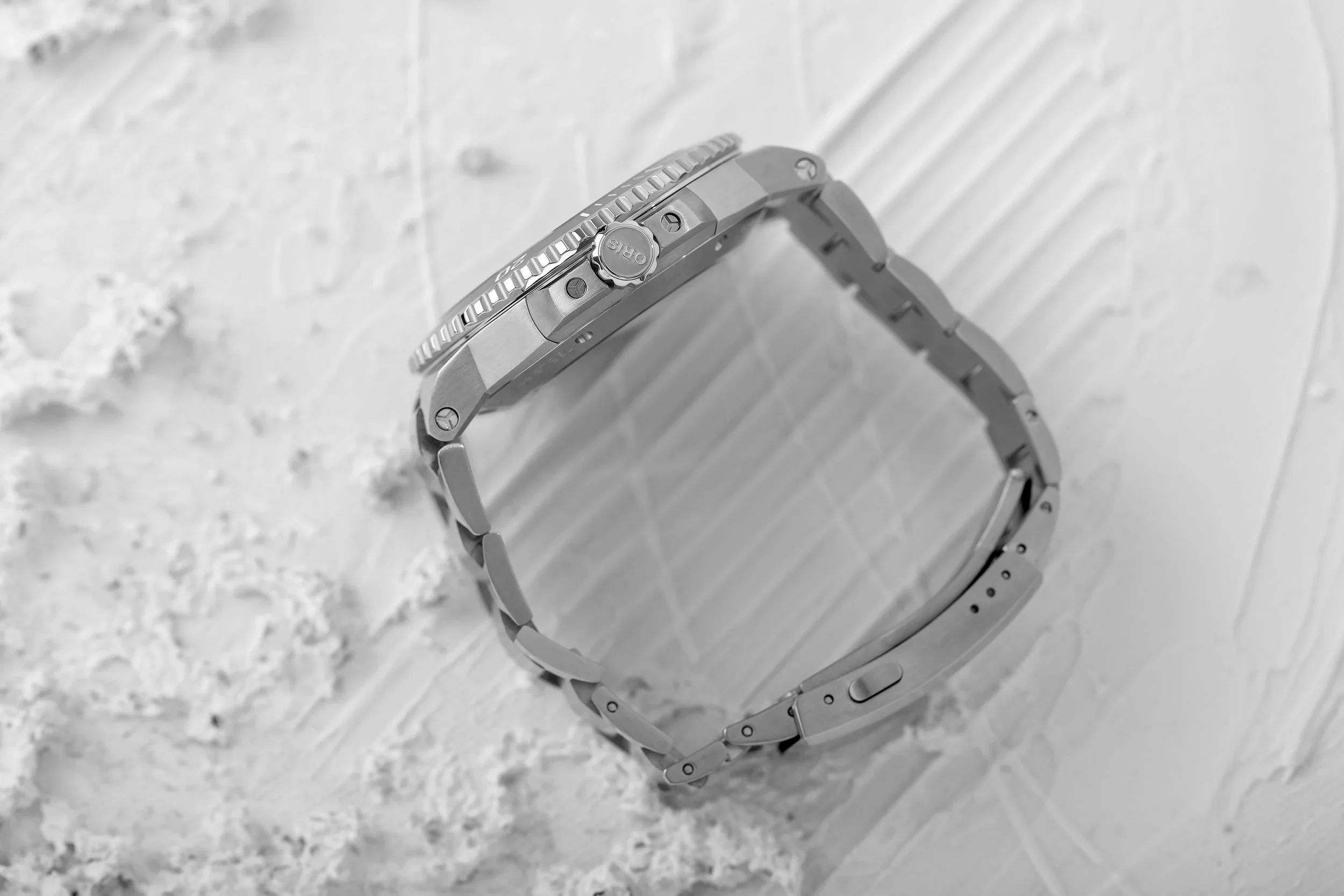
Thickness is another spec that gets oversimplified. Enthusiasts love to debate whether 11 or 14 millimeters is “too thick,” but that conversation often ignores how the thickness is distributed.
A 14 millimeter watch can feel surprisingly slim if the mid case tapers, the caseback settles into the wrist, and the bezel transitions are gentle. Conversely, an 11 millimeter watch can feel like a slab if the sides are vertical and the case sits high with no visual relief.
The MAD 1 is a good example of how deceptive thickness can be. On paper, nearly 19 millimeters sounds absurd. In practice, the short lugs, centered mass, and wide case help the watch wear more comfortably than the number suggests. At the other end of the spectrum, some microbrands use thick bezel walls and straight case profiles that make otherwise reasonable dimensions feel chunky and top heavy.
As with diameter, the raw number is only a starting point.
Common Sizing Mistakes That Are Easy to Avoid
After years of collecting, writing, and making videos about watches, the same sizing mistakes keep surfacing.
1. Buying on diameter alone
This is still the most common error. Diameter is familiar and easy to filter by, so it becomes the default. Unfortunately, it is also the quickest way to a watch that looks and feels wrong once it shows up.
2. Ignoring lug to lug
If you only check one spec, make it lug to lug. It gives you a far better sense of whether a watch will sit within the natural boundaries of your wrist.
3. Skipping a wrist test
No set of rules can fully replace trying a watch on. If you cannot try the exact model, look for something with similar dimensions and case shape, and use that as a stand in. Even a few minutes on the wrist can tell you more than an hour of reading forum opinions.
4. Letting the internet dictate your taste
Sizing discourse online is loud and often unhelpful. Any time a 36 to 38 millimeter watch is mentioned, someone will call it a “women’s watch” or “too small.” Historically, a 36 millimeter Explorer was a perfectly normal men’s watch. The idea that anything under 40 is automatically feminine is a very recent, very online invention.
You are the one spending the money and wearing the watch. Your taste matters more than a comment section.
5. Treating rules as law instead of tools
Rules of thumb like “a certain lug to lug for a certain wrist size” are useful guides, not hard lines. Some designs, like Panerai, are meant to be worn larger. The oversized military inspired look is part of their identity. The goal is not to obey rules mechanically. It is to understand why they exist so you can break them intentionally when it makes sense.
A Practical Framework for Choosing the Right Size
To make this more actionable, here is the framework I use today and the one I share whenever someone asks for sizing advice.
1. Measure your wrist in two ways
Start with circumference, but do not stop there. Look at your wrist from above and from the side. Is it relatively flat, or does it curve sharply. Flatter wrists can accommodate larger lug to lug measurements and bolder cases. Rounder wrists generally reward more compact dimensions.
2. Define your lug to lug range
Use watches you already own or can try on to find your comfort zone. On my 6.75 inch wrist, that is roughly 45 to 50 millimeters. Once you know your range, you can quickly filter out pieces that are almost guaranteed to overhang.
3. Factor in case shape and bracelet design
Ask whether you are dealing with a traditional round case, a square or rectangular watch, or an integrated bracelet design. With anything square or integrated, assume it will wear larger than the diameter suggests and adjust your projected comfort range accordingly.
4. Account for visual weight
Think about dial color and layout. If you are on the edge of your comfort range and you want the watch to wear smaller, a darker dial, more texture, or additional complication can help. If you want maximum presence, a lighter, cleaner dial will amplify the size.
5. Look at the profile, not just the thickness
When possible, study side view photos. Pay attention to how the case steps from caseback to mid case to bezel. A well sculpted 13 to 14 millimeter watch can wear far better than a featureless 11 millimeter slab.
6. Whenever possible, test on wrist
Specs and frameworks are there to narrow your options and avoid obvious mistakes. The final decision should still be made on the wrist, either with the watch itself or with something that closely approximates it.
At the End of the Day, It Is Your Wrist
Sizing is personal. There are guidelines, there are physical realities, and there are trends, but none of them matter more than how a watch looks and feels to you.
The goal is not to hit a universally approved number. It is to understand why some watches work on your wrist and others do not, so you can be intentional about what you buy, when you bend the “rules,” and when you ignore them completely.
If you put something on, look down at your wrist, and it makes you want to check the time more often even when you already know what it is, you did not get the size wrong.
Do you want to keep this as a standalone Enthusiast Angle piece, or should we also build in a short “how to measure lug to lug” breakout for readers who are newer to specs?